


Evaluation of the Nasopharyngeal Microbiota in Beef Cattle Transported to a Feedlot, With a Focus on Lactic Acid-Producing Bacteria
- PMID: 31551953
- PMCID: PMC6743003
- DOI: 10.3389/fmicb.2019.01988
Evaluation of the Nasopharyngeal Microbiota in Beef Cattle Transported to a Feedlot, With a Focus on Lactic Acid-Producing Bacteria
Abstract
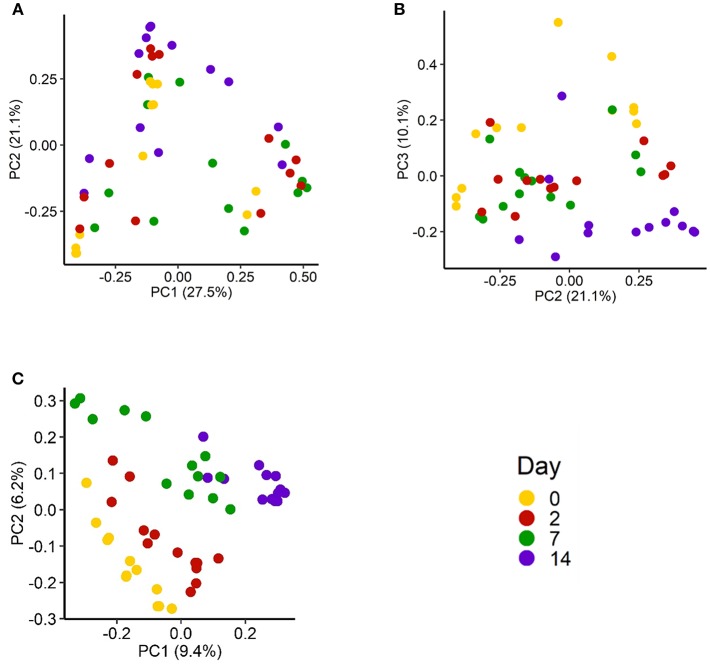
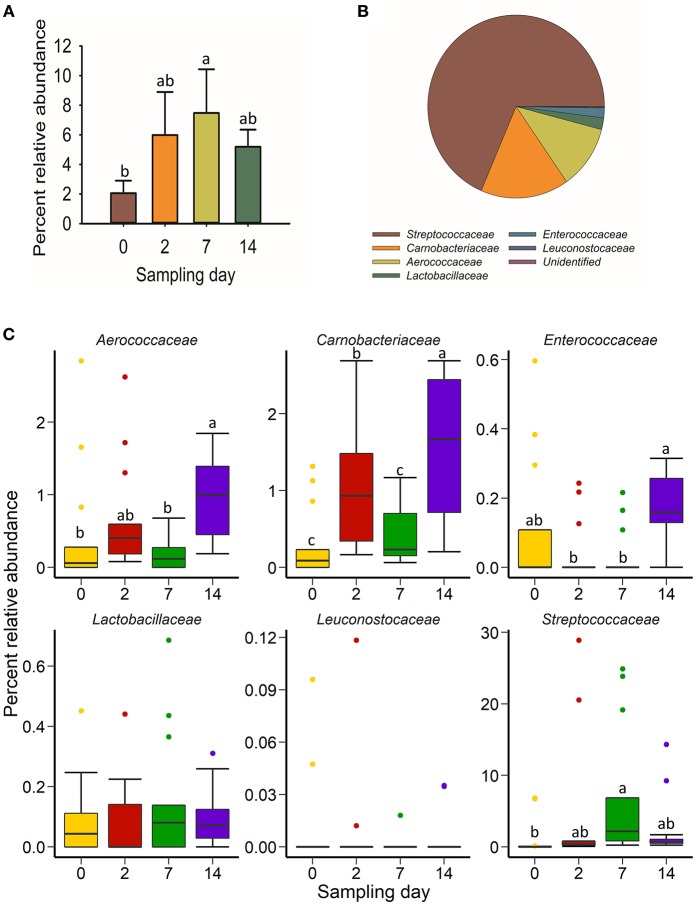
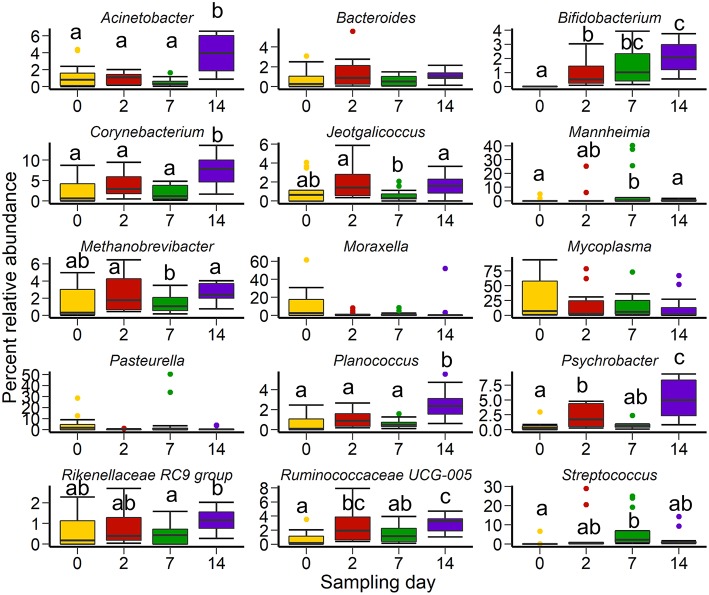
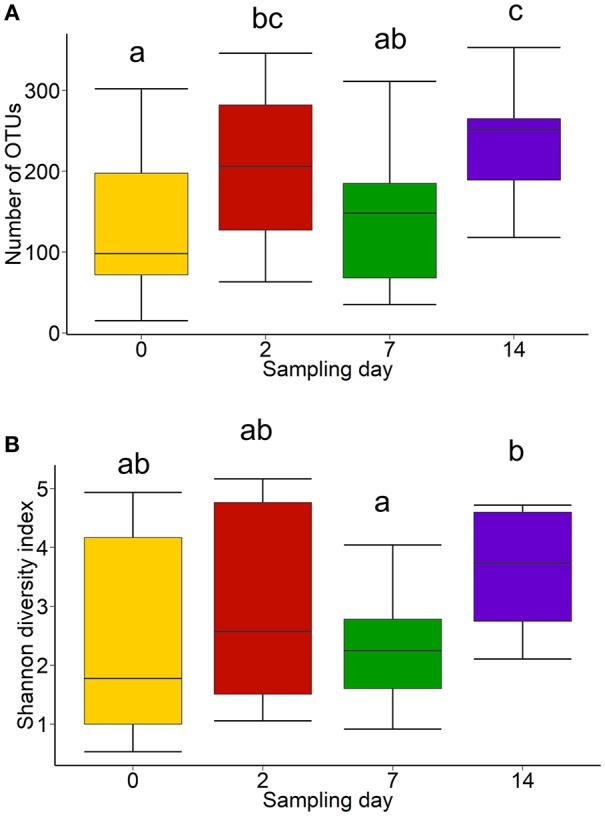
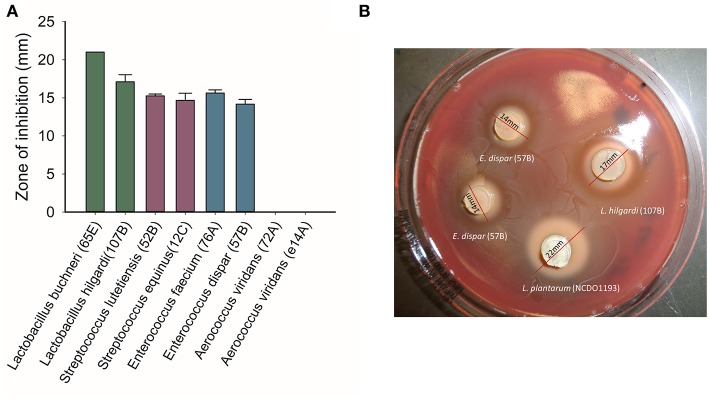
The nasopharyngeal (NP) microbiota is important in defining respiratory health in feedlot cattle, with certain NP commensals potentially protecting against bovine respiratory disease (BRD) pathogens. In the present study, we evaluated longitudinal changes in the NP microbiota with a focus on lactic acid-producing bacteria (LAB) and their linkage with BRD-associated bacteria in steers (n = 13) that were first transported to an auction market, and then to a feedlot. Deep nasopharyngeal swabs were collected at the farm before transportation to the auction market (day 0), at feedlot placement (day 2), and 5 (day 7) and 12 (day 14) days after feedlot placement. Swabs were processed for the assessment of the NP microbiota using 16S rRNA gene sequencing, and for the detection of Mannheimia haemolytica, Pasteurella multocida, and Histophilus somni by culturing. Possible associations among the top 15 most relatively abundant bacterial genera were predicted using a stepwise-selected generalized linear mixed model. Correlations between LAB and BRD-associated Pasteurellaceae families were also assessed. In addition, antimicrobial activity of selected LAB isolates against M. haemolytica was evaluated in vitro. A noticeable shift was observed in the NP microbial community structure, and in the relative abundance of LAB families as a result of auction market exposure, transport and feedlot placement. Varying degrees of positive or negative associations between the 15 most relatively abundant genera were observed. Many of the LAB families were inversely correlated with the BRD-associated Pasteurellaceae family as the cattle were transported to the auction market and then to the feedlot. Nearly all steers were culture-negative for M. haemolytica and H. somni, and P. multocida became less prevalent after feedlot placement. Isolates from the Lactobacillaceae, Streptococcaceae, and Enterococcaceae families inhibited the growth of M. haemolytica. The results of this study indicated that the NP microbiota became more diverse with an increase in microbial richness following transport to an auction market and feedlot. This study provides evidence of potential cooperation and exclusion taking place in the respiratory microbial community of cattle which may be useful for developing microbial-based strategies to mitigate BRD.
Keywords: antimicrobial activity; auction market; bovine respiratory disease; feedlot cattle; lactic acid-producing bacteria; nasopharyngeal microbiota; respiratory pathogens.
Figures
References
-
- Amat S., Timsit E., Alexander T. W. (2018). 356 Intranasal administration of novel bacterial therapeutics reduces colonization of the bovine respiratory pathogen Mannheimia haemolytica in challenged calves. J. Anim. Sci. 96, 177–178. 10.1093/jas/sky404.386 - DOI
-
- Amat S., Timsit E., Holman D. B., Alexander T. W. (2016). 0472 Characterization of bovine nasopharyngeal lactic acid bacteria and their in vitro antimicrobial activities against the respiratory pathogen Mannheimia haemolytica. J. Anim. Sci. 94, 225–226. 10.2527/jam2016-0472 - DOI
-
- Arbizu M. (2017). Pairwiseadonis: Pairwise Multilevel Comparison Using Adonis. R Package Version 00.1. Available online at: https://github.com/pmartinezarbizu/pairwiseAdonis
-
- Babcock A. H., Renter D. G., White B. J., Dubnicka S. R., Scott H. M. (2010). Temporal distributions of respiratory disease events within cohorts of feedlot cattle and associations with cattle health and performance indices. Prev. Vet. Med. 97, 198–219. 10.1016/j.prevetmed.2010.09.003 - DOI - PubMed
-
- Bates D., Mächler M., Bolker B., Walker S. (2014). Fitting linear mixed-effects models using lme4. arXiv[Preprint].arXiv:14065823. 10.18637/jss.v067.i01 - DOI
LinkOut - more resources
Full Text Sources
Miscellaneous
