Functional Somatic Symptoms
- PMID: 31554544
- PMCID: PMC6794707
- DOI: 10.3238/arztebl.2019.0553
Functional Somatic Symptoms
Abstract
Background: Approximately 10% of the general population and around one third of adult patients in clinical populations suffer from functional somatic symptoms. These take many forms, are often chronic, impair everyday functioning as well as quality of life, and are cost intensive.
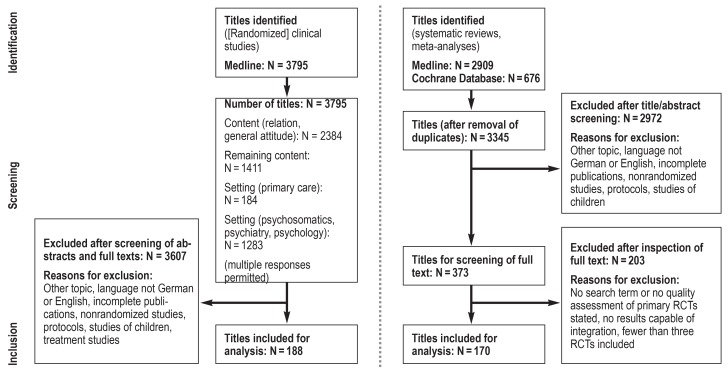
Methods: The guideline group (32 medical and psychological professional societies, two patients' associations) carried out a systematic survey of the literature and ana- lyzed 3795 original articles and 3345 reviews. The aim was to formulate empirically based recommendations that were practical and user friendly.
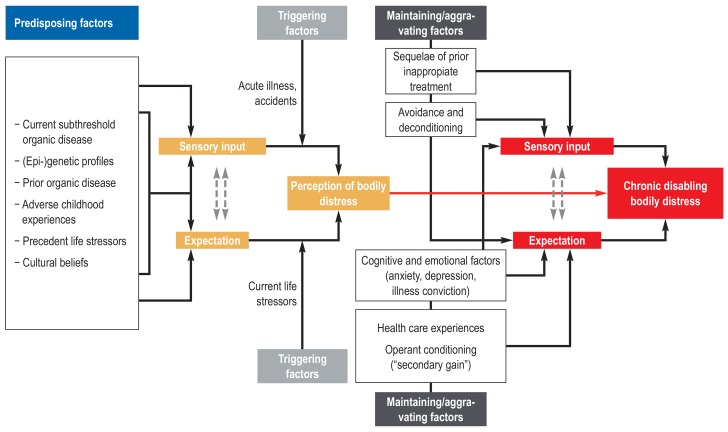
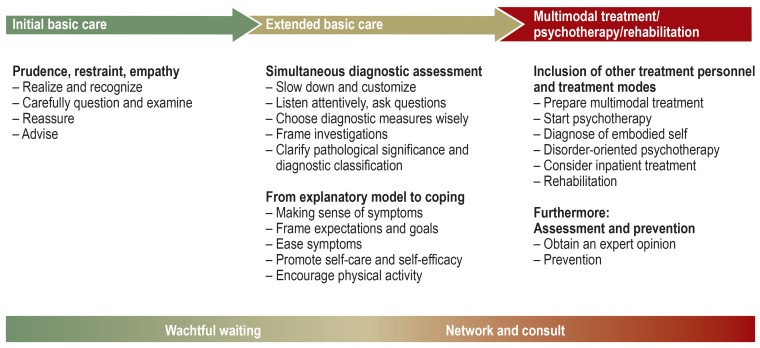
Results: Because of the variation in course and symptom severity, three stages of treatment are distinguished. In early contacts, the focus is on basic investigations, reassurance, and advice. For persistent burdensome symptoms, an extended, simultaneous and equitable diagnostic work-up of physical and psychosocial factors is recommended, together with a focus on information and self-help. In the pres- ence of severe and disabling symptoms, multimodal treatment includes further elements such as (body) psychotherapeutic and social medicine measures. Whatever the medical specialty, level of care, or clinical picture, an empathetic professional attitude, reflective communication, information, a cautious, restrained approach to diagnosis, good interdisciplinary cooperation, and above all active interventions for self-efficacy are usually more effective than passive, organ- focused treatments.
Conclusion: The cornerstones of diagnosis and treatment are biopsychosocial ex- planatory models, communication, self-efficacy, and interdisciplinary mangagement. This enables safe and efficient patient care from the initial presentation onwards, even in cases where the symptoms cannot yet be traced back to specific causes.
Figures
References
-
- Hausteiner-Wiehe C, Henningsen P, Häuser W, et al. Klett-Cotta (vormals Schattauer) Vol. 1. Stuttgart: 2013. Umgang mit Patienten mit nicht-spezifischen, funktionellen und somatoformen Körperbeschwerden S3-Leitlinie mit Quellentexten, Praxismaterialien und Patientenleitlinie.
-
- S3-Leitlinie „Funktionelle Körperbeschwerden“. www.awmf.org/leitlinien/detail/ll/051-001.html (last accessed on 4 March 2019)
-
- Henningsen P, Zipfel S, Sattel H, Creed F. Management of functional somatic syndromes and bodily distress. Psychother Psychosom. 2018;87:12–31. - PubMed
-
- Hausteiner-Wiehle C, Henningsen P. Kein Befund und trotzdem krank? Stuttgart: Klett-Cotta (vormals Schattauer) 2015 - PubMed
Publication types
MeSH terms
LinkOut - more resources
Full Text Sources
Medical