


A 16-step synthesis of the isoryanodane diterpene (+)-perseanol
- PMID: 31554978
- PMCID: PMC7123484
- DOI: 10.1038/s41586-019-1580-x
A 16-step synthesis of the isoryanodane diterpene (+)-perseanol
Abstract
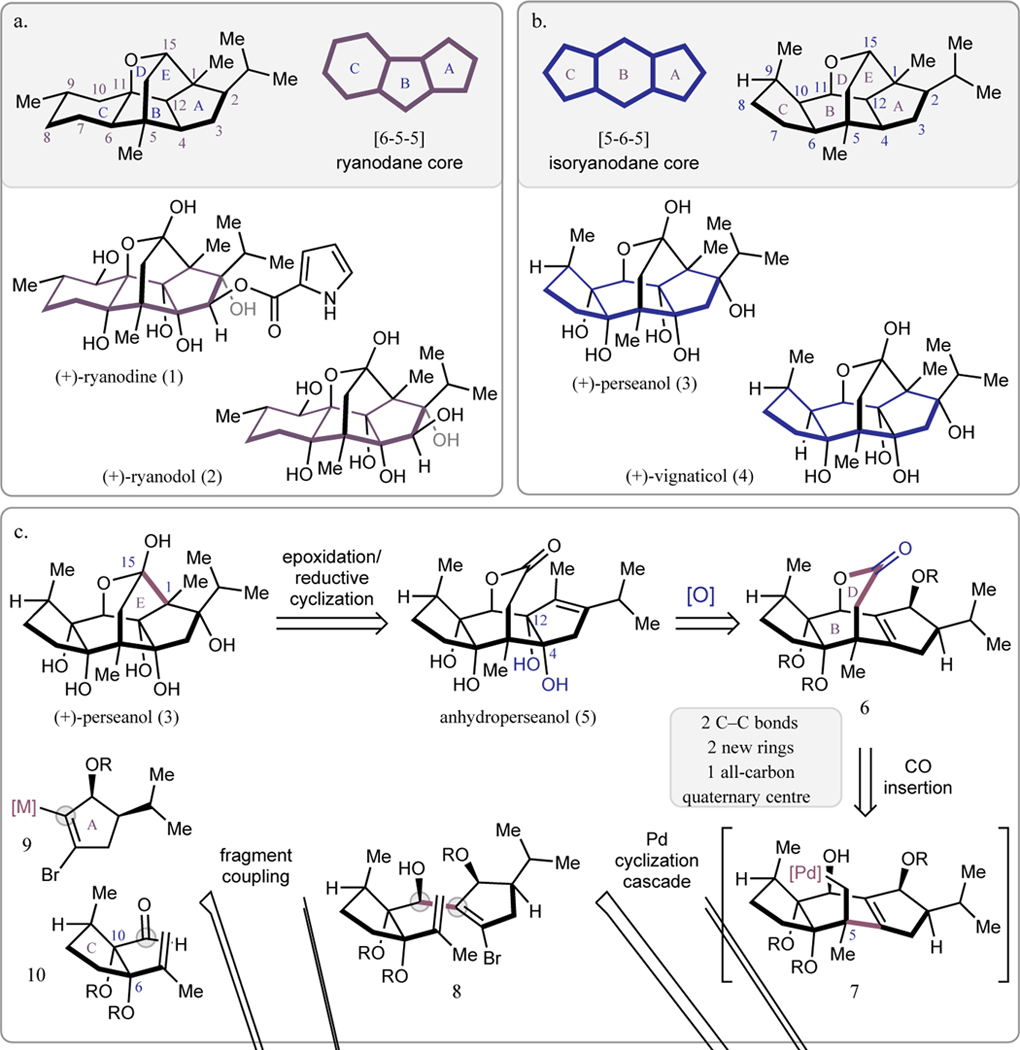
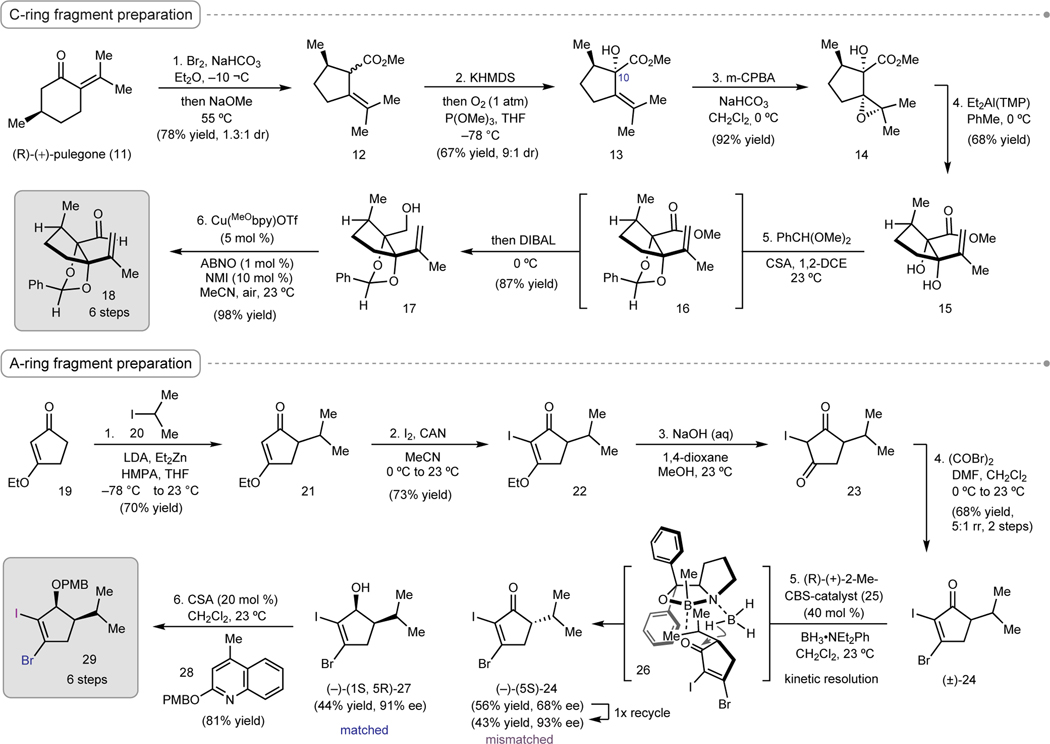
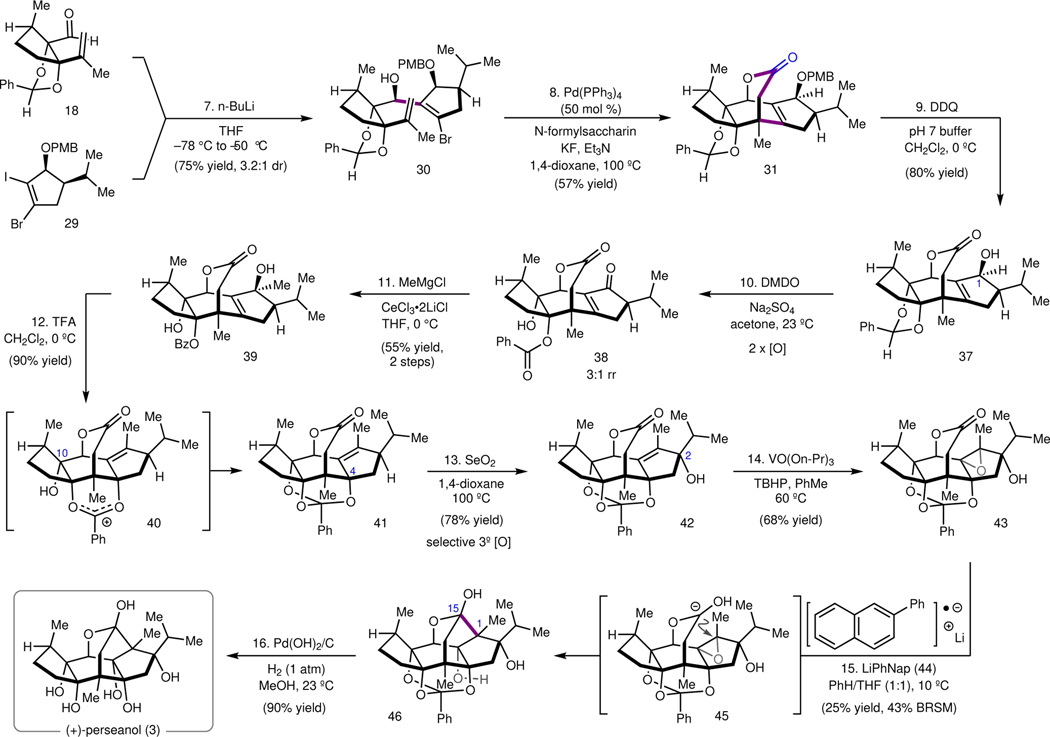
(+)-Perseanol is an isoryanodane diterpene that is isolated from the tropical shrub Persea indica1 and has potent antifeedant and insecticidal properties. It is structurally related to (+)-ryanodine, which is a high-affinity ligand for and modulator of ryanodine receptors-ligand-gated ion channels that are critical for intracellular Ca2+ signalling in most multicellular organisms2. Ryanodine itself modulates ryanodine-receptor-dependent Ca2+ release in many organisms, including mammals; however, preliminary data indicate that ryanodane and isoryanodane congeners that lack the pyrrole-2-carboxylate ester-such as perseanol-may have selective activity in insects3. Here we report a chemical synthesis of (+)-perseanol, which proceeds in 16 steps from commercially available (R)-pulegone. The synthesis involves a two-step annulation process that rapidly assembles the tetracyclic core from readily accessible cyclopentyl building blocks. This work demonstrates how convergent fragment coupling, when combined with strategic oxidation tactics, can enable the concise synthesis of complex and highly oxidized diterpene natural products.
Conflict of interest statement
The authors declare no competing interests.
Figures
References
-
- Gonzalez-Coloma A; Terrero D; Perales A; Escoubas P; Fraga BM Insect antifeedant ryanodane diterpenes from Persea indica. J. Agric. Food. Chem 1996, 44, 296–300.
-
- Sutko JL; Airey JA; Welch W; Ruest L. The pharmacology of ryanodine and related compounds. Pharmacol. Rev 1997, 49, 53–98. - PubMed
-
- Gonzalez-Coloma A; Reina M; Gutierrez C; Fraga BM Natural insecticides: structure diversity, effects and structure-activity relationships. A case study. In Studies in Natural Products Chemistry, 2002; Vol. 26, pp 849–879.
-
- United States Environmental Protection Agency R.E.D. Facts Ryanodine. https://archive.epa.gov/pesticides/reregistration/web/pdf/2595fact.pdf (accessed Oct 2018).
-
- Lahm GP et al. RynaxypyrTM: a new anthranilic diamide insecticide acting at the Ryanodine receptor In Pesticide Chemistry: Crop Protection, Public Health, Environmental Safety, Ohkawa H; Miyagawa H; Lee PW, Eds. Wiley-VCH: Weinheim, 2007; pp 111–120.
Publication types
MeSH terms
Substances
Grants and funding
LinkOut - more resources
Full Text Sources
Miscellaneous
