


Body composition, dual-energy X-ray absorptiometry and obesity: the paradigm of fat (re)distribution
- PMID: 31555464
- PMCID: PMC6750624
- DOI: 10.1259/bjrcr.20170078
Body composition, dual-energy X-ray absorptiometry and obesity: the paradigm of fat (re)distribution
Abstract
Objective: The amount of lean and fat tissues in different body compartments is likely to drive the cardiovascular risk. The longitudinal effects of changes of lean and fat mass, particularly following weight loss programs, cannot be reliably identified by the sole measurement of anthropometry. We discuss this problem on the basis of data collected in obese females with the use of dual-energy X-ray absorptiometry (DXA), anthropometry and laboratory.
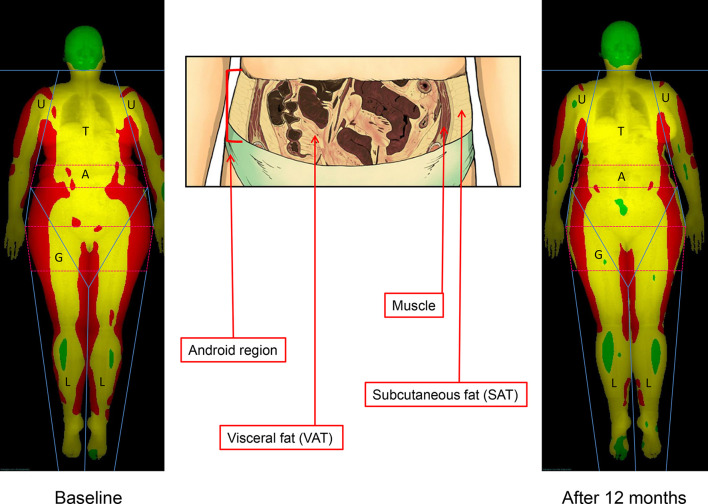
Methods: We present longitudinal data in six obese females (three pairs-weight stable, weight loss, weight increase) assigned to a medical treatment. All patients underwent whole-body scan (Lunar iDXA, GE Healthcare, WI) and laboratory analysis (blood fasting glucose, total low-density lipoprotein and high-density lipoprotein cholesterol, triglycerides) before treatment and after 12 months. Fat mass and non-bone lean mass were assessed at whole-body and regional levels. Android visceral adipose tissue was estimated by a recently validated software.
Results: The most common anthropometric measures (body mass index, waist circumference) were totally ineffective in documenting the changes in body composition in 12 month follow-up, whereas DXA could detect regional changes, which were paralleled in part by changes in biochemical indices.
Conclusion: Serial DXA measurements could provide a comprehensive assessment of body compartments, independent of changes in classic anthropometry (body mass index and waist circumference), identifying a significant redistribution of lean and fat mass and providing clues to explain changes in cardiovascular risk profile.
Figures
References
-
- World Health Organization (2000) Preventing and managing the global epidemic: Report of a WHO consultation. WHO Technical Report Series, World Health Organization, Geneva. Available from: http://www.who.int/nutrition/publications/obesity/WHO_TRS_894/en/. - PubMed
-
- Raman J, Smith E, Hay P. The clinical obesity maintenance model: an integration of psychological constructs including mood, emotional regulation, disordered overeating, habitual cluster behaviours, health literacy and cognitive function. Journal of Obesity 2013; 2013: 1: 240128–9. doi: 10.1155/2013/240128 - DOI - PMC - PubMed
LinkOut - more resources
Full Text Sources
