. 2019 Dec 2;129(12):5568-5583.
doi: 10.1172/JCI130600.

Allele-specific RNA interference prevents neuropathy in Charcot-Marie-Tooth disease type 2D mouse models

Affiliations

Allele-specific RNA interference prevents neuropathy in Charcot-Marie-Tooth disease type 2D mouse models

Kathryn H Morelli et al. J Clin Invest. .

Abstract

Gene therapy approaches are being deployed to treat recessive genetic disorders by restoring the expression of mutated genes. However, the feasibility of these approaches for dominantly inherited diseases - where treatment may require reduction in the expression of a toxic mutant protein resulting from a gain-of-function allele - is unclear. Here we show the efficacy of allele-specific RNAi as a potential therapy for Charcot-Marie-Tooth disease type 2D (CMT2D), caused by dominant mutations in glycyl-tRNA synthetase (GARS). A de novo mutation in GARS was identified in a patient with a severe peripheral neuropathy, and a mouse model precisely recreating the mutation was produced. These mice developed a neuropathy by 3-4 weeks of age, validating the pathogenicity of the mutation. RNAi sequences targeting mutant GARS mRNA, but not wild-type, were optimized and then packaged into AAV9 for in vivo delivery. This almost completely prevented the neuropathy in mice treated at birth. Delaying treatment until after disease onset showed modest benefit, though this effect decreased the longer treatment was delayed. These outcomes were reproduced in a second mouse model of CMT2D using a vector specifically targeting that allele. The effects were dose dependent, and persisted for at least 1 year. Our findings demonstrate the feasibility of AAV9-mediated allele-specific knockdown and provide proof of concept for gene therapy approaches for dominant neuromuscular diseases.

Keywords: Gene therapy; Genetic diseases; Genetics; Neuromuscular disease; Neuroscience.


Conflict of interest statement

Conflict of interest: The authors have declared that no conflict of interest exists.

Figures

Figure 1
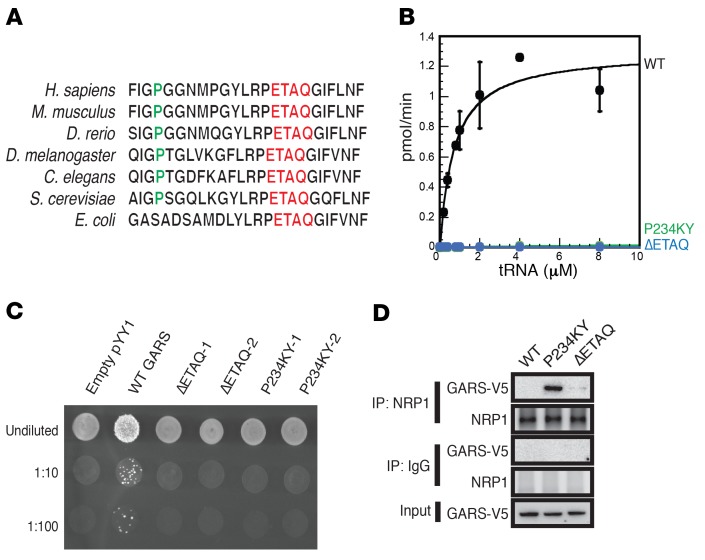
Figure 1. In vitro characterization of ΔETAQ mutation.
(A) The position and evolutionary conservation of the ΔETAQ (red) and P234KY (green) GARS mutations. (B) Initial aminoacylation rates (pmol/min) of WT (black), P234KY (green), and ΔETAQ (blue) GARS were plotted against tRNA concentrations and fit to the Michaelis-Menten equation. (C) Representative cultures of yeast strains lacking GRS1 to test for growth in the presence of each mutation (ΔETAQ or P234KY) modeled in the human GARS open reading frame. (D) WT, P234KY, or ΔETAQ GARS was expressed (with a V5 tag) and tested by immunoprecipitation with an anti-NRP1 antibody to detect aberrant interactions. Western blots were performed with anti-NRP1 and anti-V5 antibodies. Immunoprecipitation (IP), negative control (IgG), and input experiments are indicated.
Figure 2
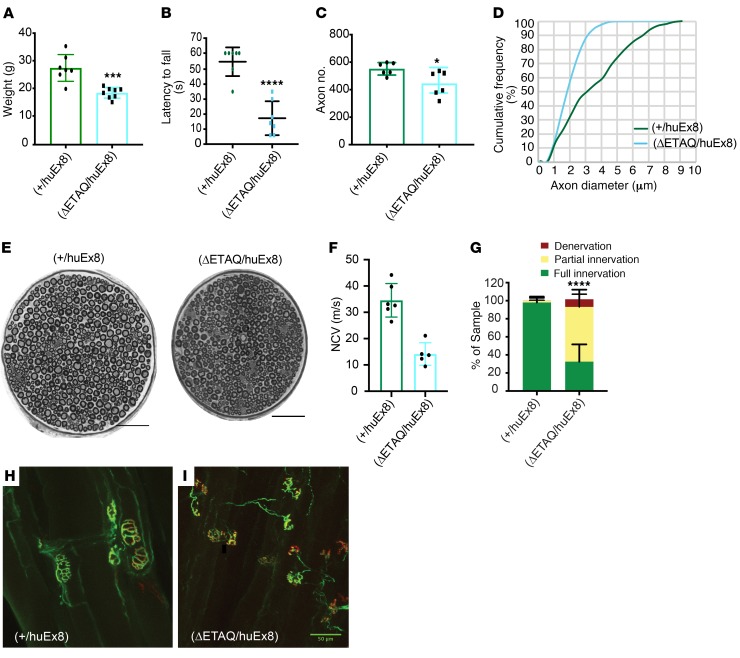
Figure 2. In vivo characterization of the ΔETAQ GARS variant.
(A) GarsΔETAQ/huEx8 mice and littermate controls were weighed at 12 weeks. GarsΔETAQ/huEx8 mice were significantly lighter, weighing 19 ± 1.9 g (P = 0.0006, n = 8), compared with GarshuEx8/+ controls, which weighed 27.4 ± 4.84 g (n = 7). (B) Gross motor performance in GarsΔETAQ/huEx8 mice was quantified using a wire hang test. While GarshuEx8/+ mice averaged 55 ± 9.57 seconds before letting go, GarsΔETAQ/huEx8 mice (n = 8) fell after only 17.3 ± 11.3 seconds. (C) Myelinated axon number in the motor branch of the femoral nerve was reduced by 21% from 551 ± 45 axons in littermate controls to 438 ± 92 axons in GarsΔETAQ/huEx8 (n = 6 mice per genotype). (D) Axon diameters were reduced, as shown in a cumulative histogram (P < 0.0001, Kolmogorov-Smirnov test, average diameter 1.6 ± 0.8 μm, n = 6), in comparison with Gars+/huEx8 littermates (3.3 ± 2.198 μm, n = 6). (E) Representative images of femoral motor nerve cross sections. (F) Nerve conduction velocity (NCV) was reduced from 35 ± 6.29 m/s in littermate controls to 13.5 ± 4.1 m/s in GarsΔETAQ/huEx8 mice (P = 0.0002, n = 6 GarsΔETAQ/huEx8, n = 7 GarshuEx8/+). (G) Neuromuscular junctions (NMJs) from the plantaris muscle showed partial innervation and denervation, scored based on the overlap between pre- and postsynaptic staining. (H and I) Representative images of NMJ morphology and innervation are shown. Differences in body weight, grip strength, conduction, and axon number between genotypes were statistically evaluated using a 2-way Student’s t test; axon diameter was evaluated by a Kolmogorov-Smirnov test. Significant difference in overall percentage NMJ innervation was determined by 2-way ANOVA with Tukey’s honestly significant difference (HSD) post hoc comparisons. For all analyses, *P < 0.05, ***P < 0.001, ****P < 0.0001 represent post hoc significance between genotypes. Values are mean ± SD. Scale bars: 100 μm (E); 50 μm (H, I).
Figure 3
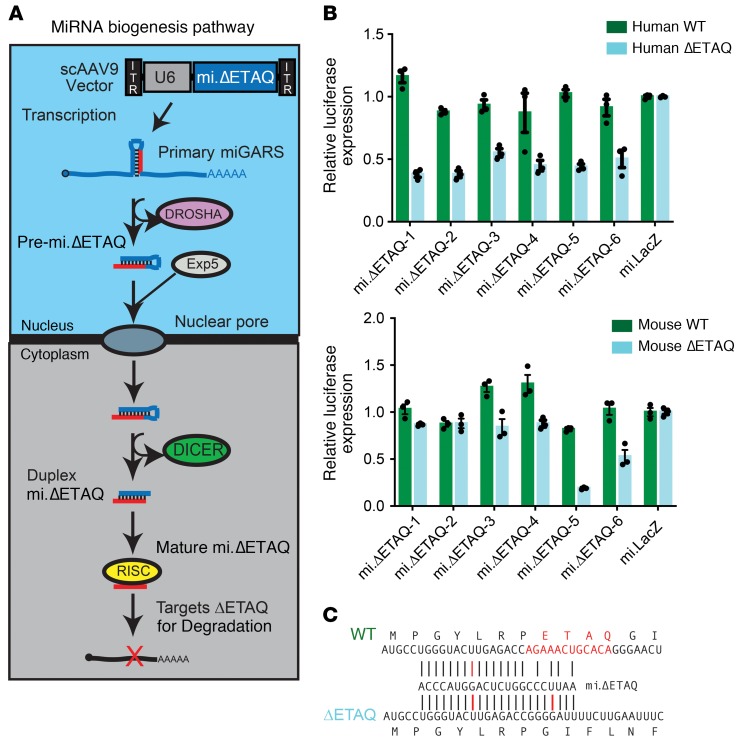
Figure 3. Generation of ΔETAQ-targeting miRNA shuttles.
(A) Therapeutic miGARS miRNAs utilize naturally occurring RNAi biogenesis and gene silencing pathways in targeting cells. Each miGARS or control sequence was cloned as a DNA template downstream of a U6 promoter and then delivered to cells via plasmid transfection (in vitro) or within scAAV9 particles in vivo (depicted here). Once in the target cell nucleus, primary miRNA constructs are transcribed and then processed by the RNAses DROSHA and DICER and the nuclear export factor exportin-5 (Exp5). The mature antisense strand (red line) incorporates into the RNA-induced silencing complex (RISC) to elicit sequence-specific degradation of the mutant Gars mRNA. (B) MiRNAs were tested in vitro by cotransfection of HEK293 cells with U6-miGARS, or control, plasmid miRNA and a dual-luciferase reporter plasmid containing 1 of 4 target genes cloned into the 3′-UTR of Renilla luciferase: WT human GARS, human ΔETAQ GARS, WT mouse Gars, or the mouse Gars gene containing the same ETAQ deletion. Target gene silencing was then determined by measurement of the ratio of Renilla to firefly luciferase. The values are reported as mean ratios ± SEM. (C) The sequence of the guide strand of the lead mi.ΔETAQ and its complementarity to both the WT and ΔETAQ GARS gene. The 4–amino acid deletion is shown in red. Base pairing between the miRNA and target genes is shown with vertical lines, with red lines indicating wobble G-U bonds present in RNA duplexes.
Figure 4
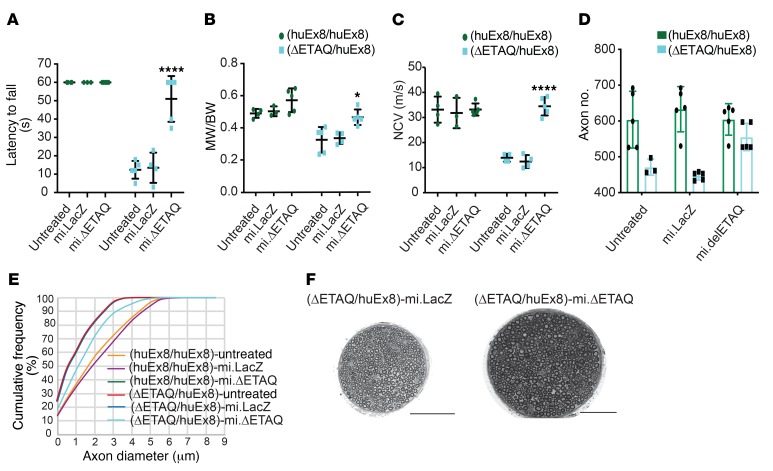
Figure 4. scAAV9.mi.ΔETAQ treatment prevents the onset of neuropathy in ΔETAQ mice.
(AC) Neonatal scAAV9.mi.ΔETAQ treatment significantly prevented deficits in gross motor performance quantified by the wire hang test (P = 0.0001) as well as reductions in MW/BW ratios (P = 0.0315) and NCVs (<0.0001), in comparison with untreated or vehicle-treated GarsΔETAQ/huEx8 mice. (DF) Quantification of axon number and axon size indicated that scAAV9.mi.ΔETAQ could partially prevent axon loss (P = 0.0272) and reductions in axon diameter (P ≤ 0.0001) in comparison with scAAV9.mi.LacZ-treated ΔETAQ mice, as shown in cross sections of the motor branch of the femoral nerve. Axon diameter was analyzed using a Kolmogorov-Smirnov normality test, while all other outcome measures were analyzed using a 2-way ANOVA with Tukey’s HSD post hoc comparisons. *P < 0.05, ****P < 0.0001 represent post hoc significance between scAAV9.mi.ΔETAQ- and scAAV9.mi.LacZ-treated ΔETAQ mice. Values are mean ± SD. Scale bars: 100 μm. Untreated GarshuEx8/huEx8, n = 4; mi.LacZ-treated GarshuEx8/huEx8, n = 3; scAAV9.mi.ΔETAQ-treated GarshuEx8/huEx8, n = 5; mi.LacZ-treated GarsΔETAQ/huEx8, n = 5; and scAAV9.mi.ΔETAQ-treated GarsΔETAQ/huEx8, n = 5.
Figure 5
Figure 5. Post-onset therapeutic effects of scAAV9.mi.ΔETAQ.
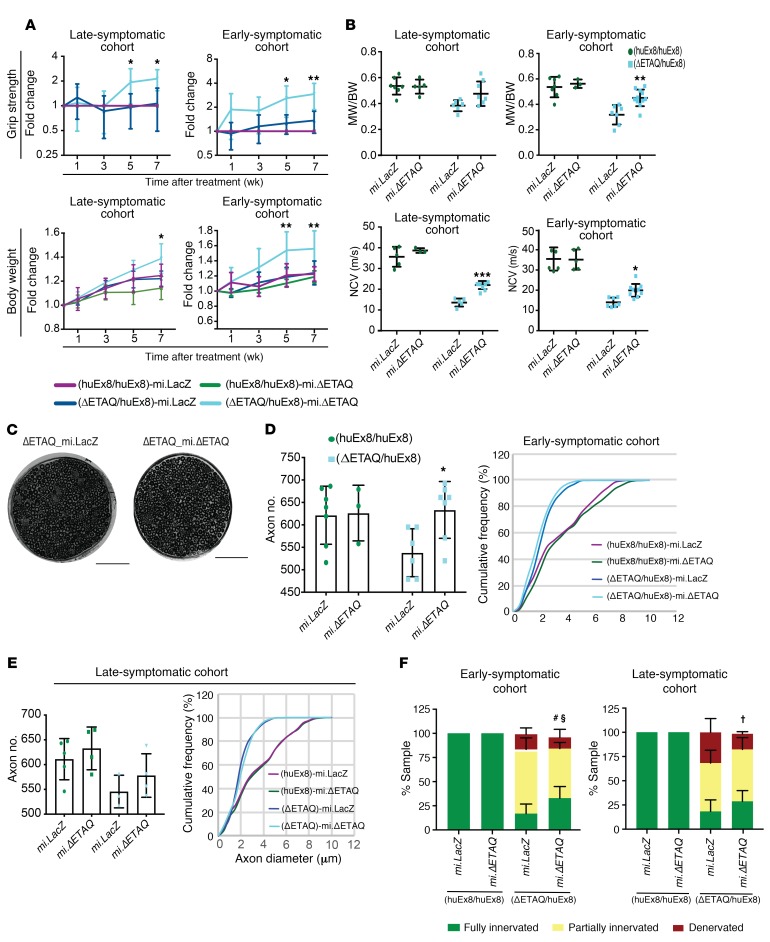
(A) Reduction in mutant Gars expression improved grip strength and increased body weight in early- and late-symptomatic GarsΔETAQ/huEx8 mice. Mi.ΔETAQ-treated early- and late-symptomatic GarsΔETAQ/huEx8 mice exhibited enhanced grip strength and significant increases in body weight starting at approximately 5 weeks after treatment. When evaluated at 7 weeks after treatment for signs of neuropathy, these data correlate with trending increases in MW/BW ratios and significant improvements in NCV in mi.ΔETAQ-treated late-symptomatic GarsΔETAQ/huEx8 mice. (BD) Early-symptomatic GarsΔETAQ/huEx8 mice treated with mi.ΔETAQ displayed significantly higher MW/BW ratios and faster NCVs (B), most likely resulting from the greater number of motor axons observed in cross sections of the motor branch of the femoral nerve, although improvement in axon diameter was not observed (C and D). (E) Prevention of axon loss was not observed in mi.ΔETAQ-treated late-symptomatic GarsΔETAQ/huEx8 mice. (F) Both early- and late- symptomatic overall displayed significant increases in NMJ innervation. Data were analyzed using a 1-way ANOVA followed by Tukey’s HSD post hoc comparisons. Significant changes in axon diameter (E) were determined with a Kolmogorov-Smirnov test. *P < 0.05, **P < 0.01, ***P < 0.001 represent post hoc significance between mi.LacZ-treated and scAAV9.mi.ΔETAQ-treated GarsΔETAQ/huEx8 mice. #Significant difference in fully innervated NMJs; §significant difference in partially innervated NMJs; significant difference in denervated NMJs. Late-symptomatic cohort: mi.LacZ-treated GarshuEx8/huEx8, n = 5–7; scAAV9.mi.ΔETAQ-treated GarshuEx8/huEx8, n = 3–5; mi.LacZ-treated GarsΔETAQ/huEx8, n = 6; and scAAV9.mi.ΔETAQ-treated GarsΔETAQ/huEx8, n = 7. Early-symptomatic cohort: GarshuEx8/huEx8, n = 6–7; scAAV9.mi.ΔETAQ-treated GarshuEx8/huEx8, n = 3–5; mi.LacZ-treated GarsΔETAQ/huEx8, n = 7; and scAAV9.mi.ΔETAQ-treated GarsΔETAQ/huEx8, n = 9–11. Values are mean ± SD. Scale bars: 100 μm.
Figure 6
Figure 6. Reduction of mutant Gars by RNAi prevents neuropathy in GarsP278KY/+ mice.
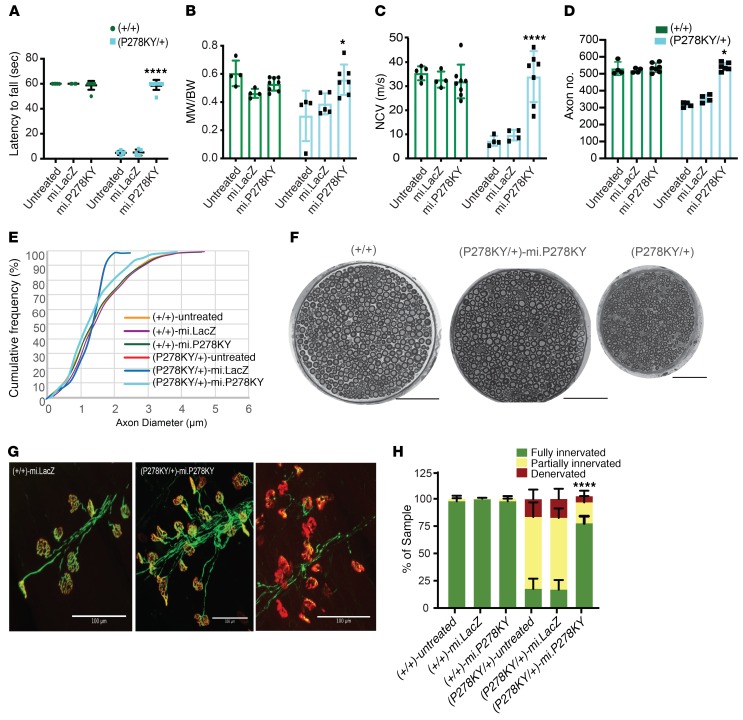
(A and B) Neonatal scAAV9.mi.P278KY treatment prevented deficits in gross motor performance quantified at 4 weeks of age by the wire hang test (P = 0.0001) (A) and reductions in MW/BW ratios (P = 0.0463) (B) in comparison with untreated and vehicle-treated P278KY mice. (C) NCVs were also significantly improved (P ≤ 0.0001) in treated P278KY mice. (D) Quantification of axon number within cross sections of the motor branch of the femoral nerve showed that while axon number was reduced by 17% in control-treated P278KY mice, axon counts in scAAV9.mi.P278KY-treated P278KY mice (589 ± 15 axons) were similar to those in untreated control littermates (600 ± 11 axons). (E) scAAV9.mi.P278KY treatment also restored the presence of large-diameter axons; average axon diameter was 1.98 ± 4.47 μm in control-treated P278KY mice, 2.71 ± 3.71 μm in scAAV9.mi.P278KY-treated P278KY mice, and 3.84 ± 3.74 μm in untreated Gars+/+ mice. (F) Representative images of cross sections of the motor branch of the femoral nerve isolated from untreated Gars+/+, GarsP278KY/+, and scAAV9.mi.P278KY-treated GarsP278KY/+ mice. (G) Representative images of NMJ morphology isolated from plantaris muscle. (H) While over 70% of the NMJs were partially or completely denervated in control-treated GarsP278KY/+ mice by 4 weeks of age, less than 30% of NMJs showed any degree of denervation in scAAV9.mi.P278KY-treated GarsP278KY/+ mice. Numbers for all outcome measures: untreated Gars+/+, n = 5; control-treated Gars+/+, n = 4; scAAV9.mi.P278KY-treated Gars+/+, n = 8; untreated GarsP278KY/+, n = 6; control-treated GarsP278KY/+, n = 5; scAAV9.mi.P278KY-treated GarsP278KY/+, n = 7. Significance in AD and H was determined by 2-way ANOVA with Tukey’s HSD post hoc comparisons. Significant changes in axon diameter (E) were determined with a Kolmogorov-Smirnov test. *P < 0.05, ****P < 0.0001 represent post hoc significance between mi.LacZ-treated and scAAV9.mi.P278KY-treated GarsP278KY/+ mice. Values are mean ± SD. All scale bars: 100 μm.
Figure 7
Figure 7. Long-term therapeutic effects of neonatal scAAV9.mi.P278KY treatment.
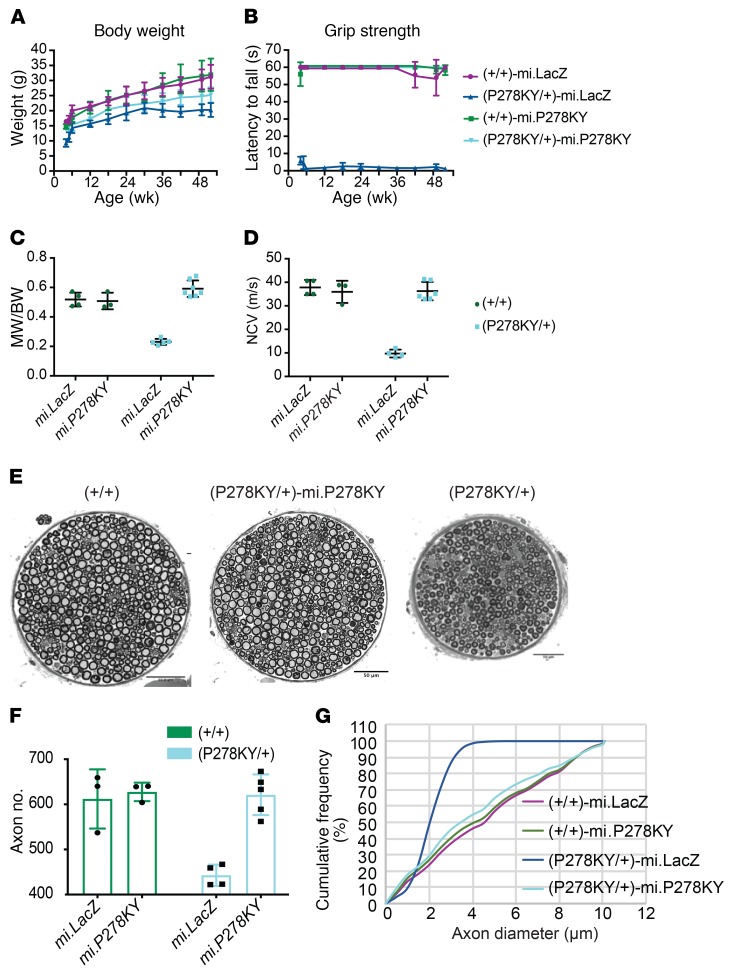
(A and B) scAAV9.mi.P278KY-treated P278KY mice displayed increases in body weight (A) starting at 24 weeks after treatment and in grip strength (B) throughout the course of 1 year compared with vehicle control–treated P278KY mice. (C and D) When evaluated for primary signs of neuropathy at 1 year after treatment, treated P278KY mice exhibited greater MW/BW ratios (C) and faster NCVs (D). (EG) scAAV9.mi.P278KY treatment could preserve all populations of axons in the motor branch of the femoral nerve at 1 year after treatment. Significance in A and B was determined by 1-way ANOVA with Tukey’s HSD post hoc comparisons. Significance in C, D, and F was determined by 2-way ANOVA with Tukey’s HSD post hoc comparisons. Significant changes in axon diameter (G) were determined with a Kolmogorov-Smirnov test. Mi.LacZ-treated Gars+/+, n = 3; scAAV9.mi.P278KY-treated Gars+/+, n = 3; mi.LacZ-treated GarsP278KY/+, n = 5; and scAAV9.mi.P278YK-treated GarsP278KY/+, n = 7. Values are mean ± SD.

References

    1. Capdeville R, Buchdunger E, Zimmermann J, Matter A. Glivec (STI571, imatinib), a rationally developed, targeted anticancer drug. Nat Rev Drug Discov. 2002;1(7):493–502. doi: 10.1038/nrd839. - DOI - PubMed
    1. Reck M, et al. Pembrolizumab versus chemotherapy for PD-L1-positive non-small-cell lung cancer. N Engl J Med. 2016;375(19):1823–1833. doi: 10.1056/NEJMoa1606774. - DOI - PubMed
    1. Chong JX, et al. The genetic basis of mendelian phenotypes: discoveries, challenges, and opportunities. Am J Hum Genet. 2015;97(2):199–215. doi: 10.1016/j.ajhg.2015.06.009. - DOI - PMC - PubMed
    1. Robinson PN, et al. Improved exome prioritization of disease genes through cross-species phenotype comparison. Genome Res. 2014;24(2):340–348. doi: 10.1101/gr.160325.113. - DOI - PMC - PubMed
    1. Naldini L. Gene therapy returns to centre stage. Nature. 2015;526(7573):351–360. doi: 10.1038/nature15818. - DOI - PubMed

Publication types

Substances

Supplementary concepts