


Hepatic senescence, the good and the bad
- PMID: 31558857
- PMCID: PMC6747293
- DOI: 10.3748/wjg.v25.i34.5069
Hepatic senescence, the good and the bad
Abstract
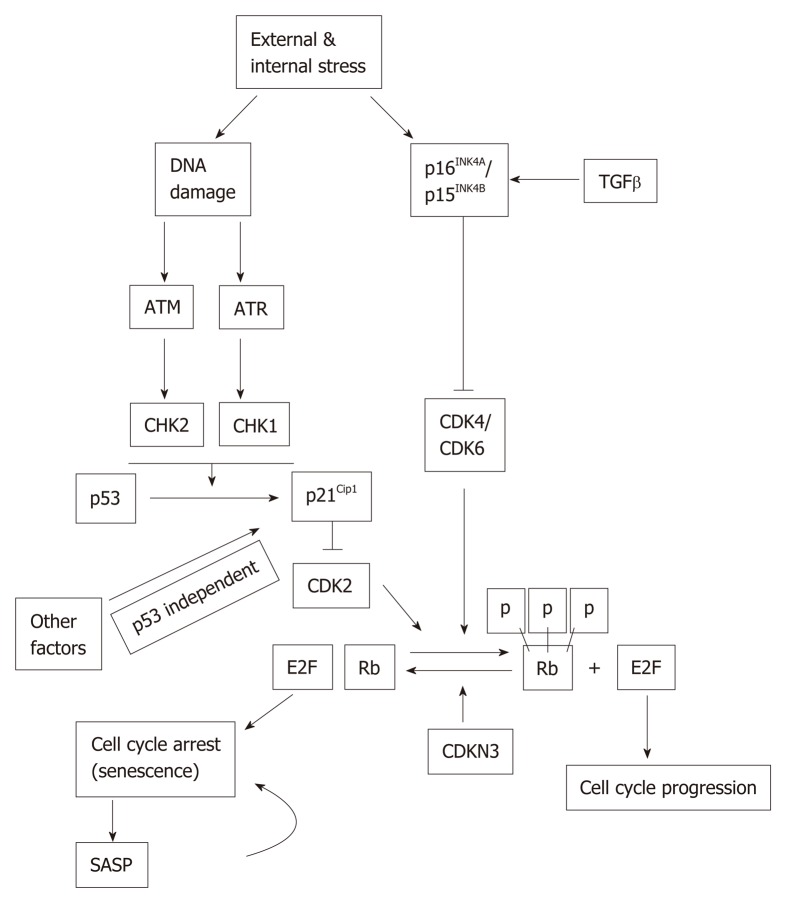
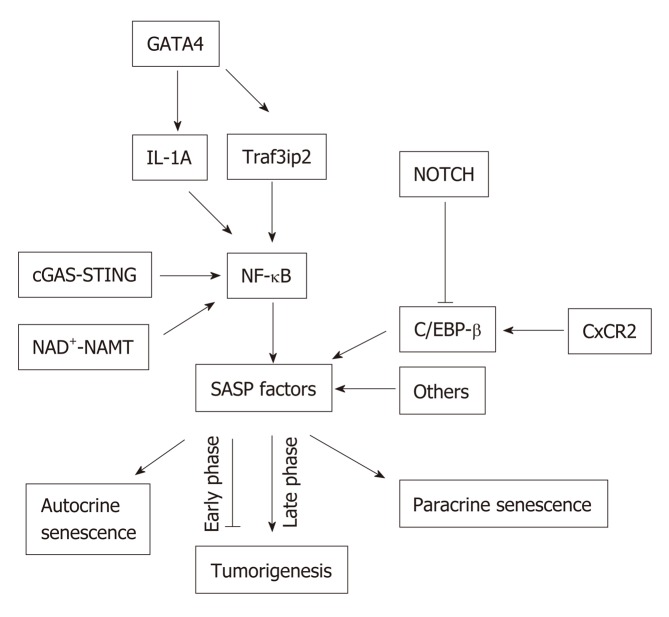
Gradual alterations of cell's physiology and functions due to age or exposure to various stresses lead to the conversion of normal cells to senescent cells. Once becoming senescent, the cell stops dividing permanently but remains metabolically active. Cellular senescence does not have a single marker but is characterized mainly by a combination of multiple markers, such as, morphological changes, expression of cell cycle inhibitors, senescence associated β-galactosidase activity, and changes in nuclear membrane. When cells in an organ become senescent, the entire organism can be affected. This may occur through the senescence-associated secretory phenotype (SASP). SASP may exert beneficial or harmful effects on the microenvironment of tissues. Research on senescence has become a very exciting field in cell biology since the link between age-related diseases, including cancer, and senescence has been established. The loss of regenerative and homeostatic capacity of the liver over the age is somehow connected to cellular senescence. The major contributors of senescence properties in the liver are hepatocytes and cholangiocytes. Senescent cells in the liver have been implicated in the etiology of chronic liver diseases including cirrhosis and hepatocellular carcinoma and in the interference of liver regeneration. This review summarizes recently reported findings in the understanding of the molecular mechanisms of senescence and its relationship with liver diseases.
Keywords: Cell cycle arrest; Cholangiocyte; DNA damage; Hepatic stellate cell; Hepatocyte; Senescence; Senescence associated secretory phenotype.
Conflict of interest statement
Conflict-of-interest statement: The authors have declared that no conflict of interest exists.
Figures
References
-
- Hayflick L. The limited in vitro lifetime of human diploid cell strains. Exp Cell Res. 1965;37:614–636. - PubMed
Publication types
MeSH terms
Grants and funding
LinkOut - more resources
Full Text Sources
Medical
Research Materials
