Hereditary breast cancer: screening and risk reducing surgery
- PMID: 31559181
- PMCID: PMC6755941
- DOI: 10.21037/gs.2019.04.04
Hereditary breast cancer: screening and risk reducing surgery
Abstract
Background: The screening modalities for women at high risk for breast cancer has received an increasing role during the last years. The aim of this study was to evaluate the performance of our screening program comparing the diagnostic sensitivity of clinical breast examination, mammography, ultrasonography (US) and magnetic resonance imaging (MRI).
Methods: Clinical Breast examination, mammography, US and MRI for each patient with BRCA1 and BRCA2 mutation who underwent breast surgery in our Institution from October 2008 to April 2016 were retrospectively evaluated. The diagnostic accuracy for MRI and for the other surveillance tests in identifying early breast cancer were assessed.
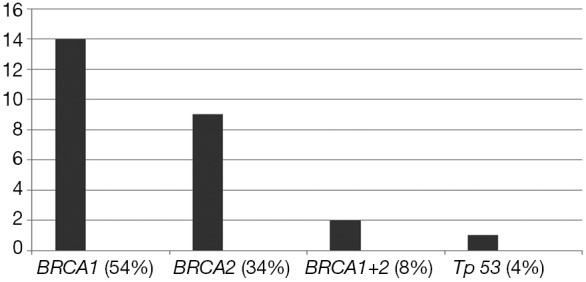
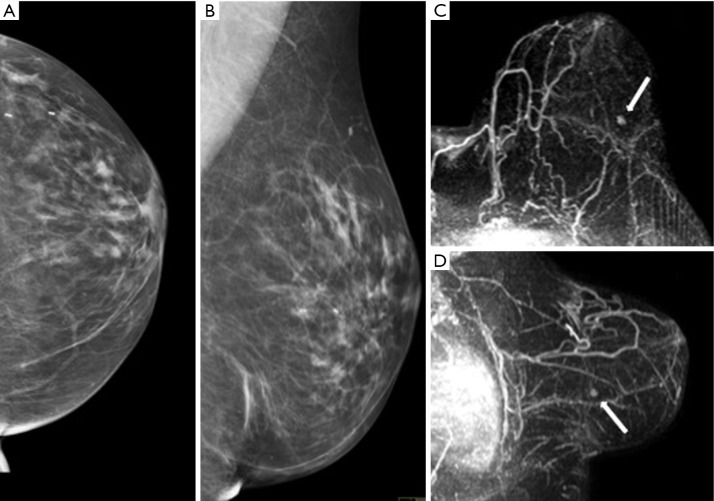
Results: Twenty-six female patients with genetic mutation underwent breast surgery. Twenty-two out of 26 (85%) developed cancer during the dedicated screening protocol whereas 4 women who underwent surgery did not have cancer. Imaging was able to detect cancer in all 22 patients (per patient sensibility of 100%), identifying all 35 neoplastic lesions (per lesion sensibility of 100%). The combination of Clinical Breast Examination, US and mammography aided the cancer diagnosis in 14 (64%) of patients with a sensitivity of 64% and specificity of 100%. MRI identified all the cancers, with sensibility and specificity of 100%. Moreover, in 8 (36%) of the 22 patients who developed breast cancers, the cancers were detected only by MRI, revealing a significant superiority respect to the other surveillance modalities (P<0.05).
Conclusions: MRI demonstrated to be the best imaging modality in detection of breast cancer even for lesion <1 cm. Prophylactic mastectomy is the most effective risk reduction strategy in women at high risk, contributing to the reduction of anxiety related to the condition of a carrier.
Keywords: Breast cancer; magnetic resonance imaging (MRI); mammography; screening; ultrasound.
Conflict of interest statement
Conflicts of Interest: The authors have no conflicts of interest to declare.
Figures
References
LinkOut - more resources
Full Text Sources
Miscellaneous