


Impact of Multidomain Lifestyle Intervention on Frailty Through the Lens of Deficit Accumulation in Adults with Type 2 Diabetes Mellitus
- PMID: 31559418
- PMCID: PMC7518562
- DOI: 10.1093/gerona/glz197
Impact of Multidomain Lifestyle Intervention on Frailty Through the Lens of Deficit Accumulation in Adults with Type 2 Diabetes Mellitus
Abstract
Background: Type 2 diabetes and obesity increase the accumulation of health deficits and may accelerate biological aging. Multidomain lifestyle interventions may mitigate against this.
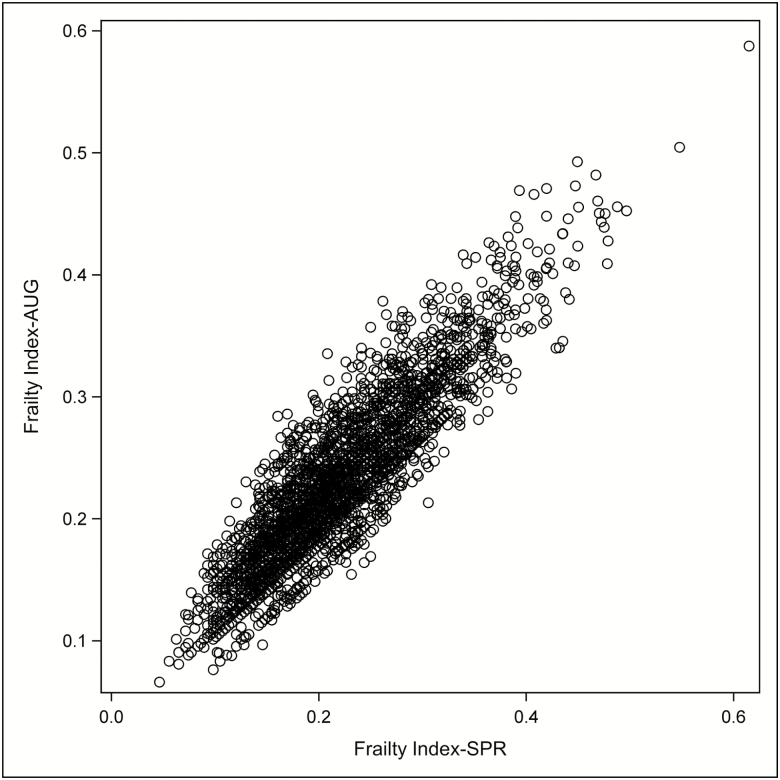
Methods: Within a large, randomized clinical trial of intensive lifestyle intervention including caloric restriction, increased physical activity, dietary counseling, and risk factor monitoring compared with diabetes support and education, we examined the accumulation of health deficits across 8 years. We used two complementary frailty indices (FIs) based on deficit accumulation, one modeled on work in the Systolic Blood Pressure Intervention Trial and the other including additional deficits related to obesity and type 2 diabetes mellitus. Differences between intervention groups and their consistency among subgroups were assessed with re-randomization tests.
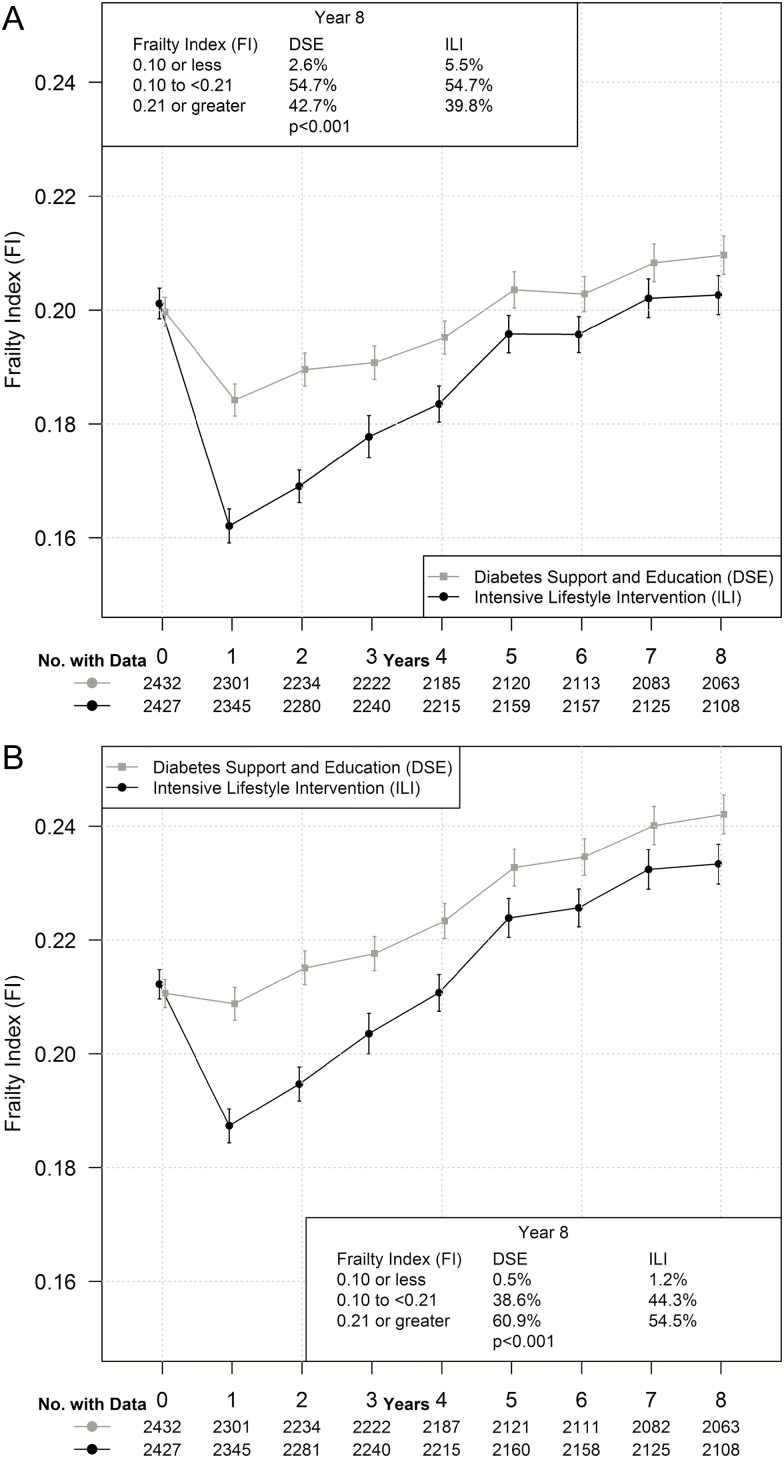
Results: Data from 4,859 adults (45-76 years at baseline, 59% female) were analyzed. Random assignment to intensive lifestyle intervention was associated with lower FI scores throughout follow-up as captured by areas under curves traced by longitudinal means (p ≤ .001), over which time mean (SE) differences between intervention groups averaged 5.8% (0.9%) and 5.4% (0.9%) for the two indices. At year 8, the percentage of participants classified as frail (FI > 0.21) was lower among intensive lifestyle intervention (39.8% and 54.5%) compared with diabetes support and education (42.7% and 60.9%) for both FIs (both p < .001). Intervention benefits were relatively greater for participants who were older, not obese, and without history of cardiovascular disease at baseline.
Conclusions: Eight years of multidomain lifestyle intervention create a buffer against the accumulation of age-related health deficits in overweight or obese adults with type 2 diabetes.ClinicalTrials.gov Identifier: NCT00017953.
Keywords: Multidomain lifestyle intervention; Aging; Diabetes mellitus; Obesity.
© The Author(s) 2019. Published by Oxford University Press on behalf of The Gerontological Society of America. All rights reserved. For permissions, please e-mail: journals.permissions@oup.com.
Figures
References
Publication types
MeSH terms
Associated data
Grants and funding
- UL1 RR024153/RR/NCRR NIH HHS/United States
- U01 DK057151/DK/NIDDK NIH HHS/United States
- P30 AG049638/AG/NIA NIH HHS/United States
- U01 DK057219/DK/NIDDK NIH HHS/United States
- U01 DK056992/DK/NIDDK NIH HHS/United States
- U01 DK057171/DK/NIDDK NIH HHS/United States
- M01 RR000056/RR/NCRR NIH HHS/United States
- U01 DK057182/DK/NIDDK NIH HHS/United States
- U01 DK057002/DK/NIDDK NIH HHS/United States
- M01 RR001346/RR/NCRR NIH HHS/United States
- U01 DK057131/DK/NIDDK NIH HHS/United States
- M01 RR000043/RR/NCRR NIH HHS/United States
- U01 DK057149/DK/NIDDK NIH HHS/United States
- U01 DK057136/DK/NIDDK NIH HHS/United States
- U01 DK057154/DK/NIDDK NIH HHS/United States
