


Systematic Literature Review on the Spread of Health-related Misinformation on Social Media
- PMID: 31561111
- PMCID: PMC7117034
- DOI: 10.1016/j.socscimed.2019.112552
Systematic Literature Review on the Spread of Health-related Misinformation on Social Media
Abstract
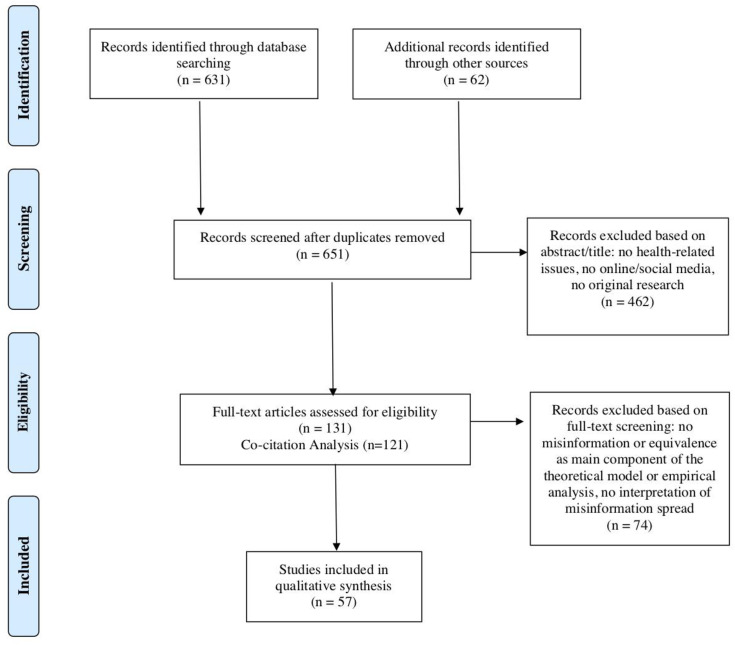
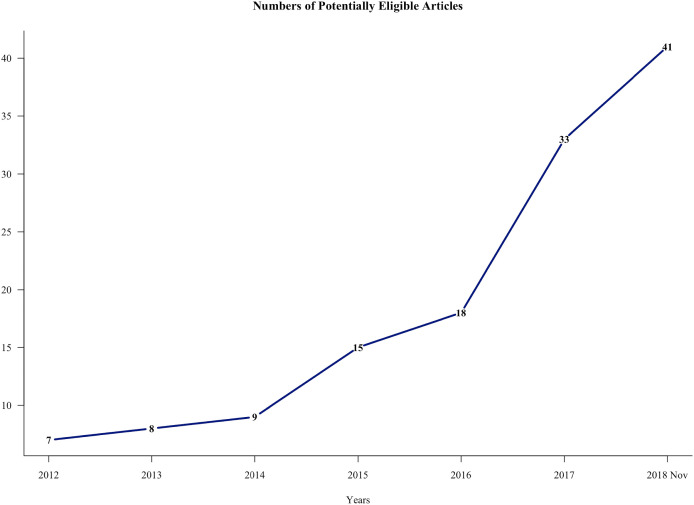
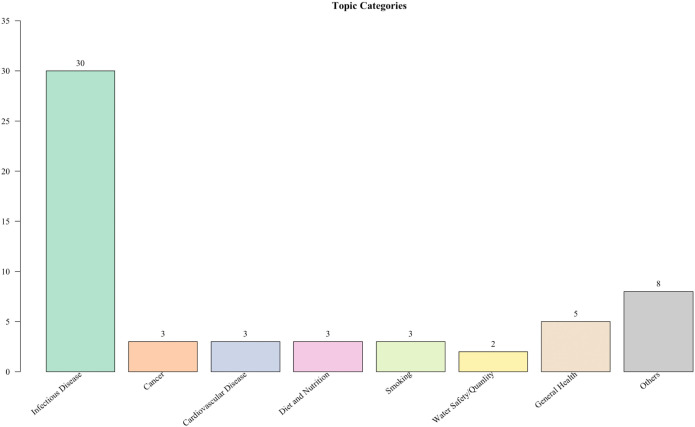
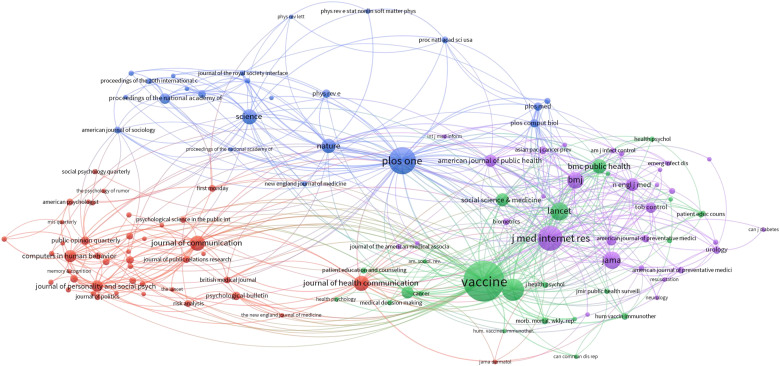
Contemporary commentators describe the current period as "an era of fake news" in which misinformation, generated intentionally or unintentionally, spreads rapidly. Although affecting all areas of life, it poses particular problems in the health arena, where it can delay or prevent effective care, in some cases threatening the lives of individuals. While examples of the rapid spread of misinformation date back to the earliest days of scientific medicine, the internet, by allowing instantaneous communication and powerful amplification has brought about a quantum change. In democracies where ideas compete in the marketplace for attention, accurate scientific information, which may be difficult to comprehend and even dull, is easily crowded out by sensationalized news. In order to uncover the current evidence and better understand the mechanism of misinformation spread, we report a systematic review of the nature and potential drivers of health-related misinformation. We searched PubMed, Cochrane, Web of Science, Scopus and Google databases to identify relevant methodological and empirical articles published between 2012 and 2018. A total of 57 articles were included for full-text analysis. Overall, we observe an increasing trend in published articles on health-related misinformation and the role of social media in its propagation. The most extensively studied topics involving misinformation relate to vaccination, Ebola and Zika Virus, although others, such as nutrition, cancer, fluoridation of water and smoking also featured. Studies adopted theoretical frameworks from psychology and network science, while co-citation analysis revealed potential for greater collaboration across fields. Most studies employed content analysis, social network analysis or experiments, drawing on disparate disciplinary paradigms. Future research should examine susceptibility of different sociodemographic groups to misinformation and understand the role of belief systems on the intention to spread misinformation. Further interdisciplinary research is also warranted to identify effective and tailored interventions to counter the spread of health-related misinformation online.
Keywords: Fake news; Health; Misinformation; Social media.
Copyright © 2019 The Authors. Published by Elsevier Ltd.. All rights reserved.
Figures
Comment in
-
Social media is a source of health-related misinformation.Evid Based Nurs. 2021 Apr;24(2):46. doi: 10.1136/ebnurs-2019-103222. Epub 2020 Feb 11. Evid Based Nurs. 2021. PMID: 32046968 No abstract available.
-
Going viral: doctors must tackle fake news in the covid-19 pandemic.BMJ. 2020 Apr 24;369:m1587. doi: 10.1136/bmj.m1587. BMJ. 2020. PMID: 32332066 No abstract available.
References
-
- Abbasi M.-A., Liu H. In: Social Computing, Behavioral-Cultural Modeling and Prediction. Greenberg A.M., Kennedy W.G., Bos N.D., editors. Springer Berlin Heidelberg; 2013. Measuring user credibility in social media; pp. 441–448.
Publication types
MeSH terms
Grants and funding
LinkOut - more resources
Full Text Sources
Medical
