


Self-reported Health Diagnoses and Demographic Correlates With Kratom Use: Results From an Online Survey
- PMID: 31567595
- PMCID: PMC7446542
- DOI: 10.1097/ADM.0000000000000570
Self-reported Health Diagnoses and Demographic Correlates With Kratom Use: Results From an Online Survey
Abstract
Objectives: To determine whether diagnosed pre-existing health conditions correlate with Kratom demographics and use patterns.
Methods: A cross-sectional, anonymous US national online survey was conducted among 8049 Kratom users in October, 2016 to obtain demographic, health, and Kratom use pattern information.
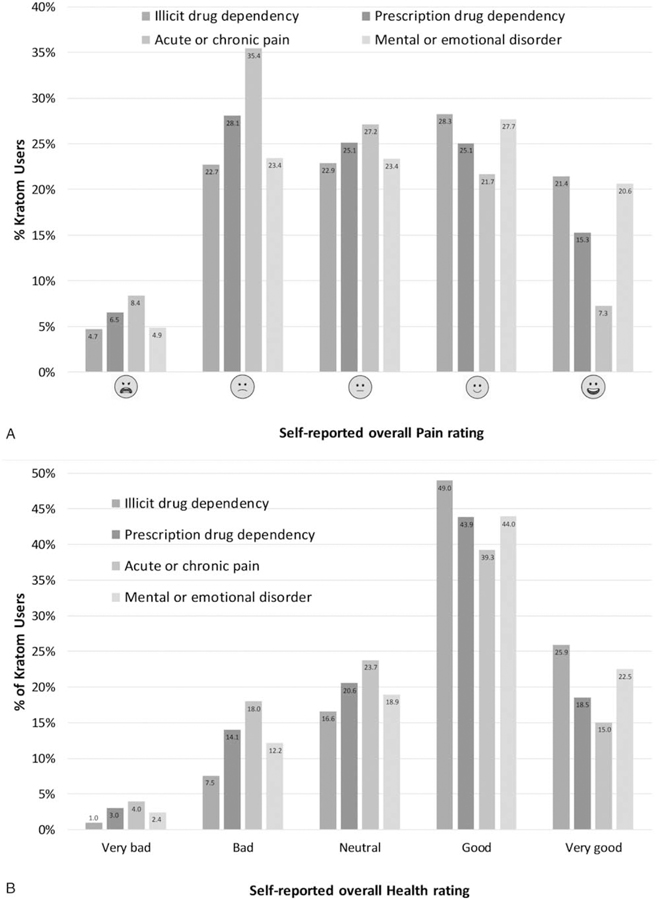
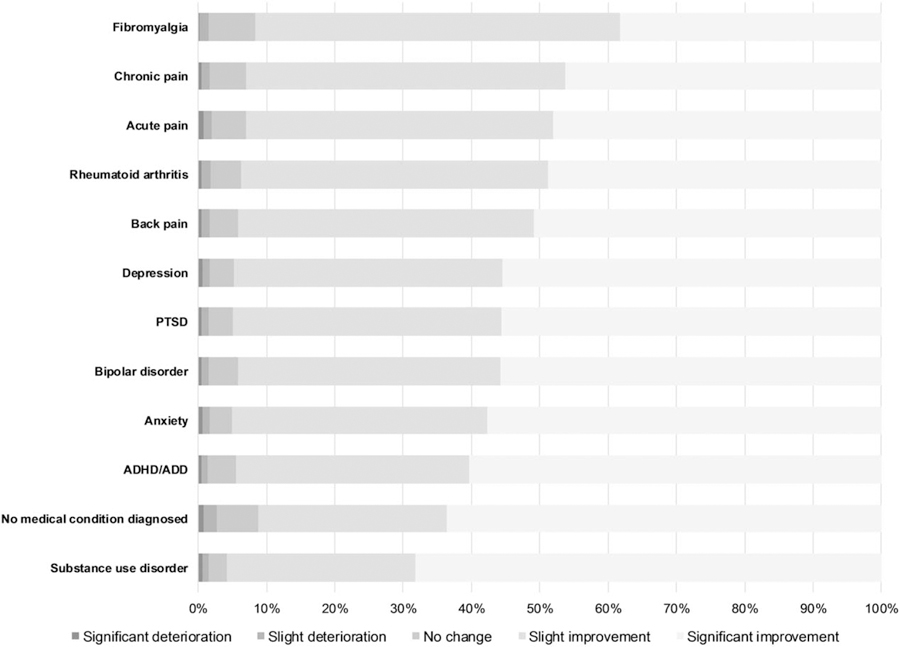
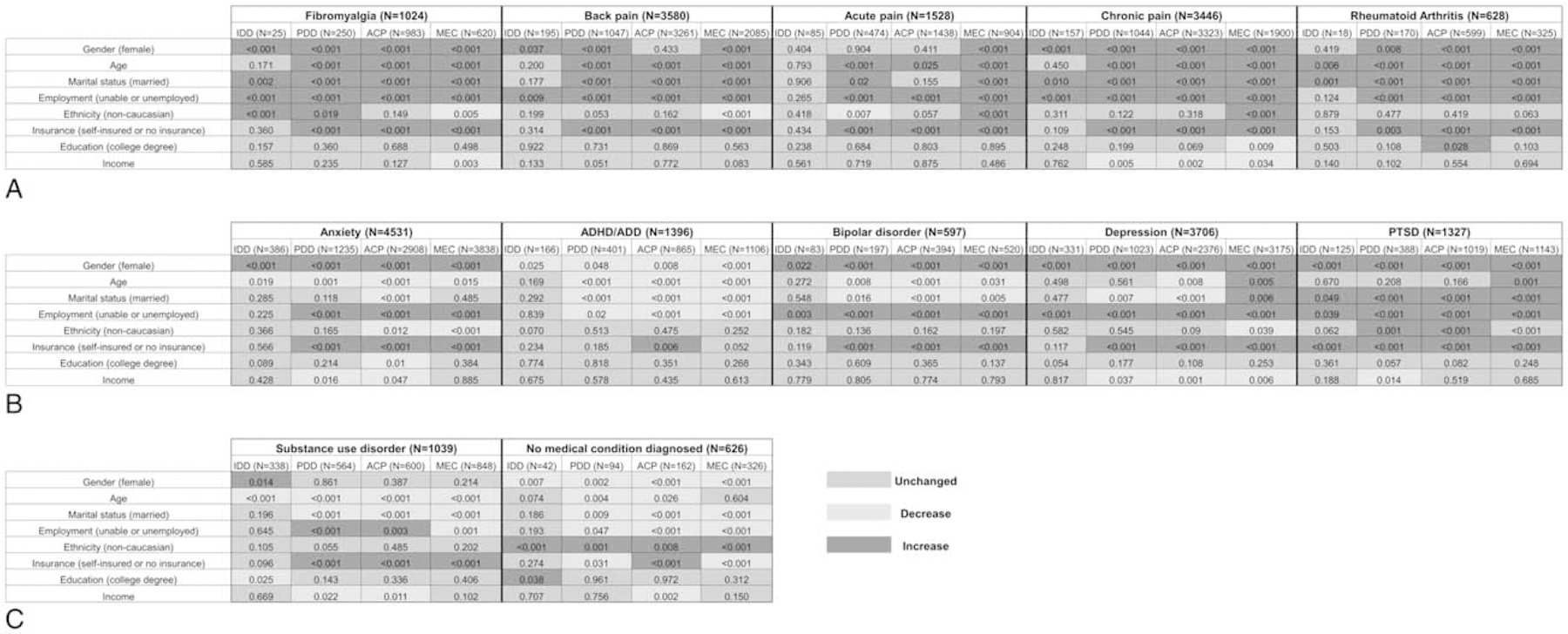
Results: People who use Kratom to mitigate illicit drug dependence self-reported less pain and better overall health than individuals who used Kratom for acute/chronic pain. Self-reported improvements in pre-existing mental health symptoms (attention deficit and hyperactivity disorder/attention deficit disorder, anxiety, bipolar disorder, post-traumatic stress disorder, and depression) attributed to Kratom use were greater than those related to somatic symptoms (back pain, rheumatoid arthritis, acute pain, chronic pain, fibromyalgia). Demographic variables, including female sex, older age, employment status, and insurance coverage correlated with increased likelihood of Kratom use.
Conclusions: Kratom use may serve as a self-treatment strategy for a diverse population of patients with pre-existing health diagnoses. Healthcare providers need to be engaging with patients to address safety concerns and potential limitations of its use in clinical practice for specific health conditions.
Conflict of interest statement
The authors state no conflict of interest.
Figures
References
-
- Ahmad K, Aziz Z. Mitragyna speciosa use in the northern states of Malaysia: a cross-sectional study. J Ethnopharmacol 2012;141:446–450. - PubMed
-
- Anwar M, Law R, Schier J. Notes from the field: Kratom (Mitragyna speciosa) exposures reported to poison centers: United States, 2010–2015. MMWR Morb Mortal Wkly Rep 2016;65:748–749. - PubMed
-
- Chakrabarty S, Zoorob R. Fibromyalgia. Am Fam Physician 2007;76:247–254. - PubMed
-
- Galbis-Reig D A case report of Kratom addiction and withdrawal. WMJ 2016;115:49–52 [quiz 53]. - PubMed
MeSH terms
Grants and funding
LinkOut - more resources
Full Text Sources
