


Area Deprivation as a Risk Factor for Methicillin-resistant Staphylococcus aureus Infection in Pediatric Cystic Fibrosis
- PMID: 31568067
- PMCID: PMC6802275
- DOI: 10.1097/INF.0000000000002419
Area Deprivation as a Risk Factor for Methicillin-resistant Staphylococcus aureus Infection in Pediatric Cystic Fibrosis
Abstract
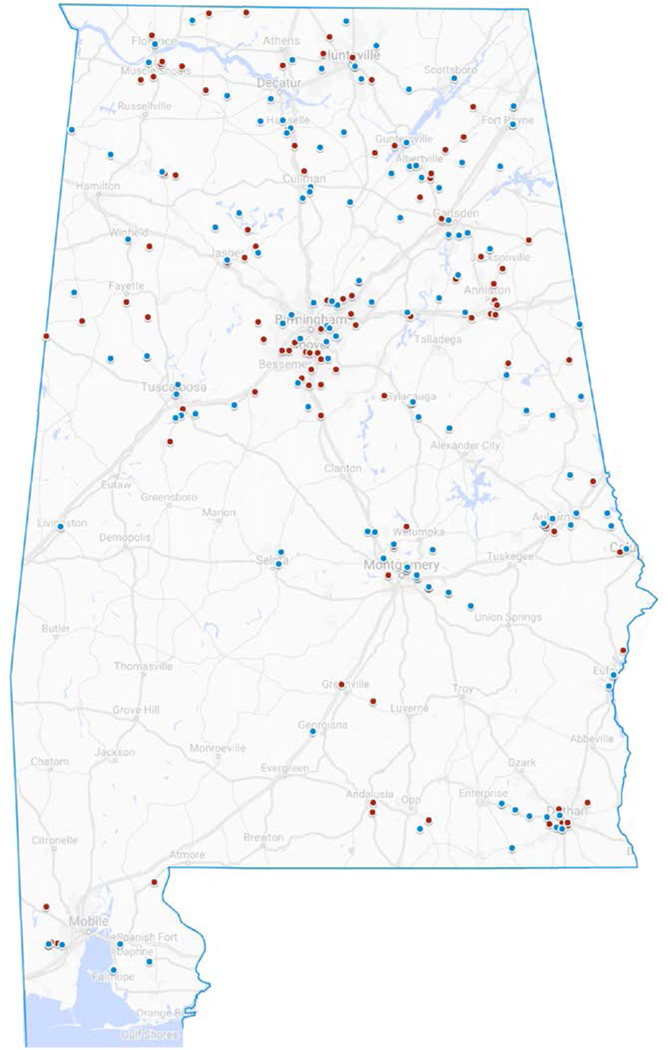
Background: In US cystic fibrosis (CF) patients, methicillin-resistant Staphylococcus aureus (MRSA) rates have tripled in the past 2 decades. Known clinical risk factors include exposure to a healthcare setting, Pseudomonas aeruginosa and CF-related diabetes. Area-level socio-environmental exposures have not been evaluated. We explored the association of area-level deprivation with MRSA prevalence in a pediatric CF Center in the Southeastern United States.
Methods: Patients' residential addresses were geocoded and linked to a composite Area Deprivation Index and Rural-Urban Commuting Area scores. The association of MRSA with Area Deprivation Index and Rural-Urban Commuting Area scores was evaluated using logistic regression with robust standard errors adjusted for sociodemographic covariates (age, sex, race, mother's and father's education and household income), clinical risk factors (P. aeruginosa, CF-related diabetes, hospitalizations and number of clinic visits) and clustering.
Results: The study included all pediatric patients (N = 231; mean age 12) at a single CF Center. MRSA was present in 44% of subjects. Higher area-level deprivation was correlated with rural residence, lack of parental college education and lower household income (P < 0.001 for each). In a multiple regression model fully adjusted for patient-level sociodemographic covariates, clinical risk factors and clustering, neighborhood deprivation was associated with more than 2-fold increase in the odds of having MRSA [OR 2.26 (1.14-4.45), P < 0.05].
Conclusions: Neighborhood deprivation is a risk factor for MRSA in pediatric CF, doubling the odds of infection. Community-level socioeconomic risk factors should be considered when developing prevention strategies and treatment plans for MRSA infection in pediatric patients with CF.
Conflict of interest statement
The authors have no conflicts of interest to disclose.
Figures
References
-
- Cystic Fibrosis Foundation Patient Registry, 2017 Annual Data Report. Bethesda, Maryland: Cystic Fibrosis Foundation; 2018.
-
- Flume PA, Mogayzel PJ Jr, Robinson KA, et al.; Clinical Practice Guidelines for Pulmonary Therapies Committee. Cystic fibrosis pulmonary guidelines: treatment of pulmonary exacerbations. Am J Respir Crit Care Med 2009;180:802–808. - PubMed
-
- Flume PA, O’Sullivan BP, Robinson KA, et al.; Cystic Fibrosis Foundation, Pulmonary Therapies Committee. Cystic fibrosis pulmonary guidelines: chronic medications for maintenance of lung health. Am J Respir Crit Care Med 2007;176:957–969. - PubMed
-
- Harik NS, Com G, Tang X, et al. Clinical characteristics and epidemiology of methicillin-resistant Staphylococcus aureus (MRSA) in children with cystic fibrosis from a center with a high MRSA prevalence. Am J Infect Control. 2016;44:409–415. - PubMed
-
- Ren CL, Morgan WJ, Konstan MW, et al.; Investigators and Coordinators of the Epidemiologic Study of Cystic Fibrosis. Presence of methicillin resistant Staphylococcus aureus in respiratory cultures from cystic fibrosis patients is associated with lower lung function. Pediatr Pulmonol 2007;42:513–518. - PubMed
Publication types
MeSH terms
Grants and funding
LinkOut - more resources
Full Text Sources
Medical
Miscellaneous
