Review
. 2019 Sep 29;17(10):559.
doi: 10.3390/md17100559.

A Comprehensive Review of Bioactive Peptides from Marine Fungi and Their Biological Significance

Affiliations
Review

A Comprehensive Review of Bioactive Peptides from Marine Fungi and Their Biological Significance

Fadia S Youssef et al. Mar Drugs. .

Abstract

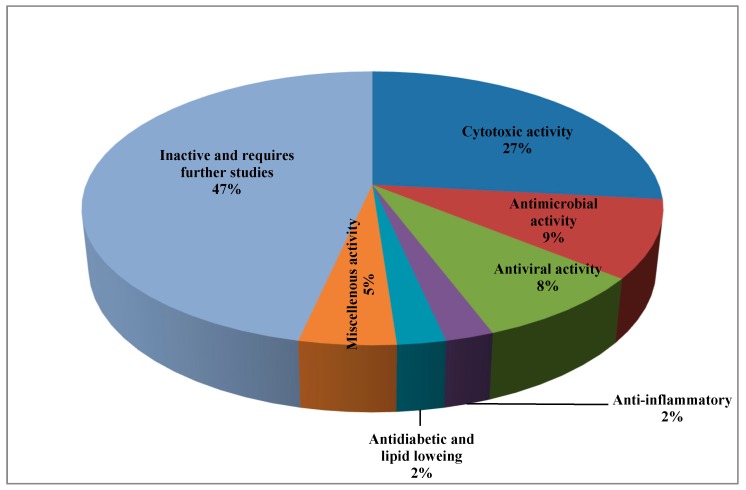
Fungal marine microorganisms are a valuable source of bioactive natural products. Fungal secondary metabolites mainly comprise alkaloids, terpenoids, peptides, polyketides, steroids, and lactones. Proteins and peptides from marine fungi show minimal human toxicity and less adverse effects comparable to synthetic drugs. This review summarizes the chemistry and the biological activities of peptides that were isolated and structurally elucidated from marine fungi. Relevant fungal genera including Acremonium, Ascotricha, Aspergillus, Asteromyces, Ceratodictyon, Clonostachys, Emericella, Exserohilum, Microsporum, Metarrhizium, Penicillium, Scytalidium, Simplicillium, Stachylidium, Talaromyces, Trichoderma, as well as Zygosporium were extensively reviewed. About 131 peptides were reported from these 17 genera and their structures were unambiguously determined using 1D and 2D NMR (one and two dimensional nuclear magnetic resonance) techniques in addition to HRMS (high resolution mass spectrometry). Marfey and Mosher reactions were used to confirm the identity of these compounds. About 53% of the isolated peptides exhibited cytotoxic, antimicrobial, and antiviral activity, meanwhile, few of them showed antidiabetic, lipid lowering, and anti-inflammatory activity. However 47% of the isolated peptides showed no activity with respect to the examined biological activity and thus required further in depth biological assessment. In conclusion, when searching for bioactive natural products, it is worth exploring more peptides of fungal origin and assessing their biological activities.

Keywords: biological activity; chemistry; marine derived fungi; peptides.


Conflict of interest statement

The authors declare no conflict of interest.

Figures
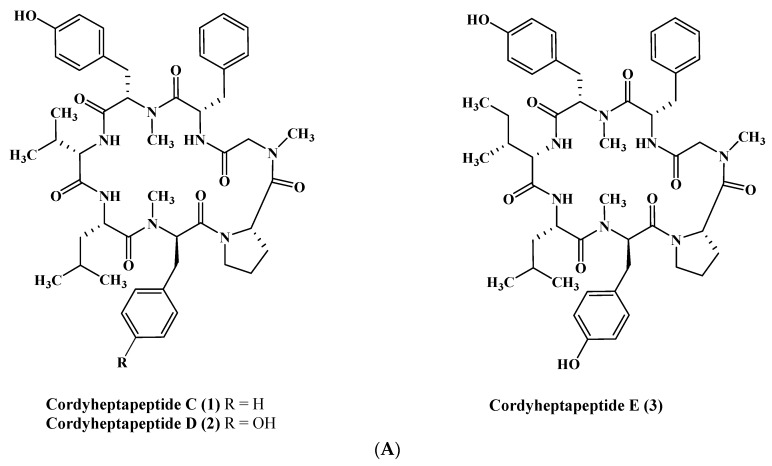
Figure 1
Figure 1
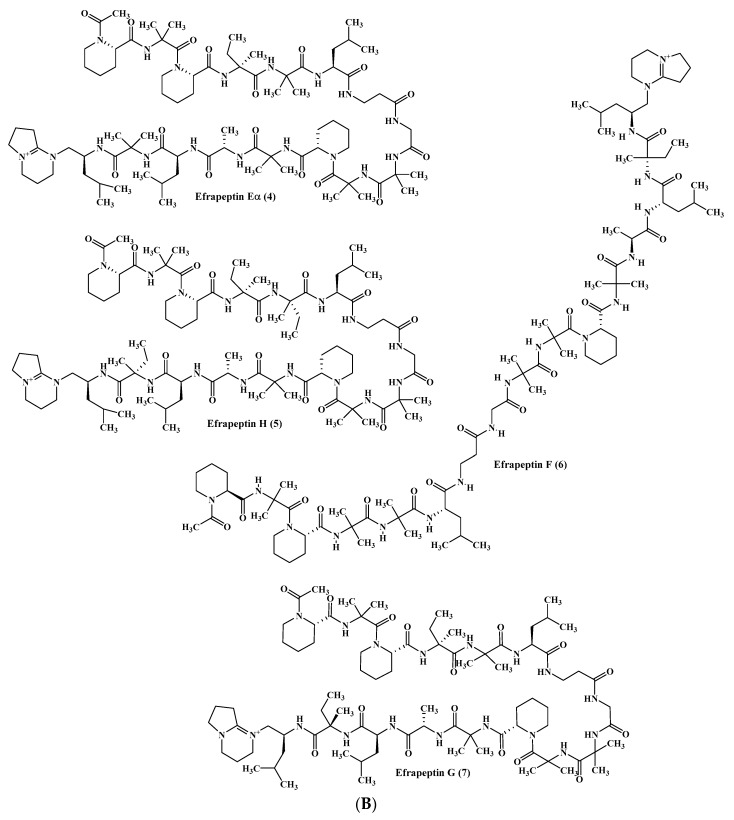
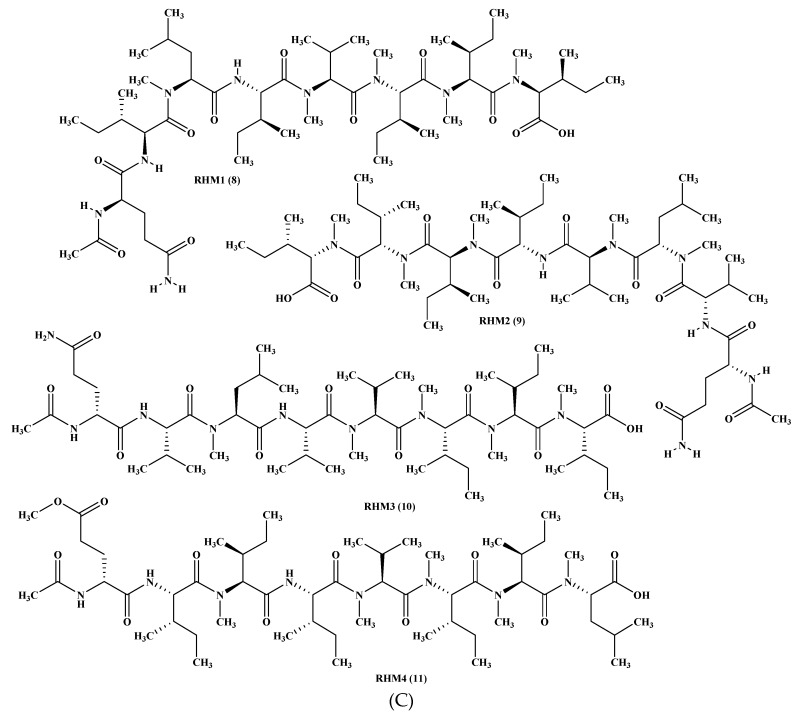
(A) Cordyheptapeptides isolated from Acremonium species. (B) Efrapeptins isolated from Acremonium species. (C) RHM family isolated from Acremonium species.
Figure 1
Figure 1
(A) Cordyheptapeptides isolated from Acremonium species. (B) Efrapeptins isolated from Acremonium species. (C) RHM family isolated from Acremonium species.
Figure 1
Figure 1
(A) Cordyheptapeptides isolated from Acremonium species. (B) Efrapeptins isolated from Acremonium species. (C) RHM family isolated from Acremonium species.
Figure 2
Figure 2
Peptides isolated from Ascotricha species.
Figure 3
Figure 3
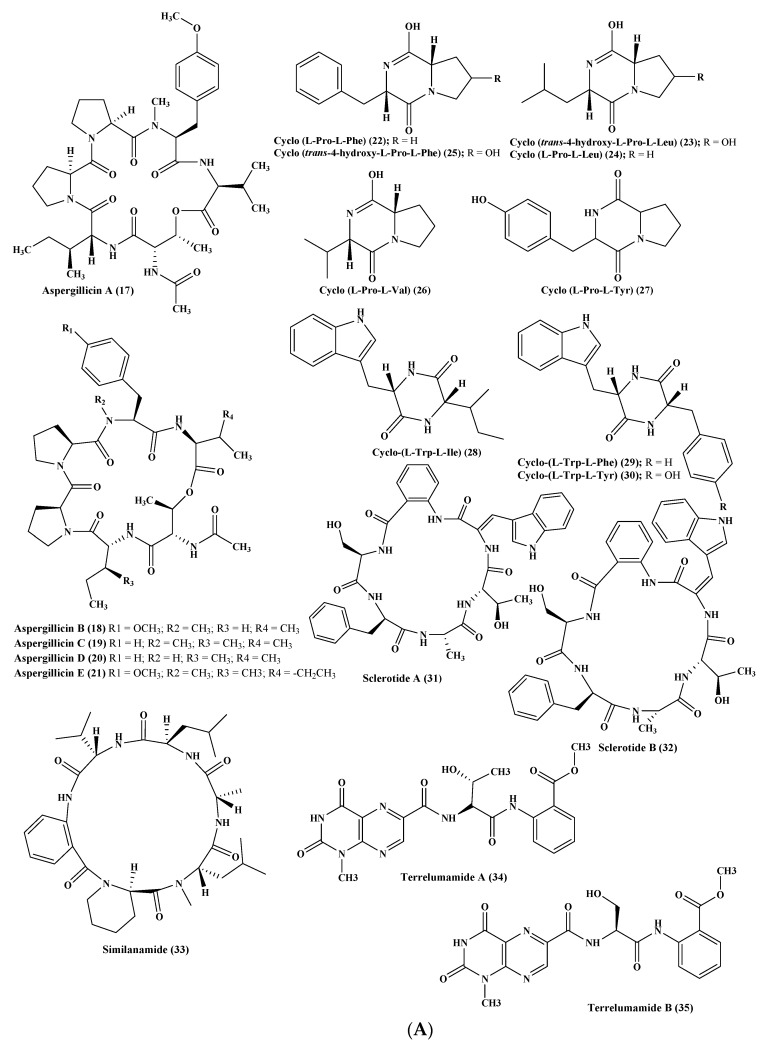
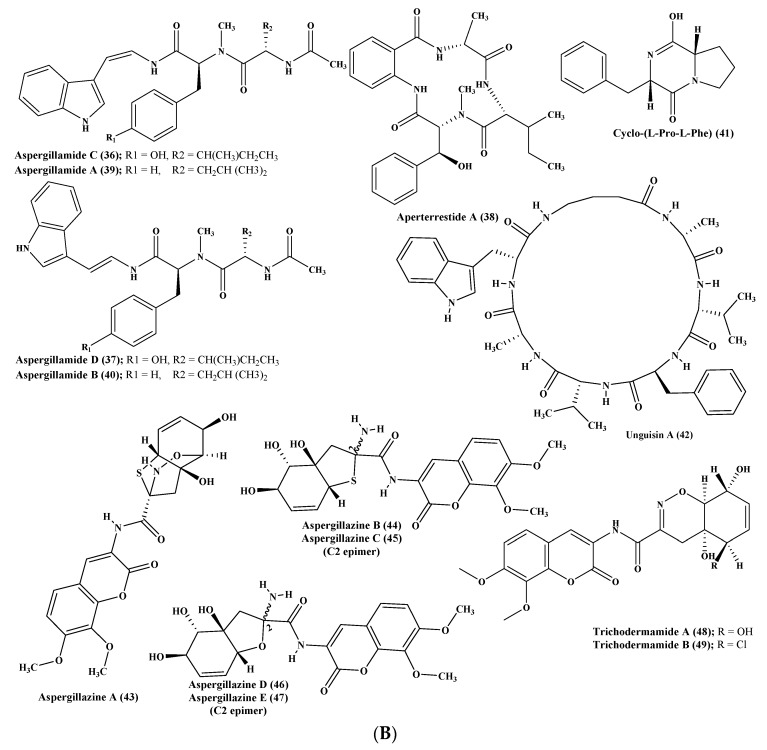
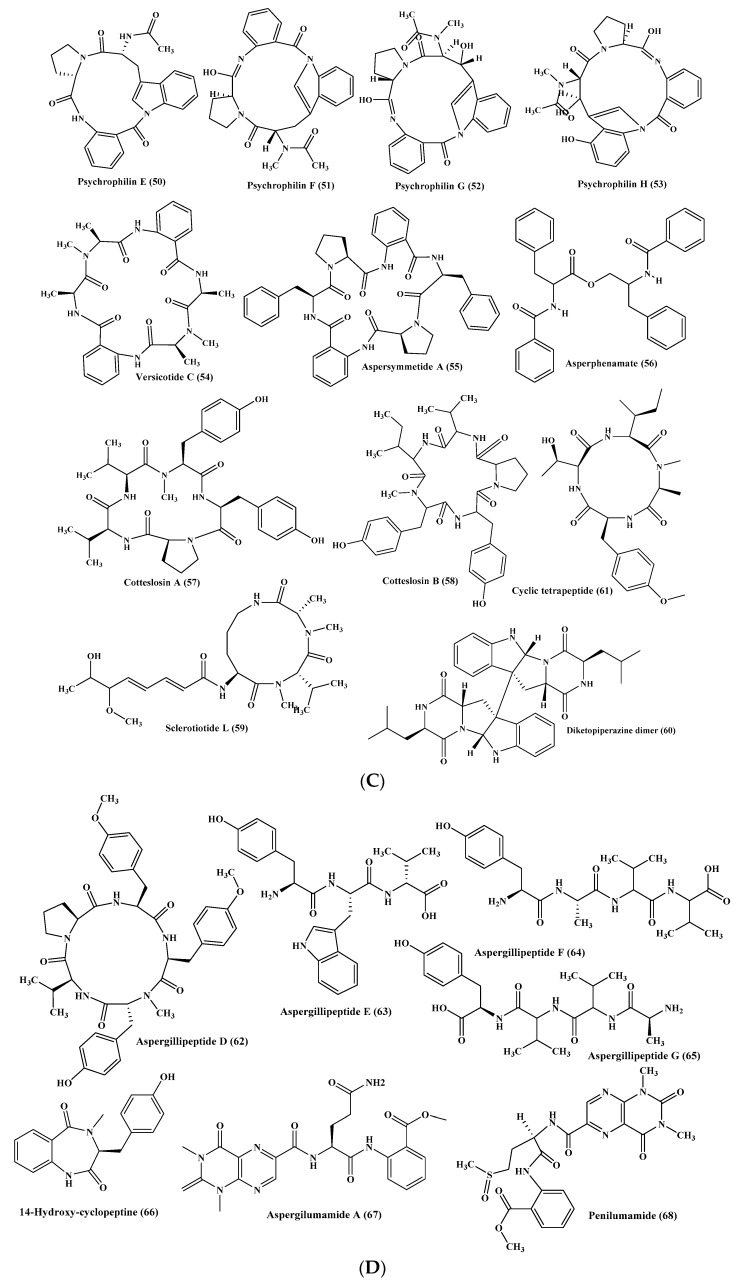
(A) Peptides isolated from Aspergillus carneus, A. niger, A. sclerotiorum, and A. terreus. (B) Peptides isolated from A. terreus, A. unguis, and A. unilateralis. (C) Peptides isolated from A. versicolor and A. violaceofuscus. (D) Peptides isolated from miscellaneous Aspergillus species.
Figure 3
Figure 3
(A) Peptides isolated from Aspergillus carneus, A. niger, A. sclerotiorum, and A. terreus. (B) Peptides isolated from A. terreus, A. unguis, and A. unilateralis. (C) Peptides isolated from A. versicolor and A. violaceofuscus. (D) Peptides isolated from miscellaneous Aspergillus species.
Figure 3
Figure 3
(A) Peptides isolated from Aspergillus carneus, A. niger, A. sclerotiorum, and A. terreus. (B) Peptides isolated from A. terreus, A. unguis, and A. unilateralis. (C) Peptides isolated from A. versicolor and A. violaceofuscus. (D) Peptides isolated from miscellaneous Aspergillus species.
Figure 4
Figure 4
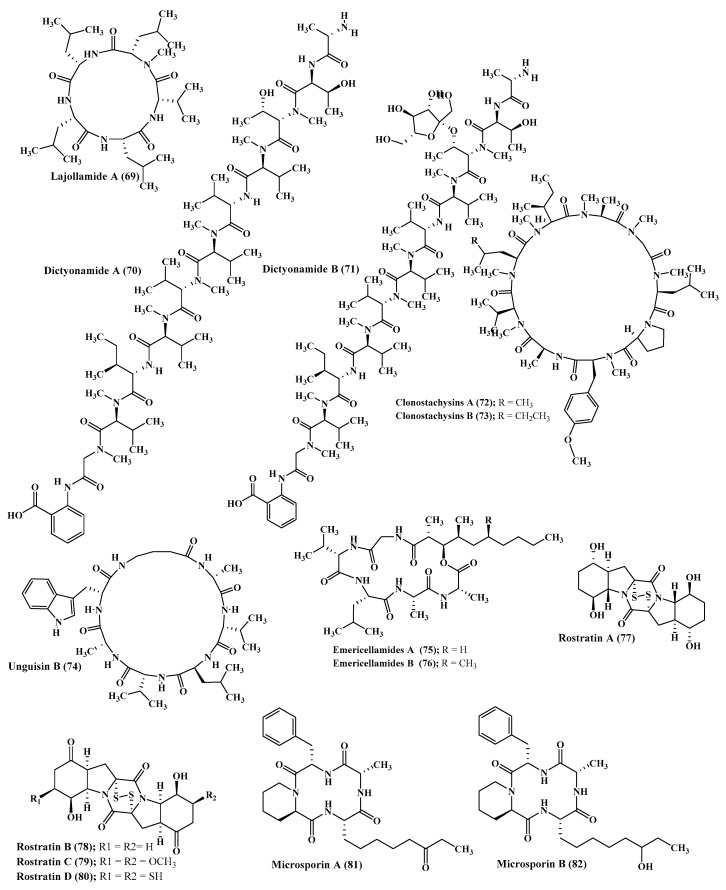
Peptides isolated from Asteromyces, Ceratodictyon, Clonostachys, Emericella, Exserohilum, and Microsporum species.
Figure 5
Figure 5
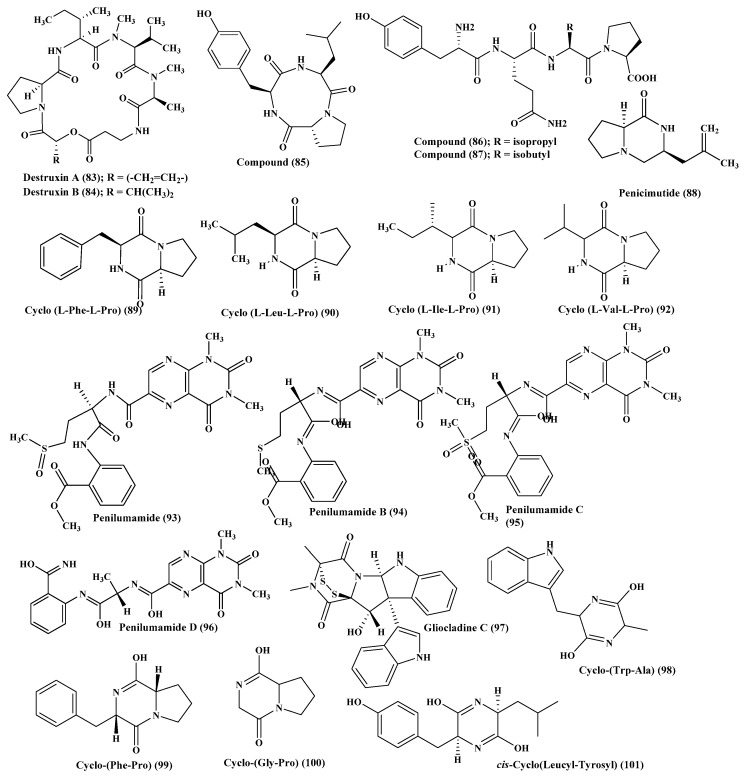
Peptides isolated from Metarrhizium and Penicillium species.
Figure 6
Figure 6
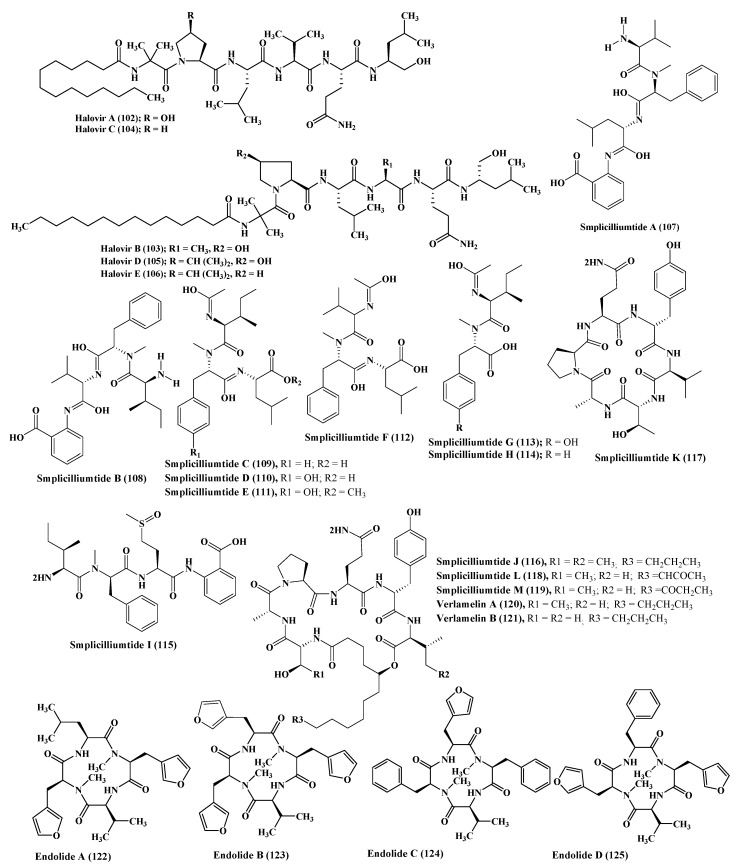
Peptides isolated from Scytalidium, Simplicillium, and Stachylidium species.
Figure 7
Figure 7
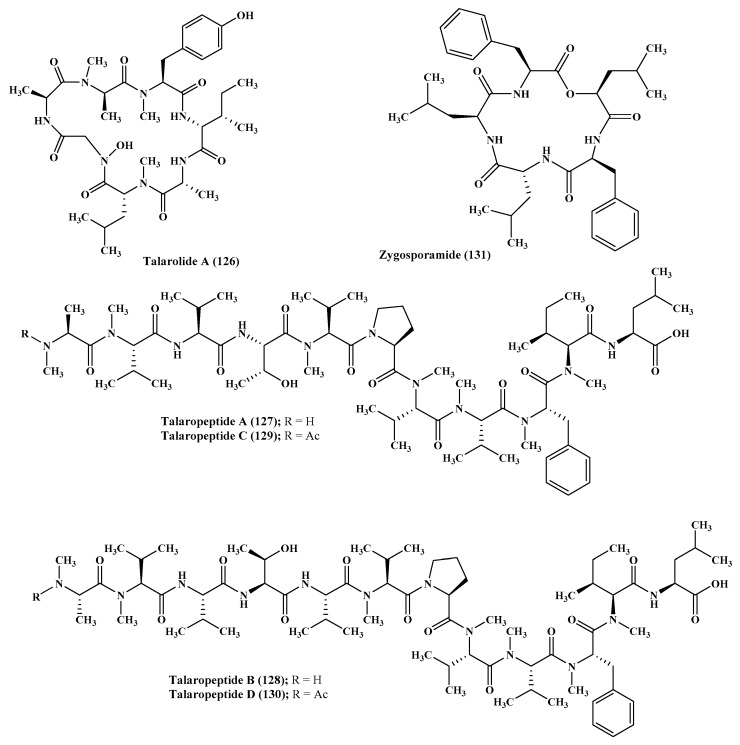
Peptides isolated from Talaromyces and Zygosporium species.
Figure 8
Figure 8
Percentages of isolated peptides with respect to their biological activity represented by a pie chart.

References

    1. Jin L., Quan C., Hou X., Fan S. Potential pharmacological resources: Natural bioactive compounds from marine-derived fungi. Mar. Drugs. 2016;14:76. doi: 10.3390/md14040076. - DOI - PMC - PubMed
    1. Rateb M.E., Ebel R. Secondary metabolites of fungi from marine habitats. Nat. Prod. Rep. 2011;28:290–344. doi: 10.1039/c0np00061b. - DOI - PubMed
    1. Schueffler A., Anke T. Fungal natural products in research and development. Nat. Prod. Rep. 2014;31:1425–1448. doi: 10.1039/C4NP00060A. - DOI - PubMed
    1. Blunt J.W., Copp B.R., Keyzers R.A., Munro M.H., Prinsep M.R. Marine natural products. Nat. Prod. Rep. 2015;32:116–211. doi: 10.1039/C4NP00144C. - DOI - PubMed
    1. Blunt J.W., Copp B.R., Keyzers R.A., Munro M.H., Prinsep M.R. Marine natural products. Nat. Prod. Rep. 2017;34:235–294. doi: 10.1039/C6NP00124F. - DOI - PubMed

MeSH terms