. 2019 Sep 20:13:3321-3329.
doi: 10.2147/DDDT.S222127. eCollection 2019.

Effects of quercetin, sitagliptin alone or in combination in testicular toxicity induced by doxorubicin in rats

Affiliations

Effects of quercetin, sitagliptin alone or in combination in testicular toxicity induced by doxorubicin in rats

Zheen Aorahman Ahmed et al. Drug Des Devel Ther. .

Abstract

Objective: This study aimed to evaluate the effect of quercetin and/or sitagliptin on testicular damage induced by doxorubicin (DOX).

Methodology: Twenty-five male Wistar rats, weighing 240±20 g, were randomly divided into five groups as follows: a negative control group; that was treated with 1 mL of 0.9% sodium chloride; a DOX-treated group received Intraperitoneal (I.P.) DOX injection (3 mg/kg); a group treated with quercetin 80 mg/kg + sitagliptin 10 mg/kg + DOX; a group treated with quercetin 80 mg/kg + DOX; and a group treated with sitagliptin 10 mg/kg+ DOX. All treatment were given orally daily for 21 days with I.P. DOX 3 mg/kg injection for the treatment groups at days 8, 10, 12, 15, 17, and 19. On day 22, blood was collected for analysis of testosterone, luteinizing hormone (LH), follicle-stimulating hormone (FSH), alkaline phosphatase (ALP), lactate dehydrogenase (LDH), glutathione peroxidase (GPx), and total antioxidant capacity (TAOC). The testes were also removed and sent for histopathological examination.

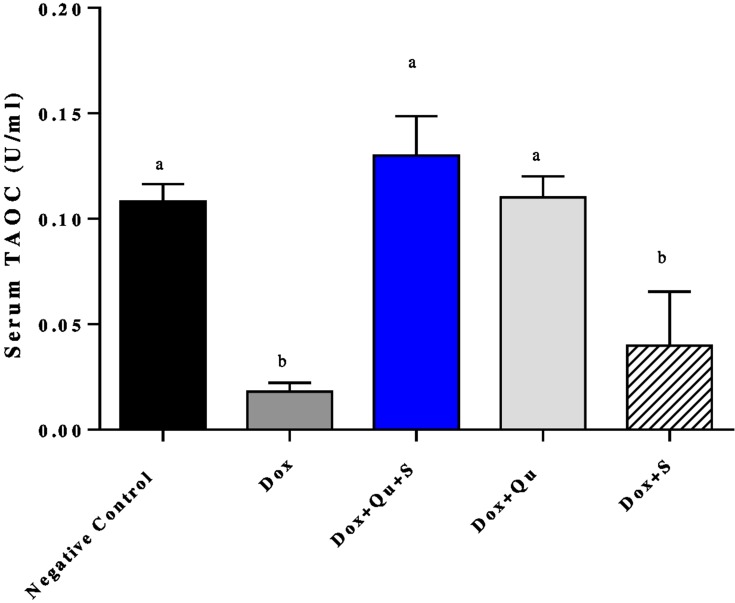
Results: The study revealed that the combination of quercetin with sitagliptin produced a significant increase in testosterone and FSH levels with a non-significant increase in LH level. This combination also non-significantly decreased the level of ALP and LDH and restored the GPx level with enhancing TAOC.

Conclusion: The results suggest quercetin/sitagliptin combination as a promising therapeutic modality for attenuation of DOX-induced testicular toxicity in rats, and the main mechanism involved in such effect could be due to the antioxidant and anti-inflammatory properties of both agents.

Keywords: doxorubicin; quercetin; sitagliptin; testicular damage.


Conflict of interest statement

The authors report no conflicts of interest in this work.

Figures
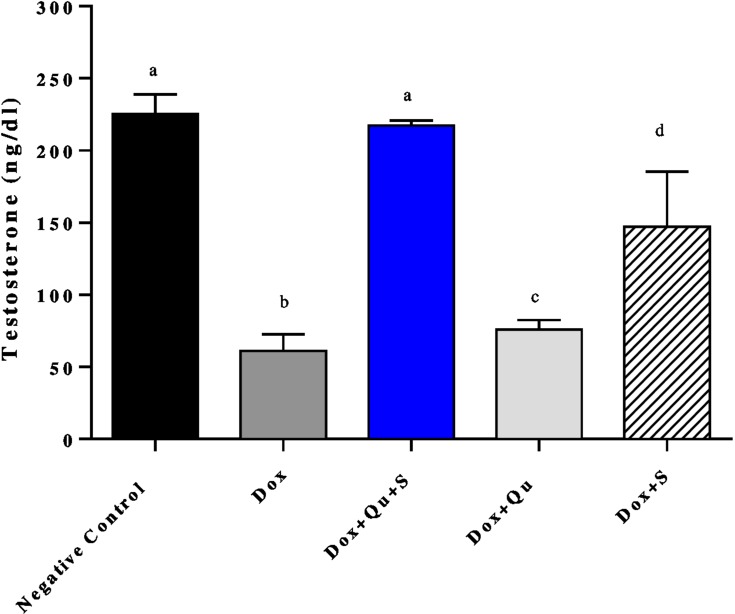
Figure 1
Figure 1
Effect of quercetin and/or sitagliptin on serum testosterone level. Note: Values of non-identical letters (a, b, c, d) are significantly different among groups (P<0.001), n=5 in each group.
Figure 2
Figure 2
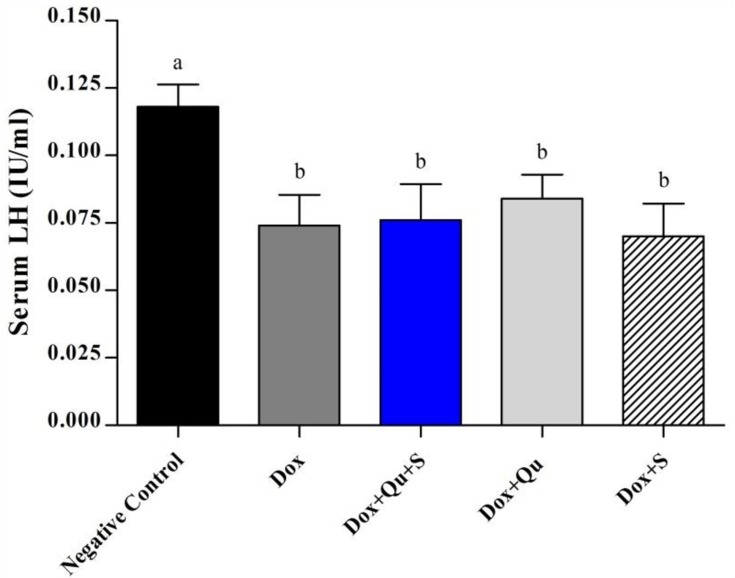
Effect of quercetin and/or sitagliptin on serum LH level. Note: Values with non-identical letters (a, b) are significantly different among groups (P<0.05), n=5 in each group. Abbreviation: LH, luteinizing hormone.
Figure 3
Figure 3
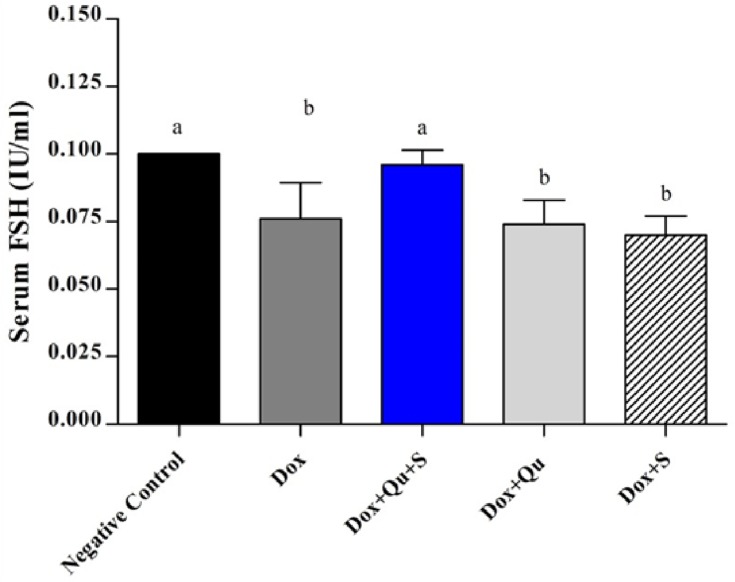
Effect of quercetin and/or sitagliptin on serum FSH level. Note: Values with non-identical letters (a, b) are significantly different among groups (P<0.05), n=5 in each group. Abbreviation: FSH, follicle-stimulating hormone.
Figure 4
Figure 4
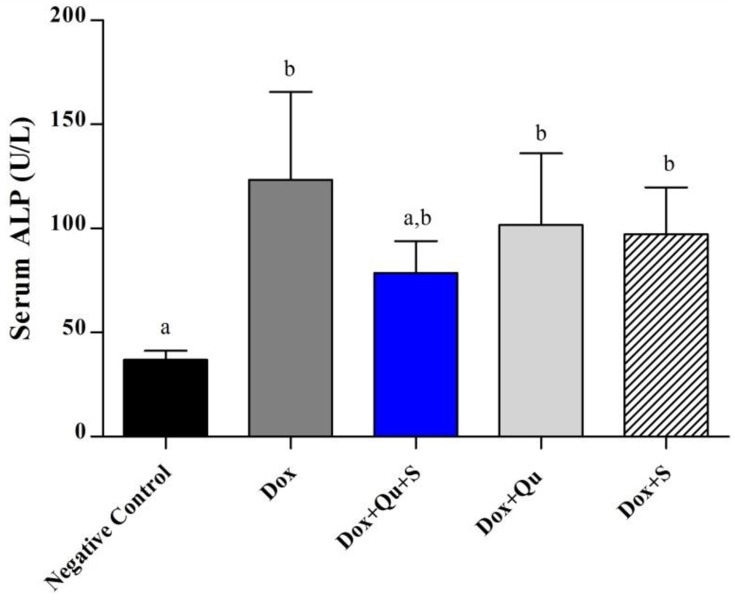
Effect of quercetin and/or sitagliptin on serum ALP level. Note: Values with non-identical letters (a, b) are significantly different among groups (P<0.05), n=5 in each group. Abbreviation: ALP, alkaline phosphatase.
Figure 5
Figure 5
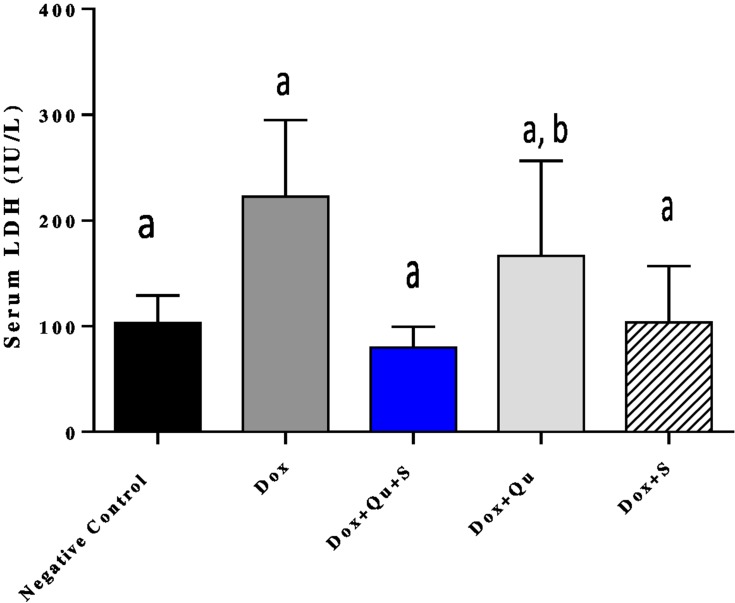
Effect of quercetin and/or sitagliptin on serum LDH level. Note: Values with non-identical letters (a, b) are significantly different among groups (P<0.05), n=5 in each group.
Figure 6
Figure 6
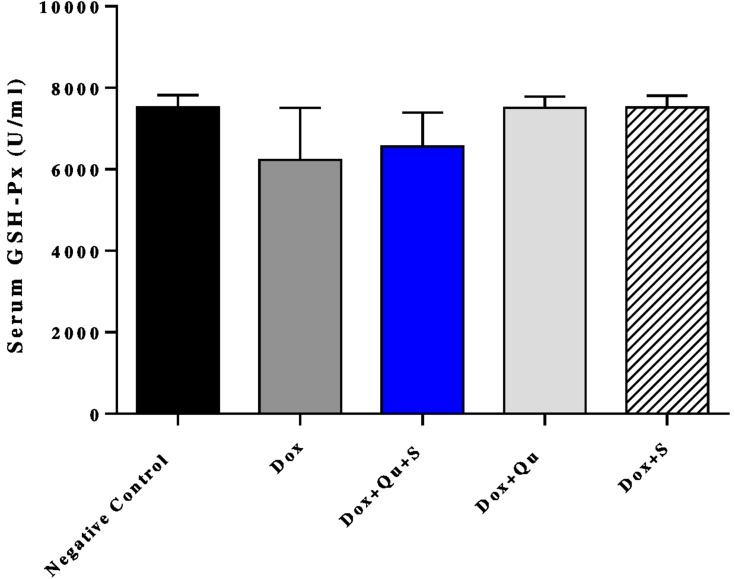
Effect of quercetin and/or sitagliptin on serum glutathione peroxidase level. n=5 in each group.
Figure 7
Figure 7
Effect of quercetin and/or sitagliptin on serum TAOC level. Note: Values of non-identical letters (a, b) are significantly different among groups (P<0.001), n=5 in each group. Abbreviation: TAOC, total antioxidant capacity.
Figure 8
Figure 8
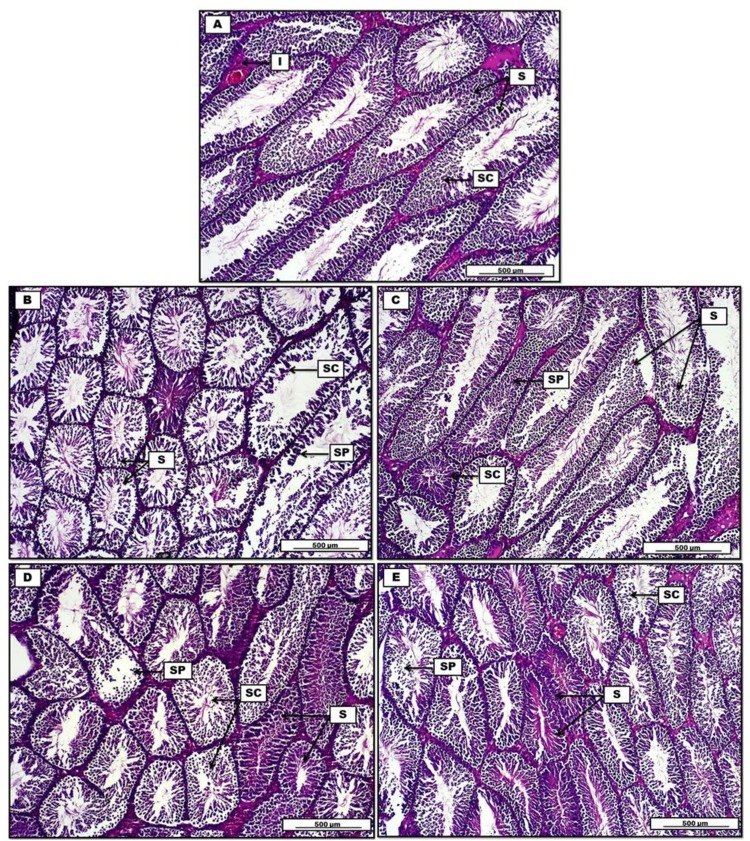
Photomicrograph of testis from groups; (A) control group, display consistent numbers of seminiferous tubules (S), separated by interstitial connective tissue (I) lined by uniformly arranged spermatogenic cells (SC). (B) Doxorubicin group show a significant reduction in spermatogenesis (SC), decrease in seminiferous tubules spermatogenic cells (S), together with severe degenerative changes in germinative sperm cell layers (SP). (C) Doxorubicin, quercetin and sitagliptin group reveal significant germinal regeneration in the spermatogenic cells (SC). Repopulation in the germinative cells of spermatogenesis (SP). Some tubules show degenerative changes in lining germinal epithelium (S). (D) Doxorubicin and sitagliptin group show regenerative changes in some seminiferous tubules (S), spermatogenic cells (SC) show typical degenerative-atrophy changes, and germinative spermatogenesis epithelium debris within the testicular tubules (SP). (E) Doxorubicin and quercetin group display significant regeneration in seminiferous tubular germinal epithelium (S), marked cellular debris within the tubular lumen (SP), and degenerative changes in spermatogenic cells (SC). H&E. Scale bars: 500 µm.
Figure 9
Figure 9
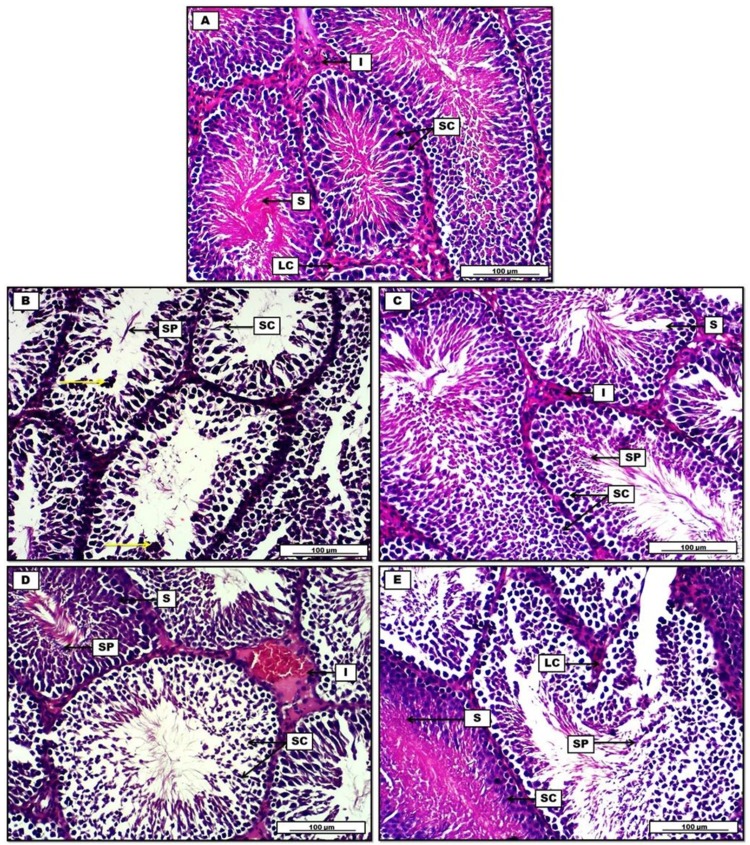
Photomicrograph of testis from groups; (A) control group shows normal morphogenic arrangement of spermatic cells (SC) and seminiferous tubules (S) which enclose a dense pinkish appearance of spermatozoa tails. Leydig cells (LC) with prominent acidophilic cytoplasm in the interstitial connective tissue (I). (B) Doxorubicin group demonstrates germinal aplasia with degeneration in spermatogenic cells (SC), sloughing of germ cells evident by dead sperm cells fragments (SP), presence of hyperchromatic apoptotic debris (yellow arrows). (C) Doxorubicin, quercetin and sitagliptin group display significant morphogenic improvements in the spermatogenic cells (SC), spermatic repopulation and regeneration (SP) can be seen within seminiferous tubules (S), interstitial tissue (I) show distinctive distribution. (D) Doxorubicin and sitagliptin group show regeneration of germinal epithelium (SP) of some seminiferous tubules (S), other spermatogenic cells show degenerative changes, evident by cellular debris (SC). Blood vessels congestion in the interstitium (I). (E) Doxorubicin and quercetin group show regeneration of germinative spermatogenic cells (SC) within the seminiferous tubules (S), presence of cellular debris in the lumen (SP). H&E. Scale bars: 100 µm.
None

References

    1. Hee Lee S, Ho Shin C. Reduced male fertility in childhood cancer survivors. Ann Pediatr Endocrinol Metab. 2013;18:168–172. doi: 10.6065/apem - DOI - PMC - PubMed
    1. Adwas AA, Elkhoely AA, Kabel AM, Abdel-Rahman MN, Eissa AA. Anti-cancer and cardioprotective effects of indol-3-carbinol in doxorubicin-treated mice. J Infect Chemother. 2016;22(1):36–43. doi: 10.1016/j.jiac.2015.10.001 - DOI - PubMed
    1. Pang B, Qiao X, Janssen L, et al. Drug-induced histone eviction from open chromatin contributes to the chemotherapeutic effects of doxorubicin. Nat Commun. 2013;4(1):1908. doi: 10.1038/ncomms2921 - DOI - PMC - PubMed
    1. Beaud H, van Pelt A, Delbes G. Doxorubicin and vincristine affect undifferentiated rat spermatogonia. Reproduction. 2017;153(6):725–735. doi: 10.1530/REP-17-0005 - DOI - PubMed
    1. Türedi S, Yuluğ E, Alver A, Kutlu Ö, Kahraman C. Effects of resveratrol on doxorubicin induced testicular damage in rats. Exp Toxicol Pathol. 2015;67(3):229–235. doi: 10.1016/j.etp.2014.12.002 - DOI - PubMed