Review
. 2019 Sep 13:7:619.
doi: 10.3389/fchem.2019.00619. eCollection 2019.

Applications of Cucurbiturils in Medicinal Chemistry and Chemical Biology

Affiliations
Review

Applications of Cucurbiturils in Medicinal Chemistry and Chemical Biology

Debapratim Das et al. Front Chem. .

Abstract

The supramolecular chemistry of cucurbit[n]urils (CBn) has been rapidly developing to encompass diverse medicinal applications, including drug formulation and delivery, controlled drug release, and sensing for bioanalytical purposes. This is made possible by their unique recognition properties and very low cytotoxicity. In this review, we summarize the host-guest complexation of biologically important molecules with CBn, and highlight their implementation in medicinal chemistry and chemical biology.

Keywords: chemosensing; drug delivery; drug release; host-guest complexes; molecular containers; molecular recognition; supramolecular chemistry.


Figures

Figure 1
Figure 1
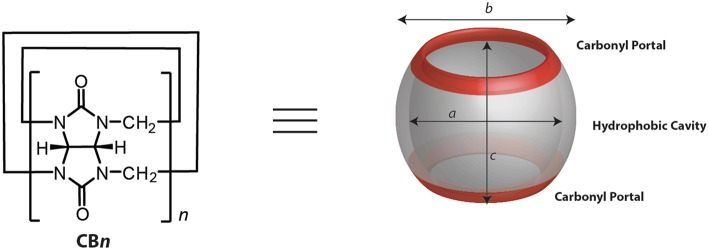
Chemical and model representations of CBn.
Figure 2
Figure 2
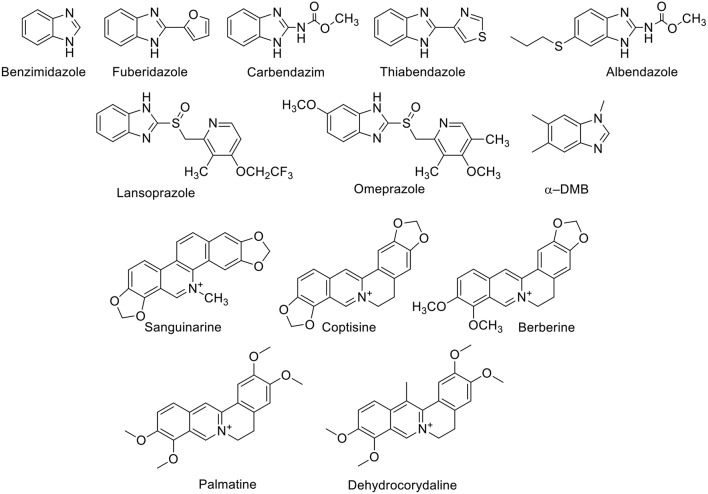
Chemical structures of benzimidazole derivatives and alkaloids which form host-guest complexes with CBn.
Figure 3
Figure 3
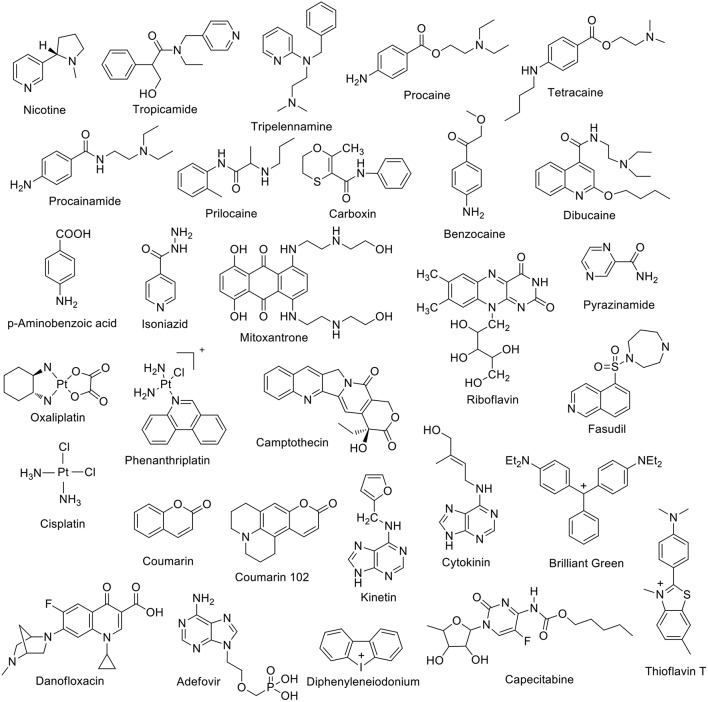
Chemical structures of a first set of selected drug molecules which form host-guest complexes with CBn.
Figure 4
Figure 4
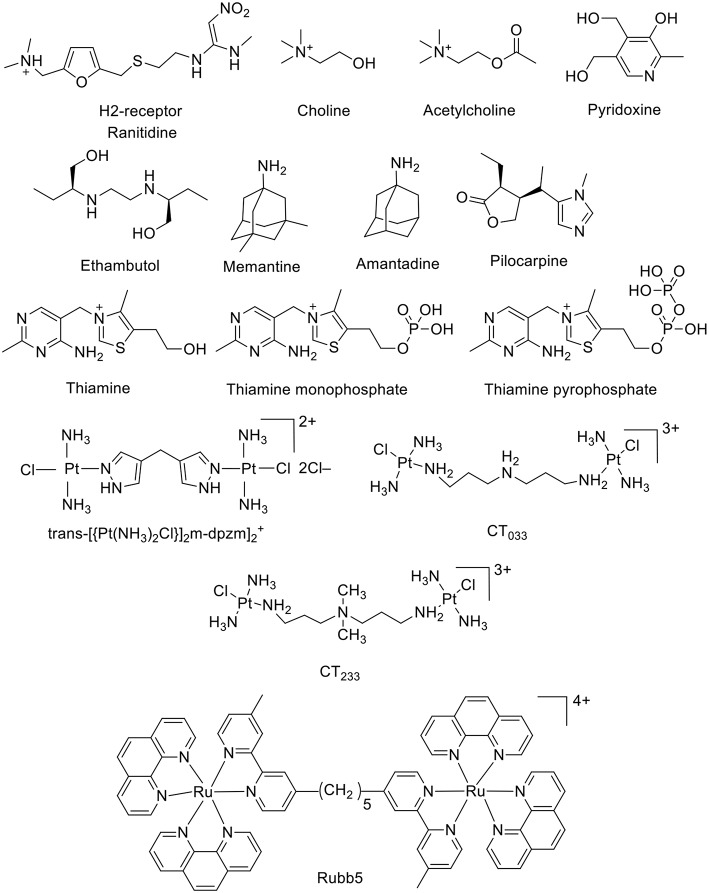
Chemical structures of a second set of selected drug-based molecules which form host-guest complexes with CBn.
Figure 5
Figure 5
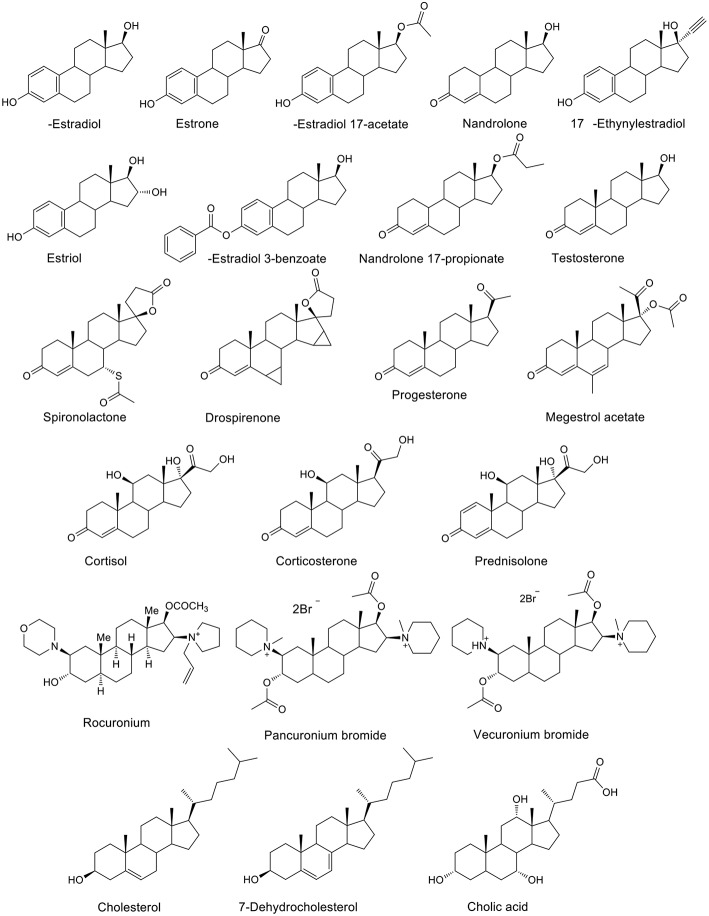
Chemical structures of steroids which form host-guest complexes with CB7 and CB8.
Figure 6
Figure 6
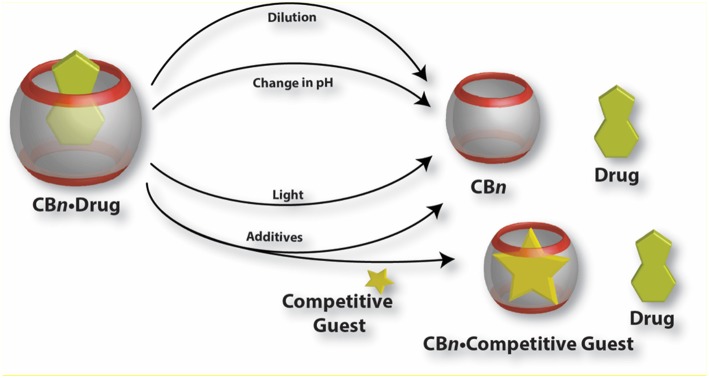
Graphical presentation of various mechanisms for the release of drug molecules from CB•drug complexes.
Figure 7
Figure 7
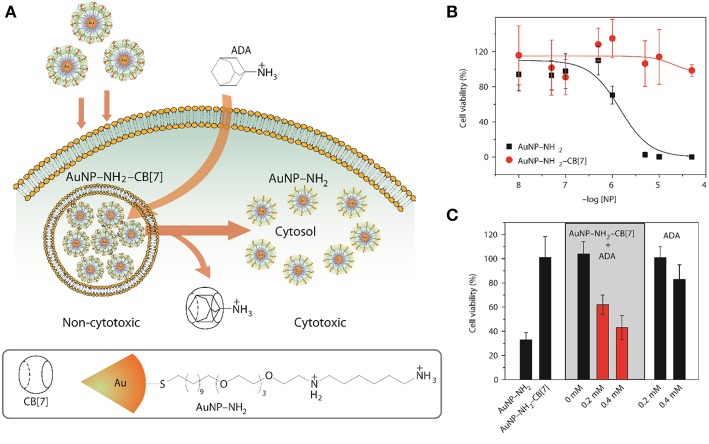
(A) Schematic illustration for the use of intracellular supramolecular host–guest complexation to trigger nanoparticle cytotoxicity; (B,C) Cytotoxicity of AuNP–NH2 and AuNP–NH2-CB7 and modulation of cytotoxicity of the gold nanoparticles (Kim et al., 2010a) (Reproduced with permission, Copyright 2010, Nature publishing group).
Figure 8
Figure 8
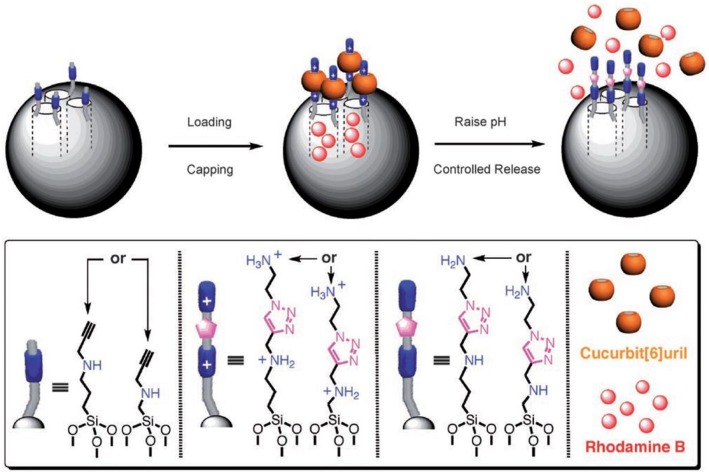
Graphical representations of operational supramolecular nanovalves (Angelos et al., 2008) (Reproduced with permission, Copyright 2008, Wiley-VCH Verlag GmbH and Co. KGaA, Weinheim).
Figure 9
Figure 9
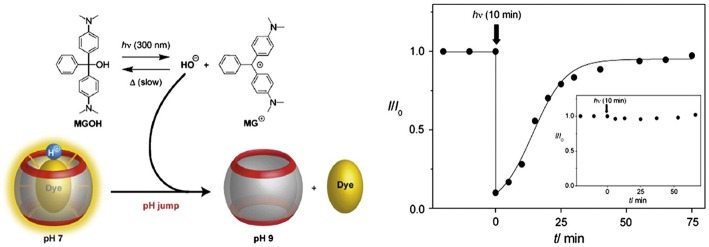
Graphical representation of a photo-triggered pH jump-induced release of an encapsulated dye (MGOH, malachite green leuco hydroxide) from the cavity of CB7 (Carvalho et al., 2011) (Reproduced with permission, Copyright 2011, The Royal Society of Chemistry).
Figure 10
Figure 10
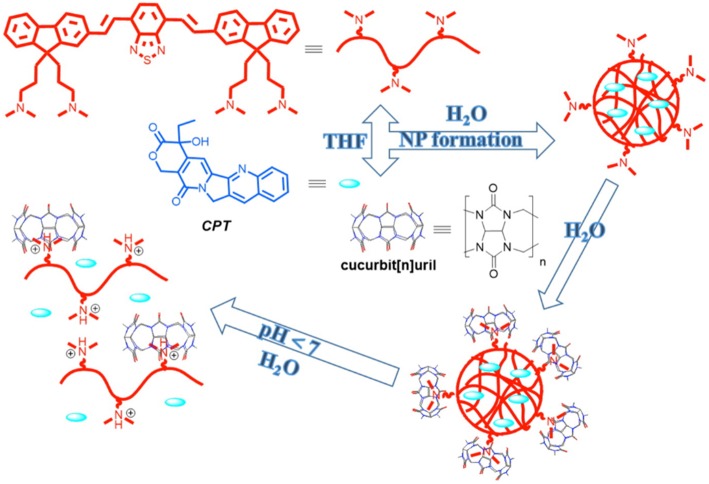
Preparation of CB-capped drug-loaded nanoparticles (NP) and illustration of a pH-triggered drug release mechanism (Pennakalathil et al., 2014) (Reproduced with permission, Copyright 2014, American Chemical Society).
Figure 11
Figure 11
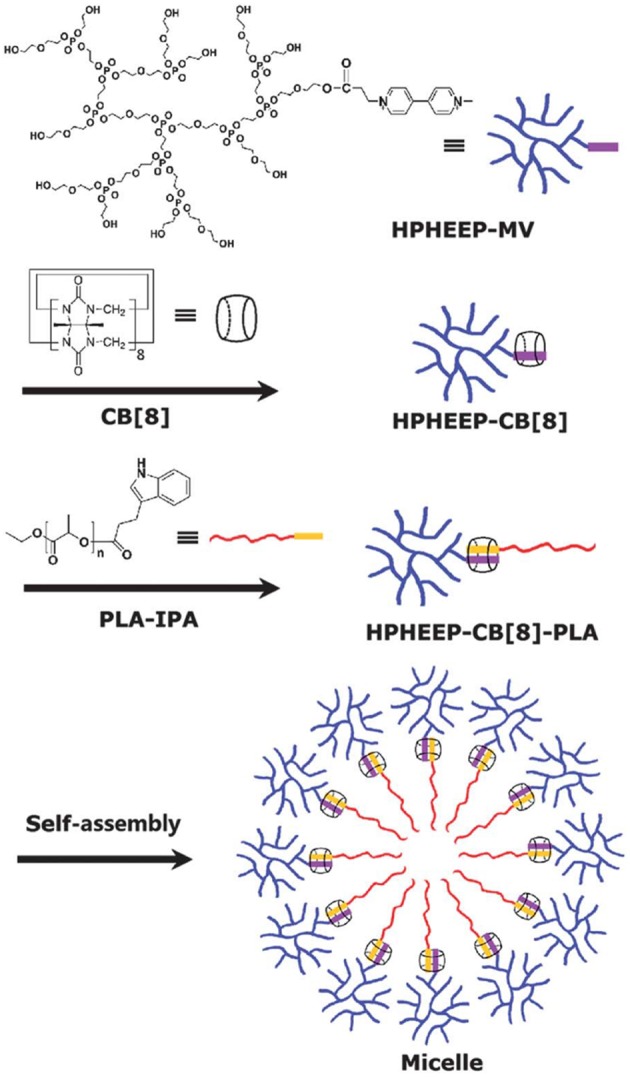
Methyl viologen-functionalized hyperbranched polyphosphate (HPHEEP-MV) and indole-terminated poly(D,L-lactide) (PLA-IPA) assembly via ternary complexation inside CB8 (Chen et al., 2013) (Reproduced with permission, Copyright 2013, The Royal Society of Chemistry).
Figure 12
Figure 12
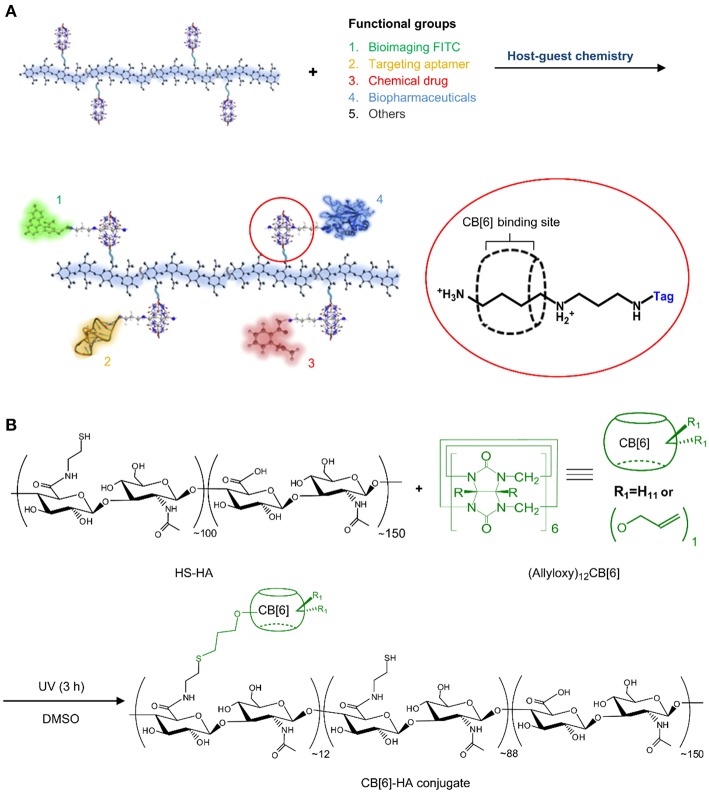
(A) Schematic illustration of a multi-functional theranostic system using CB6-HA tethered with various functional “tag”-spermidine conjugates by the host-guest complexation between spermidine and CB6. (B) Preparation of a CB6-HA conjugate by UV photoreaction of thiolated hyaluronate (HS-HA) with (allyloxy)12CB6. FITC, fluorescein isothiocyanate (Jung et al., 2011) (Reproduced with permission, Copyright 2013, Elsevier).
Figure 13
Figure 13
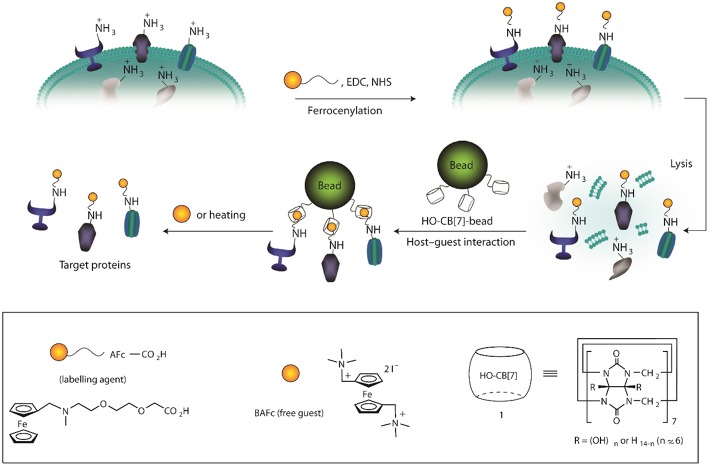
Schematic illustration for the isolation of plasma membrane proteins using a synthetic binding pair. EDC, 1-ethyl-3-(3-dimethylaminopropyl) carbodiimide; NHS, N-hydroxysuccimidyl sepharose (Lee et al., 2011) (Reproduced with permission, Copyright 2011, Nature Publishing Group).
Figure 14
Figure 14
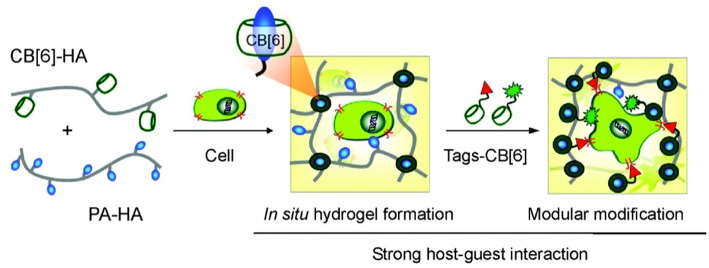
Schematic illustration for in situ formation of supramolecular biocompatible hydrogels (PA-HA, polyamine-hyaluronic acid assembly) and their modular modification using highly selective and strong supramolecular host-guest complexation (Park et al., 2012) (Reproduced with permission, Copyright 2013, American Chemical Society).

References

    1. Ahmed S., Singha N., Pramanik B., Mondal J. H., Das D. (2016). Redox controlled reversible transformation of a supramolecular alternating copolymer to a radical cation containing homo-polymer. Polym. Chem. 7, 4393–4401. 10.1039/C6PY00809G - DOI
    1. An Q., Brinkmann J., Huskens J., Krabbenborg S., de Boer J., Jonkheijm P. (2012). A supramolecular system for the electrochemically controlled release of cells. Angew. Chem. Int. Ed. 51, 12233–12237. 10.1002/anie.201205651 - DOI - PubMed
    1. Angelos S., Khashab N. M., Yang Y. W., Trabolsi A., Khatib H. A., Stoddart J. F., et al. (2009). pH clock-operated mechanized nanoparticles. J. Am. Chem. Soc. 131, 12912–12914. 10.1021/ja9010157 - DOI - PubMed
    1. Angelos S., Yang Y. W., Patel K., Stoddart J. F., Zink J. I. (2008). pH-responsive supramolecular nanovalves based on cucurbit[6]uril pseudorotaxanes. Angew. Chem. Int. Ed. 47, 2222–2226. 10.1002/anie.200705211 - DOI - PubMed
    1. Appel E. A., Loh X. J., Jones S. T., Biedermann F., Dreiss C. A., Scherman O. A. (2012). Ultrahigh-water-content supramolecular hydrogels exhibiting multistimuli responsiveness. J. Am. Chem. Soc. 134, 11767–11773. 10.1021/ja3044568 - DOI - PubMed

LinkOut - more resources