


The regulation of chromosome segregation via centromere loops
- PMID: 31573359
- PMCID: PMC6856439
- DOI: 10.1080/10409238.2019.1670130
The regulation of chromosome segregation via centromere loops
Abstract
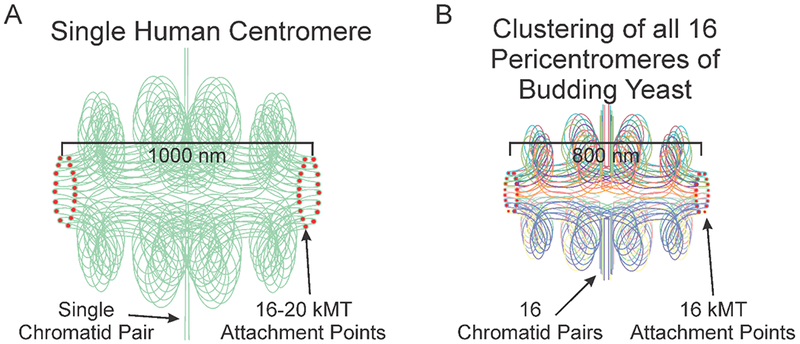
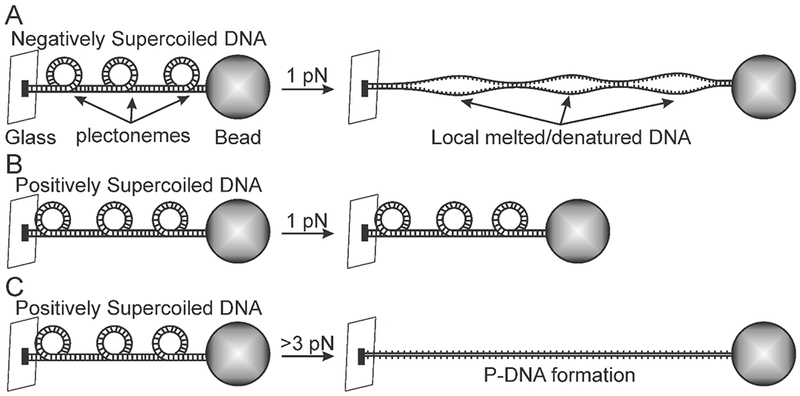
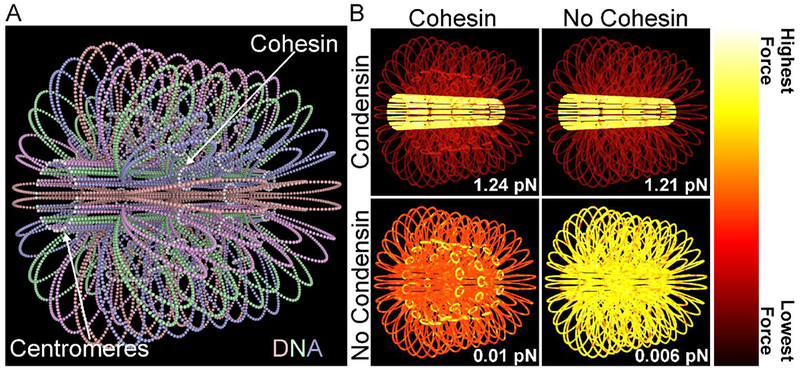
Biophysical studies of the yeast centromere have shown that the organization of the centromeric chromatin plays a crucial role in maintaining proper tension between sister kinetochores during mitosis. While centromeric chromatin has traditionally been considered a simple spring, recent work reveals the centromere as a multifaceted, tunable shock absorber. Centromeres can differ from other regions of the genome in their heterochromatin state, supercoiling state, and enrichment of structural maintenance of chromosomes (SMC) protein complexes. Each of these differences can be utilized to alter the effective stiffness of centromeric chromatin. In budding yeast, the SMC protein complexes condensin and cohesin stiffen chromatin by forming and cross-linking chromatin loops, respectively, into a fibrous structure resembling a bottlebrush. The high density of the loops compacts chromatin while spatially isolating the tension from spindle pulling forces to a subset of the chromatin. Paradoxically, the molecular crowding of chromatin via cohesin and condensin also causes an outward/poleward force. The structure allows the centromere to act as a shock absorber that buffers the variable forces generated by dynamic spindle microtubules. Based on the distribution of SMCs from bacteria to human and the conserved distance between sister kinetochores in a wide variety of organisms (0.4 to 1 micron), we propose that the bottlebrush mechanism is the foundational principle for centromere function in eukaryotes.
Keywords: Centromere; DNA loops; chromosome segregation; cohesin; condensin; kinetochore; mitosis; pericentromere.
Figures
References
-
- Flemming W (1882). Zellsubstanz, Kern und Zelltheilung (Cell substance, nucleus and cell division). Leipzig, Vogel, 1882
-
- Clarke L, Carbon J. (1980). Isolation of a yeast centromere and construction of functional small circular chromosomes. Nature, 287, 504–9 - PubMed
-
- Fitzgerald-Hayes M, Clarke L, Carbon J. (1982). Nucleotide sequence comparisons and functional analysis of yeast centromere DNAs. Cell, 29, 235–44 - PubMed
-
- Blat Y, Kleckner N. (1999). Cohesins bind to preferential sites along yeast chromosome III, with differential regulation along arms versus the centric region. Cell, 98, 249–59 - PubMed
Publication types
MeSH terms
Substances
Grants and funding
LinkOut - more resources
Full Text Sources
Molecular Biology Databases
