


The pitfalls of scaling up evidence-based interventions in health
- PMID: 31575331
- PMCID: PMC6781190
- DOI: 10.1080/16549716.2019.1670449
The pitfalls of scaling up evidence-based interventions in health
Abstract
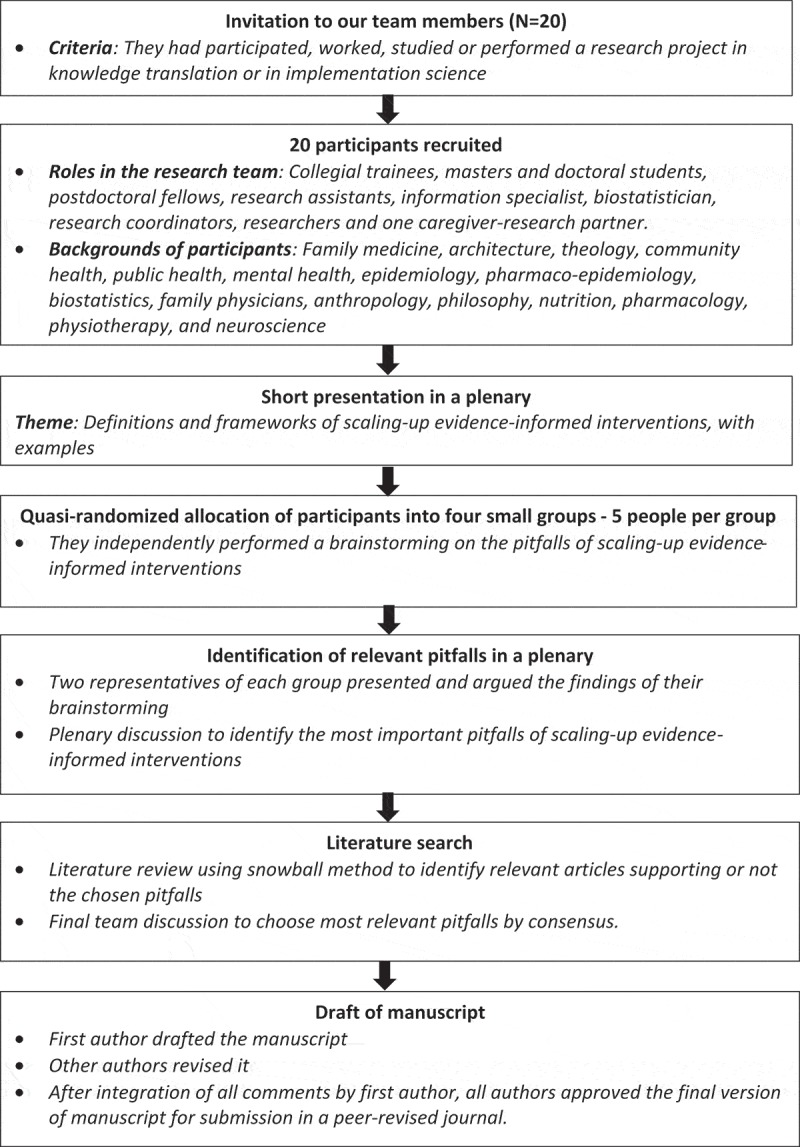
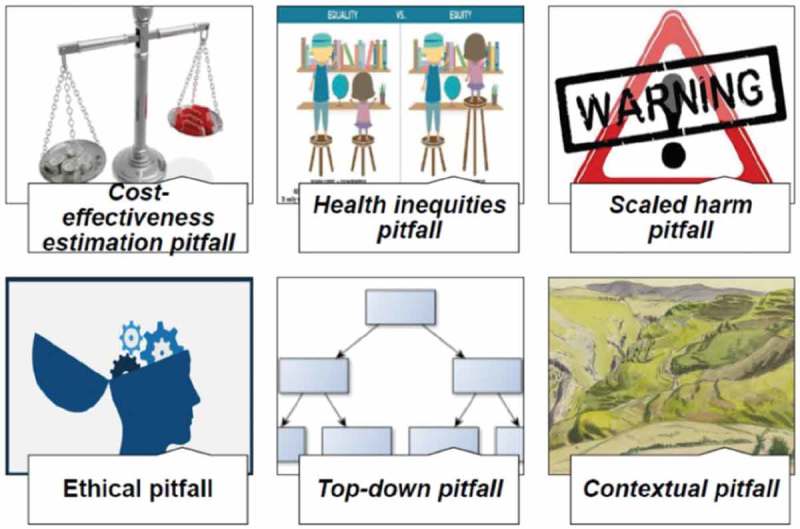
Policy-makers worldwide are increasingly interested in scaling up evidence-based interventions (EBIs) to larger populations, and implementation scientists are developing frameworks and methodologies for achieving this. But scaling-up does not always produce the desired results. Why not? We aimed to enhance awareness of the various pitfalls to be anticipated when planning scale-up. In lower- and middle-income countries (LMICs), the scale-up of health programs to prevent or respond to outbreaks of communicable diseases has been occurring for many decades. In high-income countries, there is new interest in the scaling up of interventions that address communicable and non-communicable diseases alike. We scanned the literature worldwide on problems encountered when implementing scale-up plans revealed a number of potential pitfalls that we discuss in this paper. We identified and discussed the following six major pitfalls of scaling-up EBIs: 1) the cost-effectiveness estimation pitfall, i.e. accurate cost-effectiveness estimates about real-world implementation are almost impossible, making predictions of economies of scale unreliable; 2) the health inequities pitfall, i.e. some people will necessarily be left out and therefore not benefit from the scaled-up EBIs; 3) the scaled-up harm pitfall, i.e. the harms as well as the benefits may be amplified by the scaling-up; 4) the ethical pitfall, i.e. informed consent may be a challenge on a grander scale; 5) the top-down pitfall, i.e. the needs, preferences and culture of end-users may be forgotten when scale-up is directed from above; and 6) the contextual pitfall, i.e. it may not be possible to adapt the EBIs to every context. If its pitfalls are addressed head on, scaling-up may be a powerful process for translating research data into practical improvements in healthcare in both LMICs and high-income countries, ensuring that more people benefit from EBIs.
Keywords: Scaling-up; cost-effectiveness; equity; ethics; evidence-based intervention; harms; health.
Figures
References
-
- Simmons R, Fajans P, Ghiron L, Organization WH . ExpandNet. Scaling up health service delivery: from pilot innovations to policies and programmes. Geneva (Switzerland): World Health Organization; 2007.
-
- Flay BR, Biglan A, Boruch RF, et al. Standards of evidence: criteria for efficacy, effectiveness and dissemination. Prev Sci. 2005;6:151–175. PubMed PMID: 16365954. - PubMed
-
- Lundahl B, Moleni T, Burke BL, et al. Motivational interviewing in medical care settings: a systematic review and meta-analysis of randomized controlled trials. Patient Educ Couns. 2013;93:157–168. PubMed PMID: 24001658. - PubMed
Publication types
MeSH terms
Grants and funding
LinkOut - more resources
Full Text Sources
Medical
