


Effects of 1 year of exercise training versus combined exercise training and weight loss on body composition, low-grade inflammation and lipids in overweight patients with coronary artery disease: a randomized trial
- PMID: 31575375
- PMCID: PMC6774219
- DOI: 10.1186/s12933-019-0934-x
Effects of 1 year of exercise training versus combined exercise training and weight loss on body composition, low-grade inflammation and lipids in overweight patients with coronary artery disease: a randomized trial
Abstract
Background: Dyslipidaemia and low-grade inflammation are central in atherogenesis and linked to overweight and physical inactivity. Lifestyle changes are important in secondary prevention of coronary artery disease (CAD). We compared the effects of combined weight loss and interval training with interval training alone on physical fitness, body composition, dyslipidaemia and low-grade inflammation in overweight, sedentary participants with CAD.
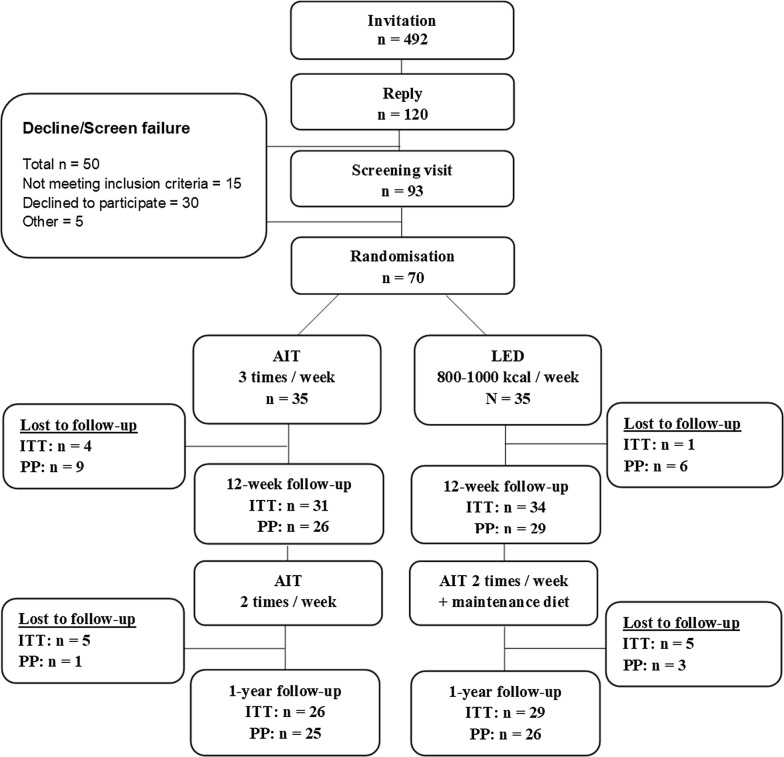
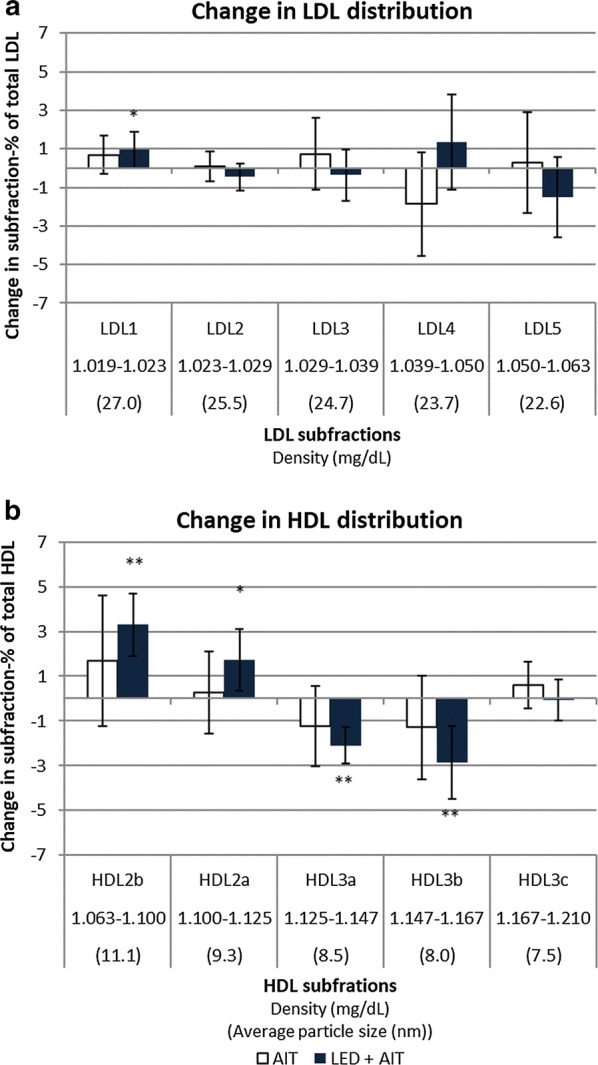
Methods: Seventy CAD patients, BMI 28-40 kg/m2 and age 45-75 years were randomised to (1) 12 weeks' aerobic interval training (AIT) at 90% of peak heart rate three times/week followed by 40 weeks' AIT twice weekly or (2) a low energy diet (LED) (800-1000 kcal/day) for 8-10 weeks followed by 40 weeks' weight maintenance including AIT twice weekly and a high-protein/low-glycaemic load diet. Effects of the intervention were evaluated by physical fitness, body weight and composition. Dyslipidaemia was described using both biochemical analysis of lipid concentrations and lipoprotein particle subclass distribution determined by density profiling. Low-grade inflammation was determined by C-reactive protein, soluble urokinase-type plasminogen activator receptor and tumour necrosis factor α. Effects on continuous outcomes were tested by mixed-models analysis.
Results: Twenty-six (74%) AIT and 29 (83%) LED + AIT participants completed the study. At baseline subject included 43 (78%) men; subjects averages were: age 63 years (6.2), body weight 95.9 kg (12.2) and VO2peak 20.7 mL O2/kg/min (4.9). Forty-six (84%) had pre-diabetes (i.e. impaired fasting glucose and/or impaired glucose tolerance). LED + AIT reduced body weight by 7.2 kg (- 8.4; - 6.1) and waist circumference by 6.6 cm (- 7.7; - 5.5) compared to 1.7 kg (- 0.7; - 2.6) and 3.3 cm (- 5.1; - 1.5) after AIT (within-group p < 0.001, between-group p < 0.001 and p = 0.018, respectively). Treatments caused similar changes in VO2peak and lowering of total cholesterol, triglycerides, non-HDL cholesterol and low-grade inflammation. A shift toward larger HDL particles was seen following LED + AIT while AIT elicited no change.
Conclusions: Both interventions were feasible. Both groups obtained improvements in VO2peak, serum-lipids and inflammation with superior weight loss and greater central fat loss following LED + AIT. Combined LED induced weight loss and exercise can be recommended to CAD patients. Trial registration NCT01724567, November 12, 2012, retrospectively registered (enrolment ended in April 2013).
Keywords: Aerobic interval training; Coronary artery disease; Dyslipidaemia; Low-grade inflammation; Secondary prevention; Weight loss.
Conflict of interest statement
JEO is a founder, shareholder and board member of ViroGates A/S, Denmark, the company that produces the suPARnostic® assay. JEO and SBH are inventors on a patent on suPAR and risk. Hvidovre Hospital, University of Copenhagen, Denmark, owns the patent, which is licensed to ViroGates A/S. The remaining authors declare that they have no competing interests.
Figures
References
-
- Piepoli MF, Hoes AW, Agewall S, et al. European Guidelines on cardiovascular disease prevention in clinical practice: The Sixth Joint Task Force of the European Society of Cardiology and Other Societies on Cardiovascular Disease Prevention in Clinical Practice. Eur Heart J. 2016;2016:1–78.
Publication types
MeSH terms
Substances
Associated data
LinkOut - more resources
Full Text Sources
Medical
Research Materials
Miscellaneous
