


Addition Of D-Sorbitol Improves The Usability Of Ophthalmic Viscosurgical Devices
- PMID: 31576103
- PMCID: PMC6769236
- DOI: 10.2147/OPTH.S218675
Addition Of D-Sorbitol Improves The Usability Of Ophthalmic Viscosurgical Devices
Abstract
Purpose: To evaluate the effects of D-sorbitol addition on changes in the extrusion force of ophthalmic viscosurgical devices (OVDs).
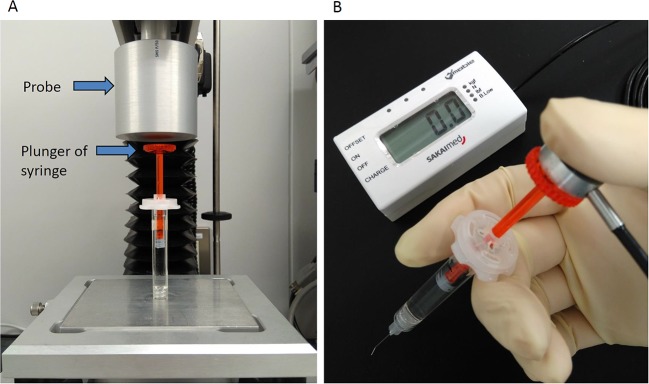
Methods: OVD formulations; the mixtures of 3% hyaluronic acid (HA) and 4% chondroitin sulfate (CS) containing 0%, 0.5%, or 1.0% D-sorbitol were prepared. Each prefilled syringe of OVD was stored at room temperature for 0, 15, 30, 60, or 120 mins after a small amount of viscoelastic agent was discharged from the needle. The extrusion force values (kgf) of these OVDs when reused after storage were measured with a texture analyzer. Moreover, 10 healthy adults (5 men and 5 women) used a pinch sensor to measure the extrusion force values for the HA/CS combination without D-sorbitol which was stored in the above manner, and used a 4-step scale to score the usability of OVD.
Results: For the HA/CS combination without D-sorbitol, the extrusion force value was increased from its initial value (storage duration, 0 min) as storage duration increased. However, for the HA/CS combination containing 0.5% or 1.0% D-sorbitol, this value remained almost unchanged over time. Likewise, the pinch sensor-determined extrusion force values of HA/CS combination without D-sorbitol increased, depending on storage duration.
Conclusion: The addition of D-sorbitol to viscoelastic agent may suppress the needle clogging that occurs with OVD storage, and may improve the usability of OVDs during surgery.
Keywords: cataract surgery; extrusion force; ophthalmic viscosurgical device; vitreous surgery.
© 2019 Watanabe et al.
Conflict of interest statement
The authors report no conflicts of interest in this work.
Figures
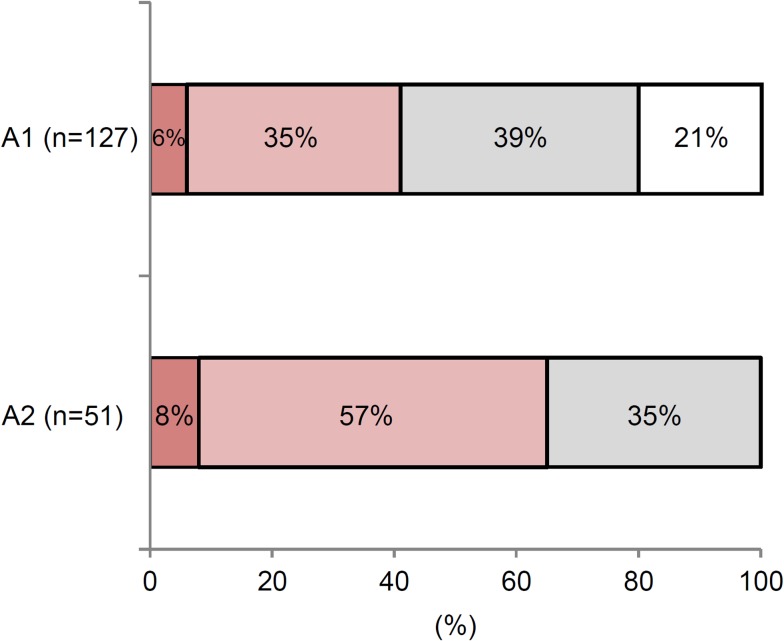
 ; I do not store OVDs but have experienced needle clogging,
  ; I have experienced needle clogging due to storage,
  ; I sometimes store OVDs but have not experienced needle clogging, □; I have not experienced needle clogging because I do not store OVDs. A2: Answer to the Q2 “During cataract surgery or vitreous surgery, when applying viscoelastic agent to the corneal surface, how do you deal with needle clogging?”
  ; Immersed the needle tip in physiological saline,
  ; Immersed the needle tip in BSS,
  ; Others. Abbreviations: OVD, ophthalmic viscosurgical devices; BSS, balanced salt solution.
 ; no D-sorbitol,
  ; 0.5% D-sorbitol, and
  ; 1.0% D-sorbitol. The relative extrusion force (%) is presented as the mean ± standard deviation (n = 3). Effect of soaking the needle in PBS on the extrusion force of HA/CS-A exposed to the open air for 60 mins (E). Treatment: the needle tip was soaked in PBS after exposure to the open air for 60 mins. Non-treatment: the needle tip was not soaked in PBS. The relative extrusion force (%) is presented as the mean ± standard deviation (n = 5). Abbreviations: OVD, ophthalmic viscosurgical devices; HA, hyaluronic acid; CS, chondroitin sulfate; kgf, kilogram-force; PBS, phosphate-buffered saline.
References
LinkOut - more resources
Full Text Sources
