Molecular foundations of chiropractic therapy
- PMID: 31577263
- PMCID: PMC7233649
- DOI: 10.23750/abm.v90i10-S.8768
Molecular foundations of chiropractic therapy
Abstract
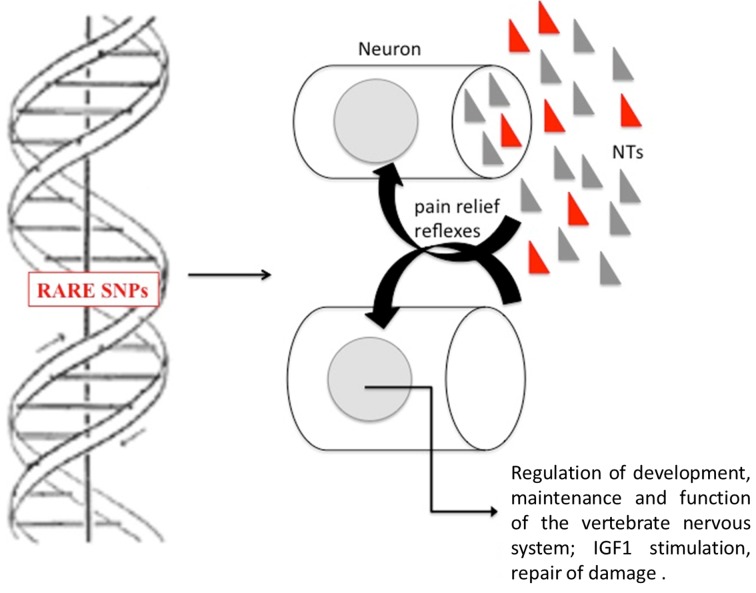
Background and aim: Alternative medicine is a broad term used to encompass different therapies, including chiropractic. Chiropractic was called "a science of healing without drugs" by its founder, David Daniel Palmer. It is based on the idea that the body has a powerful self-healing ability and that there is a relationship between body structure and function that affects health. In particular, chiropractic assumes that the nervous system controls the human body through nerves branching from the vertebral column and spinal cord. Researchers do not fully understand how chiropractic therapies affect pain, but chiropractic is widely used today to treat chronic pain, such as back pain. Different studies with animal models have demonstrated that chiropractic therapies mediate neuroplasticity, specifically through modulation of neurotrophins. No studies have yet been published on interaction between neurotrophin gene polymorphisms and chiropractic treatment.
Methods: We searched PubMed with the following keywords: chiropractic, neuroplasticity, neurotrophin gene polymorphism for a panorama of on the molecular mechanisms of chiropractic therapy.
Results: From the material collected, we identified a set of genes and some functional polymorphisms that could be correlated with better response to chiropractic therapy.
Conclusions: Further association studies will be necessary to confirm hypotheses of a correlation between single nucleotide polymorphisms in specific genes and better response to chiropractic therapy.
Conflict of interest statement
Each author declares that he or she has no commercial associations (e.g. consultancies, stock ownership, equity interest, patent/licensing arrangement etc.) that might pose a conflict of interest in connection with the submitted article
Figures
References
-
- Ernst E. Chiropractic: a critical evaluation. J Pain Symptom Manage. 2008;35:544–62. - PubMed
-
- Haavik H, Murphy B. The role of spinal manipulation in addressing disordered sensorimotor integration and altered motor control. J Electromyogr Kinesiol. 2012;22:768–76. - PubMed
-
- Barnes PM, Powell-Griner E, McFann K, Nahin RL. Complementary and alternative medicine use among adults: United States, 2002. Adv Data. 2004;343:1–19. - PubMed
-
- Tracey KJ. The inflammatory reflex. Nature. 2002;420:853–9. - PubMed
-
- Johnson IP. Hypothesis: upregulation of a muscle-specific isoform of insulin-like growth factor-1 (IGF-1) by spinal manipulation. Med Hypothese. 2008;71:715–21. - PubMed
Publication types
MeSH terms
LinkOut - more resources
Full Text Sources
Medical