. 2019 Feb 26;12(5):702-720.
doi: 10.1093/ckj/sfz011. eCollection 2019 Oct.

The European Renal Association - European Dialysis and Transplant Association (ERA-EDTA) Registry Annual Report 2016: a summary

Affiliations

The European Renal Association - European Dialysis and Transplant Association (ERA-EDTA) Registry Annual Report 2016: a summary

Anneke Kramer et al. Clin Kidney J. .

Abstract

Background: This article summarizes the ERA-EDTA Registry's 2016 Annual Report, by describing the epidemiology of renal replacement therapy (RRT) for end-stage renal disease (ESRD) in 2016 within 36 countries.

Methods: In 2017 and 2018, the ERA-EDTA Registry received data on patients undergoing RRT for ESRD in 2016 from 52 national or regional renal registries. In all, 32 registries provided individual patient data and 20 provided aggregated data. The incidence and prevalence of RRT and the survival probabilities of these patients were determined.

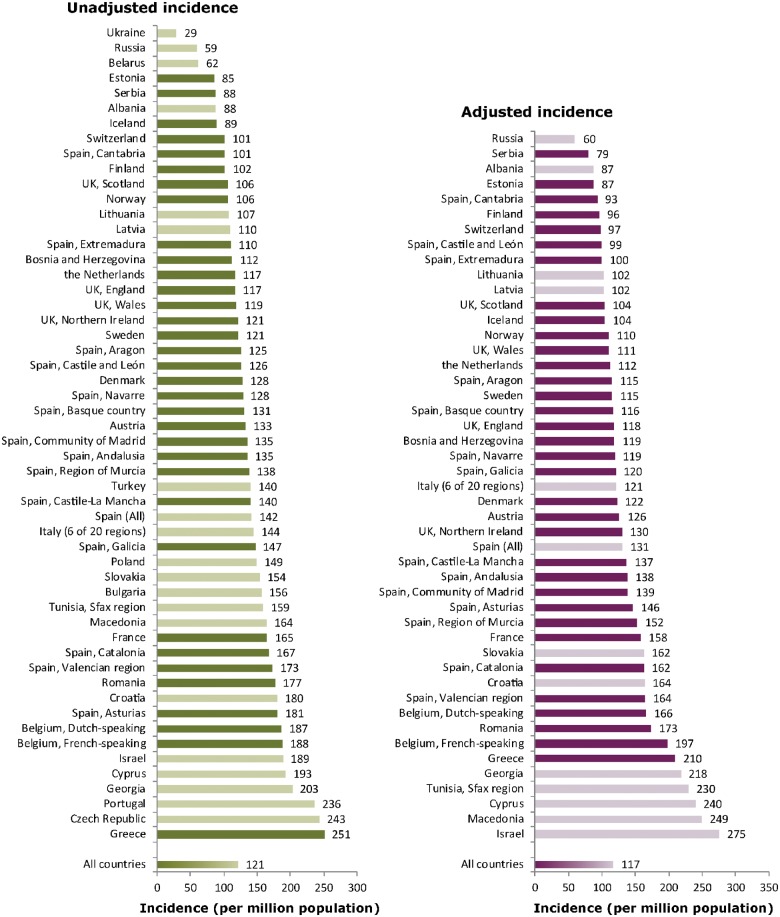
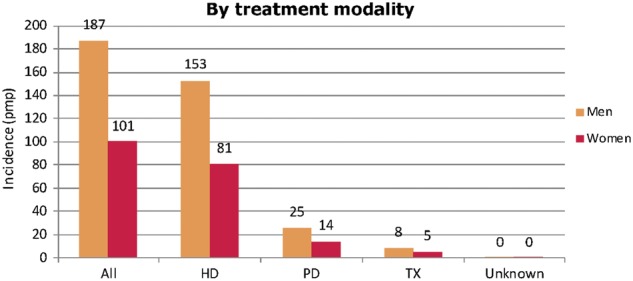
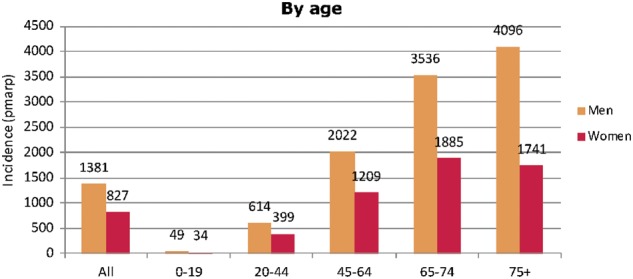
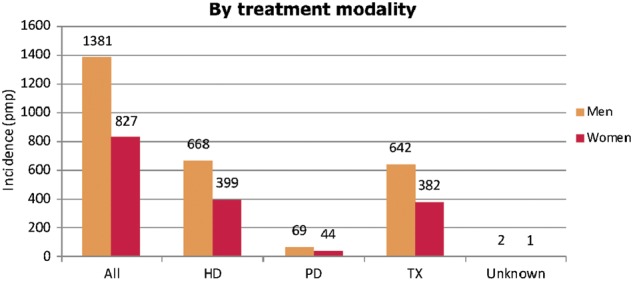
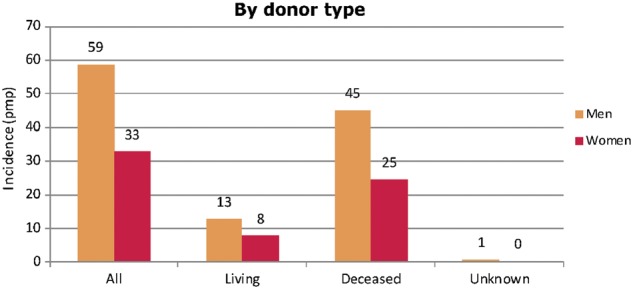
Results: In 2016, the incidence of RRT for ESRD was 121 per million population (pmp), ranging from 29 pmp in Ukraine to 251 pmp in Greece. Almost two-thirds of patients were men, over half were aged ≥65 years and almost a quarter had diabetes mellitus as their primary renal diagnosis. Treatment modality at the start of RRT was haemodialysis for 84% of patients. On 31 December 2016, the prevalence of RRT was 823 pmp, ranging from 188 pmp in Ukraine to 1906 pmp in Portugal. In 2016, the transplant rate was 32 pmp, varying from 3 pmp in Ukraine to 94 pmp in the Spanish region of Catalonia. For patients commencing RRT during 2007-11, the 5-year unadjusted patient survival probability on all RRT modalities combined was 50.5%. For 2016, the incidence and prevalence of RRT were higher among men (187 and 1381 pmp) than women (101 and 827 pmp), and men had a higher rate of kidney transplantation (59 pmp) compared with women (33 pmp). For patients starting dialysis and for patients receiving a kidney transplant during 2007-11, the adjusted patient survival probabilities appeared to be higher for women than for men.

Keywords: dialysis; end-stage renal disease; epidemiology; kidney transplantation; survival analysis.


Figures
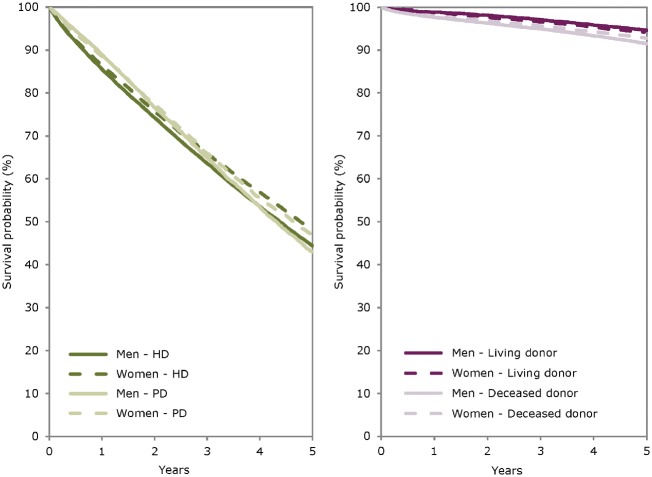
FIGURE 1
FIGURE 1
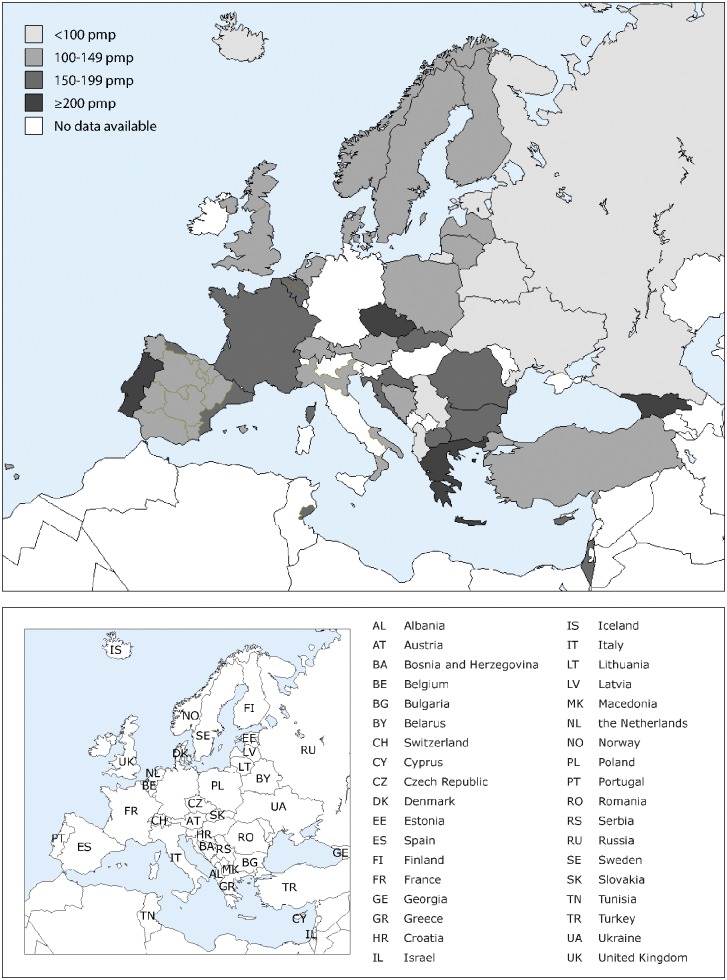
Incidence of RRT pmp in 2016, at Day 1, by country/region, unadjusted. The incidence for Czech Republic, Poland, Russia, Slovakia and Tunisia (Sfax region) only includes patients receiving dialysis. For Serbia and England (UK), the incidence is underestimated by, respectively, ∼26% and ∼2% (see Table 1).
FIGURE 2
FIGURE 2
Unadjusted (left panel) and adjusted (right panel) incidence of RRT pmp in 2016, at Day 1, by country/region. Registries providing individual patient data are shown as dark bars, and registries providing aggregated data as light bars. Adjustment of incidence was performed by standardizing the rates to the age and gender distribution of the EU27 population [5]. The incidence for Czech Republic, Poland, Russia, Slovakia and Tunisia (Sfax region) only includes patients receiving dialysis. For Serbia and England (UK), the incidence is underestimated by, respectively, ∼26% and ∼2% (see Table 1).
FIGURE 3
FIGURE 3
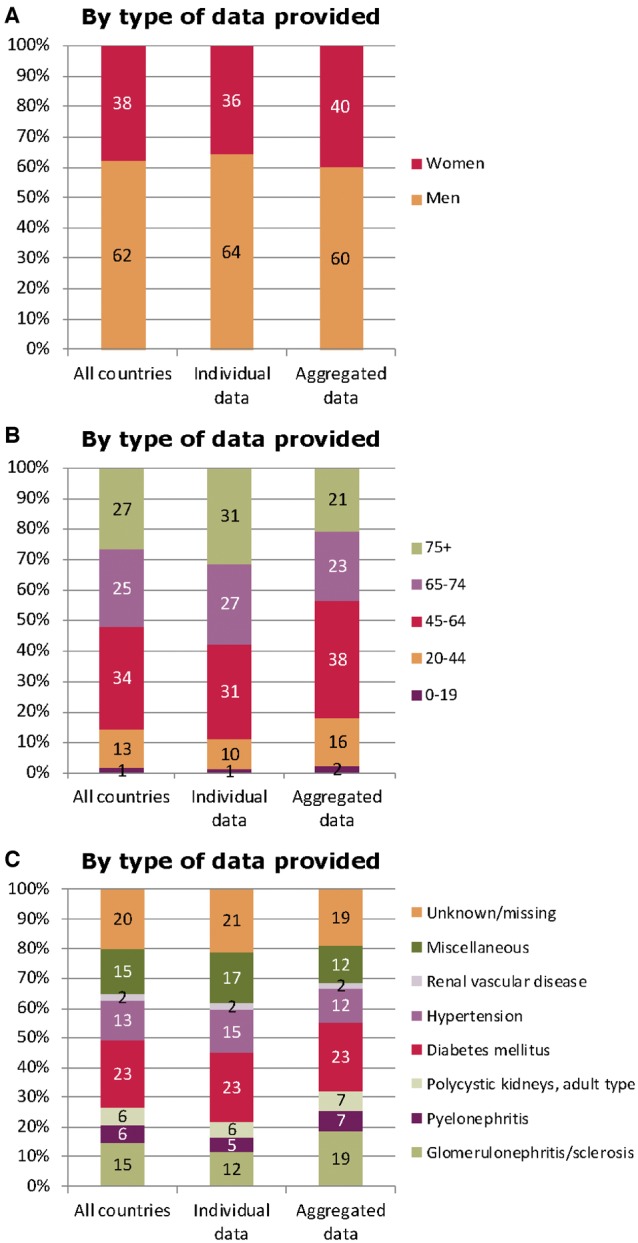
(A) Sex, (B) age and (C) primary renal disease distribution by type of data provided for incident patients accepted for RRT in 2016, at Day 1. See Appendix A1 for a list of countries and regions supplying individual patient data or aggregated data.
FIGURE 4
FIGURE 4
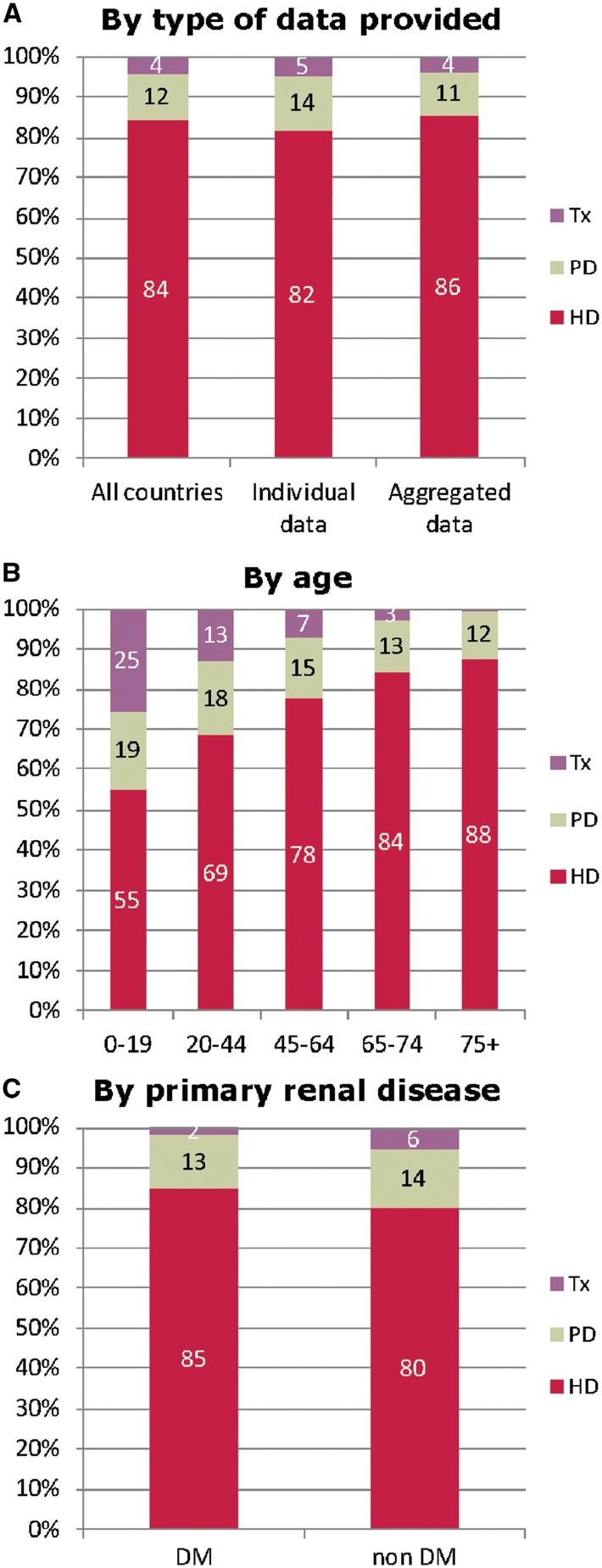
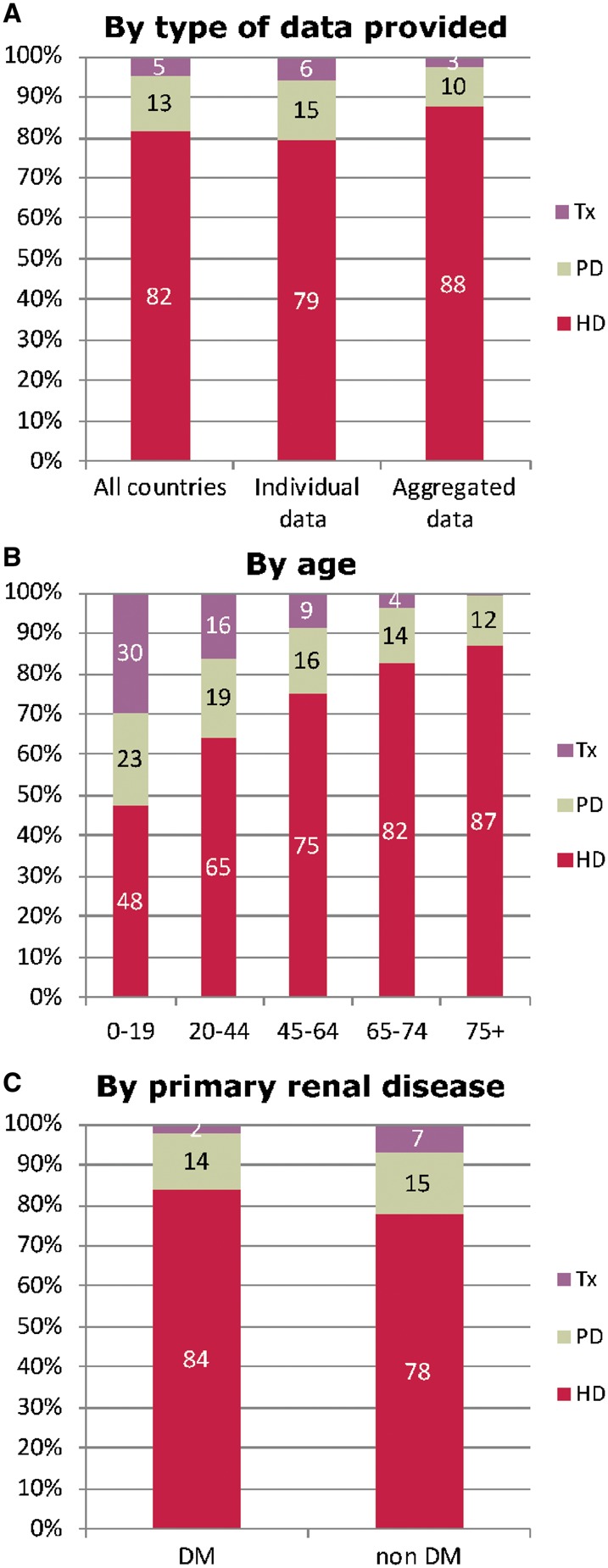
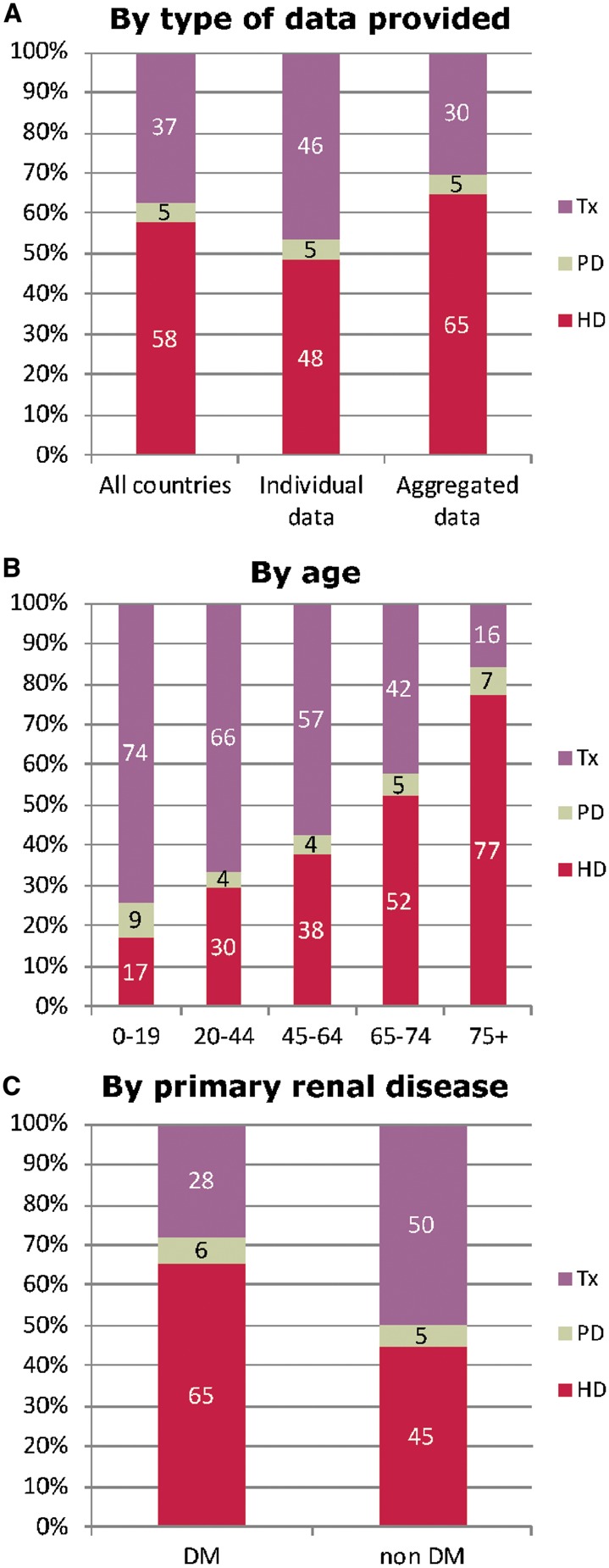
Treatment modality distribution, at Day 1, by (A) type of data provided (B) age and (C) primary renal diagnosis (DM and non-DM) for incident patients accepted for RRT in 2016. Parts (B) and (C) are only based on the data from registries providing individual patient data. See Appendix A1 for a list of countries and regions supplying individual patient data or aggregated data. Tx, kidney transplant.
FIGURE 5
FIGURE 5
Treatment modality distribution, at Day 91, by (A) type of data provided, (B) age and (C) primary renal diagnosis (DM and non-DM) for incident patients accepted for RRT in 2016. Parts (B) and (C) are only based on the data from registries providing individual patient data. See Appendix A1 for a list of countries and regions supplying individual patient data or aggregated data. Tx, kidney transplant.
FIGURE 6
FIGURE 6
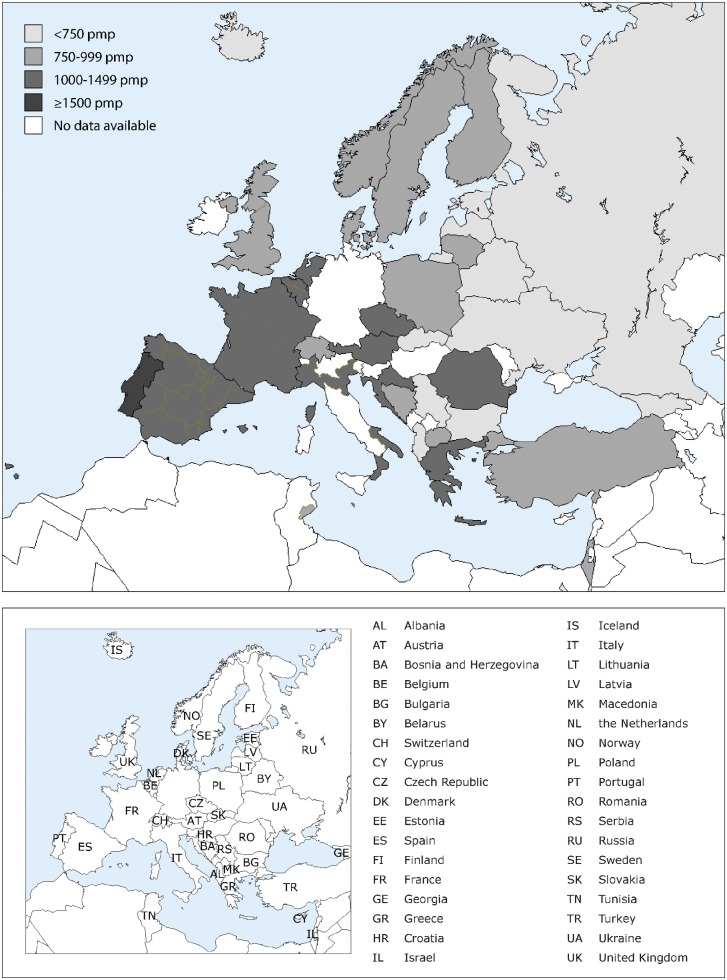
Prevalence of RRT pmp on 31 December 2016 by country/region. The prevalence for Israel only includes patients receiving dialysis. For Romania, Serbia, Switzerland and England (UK), the prevalence is underestimated by, respectively, ∼30, ∼29, ∼6 and ∼1% (see Table 2).
FIGURE 7
FIGURE 7
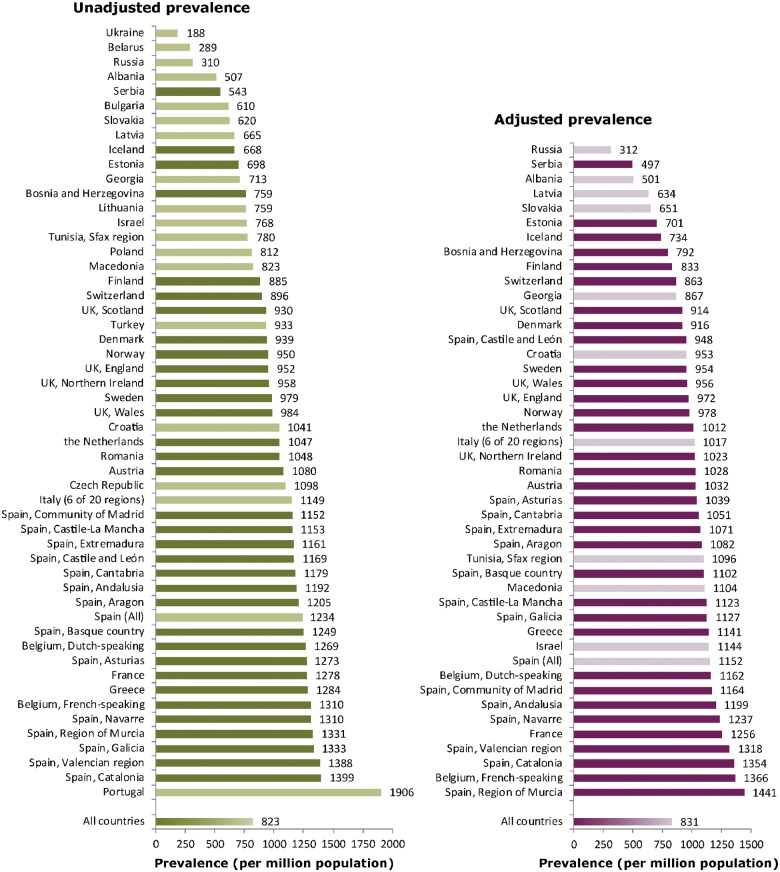
Unadjusted (left panel) and adjusted (right panel) prevalence of RRT pmp on 31 December 2016 by country/region. Registries providing individual patient data are shown as dark bars, and registries providing aggregated data as light bars. Adjustment of the prevalence was performed by standardizing the prevalence to the age and gender distribution of the EU27 population [5]. The prevalence for Israel only includes patients receiving dialysis. For Romania, Serbia, Switzerland and England (UK), the prevalence is underestimated by, respectively, ∼30, ∼29, ∼6 and ∼1% (see Table 2).
FIGURE 8
FIGURE 8
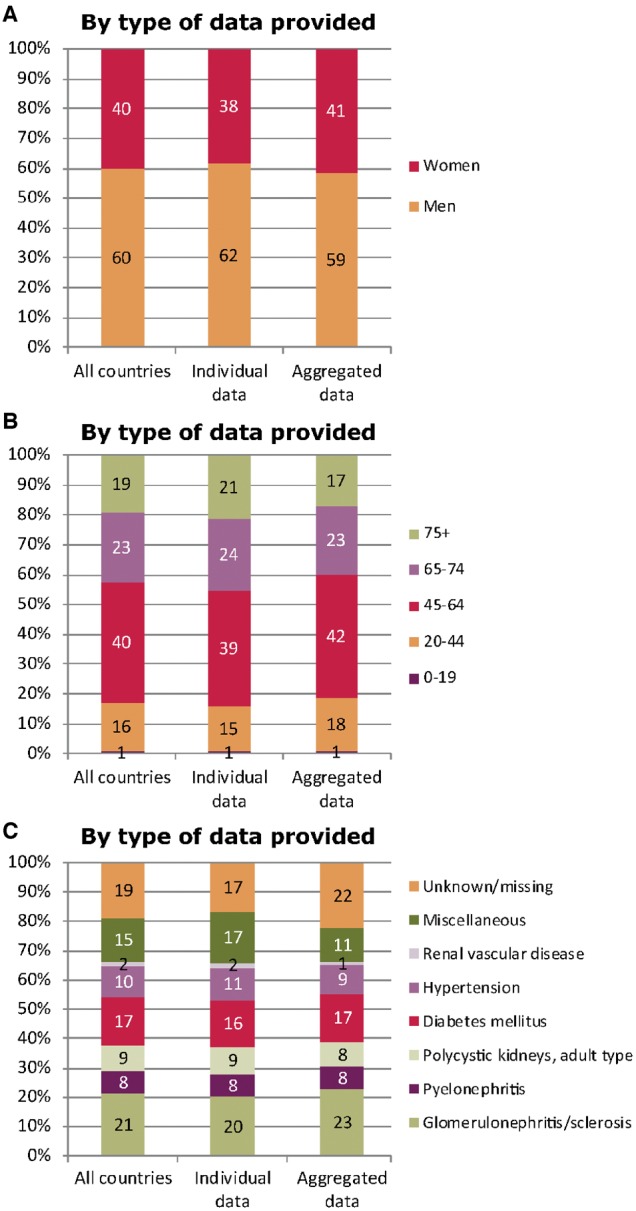
(A) Sex, (B) age and (C) primary renal disease distribution by type of data provided for prevalent patients on RRT on 31 December 2016. See Appendix A1 for a list of countries and regions supplying individual patient data or aggregated data.
FIGURE 9
FIGURE 9
Treatment modality distribution by (A) type of data provided (B) age and (C) primary renal diagnosis (DM and non-DM) for prevalent patients on RRT on 31 December 2016. Parts (B) and (C) are only based on the data from registries providing individual patient data. See Appendix A1 for a list of countries and regions supplying individual patient data or aggregated data. Tx, kidney transplant.
FIGURE 10
FIGURE 10
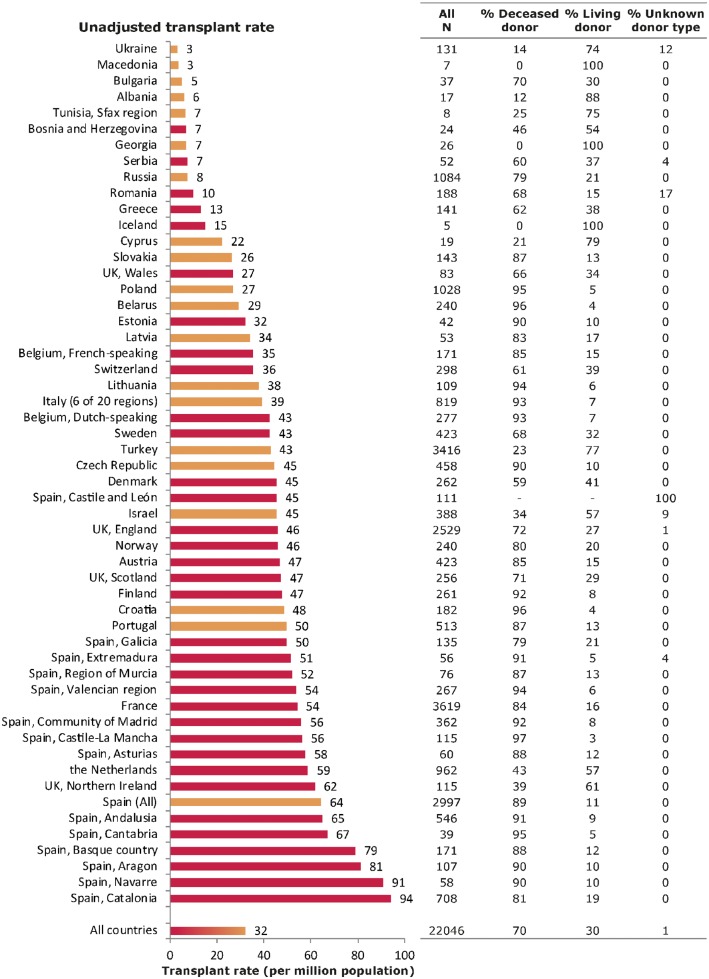
Kidney transplants performed in 2016, as counts and pmp (unadjusted) by country/region. Registries providing individual patient data are shown as dark bars, and registries providing aggregated data as light bars. Data based on patients aged ≥20 years in Dutch-speaking Belgium, French-speaking Belgium, the Spanish regions of Cantabria, Castile and León, Castile-La Mancha and Navarre and UK: England, Northern Ireland and Wales. The total count for Austria is based on residents and non-residents. For Romania, Serbia, Switzerland and England (UK), the overall kidney transplant rate is underestimated by, respectively, ∼30, ∼36, ∼6 and ∼7%.
FIGURE 11
FIGURE 11
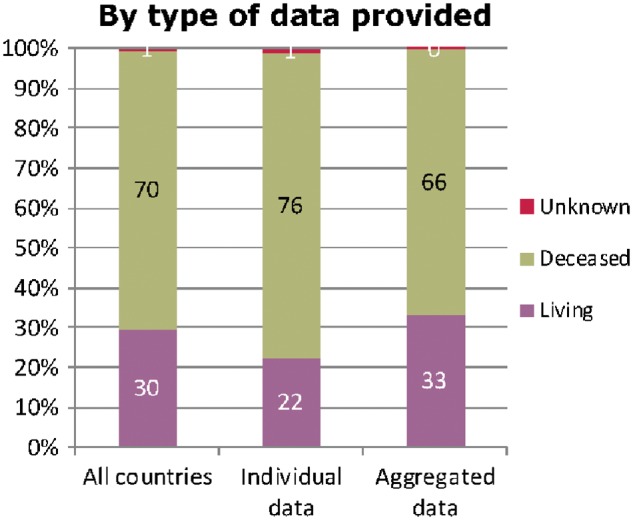
Donor-type distribution for kidney transplants performed in 2016, by type of data provided. See Appendix A1 for a list of countries and regions supplying individual patient data or aggregated data.
FIGURE 12
FIGURE 12
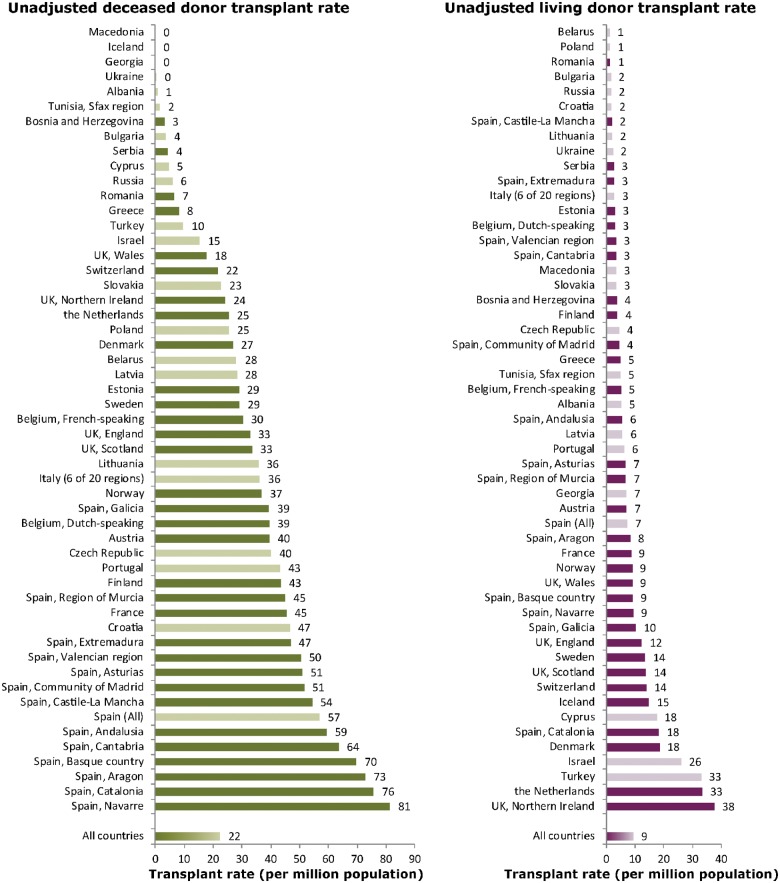
Deceased donor (left panel) and living donor (right panel) kidney transplants performed in 2016 pmp, by country/region, unadjusted. Registries providing individual patient data are shown as dark bars, and registries providing aggregated data as light bars. Data based on patients aged ≥20 years in Dutch-speaking Belgium, French-speaking Belgium, the Spanish regions of Cantabria, Castile and León, Castile-La Mancha and Navarre and UK: England, Northern Ireland and Wales. The total count for Austria is based on residents and non-residents. For Romania, Switzerland and England (UK), the kidney transplant rate is underestimated by, respectively, ∼30, ∼6 and ∼7%. For Serbia, the transplant rate is underestimated by ∼29% for deceased donor transplants and by ∼39% for living donor transplants.
FIGURE 13
FIGURE 13
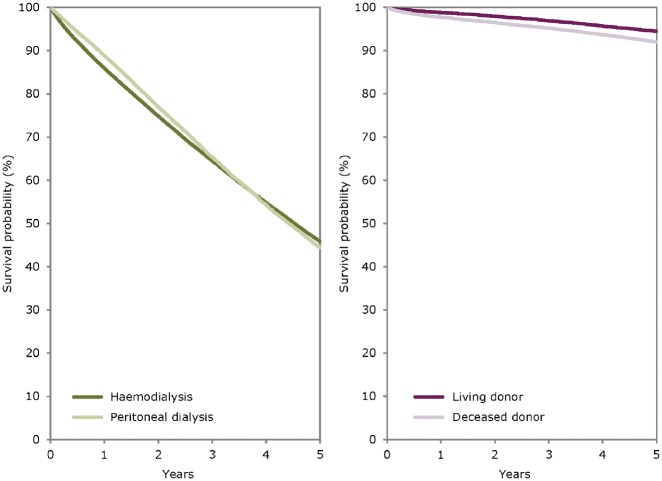
Patient survival of patients starting HD and PD between 2007 and 2011 from Day 91 (left panel) and patients receiving a first kidney transplant from a living or deceased donor between 2007 and 2011 (right panel). Survival on dialysis was censored for transplantation, and adjusted using fixed values for age (67 years), gender (63% men) and primary renal disease (24% DM, 19% hypertension/renal vascular disease, 11% glomerulonephritis and 46% other causes). Survival after kidney transplantation was adjusted using fixed values for age (50 years), gender (63% men) and primary renal disease (14% DM, 10% hypertension/renal vascular disease, 23% glomerulonephritis and 53% other causes). These figures are based on the data from the following registries providing individual patient data: Austria, Belgium (Dutch-speaking), Belgium (French-speaking), Denmark, Finland, France, Greece, Iceland, Norway, Spain (Andalusia), Spain (Aragon), Spain (Asturias), Spain (Basque country), Spain (Cantabria), Spain (Castile and León), Spain (Castile-La Mancha), Spain (Catalonia), Spain (Extremadura), Spain (Galicia), Spain (Community of Madrid), Spain (Valencian region), Sweden, the Netherlands and the UK (all countries).
FIGURE 14
FIGURE 14
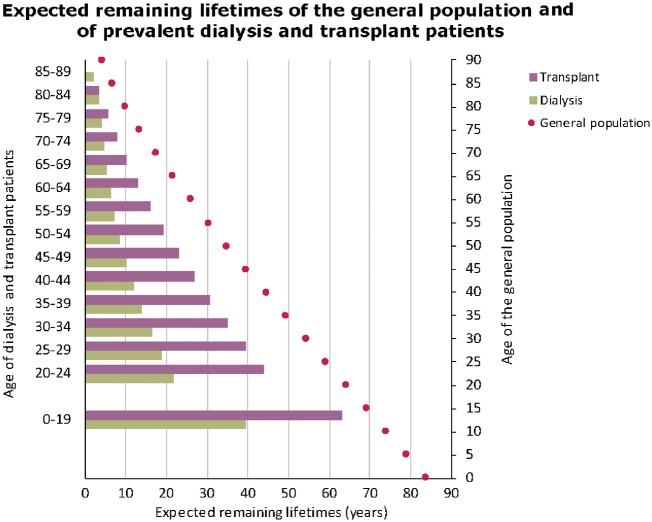
Expected remaining lifetimes of the general population (cohort 2012–16), and of prevalent dialysis and kidney transplant patients (cohort 2012–16), by age and gender. This figure is based on data from the following registries providing individual patient data: Austria, Belgium (Dutch-speaking), Belgium (French-speaking), Denmark, Finland, France, Greece, Iceland, Norway, Spain (Andalusia), Spain (Aragon), Spain (Asturias), Spain (Basque Country), Spain (Cantabria), Spain (Castile and León), Spain (Castile-La Mancha), Spain (Catalonia), Spain (Extremadura), Spain (Galicia), Spain (Community of Madrid), Spain (Valencian region), Sweden, the Netherlands and the UK (all countries).
FIGURE 15
FIGURE 15
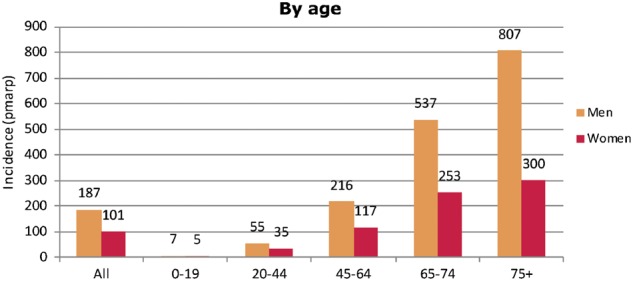
Incidence of RRT per million age-related population (pmarp) in 2016, at Day 1, by age and sex. Figure is only based on the data from registries providing individual patient data (see Appendix A1).
FIGURE 16
FIGURE 16
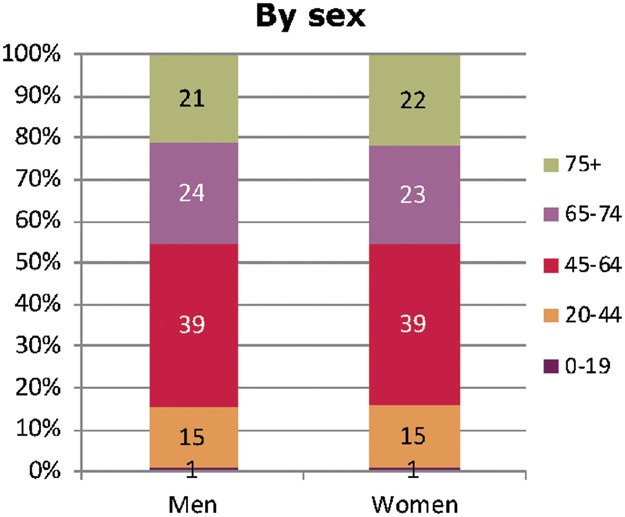
Age distribution by sex for incident patients accepted for RRT in 2016, at Day 1. Figure is only based on the data from registries providing individual patient data (see Appendix A1).
FIGURE 17
FIGURE 17
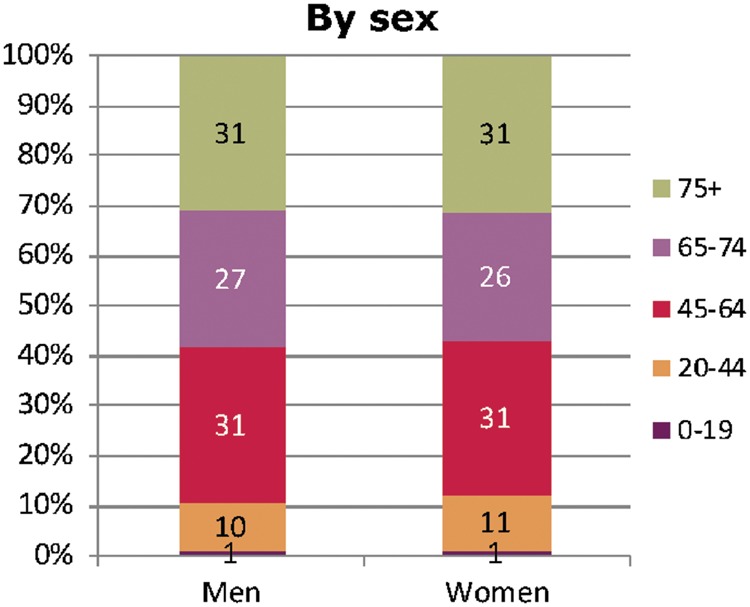
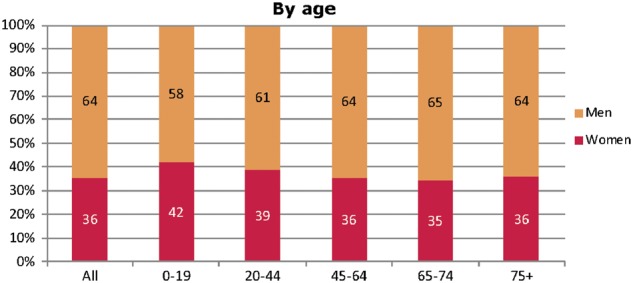
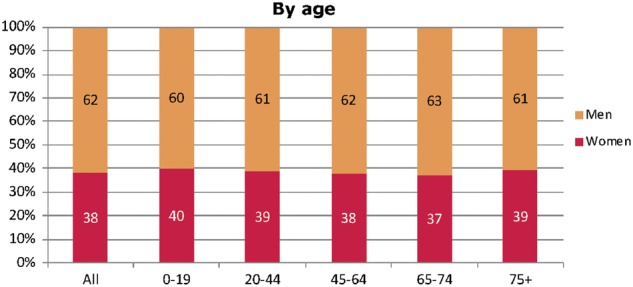
Sex distribution by age for incident patients accepted for RRT in 2016, at Day 1. Figure is only based on the data from registries providing individual patient data (see Appendix A1).
FIGURE 18
FIGURE 18
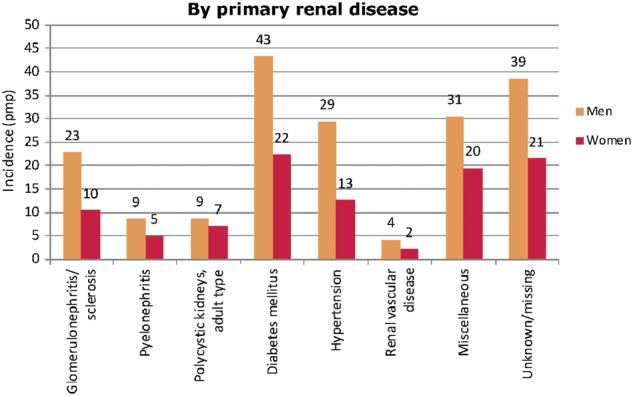
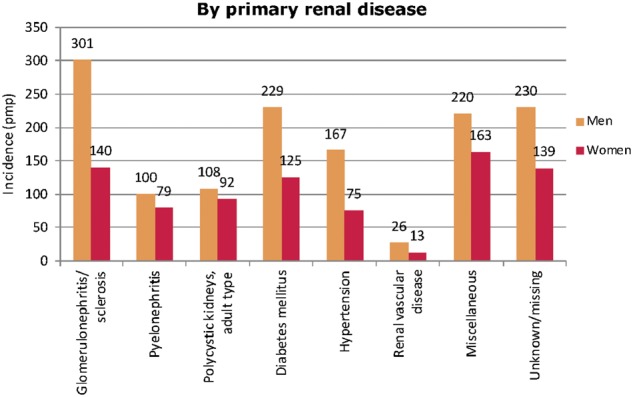
Incidence of RRT pmp in 2016, at Day 1, by primary renal disease and sex. Figure is only based on the data from registries providing individual patient data (see Appendix A1).
FIGURE 19
FIGURE 19
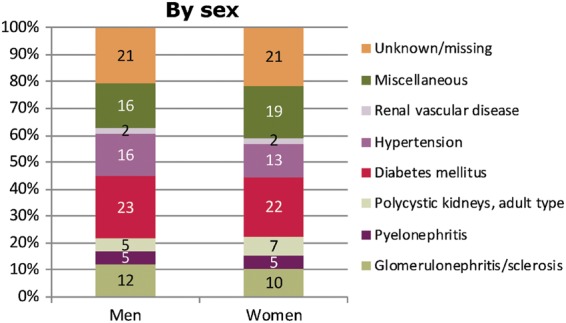
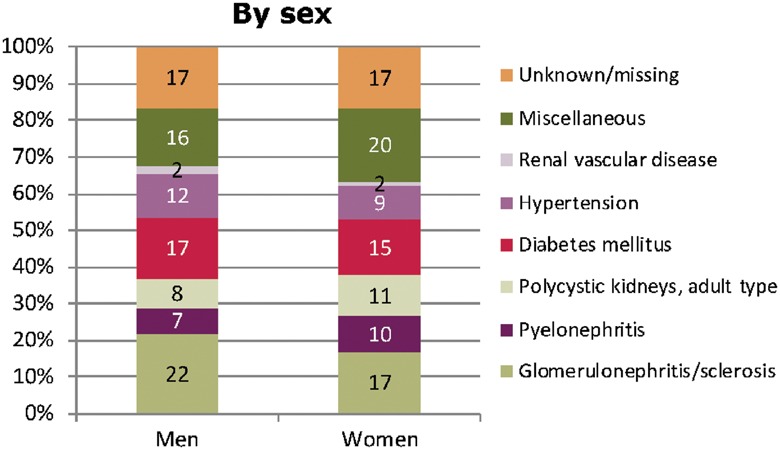
Primary renal disease distribution by sex for incident patients accepted for RRT in 2016, at Day 1. Figure is only based on the data from registries providing individual patient data (see Appendix A1).
FIGURE 20
FIGURE 20
Incidence of RRT pmp in 2016, at Day 1, by treatment modality and sex. Figure is only based on the data from registries providing individual patient data (see Appendix A1).
FIGURE 21
FIGURE 21
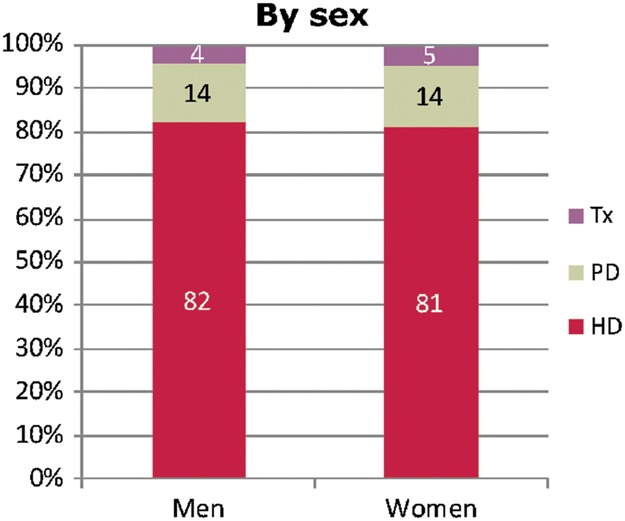
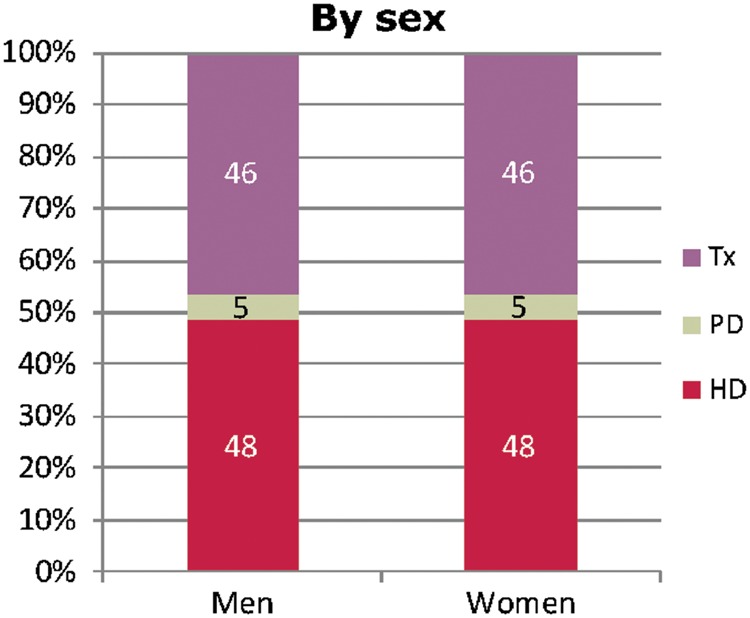
Treatment modality distribution by sex for incident patients accepted for RRT in 2016, at Day 1. Figure is only based on the data from registries providing individual patient data (see Appendix A1). Tx, kidney transplant.
FIGURE 22
FIGURE 22
Prevalence of RRT pmarp on 31 December 2016, by age and sex. Figure is only based on the data from registries providing individual patient data (see Appendix A1).
FIGURE 23
FIGURE 23
Age distribution by sex for prevalent patients on RRT on 31 December 2016. Figure is only based on the data from registries providing individual patient data (see Appendix A1).
FIGURE 24
FIGURE 24
Sex distribution by age for prevalent patients on RRT on 31 December 2016. Figure is only based on data from registries providing individual patient data (see Appendix A1).
FIGURE 25
FIGURE 25
Prevalence of RRT pmp on 31 December 2016, by primary renal disease and sex. Figure is only based on data from registries providing individual patient data (see Appendix A1).
FIGURE 26
FIGURE 26
Primary renal disease distribution by sex for prevalent patients on RRT on 31 December 2016. Figure is only based on the data from registries providing individual patient data (see Appendix A1).
FIGURE 27
FIGURE 27
Prevalence of RRT pmp on 31 December 2016, by treatment modality and sex. Figure is only based on the data from registries providing individual patient data (see Appendix A1).
FIGURE 28
FIGURE 28
Treatment modality distribution by sex for prevalent patients on RRT on 31 December 2016. Figure is only based on the data from registries providing individual patient data (see Appendix A1). Tx, kidney transplant.
FIGURE 29
FIGURE 29
Kidney transplants performed pmp in 2016, by donor type and sex. Figure is only based on the data from registries providing individual patient data (see Appendix A1).
FIGURE 30
FIGURE 30
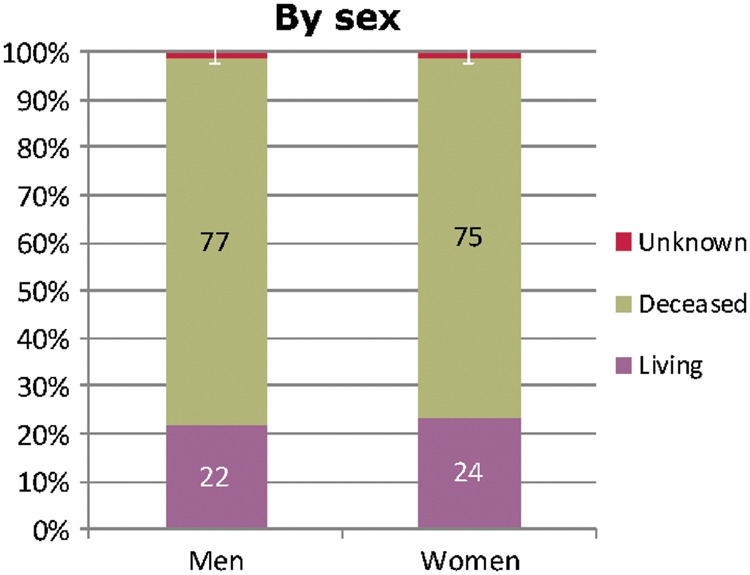
Donor-type distribution for kidney transplants performed in 2016, by sex. Figure is only based on the data from registries providing individual patient data (see Appendix A1).
FIGURE 31
FIGURE 31
Patient survival of men and women starting HD and PD between 2007 and 2011 from Day 91 (left panel) and men and women receiving a first kidney transplant from a living or deceased donor between 2007 and 2011 (right panel). Survival on dialysis was adjusted using fixed values for age (67 years) and primary renal disease (24% diabetes mellitus, 19% hypertension/renal vascular disease, 11% glomerulonephritis and 46% other causes). Survival after kidney transplantation was adjusted using fixed values for age (50 years) and primary renal disease (14% diabetes mellitus, 10% hypertension/renal vascular disease, 23% glomerulonephritis and 53% other causes). These figures are based on the data from the following registries providing individual patient data: Austria, Belgium (Dutch-speaking), Belgium (French-speaking), Denmark, Finland, France, Greece, Iceland, Norway, Spain (Andalusia), Spain (Aragon), Spain (Asturias), Spain (Basque country), Spain (Cantabria), Spain (Castile and León), Spain (Castile-La Mancha), Spain (Catalonia), Spain (Extremadura), Spain (Galicia), Spain (Community of Madrid), Spain (Valencian region), Sweden, the Netherlands and the UK (all countries).

References

    1. ERA-EDTA Registry. ERA-EDTA Registry Annual Report 2016. Amsterdam: Academic Medical Center, Department of Medical Informatics, 2018
    1. Kramer A, Pippias M, Stel VS. et al. Renal replacement therapy in Europe: a summary of the 2013 ERA-EDTA Registry Annual Report with a focus on diabetes mellitus. Clin Kidney J 2016; 9: 457–469 - PMC - PubMed
    1. Pippias M, Kramer A, Noordzij M. et al. The European Renal Association-European Dialysis and Transplant Association Registry Annual Report 2014: a summary. Clin Kidney J 2017; 10: 154–169 - PMC - PubMed
    1. Kramer A, Pippias M, Noordzij M. et al. The European Renal Association-European Dialysis and Transplant Association Registry Annual Report 2015: a summary. Clin Kidney J 2018; 11: 108–122 - PMC - PubMed
    1. Eurostat. http://ec.europa.eu/eurostat/data/database (21 February 2017, date last accessed)