


The prevalence of polycystic ovary syndrome in adolescents: A systematic review and meta-analysis
- PMID: 31583370
- PMCID: PMC6745085
- DOI: 10.18502/ijrm.v17i8.4818
The prevalence of polycystic ovary syndrome in adolescents: A systematic review and meta-analysis
Abstract
Background: Polycystic ovarian syndrome is an endocrine disorder with many complications. This syndrome is a growing concern among adolescents around the world, with varying reports of its prevalence in different parts of the world.
Objective: This study aimed to determine the prevalence of polycystic ovary syndrome in adolescents by a systematic review and meta-analysis.
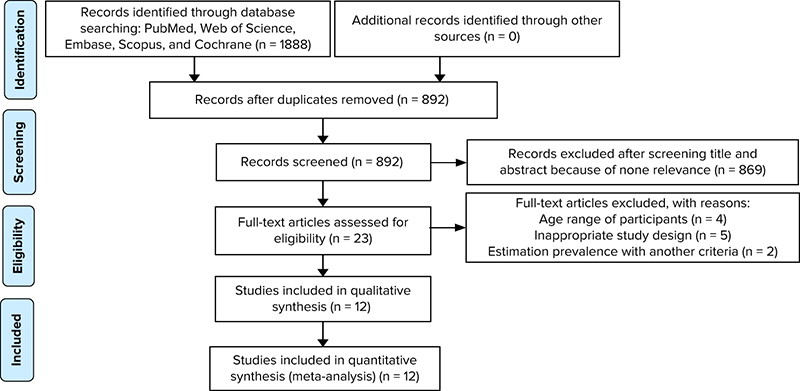
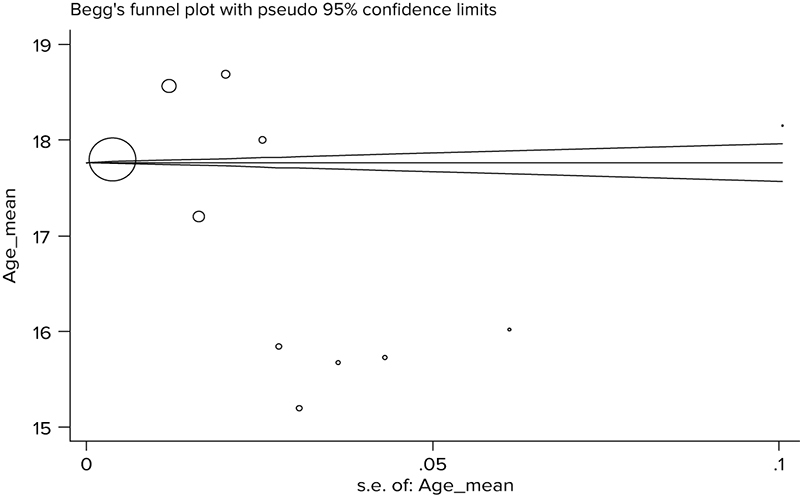
Materials and methods: In this study, a search for published articles with an English language limitation and without a time limit was done in different databases (Scopus, PubMed, and Web of Science, Emabse and Cochrane) in January 2019. The 12 studies that met the criteria for entering a qualitative assessment scale of 5 and higher were subjected to systematic review and meta-analysis. Egger and Begg's tests were used to check the publication bias. Data were analyzed with STATA software, version 11.1.
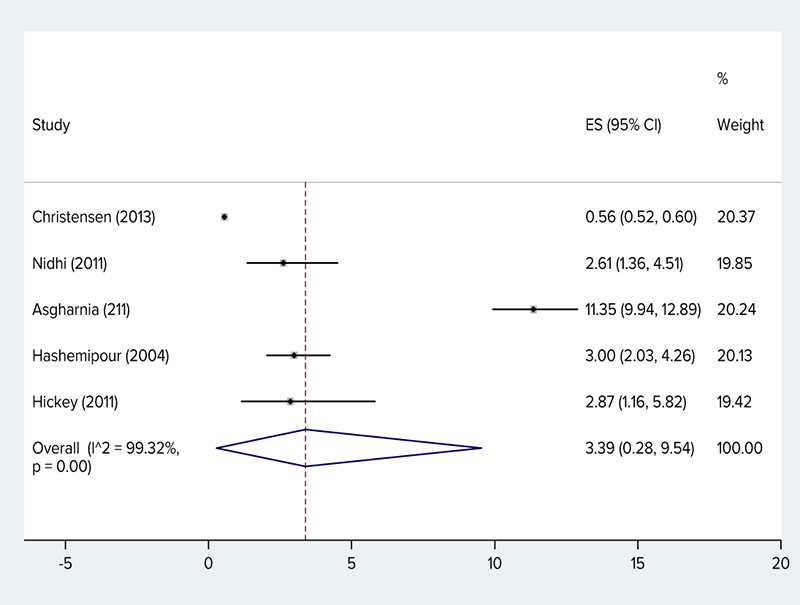
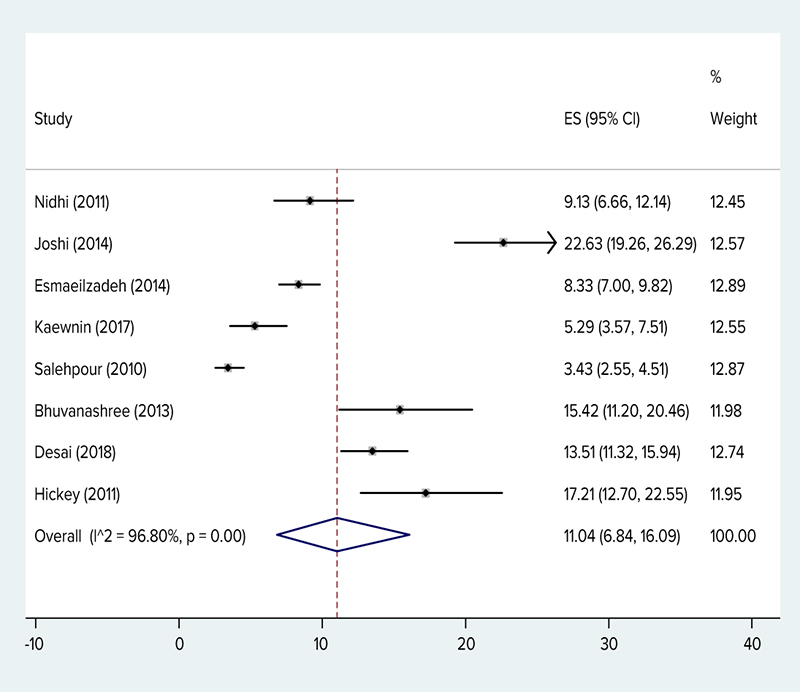
Results: Twelve studies were included for meta-analysis. The total number of participants in the study was 149,477. The average quality score of all studies was 8.67 (range: 5-10). The prevalence of polycystic ovarian syndrome in adolescents based on the Rotterdam criteria was 11.04% (95% CI: 6.84-16.09%), based on the National Institute of Health criteria, it was 3.39% (95% CI: 0.28-9.54%), and based on Androgen Excess and Polycystic Ovary Syndrome Society, it was 8.03% (95% CI: 6.24-10.01%).
Conclusion: The result of this study showed that there is a variation in the prevalence of PCOS in adolescents based on different criteria; we suggest more community-based studies among adolescences in different parts of the world.
Keywords: Adolescence; Meta-analysis; Polycystic ovary syndrome; Prevalence.
Copyright © 2019 Marzieh Saei Ghare Naz et al.
Conflict of interest statement
The authors declare no conflict of interest.
Figures
References
-
- Farooq R. Short Review on Polycystic Ovarian Syndrome. Journal of Medicine. 2018;19:49–53.
-
- Diamanti-Kandarakis E. PCOS in adolescents. Best Pract Res Clin Obstet Gynaecol. 2009;24:173–183. - PubMed
Publication types
LinkOut - more resources
Full Text Sources
Miscellaneous