


Therapeutic Delivery of Ang(1-7) via Genetically Modified Probiotic: A Dosing Study
- PMID: 31586210
- PMCID: PMC7109904
- DOI: 10.1093/gerona/glz222
Therapeutic Delivery of Ang(1-7) via Genetically Modified Probiotic: A Dosing Study
Abstract
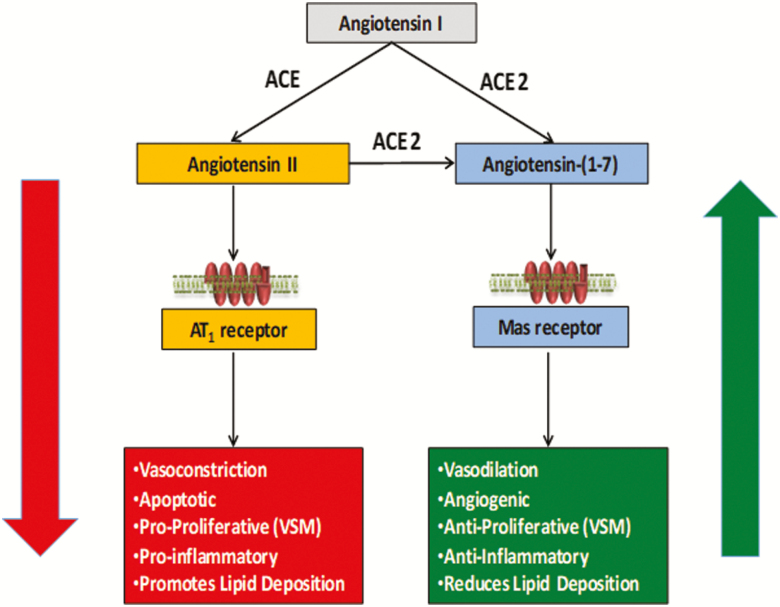
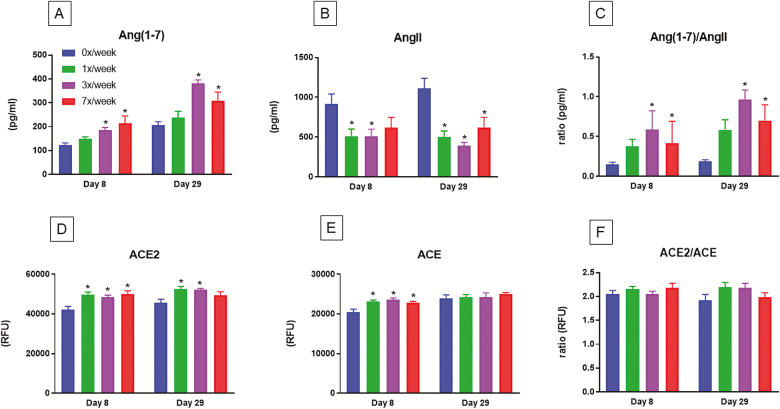
In recent years a number of beneficial health effects have been ascribed to the renin-angiotensin system (RAS) that extend beyond lowering blood pressure, primarily mediated via the angiotensin-converting enzyme-2 (ACE2)/angiotensin (1-7) or Ang(1-7)/MAS receptor axis. Moreover, once thought as merely a systemic effector, RAS components exist within tissues. The highest tissue concentrations of ACE2 mRNA are located in the gut making it an important target for altering RAS function. Indeed, genetically engineered recombinant probiotics are promising treatment strategies offering delivery of therapeutic proteins with precision. An Ang(1-7) secreting Lactobacillus paracasei (LP) or LP-A has been described for regulation of diabetes and hypertension; however, we are the first to the best of our knowledge to propose this paradigm as it relates to aging. In this Research Practice manuscript, we provide proof of concept for using this technology in a well-characterized rodent model of aging: the Fisher344 x Brown Norway Rat (F344BN). Our primary findings suggest that LP-A increases circulating levels of Ang(1-7) both acutely and chronically (after 8 or 28 treatment days) when administered 3× or 7×/week over 4 weeks. Our future preclinical studies will explore the impact of this treatment on gut and other age-sensitive distal tissues such as brain and muscle.
Keywords: Lactobacillus; Ang-(1–7); Dysbiosis; Probiotics; Renin-angiotensin system.
© The Author(s) 2019. Published by Oxford University Press on behalf of The Gerontological Society of America. All rights reserved. For permissions, please e-mail: journals.permissions@oup.com.
Figures
References
-
- Zoccali C, Mallamaci F. Pleiotropic effects of angiotensin II blockers in hemodialysis patients: myth or reality? Kidney Int. 2014;86:469–471. doi:10.1038/ki.2014.155 - PubMed
-
- Harmer D, Gilbert M, Borman R, Clark KL. Quantitative mRNA expression profiling of ACE 2, a novel homologue of angiotensin converting enzyme. FEBS Lett. 2002;532:107–110. doi:10.1016/s0014-5793(02)03640-2 - PubMed
-
- Tipnis SR, Hooper NM, Hyde R, Karran E, Christie G, Turner AJ. A human homolog of angiotensin-converting enzyme. cloning and functional expression as a captopril-insensitive carboxypeptidase. J Biol Chem. 2000;275:33238–33243. doi:10.1074/jbc.M002615200 - PubMed
Publication types
MeSH terms
Substances
Grants and funding
LinkOut - more resources
Full Text Sources
Medical
Research Materials
Miscellaneous
