


Influence of the Gut Microbiome, Diet, and Environment on Risk of Colorectal Cancer
- PMID: 31586566
- PMCID: PMC6957737
- DOI: 10.1053/j.gastro.2019.06.048
Influence of the Gut Microbiome, Diet, and Environment on Risk of Colorectal Cancer
Abstract
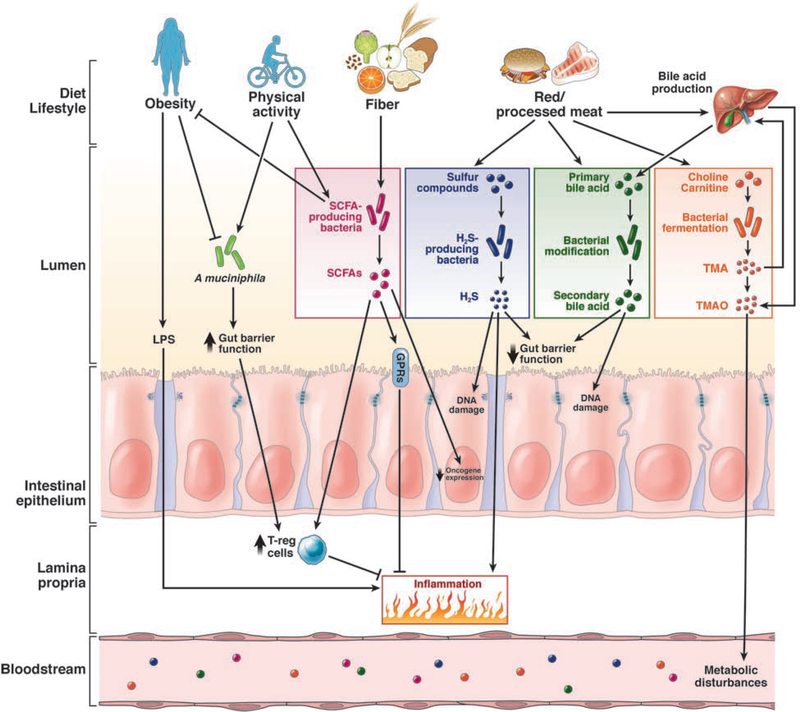
Researchers have discovered associations between elements of the intestinal microbiome (including specific microbes, signaling pathways, and microbiota-related metabolites) and risk of colorectal cancer (CRC). However, it is unclear whether changes in the intestinal microbiome contribute to the development of sporadic CRC or result from it. Changes in the intestinal microbiome can mediate or modify the effects of environmental factors on risk of CRC. Factors that affect risk of CRC also affect the intestinal microbiome, including overweight and obesity; physical activity; and dietary intake of fiber, whole grains, and red and processed meat. These factors alter microbiome structure and function, along with the metabolic and immune pathways that mediate CRC development. We review epidemiologic and laboratory evidence for the influence of the microbiome, diet, and environmental factors on CRC incidence and outcomes. Based on these data, features of the intestinal microbiome might be used for CRC screening and modified for chemoprevention and treatment. Integrated prospective studies are urgently needed to investigate these strategies.
Keywords: Colitis; Dysbiosis; Fecal Microbiota Transplant; Infection.
Copyright © 2020 AGA Institute. Published by Elsevier Inc. All rights reserved.
Figures
References
-
- Siegel RL, Miller KD, Jemal A. Cancer statistics, 2019. CA Cancer J Clin 2019. - PubMed
-
- Siegel RL, Miller KD, Fedewa SA, et al. Colorectal cancer statistics, 2017. CA Cancer J Clin 2017;67:177–193. - PubMed
-
- Islami F, Goding Sauer A, Miller KD, et al. Proportion and number of cancer cases and deaths attributable to potentially modifiable risk factors in the United States. CA Cancer J Clin 2018;68:31–54. - PubMed
Publication types
MeSH terms
Grants and funding
LinkOut - more resources
Full Text Sources
Other Literature Sources
Medical
