


Maternal cannibalism in two populations of wild chimpanzees
- PMID: 31587157
- PMCID: PMC7080684
- DOI: 10.1007/s10329-019-00765-6
Maternal cannibalism in two populations of wild chimpanzees
Abstract
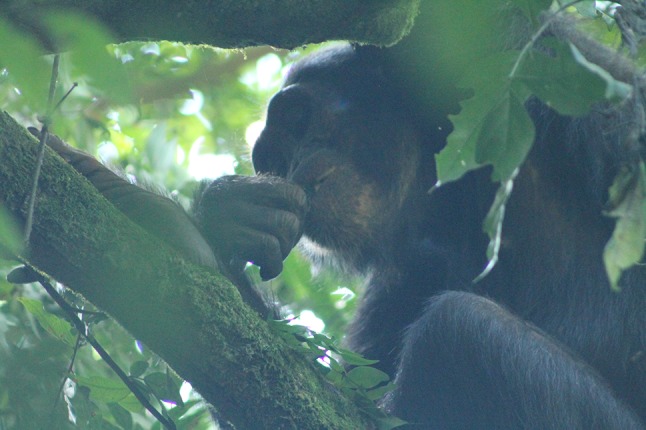
Maternal cannibalism has been reported in several animal taxa, prompting speculations that the behavior may be part of an evolved strategy. In chimpanzees, however, maternal cannibalism has been conspicuously absent, despite high levels of infant mortality and reports of non-maternal cannibalism. The typical response of chimpanzee mothers is to abandon their deceased infant, sometimes after prolonged periods of carrying and grooming the corpse. Here, we report two anomalous observations of maternal cannibalism in communities of wild chimpanzees in Uganda and Ivory Coast and discuss the evolutionary implications. Both infants likely died under different circumstances; one apparently as a result of premature birth, the other possibly as a result of infanticide. In both cases, the mothers consumed parts of the corpse and participated in meat sharing with other group members. Neither female presented any apparent signs of ill health before or after the events. We concluded that, in both cases, cannibalizing the infant was unlikely due to health-related issues by the mothers. We discuss these observations against a background of chimpanzee mothers consistently refraining from maternal cannibalism, despite ample opportunities and nutritional advantages. We conclude that maternal cannibalism is extremely rare in this primate, likely due to early and strong mother-offspring bond formation, which may have been profoundly disrupted in the current cases.
Keywords: Cannibalism; Chimpanzee; Maternal cannibalism; Parental investment.
Conflict of interest statement
The authors declare that they have no conflicts of interest.
Figures

References
-
- Altmann J. Baboon mothers and infants. Chicago: University of Chicago Press; 2001.
-
- Anderson JR. Comparative thanatology. Curr Biol. 2016;26(13):R553–556. - PubMed
-
- Biro D, Humle T, Koops K, Sousa C, Hayashi M, Matsuzawa T. Chimpanzee mothers at Bossou, Guinea carry the mummified remains of their dead infants. Curr Biol. 2010;20(8):R351–352. - PubMed
-
- Boesch C, Boesch-Achermann H. The chimpanzees of the Taï forest: behavioural ecology and evolution. Oxford: Oxford University Press; 2000.
MeSH terms
LinkOut - more resources
Full Text Sources
