Clinical Trial
. 2019 Nov 5;30(5):855-864.e3.
doi: 10.1016/j.cmet.2019.09.002. Epub 2019 Oct 3.

Biliopancreatic Diversion Induces Greater Metabolic Improvement Than Roux-en-Y Gastric Bypass

Affiliations
Clinical Trial

Biliopancreatic Diversion Induces Greater Metabolic Improvement Than Roux-en-Y Gastric Bypass

Lydia-Ann Harris et al. Cell Metab. .

Abstract

Diabetes remission is greater after biliopancreatic diversion (BPD) than Roux-en-Y gastric bypass (RYGB) surgery. We used a mixed-meal test with ingested and infused glucose tracers and the hyperinsulinemic-euglycemic clamp procedure with glucose tracer infusion to assess the effect of 20% weight loss induced by either RYGB or BPD on glucoregulation in people with obesity (ClinicalTrials.gov number: NCT03111953). The rate of appearance of ingested glucose into the circulation was much slower, and the postprandial increases in plasma glucose and insulin concentrations were markedly blunted after BPD compared to after RYGB. Insulin sensitivity, assessed as glucose disposal rate during insulin infusion, was ∼45% greater after BPD than RYGB, whereas β cell function was not different between groups. These results demonstrate that compared with matched-percentage weight loss induced by RYGB, BPD has unique beneficial effects on glycemic control, manifested by slower postprandial glucose absorption, blunted postprandial plasma glucose and insulin excursions, and greater improvement in insulin sensitivity.

Keywords: bariatric surgery; insulin sensitivity; obesity.


Conflict of interest statement

DECLARATION OF INTERESTS

S.K. is a shareholder of Aspire Bariatrics, receives research funding from Merck Research Laboratories and Janssen Pharmaceuticals, and serves as a member of the Merck Global Diabetes and Metabolism Scientific Advisory Board. The other authors have nothing to disclose.

Figures
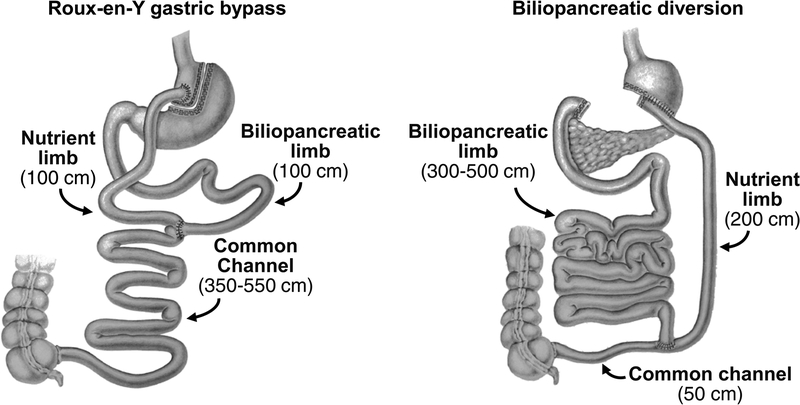
Figure 1.
Figure 1.
Diagram of Roux-en-Y gastric bypass and biliopancreatic diversion surgeries. Roux-en-Y gastric bypass involves the creation of a small gastric pouch (<30 ml) that is anastomosed to a segment of jejunum, which was transected at 75 cm from the Ligament of Treitz. Intestinal continuity is restored via an anastomosis between the nutrient limb and the excluded biliopancreatic limb 100 cm distal to the gastro-jejunostomy to form a 100-cm nutrient limb, a 100-cm biliopancreatic limb, and a variable length (350–550 cm) common channel. Biliopancreatic diversion involves a horizontal gastrectomy, and anastomosis of the remaining stomach (~300 ml) to the small intestine, 250 cm from the ileocecal valve. The excluded biliopancreatic limb is anastomosed to the distal ileum, 50 cm from the ileocecal valve to form a 200-cm nutrient limb, a variable length (300–500 cm) biliopancreatic limb, and a 50-cm common channel.
Figure 2.
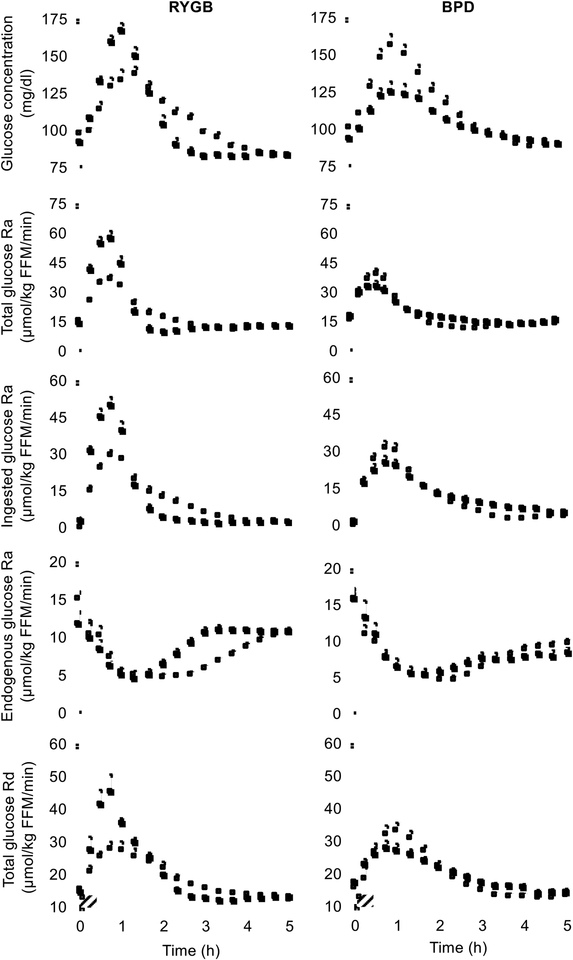
Figure 2.. Weight loss induced by RYGB and BPD causes marked differences in glucose dynamics during mixed meal ingestion
Plasma glucose concentrations, total glucose Ra into the systemic circulation, ingested glucose Ra, endogenous glucose Ra, and total glucose Rd from the systemic circulation after ingesting a mixed-meal over 30 min (striped box) before (white squares) and after (black squares) 20% weight loss induced by RYGB or BPD surgery. Abbreviations: BPD, biliopancreatic diversion; FFM, fat-free mass. Ra, rate of appearance; Rd, disposal rate; RYGB, Roux-en-Y gastric bypass. Data are means ± SEM. See also Figure S1.
Figure 3.
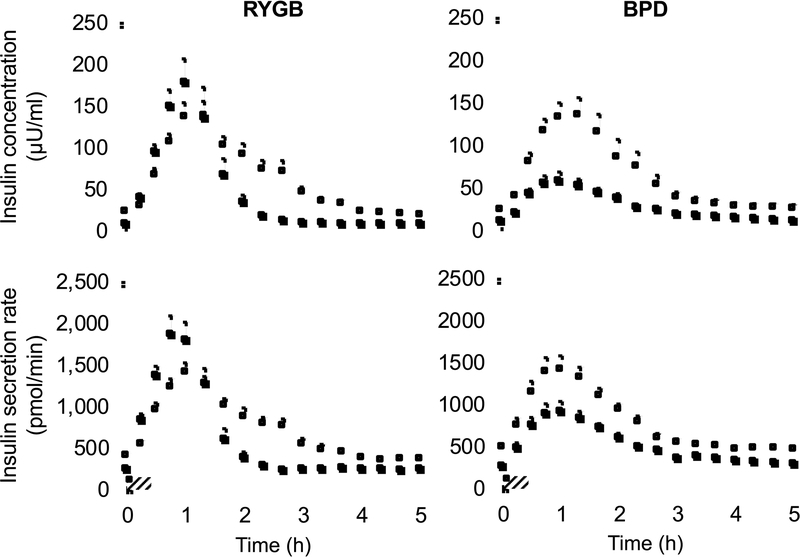
Figure 3.. Weight loss induced by RYGB and BPD causes marked differences in the insulin response to mixed meal ingestion
Plasma insulin concentrations and insulin secretion rate after ingesting a mixed-meal over 30 min (striped box) before (white squares) and after (black squares) 20% weight loss induced by Roux-en-Y gastric bypass (RYGB) or biliopancreatic diversion (BPD) surgery. Data are means ± SEM.
Figure 4.
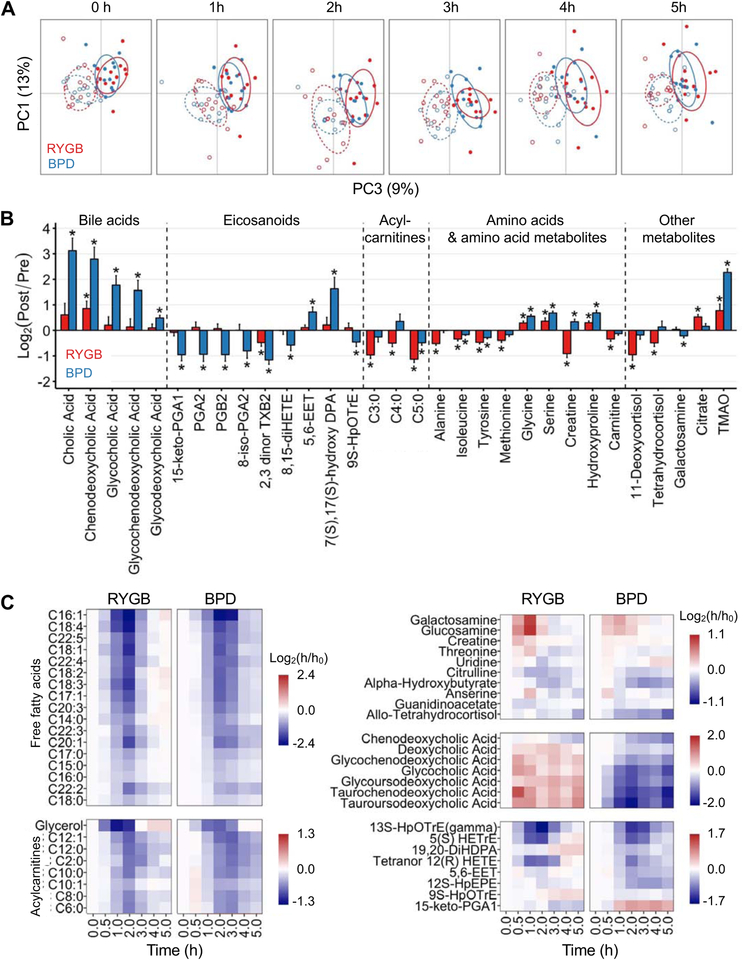
Figure 4.. Weight loss after BPD causes distinct changes in the fasting and postprandial metabolome than weight loss after RYGB
Principal components analysis of plasma metabolite abundances during basal postabsorptive conditions (0 h) and throughout the postprandial period (1 h-5 h) before (solid lines) and after (broken lines) weight loss induced by RYGB (red) and BPD (blue) surgeries (A). Changes in basal plasma metabolite abundances that were different (2-way interaction FDR <0.3) after 20% weight loss induced by RYGB (red bars) and BPD (blue bars) surgery; * post-hoc within-group paired (pre-post weight loss) t-test FDR <0.1 (B). Heatmaps showing the meal-induced changes in plasma metabolite abundances that were different after 20% weight loss induced by RYGB and BPD (3-way interaction FDR <0.1 and post-hoc 2-way interaction FDR <0.1 in at least one of the two groups) (C). Abbreviations: BPD, biliopancreatic diversion; RYGB, Roux-en-Y gastric bypass. See also Figure S2 and Table S1.
Figure 5.
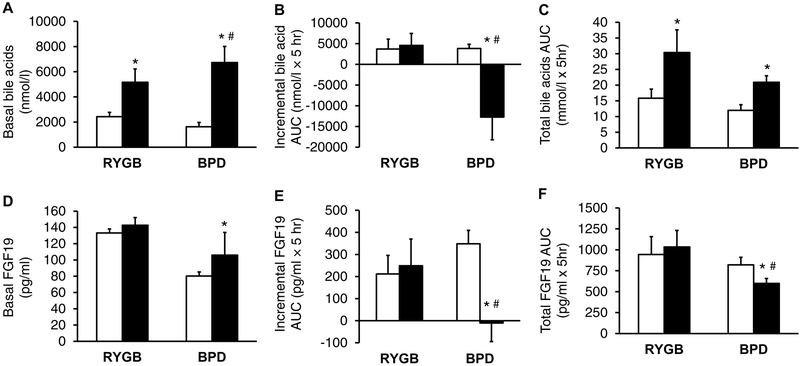
Figure 5.. Weight loss after BPD causes a greater increase in fasting plasma bile acids than weight loss after RYGB
Basal concentrations, incremental 5-h postprandial concentration areas under the curve (AUC) above basal values, and total 5-h postprandial concentration AUC above zero for bile acids (A–C) and FGF19 (D–F) before (white bars) and after (black bars) 20% weight loss induced by Roux-en-Y gastric bypass (RYGB) or biliopancreatic diversion (BPD) surgery. * Value significantly different from the corresponding before weight loss value, p<0.05. #Value significantly different from the RYGB value, p<0.05. Abbreviations: BPD, biliopancreatic diversion; RYGB, Roux-en-Y gastric bypass. Data are means ± SEM.
Figure 6.
Figure 6.. Matched weight loss causes a greater improvement in insulin sensitivity, but not β-cell function, after BPD than RYGB
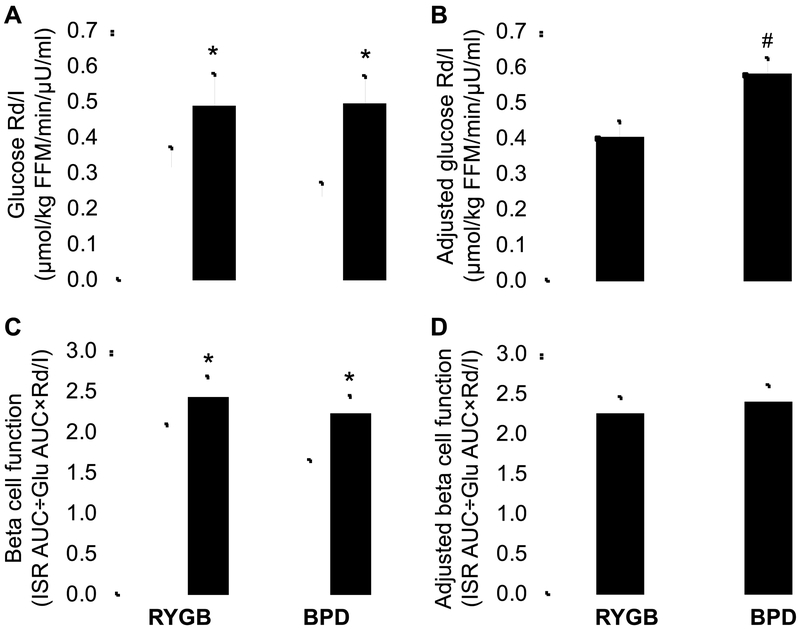
Glucose Rd/I during the hyperinsulinemic-euglycemic clamp procedure (A) and β-cell function assessed after mixed meal ingestion (C) before (white bars) and after (black bars) 20% weight loss induced by RYGB or BPD surgery and glucose Rd/I after weight loss adjusted for baseline Rd/I and body mass index (B) and β-cell function after weight loss adjusted for baseline β-cell function and body mass index (D). * Value significantly different from the corresponding before weight loss value, p<0.05. #Value significantly different from the RYGB value, p<0.05. Abbreviations: BPD, biliopancreatic diversion; FFM, fat-free mass; Glu, glucose; I, plasma insulin concentration; ISR, insulin secretion rate; Rd, disposal rate; RYGB, Roux-en-Y gastric bypass. Data are means ± SEM.

Comment in

References

    1. Ahmad NN, Pfalzer A, and Kaplan LM (2013). Roux-en-Y gastric bypass normalizes the blunted postprandial bile acid excursion associated with obesity. Int. J. Obes. (Lond) 37, 1553. - PMC - PubMed
    1. Baud G, Daoudi M, Hubert T, Raverdy V, Pigeyre M, Hervieux E, Devienne M, Ghunaim M, Bonner C, Quenon A, et al. (2016). Bile Diversion in Roux-en-Y Gastric Bypass Modulates Sodium-Dependent Glucose Intestinal Uptake. Cell Metab 23, 547–553. - PubMed
    1. Bennett BJ, de Aguiar Vallim TQ, Wang Z, Shih DM, Meng Y, Gregory J, Allayee H, Lee R, Graham M, Crooke R, et al. (2013). Trimethylamine-N-oxide, a metabolite associated with atherosclerosis, exhibits complex genetic and dietary regulation. Cell Metab 17, 49–60. - PMC - PubMed
    1. Bradley D, Conte C, Mittendorfer B, Eagon JC, Varela JE, Fabbrini E, Gastaldelli A, Chambers KT, Su X, Okunade A, et al. (2012a). Gastric bypass and banding equally improve insulin sensitivity and β cell function. J. Clin. Invest 122, 4667–4674. - PMC - PubMed
    1. Bradley D, Magkos F, Eagon JC, Varela JE, Gastaldelli A, Okunade AL, Patterson BW, and Klein S (2014). Matched weight loss induced by sleeve gastrectomy or gastric bypass similarly improves metabolic function in obese subjects. Obesity 22, 2026–2031. - PMC - PubMed

Publication types

Associated data