


Violence In Older Adults: Scope, Impact, Challenges, And Strategies For Prevention
- PMID: 31589527
- PMCID: PMC7327526
- DOI: 10.1377/hlthaff.2019.00577
Violence In Older Adults: Scope, Impact, Challenges, And Strategies For Prevention
Abstract
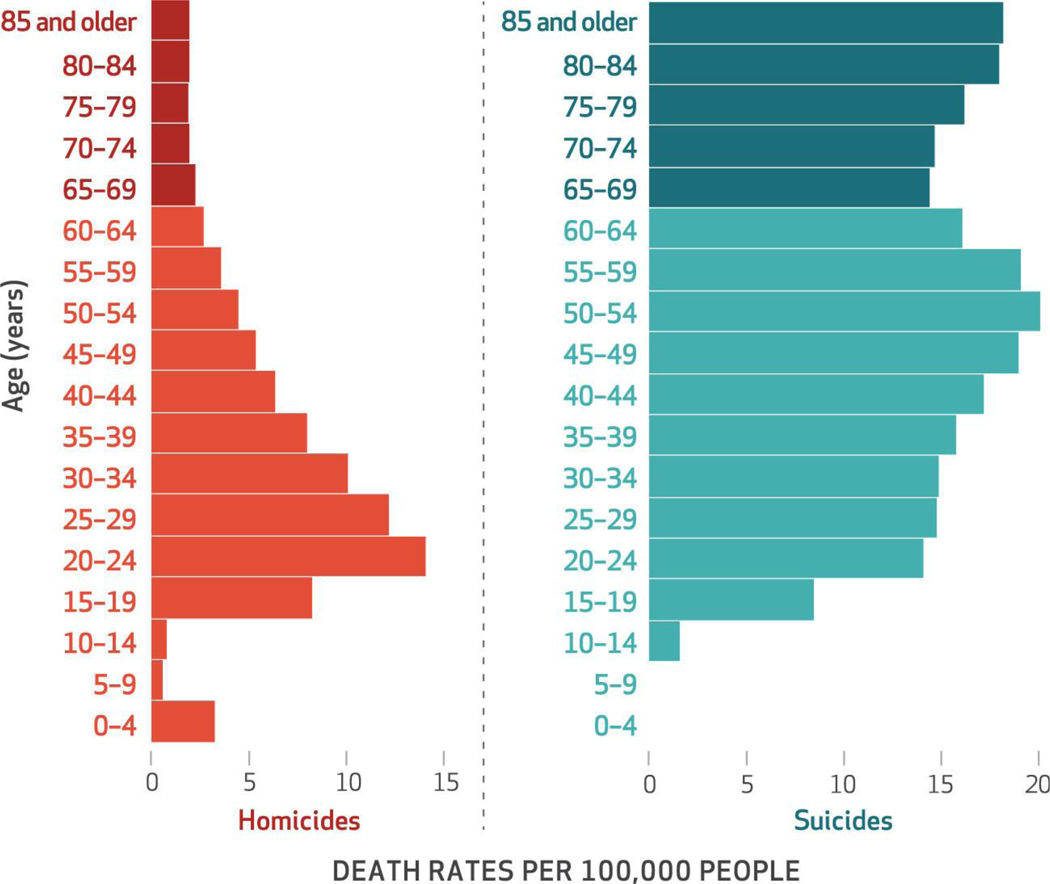
Although often perceived to be a problem of the young, violence commonly affects older adults, a rapidly growing segment of the population. Violence can be directed toward older adults (elder abuse and intimate partner violence), self-directed (suicide), or perpetrated by older adults against others (intimate partner violence and violence in dementia). Across forms of violence, firearm access increases lethality, and veterans may be a particularly high-risk population. The forms of violence in older adults have some common risk factors (such as medical or psychiatric illness) and common challenges for prevention (such as balancing autonomy and well-being in vulnerable adults). The integration of prevention strategies across the life span, disciplines, and forms of violence offers promise for promoting older adult health and well-being. Looking forward, key areas for attention will include raising awareness about these topics and prioritizing funding for the implementation and evaluation of violence prevention interventions in health care settings and the community.
Keywords: Cognitive impairment; Dementia; Elder abuse; Firearms; Health policy; Mental disorders; Mental health; Older adults; Post traumatic stress disorder; Primary care providers; Suicide; Violence.
Figures
References
-
- Ortman JM, Velkoff VA, Hogan H. An aging nation: the older population in the United States. Current Population Reports [serial on the Internet]. 2014. May [cited 2019 Aug 15].
-
- Morgan RE, Mason BJ. Crimes against the elderly, 2003–2013 [Internet]. Washington (DC): Department of Justice, Bureau of Justice Statistics; 2014. November [cited 2019 Aug 15]. (Special Report). Available from: https://www.bjs.gov/content/pub/pdf/cae0313.pdf
-
- Connolly M, Brandl B, Breckman R. The elder justice roadmap: a stakeholder initiative to respond to an emerging health, justice, financial and social crisis [Internet]. Washington (DC): Department of Justice; 2014.
-
- Lifespan of Greater Rochester, Weill Cornell Medical Center of Cornell University, New York City Department for the Aging. Under the radar: New York State elder abuse prevalence study: self-reported prevalence and documented case surveys: final report [Internet]. Rochester (NY): Lifespan of Greater Rochester; 2011. May [cited 2019 Aug 15]. Available from: https://ocfs.ny.gov/main/reports/Under%20the%20Radar%2005%2012%2011%20fi...
Publication types
MeSH terms
Grants and funding
LinkOut - more resources
Full Text Sources
Medical
