


Self-reported hearing quality of life measures in pediatric cochlear implant recipients with bilateral input
- PMID: 31590628
- PMCID: PMC7002198
- DOI: 10.1080/14670100.2019.1670486
Self-reported hearing quality of life measures in pediatric cochlear implant recipients with bilateral input
Abstract
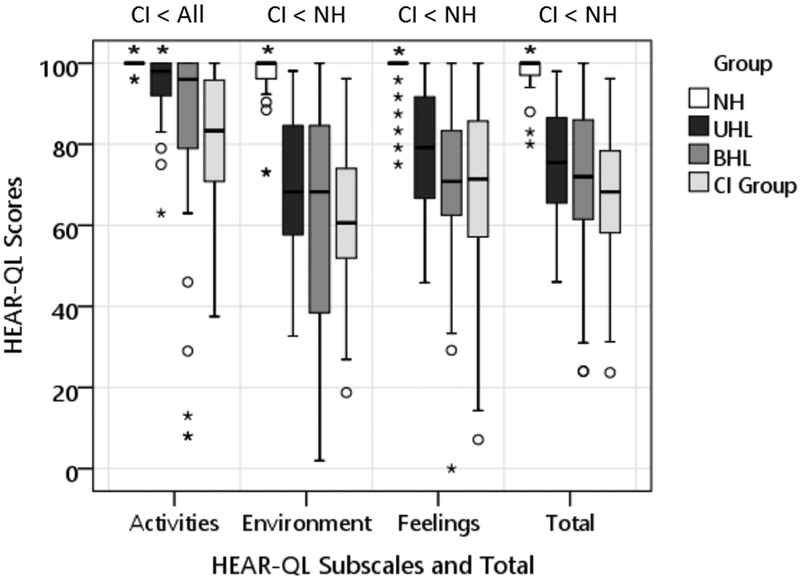
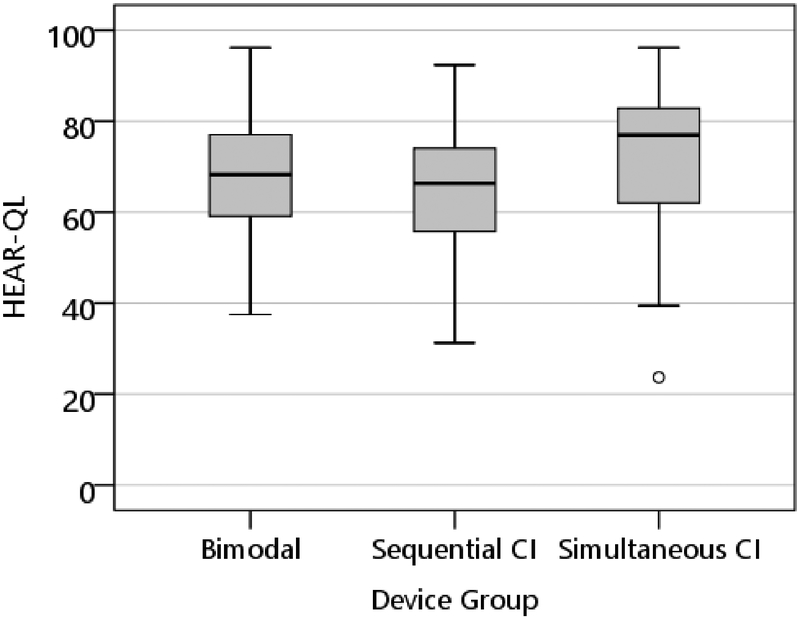
Objective: Self-reported hearing quality of life (QoL) for pediatric cochlear implant (CI) recipients was examined, asking whether 1) children with CIs have similar QoL as those with less severe hearing loss (HL); 2) children with different bilateral CI (BCI) device configurations report different QoL; and 3) do audiological, demographic and spoken language factors affect hearing QoL?Design: One hundred four children (ages 7-11 years) using bimodal devices or BCIs participated. The Hearing Environments and Reflection of Quality of Life (HEAR-QL) questionnaire, receptive language and speech perception tests were administered. HEAR-QL scores of CI recipients were compared to scores of age-mates with normal hearing and mild to profound HL.Results: HEAR-QL scores for CI participants were similar to those of children with less severe HL and did not differ with device configuration. Emotion identification and word recognition in noise correlated significantly with HEAR-QL scores.Discussion: CI recipients reported that HL hinders social participation. Better understanding of speech in noise and emotional content was associated with fewer hearing-related difficulties on the HEAR-QL.Conclusions: Noisy situations encountered in educational settings should be addressed for children with HL. The link between perception of emotion and hearing-related QoL for CI recipients should be further examined.
Keywords: Bilateral input; Cochlear implants; Hearing quality of life; Pediatric patients; Speech perception.
Conflict of interest statement
JL and DS report no relevant conflicts of interest related to this work. LSD is a member of the Knowledge Implementation in Pediatric Audiology (KIPA) group, Oticon.
Figures
References
-
- Archbold S, Sach T, O’neill C, Lutman M, & Gregory S (2008). Outcomes from cochlear implantation for child and family: parental perspectives. Deafness & Education International, 10(3), 120–142. doi:doi: 10.1002/dei.243 - DOI
-
- Chmiel R, Sutton L, & Jenkins H (2000). Quality of life in children with cochlear implants. Annals of Otology, Rhinology and Laryngology Supplement, 185, 103–105. - PubMed
Publication types
MeSH terms
Grants and funding
LinkOut - more resources
Full Text Sources
Medical
