Review
. 2019 Nov;16(11):645-654.
doi: 10.1038/s41585-019-0237-8. Epub 2019 Oct 7.

Towards precision oncology in advanced prostate cancer

Affiliations
Review

Towards precision oncology in advanced prostate cancer

Sheng-Yu Ku et al. Nat Rev Urol. 2019 Nov.

Abstract

Metastatic biopsy programmes combined with advances in genomic sequencing have provided new insights into the molecular landscape of castration-resistant prostate cancer (CRPC), identifying actionable targets, and emerging resistance mechanisms. The detection of DNA repair aberrations, such as mutation of BRCA2, could help select patients for poly(ADP-ribose) polymerase (PARP) inhibitor or platinum chemotherapy, and mismatch repair gene defects and microsatellite instability have been associated with responses to checkpoint inhibitor immunotherapy. Poor prognostic features, such as the presence of RB1 deletion, might help guide future therapeutic strategies. Our understanding of the molecular features of CRPC is now being translated into the clinic in the form of increased molecular testing for use of these agents and for clinical trial eligibility. Genomic testing offers opportunities for improving patient selection for systemic therapies and, ultimately, patient outcomes. However, challenges for precision oncology in advanced prostate cancer still remain, including the contribution of tumour heterogeneity, the timing and potential cooperation of multiple driver gene aberrations, and diverse resistant mechanisms. Defining the optimal use of molecular biomarkers in the clinic, including tissue-based and liquid biopsies, is a rapidly evolving field.


Figures
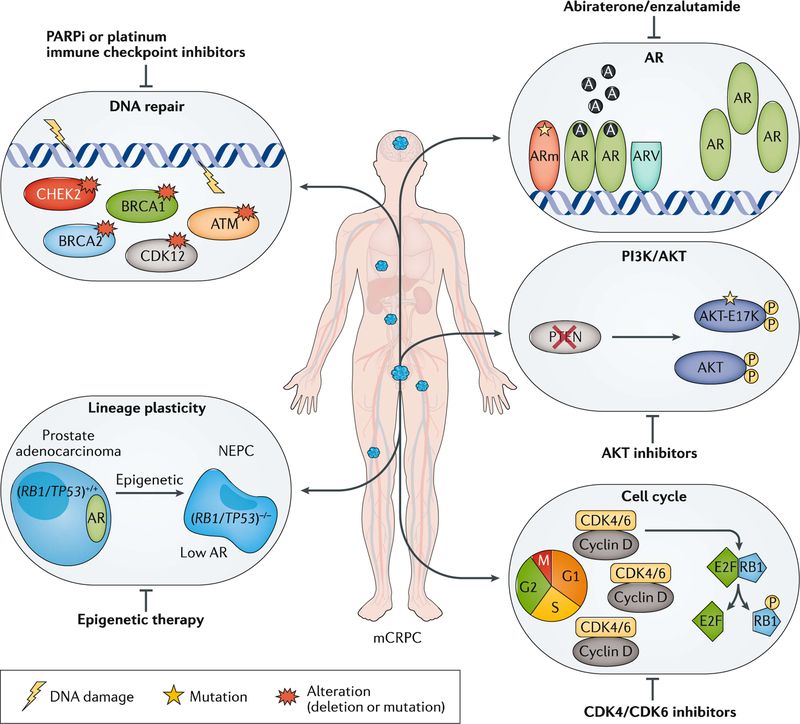
Fig. 1 |
Fig. 1 |. Precision medicine in mCRPC.
Genomic alterations are often heterogeneous across patients with metastatic castration-resistant prostate cancer (mCRPC). Different alterations can have distinct biological roles in driving mCRPC progression and response, and resistance to therapies. By understanding each altered gene or pathway in an individual, precision medicine has the potential to guide unique therapeutic approaches for patients and improve clinical outcomes. A, androgen; AR, androgen receptor; ARm, mutant AR; ARV, AR splice variant; CDK, cyclin-dependent kinase; NEPC, neuroendocrine prostate cancer.
Fig. 2 |
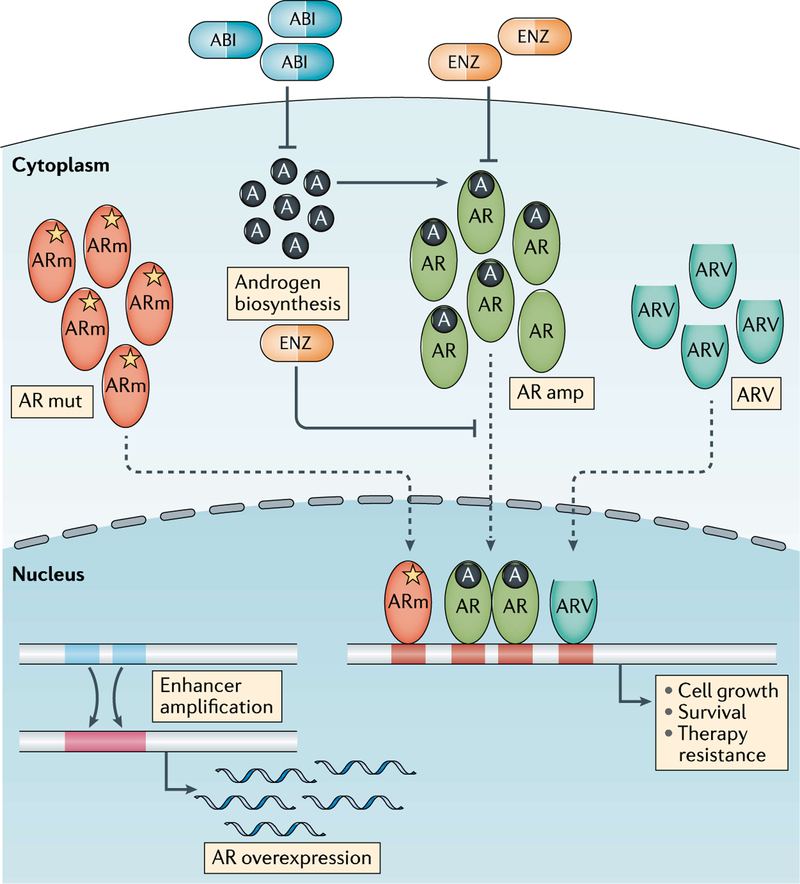
Fig. 2 |. Altered AR signalling in mCRPC.
Alterations in androgen receptor (AR) signalling are the most prevalent biological events in metastatic castration-resistant prostate cancer (mCRPC) resulting in persistent AR activation. These alterations include AR amplification (amp), mutations, AR splice variants (ARVs), intratumoural androgen biosynthesis and AR enhancer amplification. Enzalutamide and abiraterone acetate are two FDA-approved drugs that target AR signalling in mCRPC. Enzalutamide is an AR antagonist that also blocks AR translocation and function, whereas abiraterone inhibits androgen biosynthesis. A, androgen; ABI, abiraterone; ARm, mutant AR; ENZ, enzalutamide; mut, mutation.
Fig. 3 |
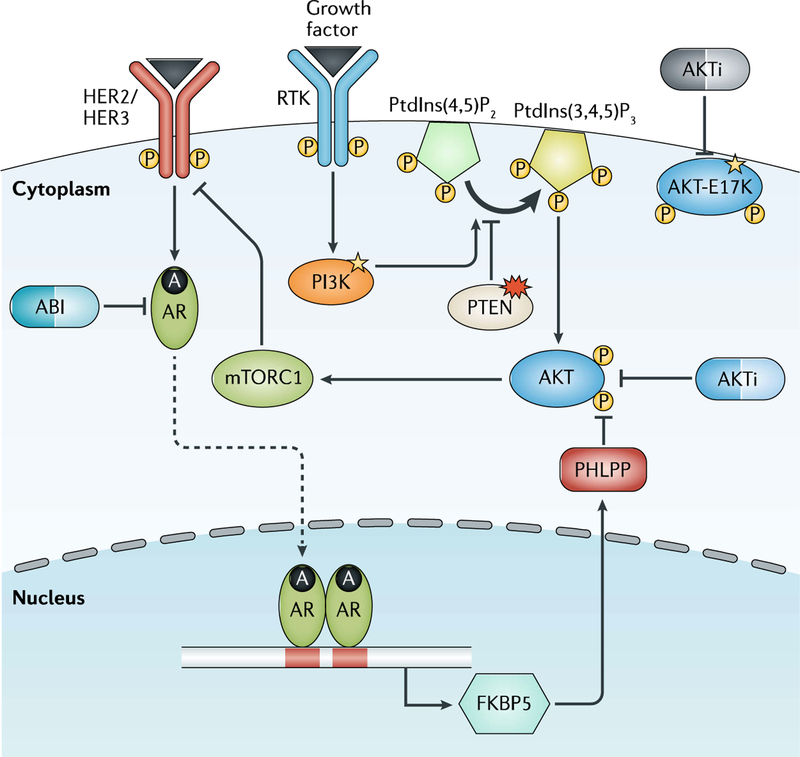
Fig. 3 |. Dysregulated PI3K-AKT signalling in mCRPC.
Genomic alterations involving the PTEN-PI3K-AKT pathway occur in ~50% of metastatic castration-resistant prostate cancers (mCRPCs) resulting in PI3K-AKT pathway activation. Loss of PTEN has been associated with shorter time on androgen receptor (AR) pathway inhibitor (ARPI) treatment potentially due to reciprocal negative feedback of the PI3K and AR signalling pathways. Drugs that target AKT or PI3K inhibitors are currently being tested in clinical trials as monotherapy (for AKT-mutated tumours) or in combination with ARPIs. A, androgen; ABI, abiraterone; AKTi, AKT inhibitor; FKBP5, FK506 binding protein 5; PHLPP, PH domain leucine-rich repeat protein phosphatase; Ptdlns(4,5)P2, phosphatidylinositol 4,5-bisphosphate; Ptdlns(3,4,5)P3, phosphatidylinositol 3,4,5-trisphosphate; RTK, receptor tyrosine kinase.
Fig. 4 |
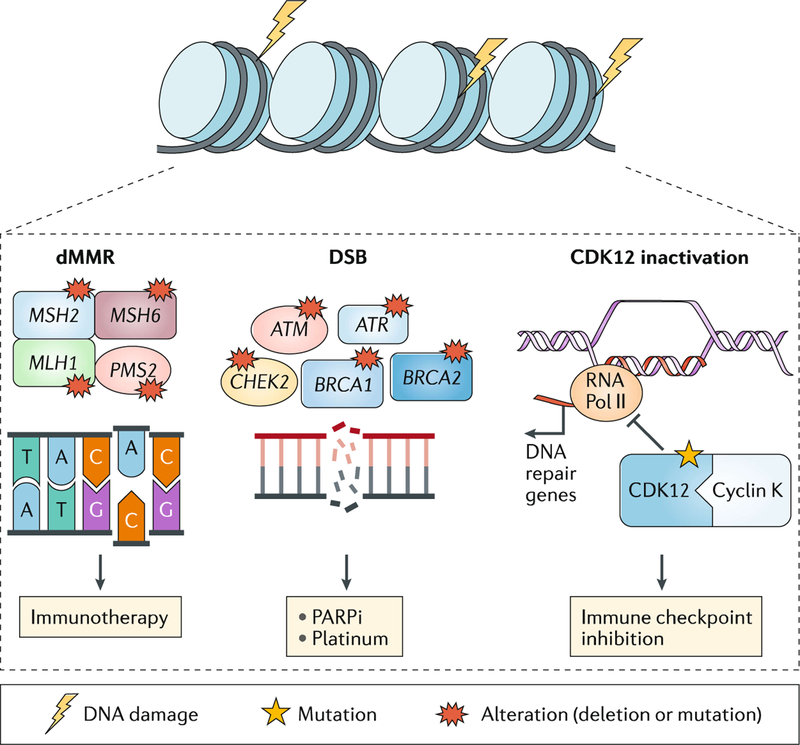
Fig. 4 |. DNA repair pathway in mCRPC.
Germline or somatic mutations involving DNA repair genes, such as BRCA1, BRCA2, ATM and MSH2 are present in 20% of metastatic castration-resistant prostate cancers (mCRPCs). Loss of homologous recombination genes (such as BRCA2) has been associated with response to poly(ADP-ribose) polymerase (PARP) inhibitor (PARPi) treatment and platinum chemotherapy. Mutations in DNA mismatch repair (MMR) genes (for example, MSH2) results in hypermutation and microsatellite instability. Loss of CDK12 or deficiency in mismatch repair genes (dMMR) has been associated with response to checkpoint inhibitor therapy. CDK, cyclin-dependent kinase; DSB, double-strand breaks; RNA Pol II, RNA polymerase II.
Fig. 5 |
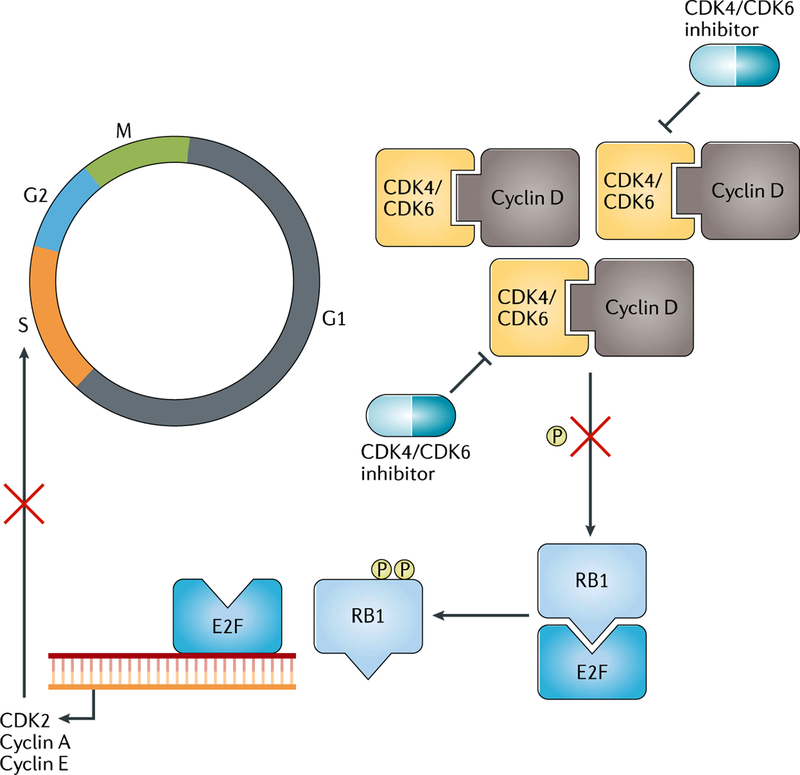
Fig. 5 |. Dysregulated cell cycle in mCRPC.
Cell cycle machinery is governed by cyclins and cyclin-dependent kinases (CDKs) at different phases. For instance, at the G1 phase, CDK4/6 binds to cyclin D to phosphorylate RB1 to release E2F. This enables E2F, a transcription factor, to relocate onto DNA to drive gene expression, such as those encoding CDK2, cyclin A and cyclin E, to advance cells to S phase. Loss of RB1 and/or amplification of CDKs are more common in metastatic castration-resistant prostate cancer (mCRPC) than in localized prostate cancer. CDK4/6 inhibitors are being tested in clinical trials in RB1 wild-type mCRPC as a monotherapy and in combination with androgen receptor pathway inhibitors.
Fig. 6 |
Fig. 6 |. Lineage plasticity in mCRPC.
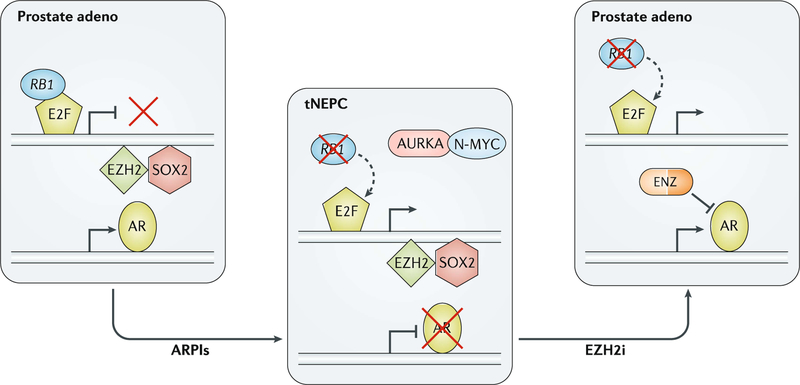
Lineage plasticity has been increasingly observed in patients with metastatic castration-resistant prostate cancer (mCRPC) treated with androgen receptor pathway inhibitors (ARPIs) to drive prostate cancer from an adenocarcinoma histology towards a neuroendocrine prostate cancer (NEPC) phenotype. This change is associated with loss of androgen receptor (AR) expression, combined loss of RB1 and TP53, and distinct epigenetic changes. In preclinical studies, inhibition of the epigenetic regulator EZH2 has a potential role in reversing the phenotype back towards an AR+ adenocarcinoma to regain responses to enzalutamide (ENZ). adeno, adenocarcinoma; EZH2i, EZH2 inhibition; tNEPC, treatment-related NEPC.

References

    1. Ferlay J et al. Cancer incidence and mortality worldwide: sources, methods and major patterns in GLOBOCAN 2012. Int. J. Cancer 136, E359–E386 (2015). - PubMed
    1. Siegel RL, Miller KD & Jemal A Cancer statistics, 2019. CA Cancer J. Clin 69, 7–34 (2019). - PubMed
    1. Lonergan PE & Tindall DJ Androgen receptor signaling in prostate cancer development and progression. J. Carcinog 10, 20 (2011). - PMC - PubMed
    1. Huggins C & Hodges CV Studies on prostatic cancer. I. The effect of castration, of estrogen and of androgen injection on serum phosphatases in metastatic carcinoma of the prostate. CA Cancer J. Clin 22,232–240(1972). - PubMed
    1. Sweeney CJ et al. Chemohormonal therapy in metastatic hormone-sensitive prostate cancer. N. Engl. J. Med 373, 737–746 (2015). - PMC - PubMed

Publication types

MeSH terms