


Prevalence of diabetes and cardio-metabolic risk factors in young men in the United Arab Emirates: A cross-sectional national survey
- PMID: 31592445
- PMCID: PMC6775448
- DOI: 10.1002/edm2.81
Prevalence of diabetes and cardio-metabolic risk factors in young men in the United Arab Emirates: A cross-sectional national survey
Abstract
Introduction: The aim of the study was to determine the prevalence of cardio-metabolic risk factors in men under 30 in the United Arab Emirates.
Methods: This cross-sectional observational study included 33 327 Emirati men aged 18-29 attending an obligatory standardized medical examination between May 2015 and February 2017. Body mass index, fasting blood glucose, total cholesterol, triglycerides and blood pressure were assessed.
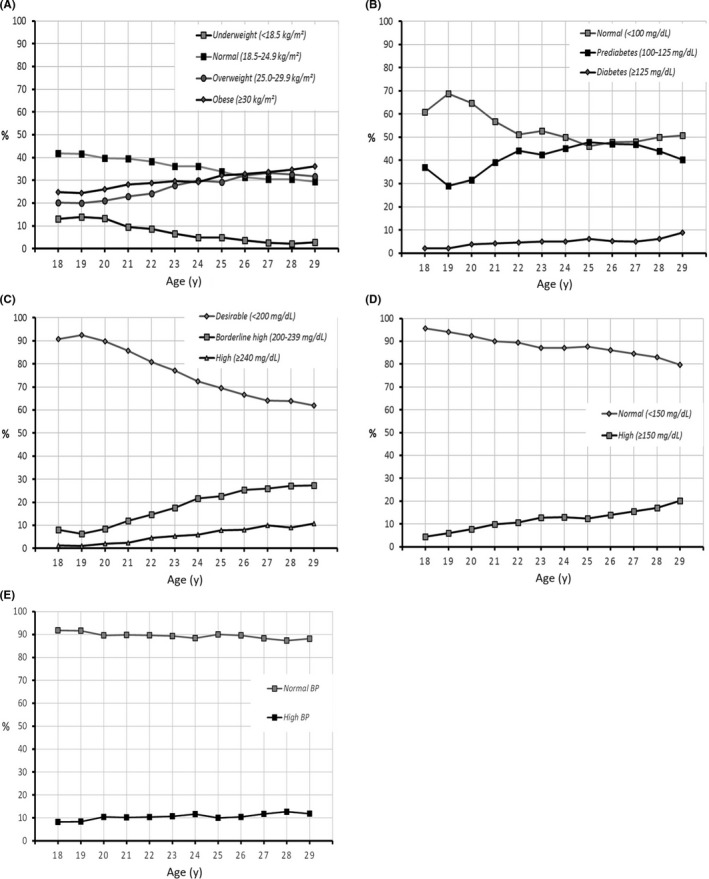
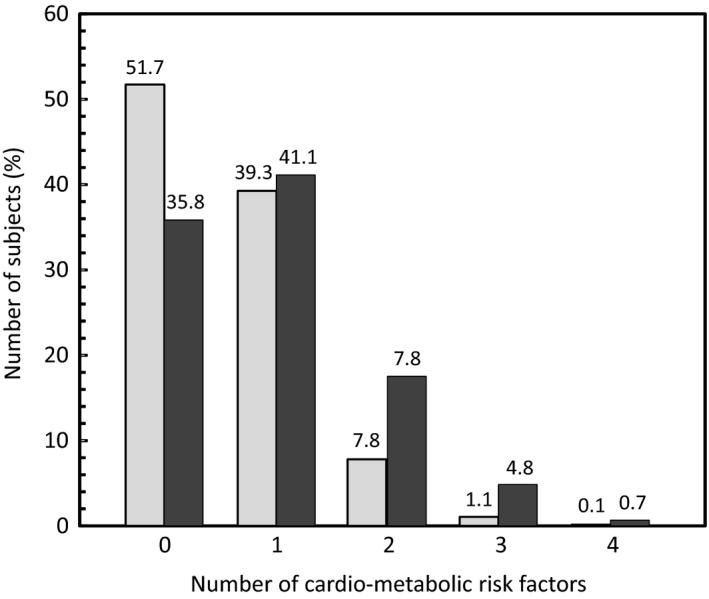
Results: Overall, 7720 subjects (24.4%) were overweight and 8835 (28.0%) obese. The age-adjusted prevalence was 4.7% [95% CI: 4.4-5.0] for diabetes, 41.3% [40.6-41.9] for impaired fasting glucose, 5.5% [5.2-5.8] for hypercholesterolaemia (total cholesterol ≥ 240 mg/dL), 11.5% [11.1%-12.0%] for hypertriglyceridaemia (≥150 mg/dL) and 10.4% [10.0%-10.8%] for hypertension (diastolic or systolic blood pressure-or both-above upper limit of normal). These conditions were already present in the youngest age groups and rise progressively and rapidly with age. Of the 26 648 subjects with valid data for all cardio-metabolic risk factors, 16 563 subjects (62.2%) presented ≥ 1 factor, 6392 subjects presented ≥2 factors (24.0%) and 63 (0.2%) presented all five. Patients who were obese were more likely to present multiple cardio-metabolic risk factors and to have hypertension (P < 0.0001). All cardio-metabolic risk factors were highly correlated with each other.
Conclusions: This national cohort study in the UAE revealed that obesity, diabetes, impaired fasting glucose, hypercholesterolaemia, triglyceridaemia and hypertension are already highly prevalent in young adulthood. Public health initiatives are required to address these and to anticipate the future burden of diabetes and major cardiovascular disease for which these men are at high risk.
Keywords: UAE; age‐specific prevalence; diabetes; metabolic disorders.
© 2019 The Authors. Endocrinology, Diabetes & Metabolism published by John Wiley & Sons Ltd.
Conflict of interest statement
Nothing to declare.
Figures
References
-
- International Diabetes Foundation . IDF Diabetes ATlas, 8th ed Brussels, Belgium: International Diabetes Foundation; 2017.
-
- Meo SA, Usmani AM, Qalbani E. Prevalence of type 2 diabetes in the Arab world: impact of GDP and energy consumption. Eur Rev Med Pharmacol Sci. 2017;21(6):1303‐1312. - PubMed
-
- Malik M, Razig SA. The prevalence of the metabolic syndrome among the multiethnic population of the United Arab Emirates: a report of a national survey. Metab Syndr Relat Disord. 2008;6(3):177‐186. - PubMed
-
- Vela BK, Alhessi AY, Popovic M, Al‐Shaqra MA. Prevalence of unrecognized dyslipidaemia in Dubai and Northern Emirates: a cross‐sectional hospital based study. Coll Antropol. 2008;32(4):1087‐1092. - PubMed
LinkOut - more resources
Full Text Sources
