


ADAM proteases: Emerging role and targeting of the non-catalytic domains
- PMID: 31593799
- PMCID: PMC7485987
- DOI: 10.1016/j.canlet.2019.10.003
ADAM proteases: Emerging role and targeting of the non-catalytic domains
Abstract
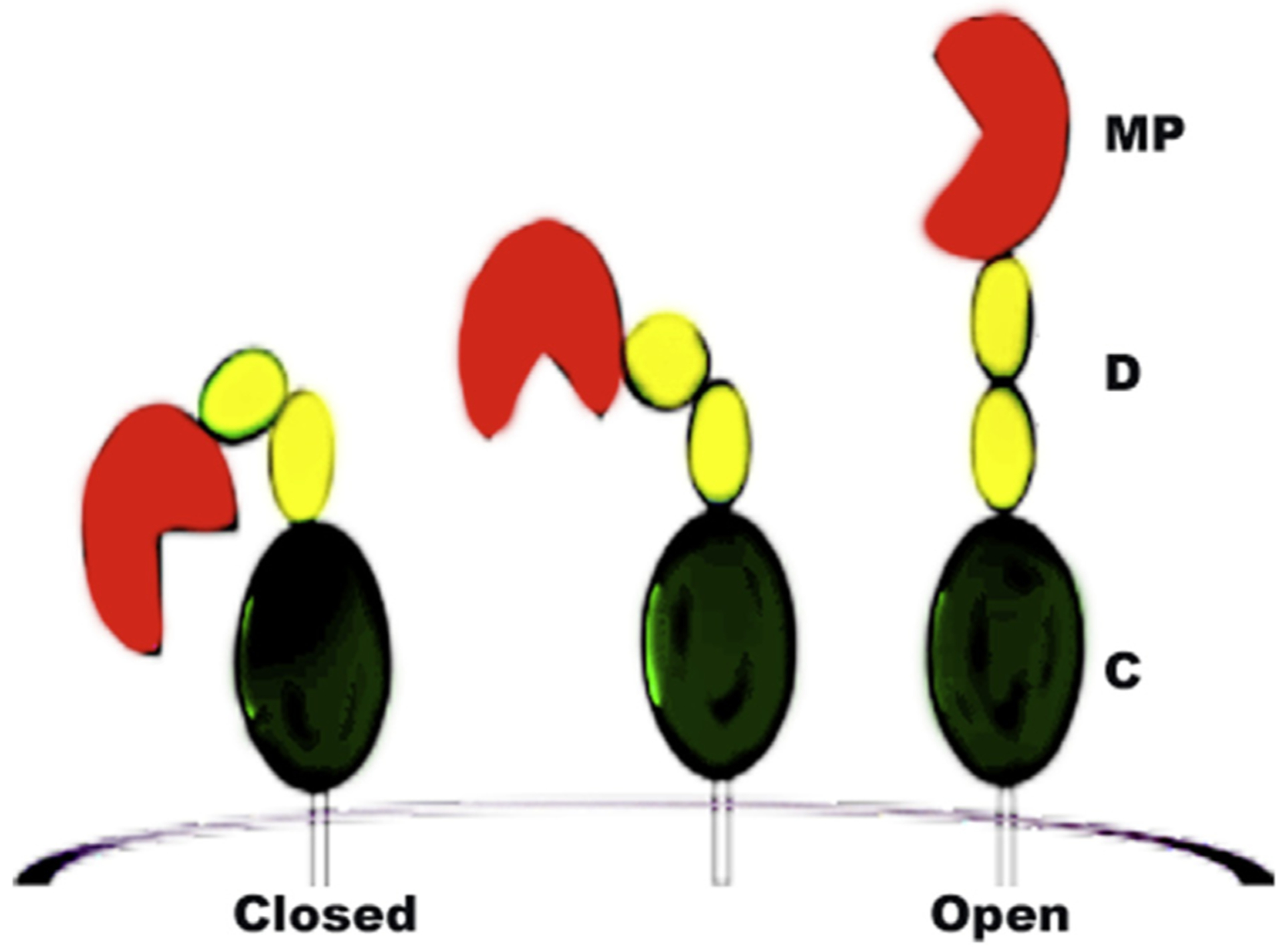
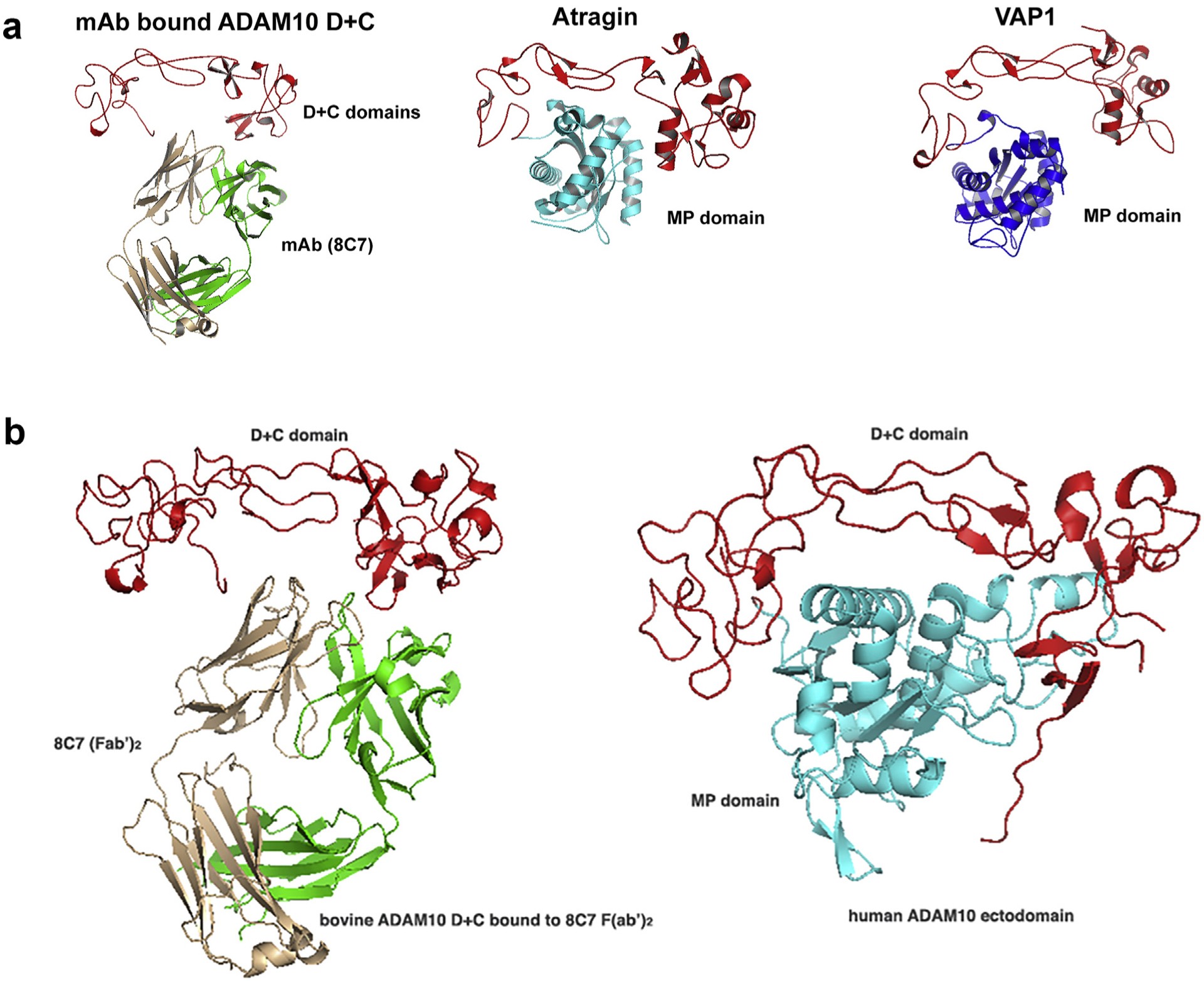
ADAM proteases are multi domain transmembrane metalloproteases that cleave a range of cell surface proteins and activate signaling pathways implicated in tumor progression, including those mediated by Notch, EFGR, and the Eph receptors. Consequently, they have emerged as key therapeutic targets in the efforts to inhibit tumor initiation and progression. To that end, two main approaches have been taken to develop ADAM antagonists: (i) small molecule inhibitors, and (ii) monoclonal antibodies. In this mini-review we describe the distinct features of ADAM proteases, particularly of ADAM10 and ADAM17, their domain organization, conformational rearrangements, regulation, as well as their emerging importance as therapeutic targets in cancer. Further, we highlight an anti-ADAM10 monoclonal antibody that we have recently developed, which has shown significant promise in inhibiting Notch signaling and deterring growth of solid tumors in pre-clinical settings.
Keywords: ADAM10; ADAM17; Integrins; Notch signaling; Therapeutic antibody.
Copyright © 2019 Elsevier B.V. All rights reserved.
Conflict of interest statement
Conflicts of interest
The authors declare that they have no competing interest.
Figures
References
-
- Hooper NM, Turner AJ, Protein processing mechanisms: from angiotensin-converting enzyme to Alzheimer’s disease, Biochem. Soc. Trans 28 (2000) 441–446. - PubMed
-
- Massague J, Pandiella A, Membrane-anchored growth factors, Annu. Rev. Biochem 62 (1993) 515–541. - PubMed
-
- Becherer JD, Blobel CP, Biochemical properties and functions of membrane-anchored metalloprotease-disintegrin proteins (ADAMs), Curr. Top. Dev. Biol 54 (2003) 101–123. - PubMed
-
- Black RA, White ADAMs JM, Focus on the protease domain, Curr. Opin. Cell Biol 10 (1998) 654–659. - PubMed
Publication types
MeSH terms
Substances
Grants and funding
LinkOut - more resources
Full Text Sources
Other Literature Sources
Miscellaneous
