Live and Diet by Your Gut Microbiota
- PMID: 31594820
- PMCID: PMC6786875
- DOI: 10.1128/mBio.02335-19
Live and Diet by Your Gut Microbiota
Abstract
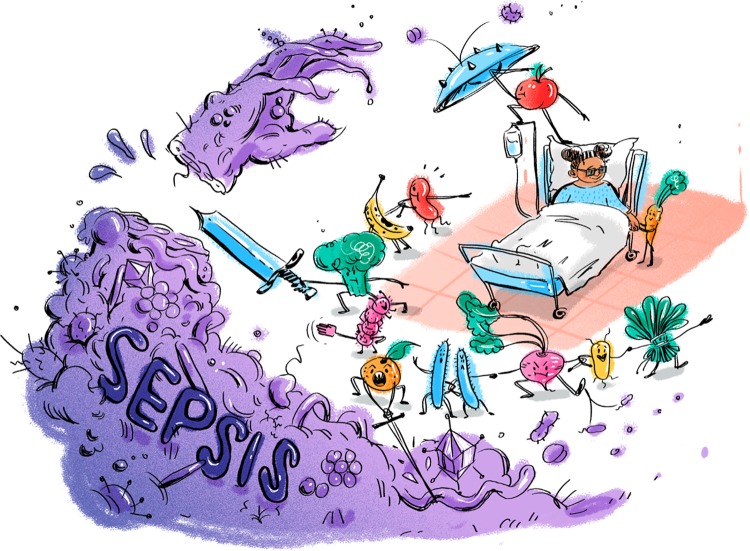
Diet influences health in multiple ways. One important effect of diet is on the gut microbiota. The effects of diet are often related to an individual's specific microbiota composition. The close links between health, diet, and gut microbiota are illustrated in a new mouse model of sepsis where the combination of a high-fat/low-fiber Western diet, antibiotics, and surgery promotes the development of lethal sepsis. Diet can also influence infection via the gut microbiota beyond sepsis. Future studies with this model may inform the use of microbiota analysis and personalized diets to protect surgery patients from infection and sepsis.
Keywords: diet; gut microbiota; infection; sepsis.
Copyright © 2019 Bassis.
Figures
Comment on
-
Mice Fed an Obesogenic Western Diet, Administered Antibiotics, and Subjected to a Sterile Surgical Procedure Develop Lethal Septicemia with Multidrug-Resistant Pathobionts.mBio. 2019 Jul 30;10(4):e00903-19. doi: 10.1128/mBio.00903-19. mBio. 2019. PMID: 31363025 Free PMC article.
References
-
- Zeevi D, Korem T, Zmora N, Israeli D, Rothschild D, Weinberger A, Ben-Yacov O, Lador D, Avnit-Sagi T, Lotan-Pompan M, Suez J, Mahdi JA, Matot E, Malka G, Kosower N, Rein M, Zilberman-Schapira G, Dohnalová L, Pevsner-Fischer M, Bikovsky R, Halpern Z, Elinav E, Segal E. 2015. Personalized nutrition by prediction of glycemic responses. Cell 163:1079–1094. doi: 10.1016/j.cell.2015.11.001. - DOI - PubMed
-
- Mendes-Soares H, Raveh-Sadka T, Azulay S, Ben-Shlomo Y, Cohen Y, Ofek T, Stevens J, Bachrach D, Kashyap P, Segal L, Nelson H. 2019. Model of personalized postprandial glycemic response to food developed for an Israeli cohort predicts responses in Midwestern American individuals. Am J Clin Nutr 110:nqz028. doi: 10.1093/ajcn/nqz028. - DOI - PMC - PubMed
Publication types
MeSH terms
Substances
LinkOut - more resources
Full Text Sources