


Impact of design and length on the accuracy of closed tray transfer copings
- PMID: 31598199
- PMCID: PMC6776411
- DOI: 10.4317/jced.55588
Impact of design and length on the accuracy of closed tray transfer copings
Abstract
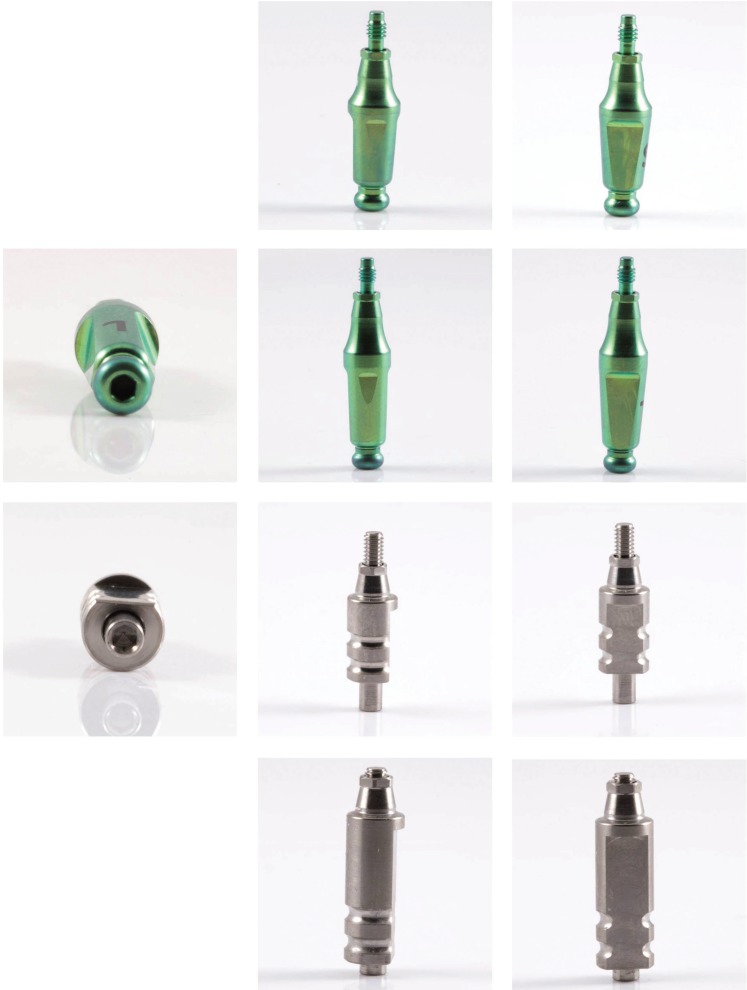
Background: The aim of this study was to evaluate the accuracy of two closed-tray transfer copings for implant impressions (a new design vs. an old design) in two different lengths (short and long).
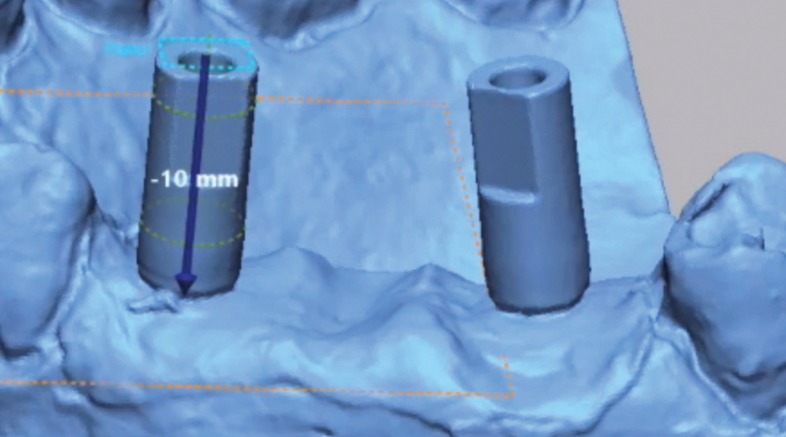
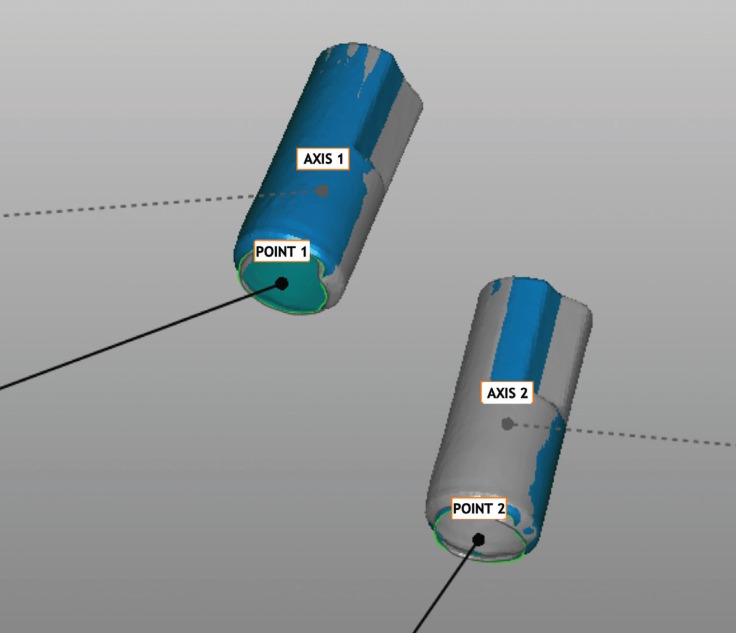
Material and methods: Four groups of transfer copings (NS - new short, NL - new long, OS - old short and OL - old long) were tested. An epoxy resin model was prepared of missing teeth 1.4, 1.5 and 1.6. Two Alpha-Bio analogues were placed in position of teeth 1.4 and 1.6, at a 10o angulation. Two calibrated operators took 10 closed-tray impressions for each group with polyether in a Rim-Lock impression tray.
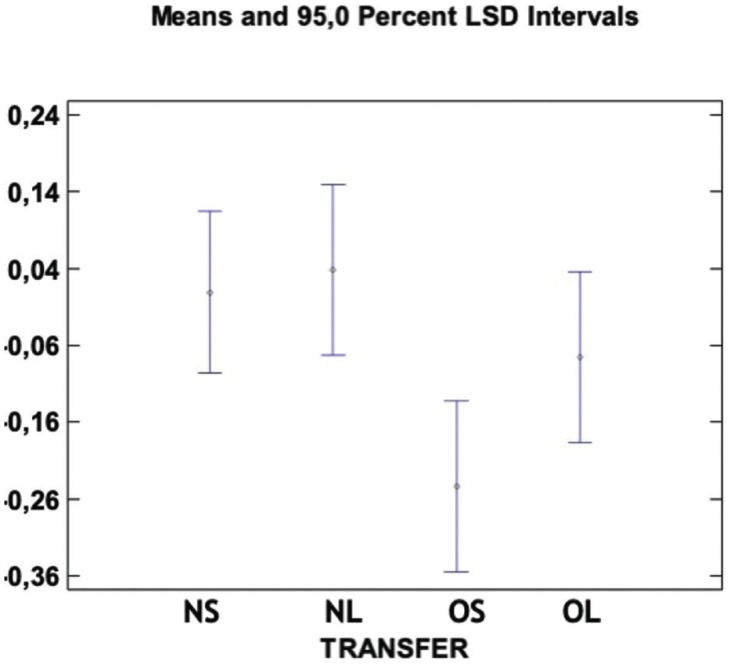
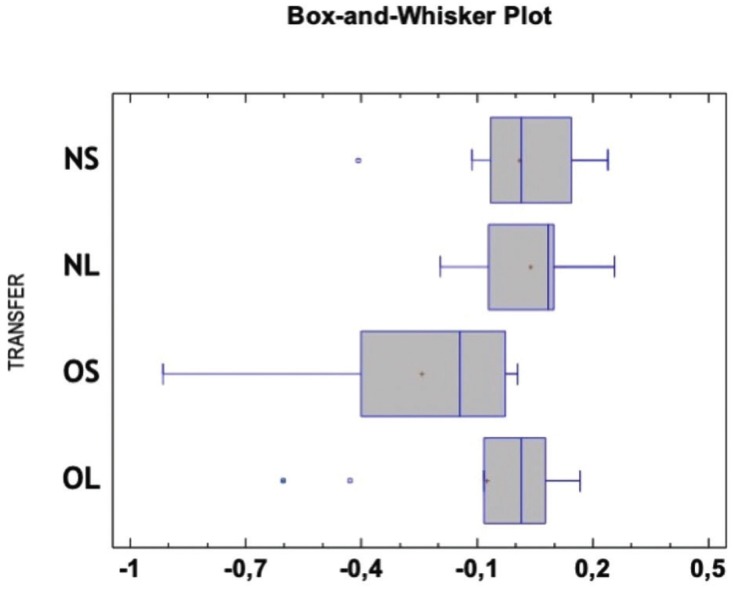
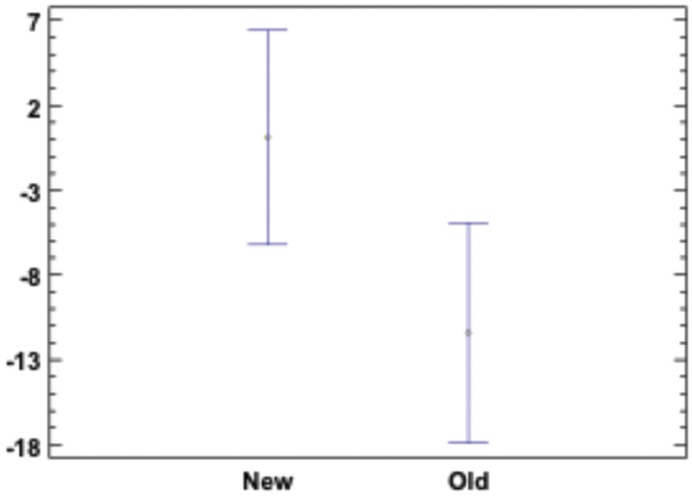
Results: After measuring and comparing impressions, a significant difference was found between the two new transfer copings and the old short transfer coping.
Conclusions: The new transfer coping design significantly improved impression accuracy. An adequate transfer coping design for the closed-tray impression technique can help to achieve clinically acceptable impressions for two-unit implant supported bridges. Key words:Closed tray, impression coping, transfer coping, implant impression.
Copyright: © 2019 Medicina Oral S.L.
Conflict of interest statement
Conflict of interest statement:The authors have declared that no conflict of interest exist.
Figures
References
-
- Tan KB. The clinical significance of distortion in implant prosthodontics: is there such a thing as passive fit? Ann Acad Med Singapore. 1995;24:138–157. - PubMed
-
- Holst S, Blatz MB, Bergler M, Goellner M, Wichmann M. Influence of impression material and time on the 3-dimensional accuracy of implant impressions. Quintessence international. 2007;38:67–73. - PubMed
-
- Schaefer O, Schmidt M, Goebel R, Kuepper H. Qualitative and quantitative three-dimensional accuracy of a single tooth captured by elastomeric impression materials: an in vitro study. J Prosthet Dent. 2012;108:165–172. - PubMed
-
- Rashidan N, Alikhasi M, Samadizadeh S, Beyabanaki E, Kharazifard MJ. Accuracy of implant impressions with different impression coping types and shapes. Clin Implant Dent Relat Res. 2012;14:218–225. - PubMed
LinkOut - more resources
Full Text Sources
Miscellaneous