


A machine learning approach to quantify the specificity of colour-emotion associations and their cultural differences
- PMID: 31598303
- PMCID: PMC6774957
- DOI: 10.1098/rsos.190741
A machine learning approach to quantify the specificity of colour-emotion associations and their cultural differences
Abstract
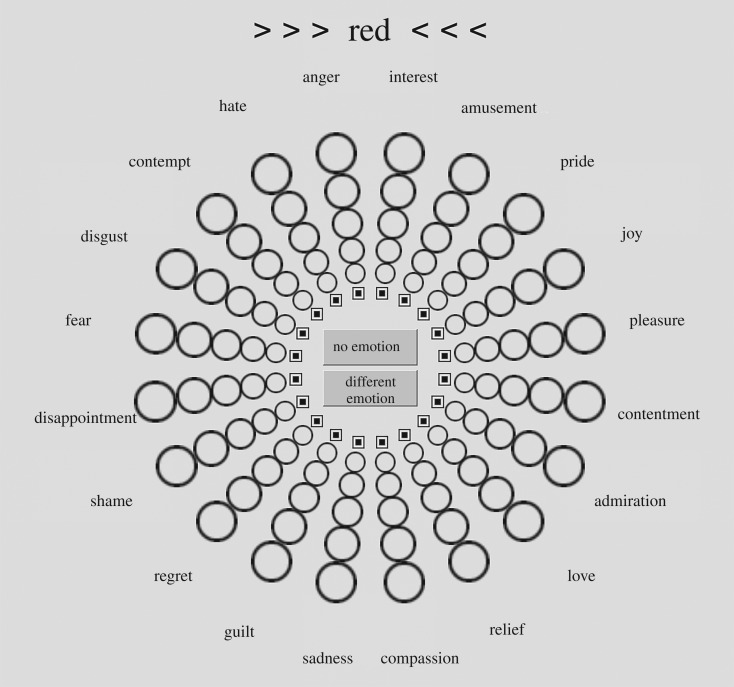
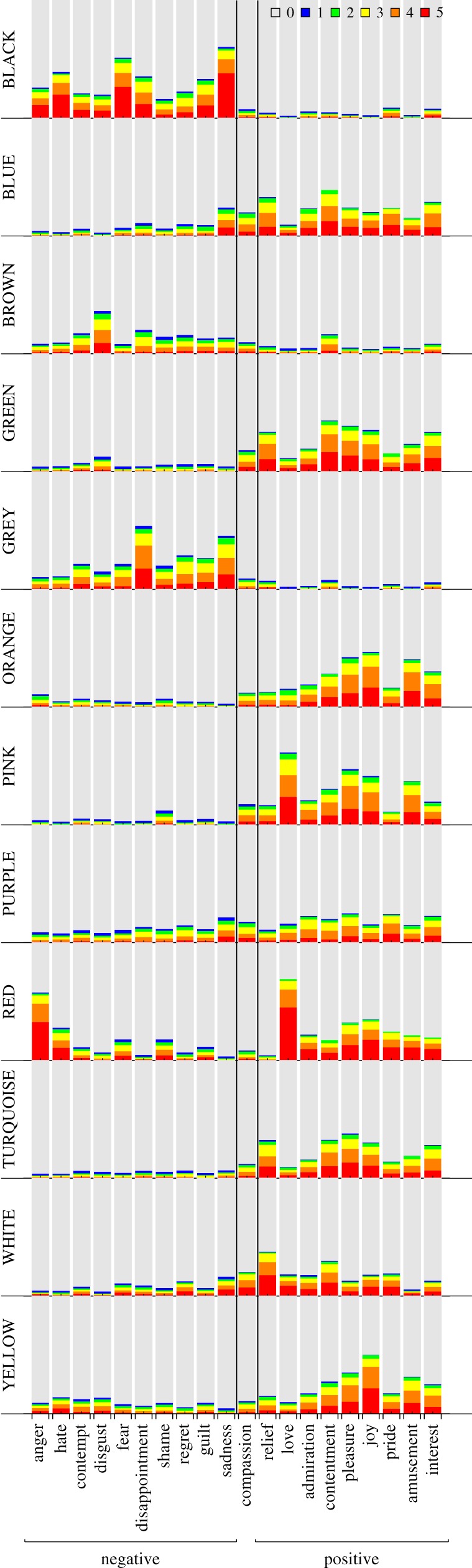
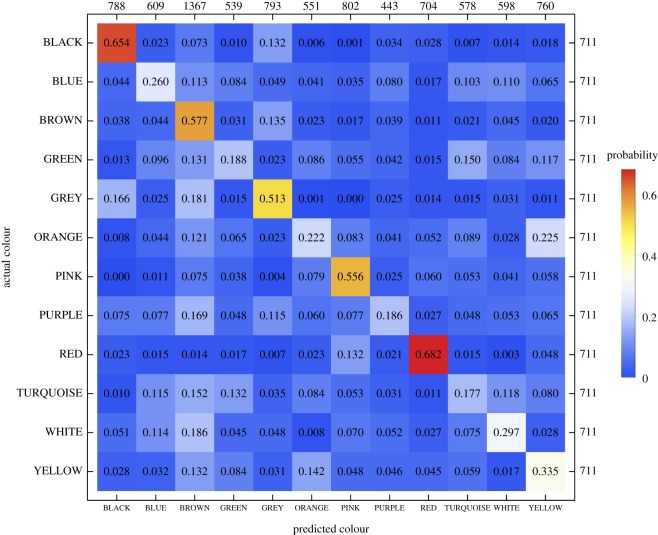
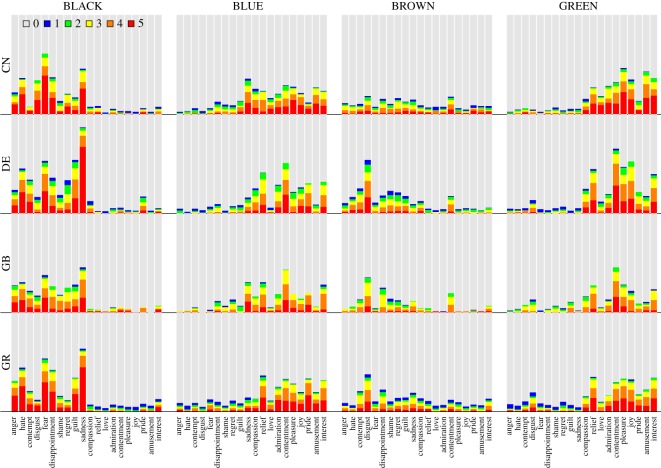
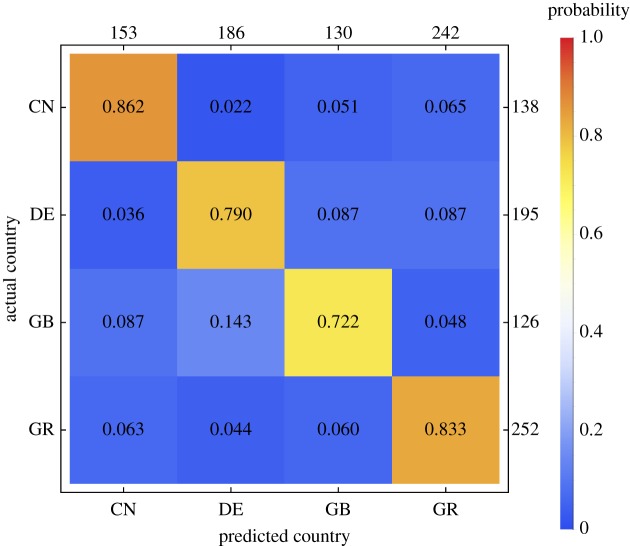
The link between colour and emotion and its possible similarity across cultures are questions that have not been fully resolved. Online, 711 participants from China, Germany, Greece and the UK associated 12 colour terms with 20 discrete emotion terms in their native languages. We propose a machine learning approach to quantify (a) the consistency and specificity of colour-emotion associations and (b) the degree to which they are country-specific, on the basis of the accuracy of a statistical classifier in (a) decoding the colour term evaluated on a given trial from the 20 ratings of colour-emotion associations and (b) predicting the country of origin from the 240 individual colour-emotion associations, respectively. The classifier accuracies were significantly above chance level, demonstrating that emotion associations are to some extent colour-specific and that colour-emotion associations are to some extent country-specific. A second measure of country-specificity, the in-group advantage of the colour-decoding accuracy, was detectable but relatively small (6.1%), indicating that colour-emotion associations are both universal and culture-specific. Our results show that machine learning is a promising tool when analysing complex datasets from emotion research.
Keywords: Geneva Emotion Wheel (GEW); colour; cultural specificity; emotion; machine learning; multivariate pattern classification.
© 2019 The Authors.
Conflict of interest statement
The authors declare that they have no competing interests.
Figures
References
-
- Schloss KB, Strauss ED, Palmer SE. 2013. Object color preferences. Color Res. Appl. 38, 393–411. (10.1002/col.21756) - DOI
Associated data
LinkOut - more resources
Full Text Sources
