


Diabetic Ketoacidosis at Diagnosis of Type 1 Diabetes in Colorado Children, 2010-2017
- PMID: 31601639
- PMCID: PMC6925579
- DOI: 10.2337/dc19-0428
Diabetic Ketoacidosis at Diagnosis of Type 1 Diabetes in Colorado Children, 2010-2017
Abstract
Objective: We examined trends in diabetic ketoacidosis (DKA) at diagnosis of type 1 diabetes at a large pediatric diabetes center between 2010 and 2017, overlapping with the Affordable Care Act's overhaul of U.S. health care.
Research design and methods: Colorado residents <18 years old who were diagnosed with type 1 diabetes from 2010 to 2017 and subsequently followed at the Barbara Davis Center for Diabetes were included. Logistic regression models were used to test associations among age, sex, race/ethnicity, insurance, language, year of diagnosis, and rural/nonrural residence and DKA at diagnosis. Linear regression models were used to test the association of each predictor with HbA1c at diagnosis.
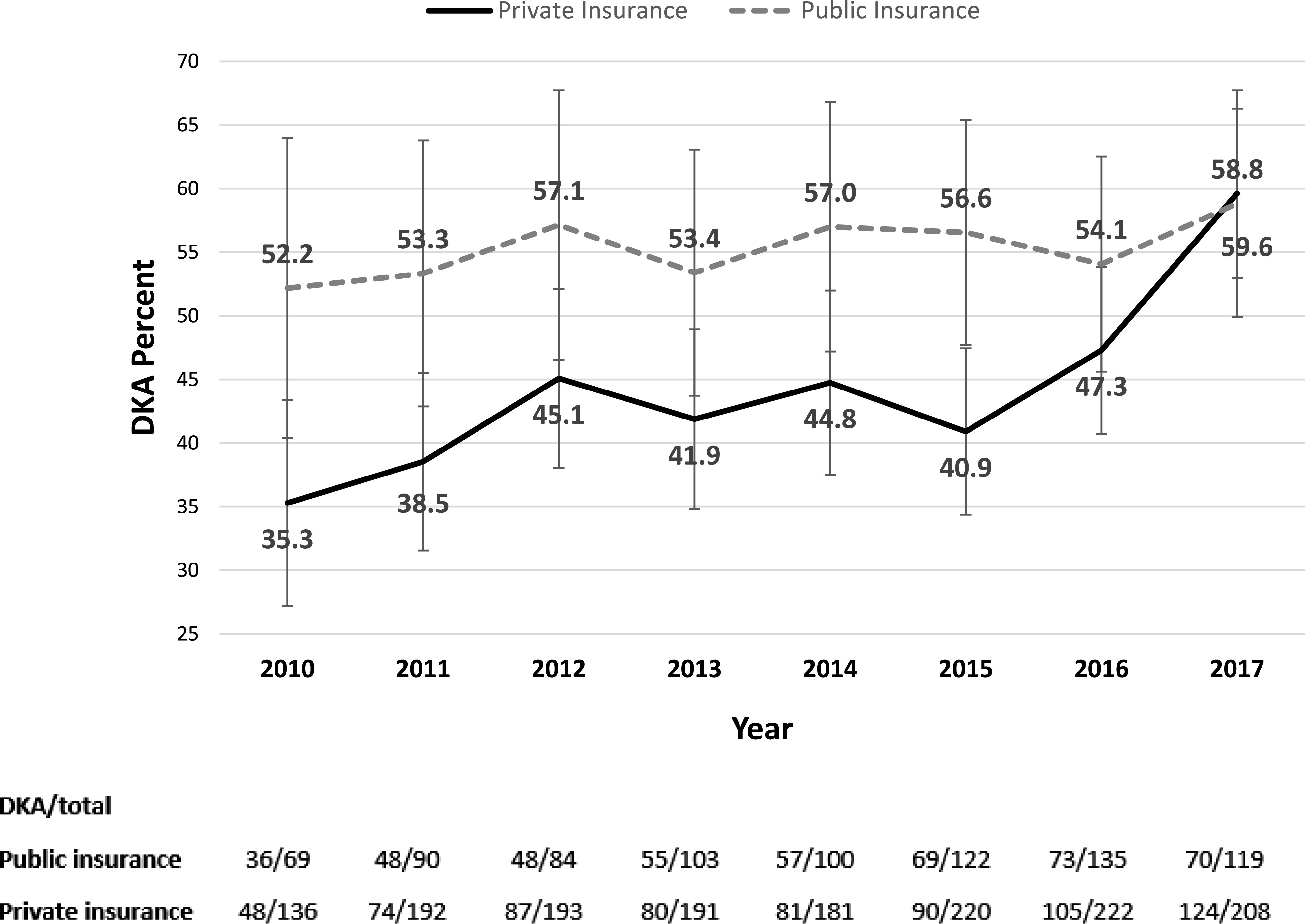
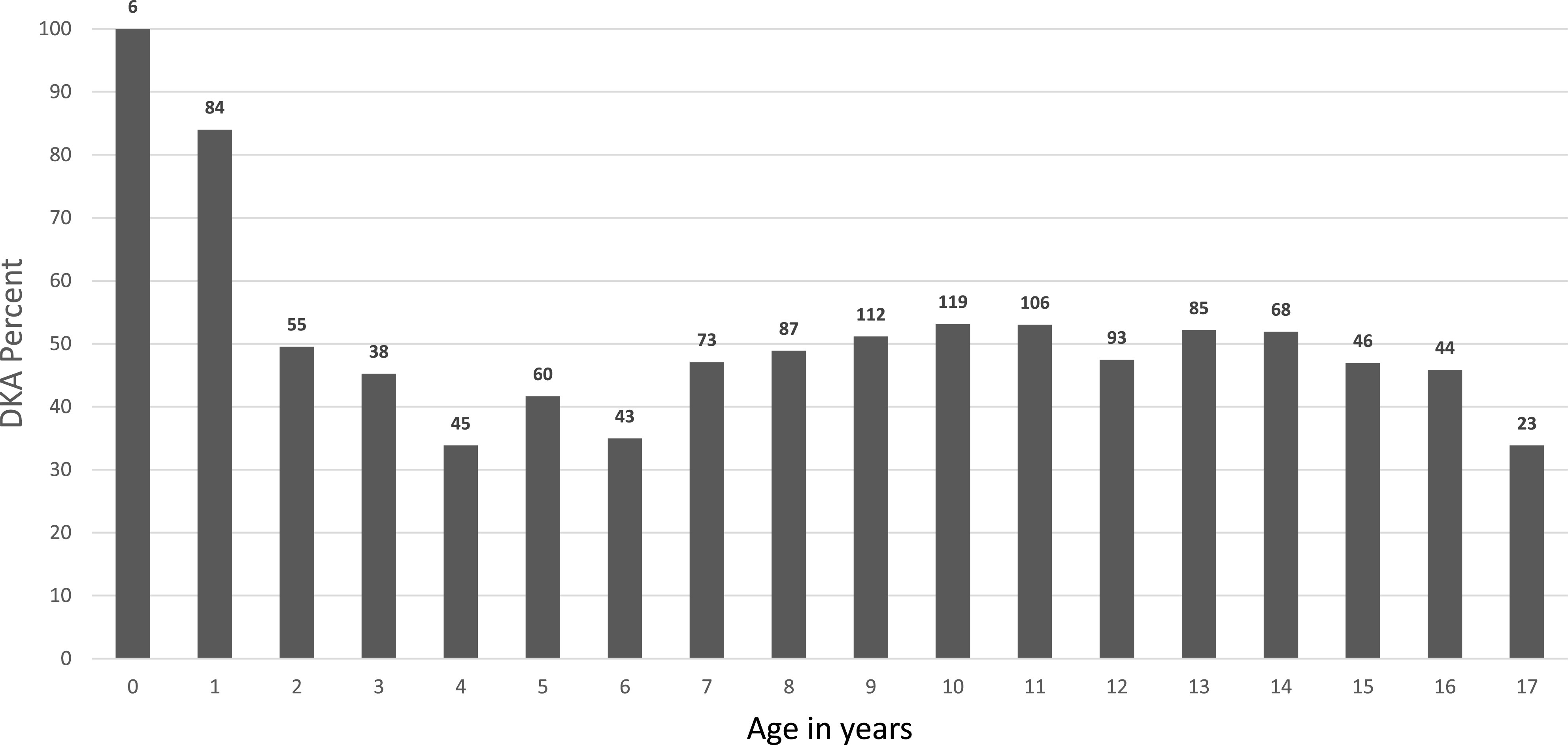
Results: There were 2,429 subjects who met the inclusion criteria. From 2010 to 2017, the rate of DKA increased from 41 to 58%. It increased from 35.3 to 59.6% among patients with private insurance (odds ratio 1.10 [95% CI 1.05-1.15]; P < 0.0001) but remained unchanged (52.2-58.8%) among children with public insurance (1.03 [0.97-1.09]; P = 0.36). In the multivariable model, public insurance (1.33 [1.08-1.64]; P = 0.007), rural address (1.42 [1.08-1.86]; P = 0.013), and HbA1c (1.32 [1.26-1.38]; P < 0.0001) were positively associated with DKA, whereas age, race/ethnicity, sex, and primary language were not.
Conclusions: The increase in the rate of DKA in patients with newly diagnosed type 1 diabetes was driven by patients with private insurance. This paradoxically occurred during a time of increasing health insurance coverage. More study is needed to understand the factors driving these changes.
© 2019 by the American Diabetes Association.
Figures
References
-
- Duca LM, Wang B, Rewers M, Rewers A. Diabetic ketoacidosis at diagnosis of type 1 diabetes predicts poor long-term glycemic control. Diabetes Care 2017;40:1249–1255 - PubMed
-
- Rewers A, Dong F, Slover RH, Klingensmith GJ, Rewers M. Incidence of diabetic ketoacidosis at diagnosis of type 1 diabetes in Colorado youth, 1998-2012. JAMA 2015;313:1570–1572 - PubMed
Publication types
MeSH terms
LinkOut - more resources
Full Text Sources
Other Literature Sources
Medical
Miscellaneous
