


Lower Gastrointestinal Kaposi Sarcoma in HIV/AIDS: A Diagnostic Challenge
- PMID: 31602377
- PMCID: PMC6738214
- DOI: 10.1159/000500140
Lower Gastrointestinal Kaposi Sarcoma in HIV/AIDS: A Diagnostic Challenge
Abstract
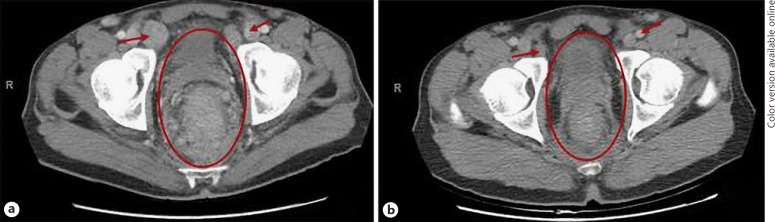
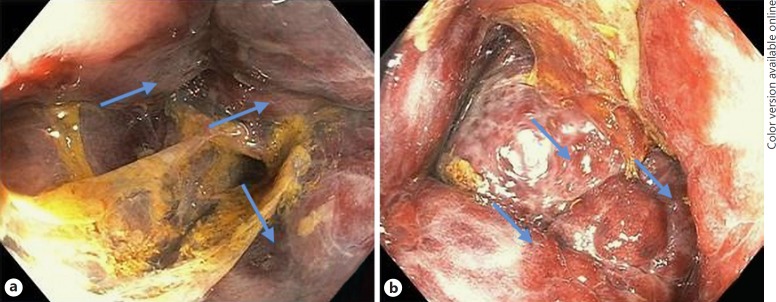
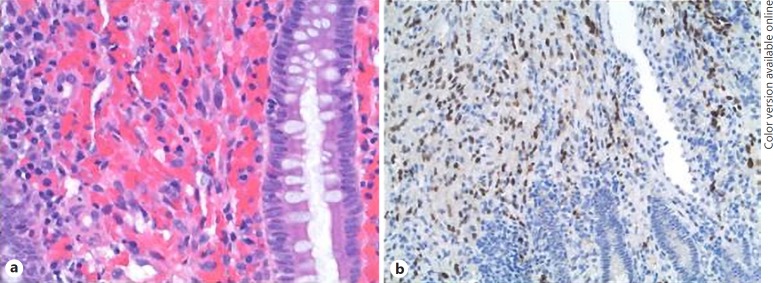
Gastrointestinal Kaposi sarcoma (GI-KS) is the most common extra-cutaneous site of KS in HIV/AIDS, and the majority (75%) of affected patients are asymptomatic. GI-KS rarely occurs in the absence of cutaneous lesions. Opportunistic GI infections in HIV/AIDS and GI-KS can present with similar symptoms especially diarrhea, creating a diagnostic challenge. We present a 46-year-old homosexual male with a medical history of HIV/AIDS and neurosyphilis, who presented with 2 weeks of nonbloody diarrhea and abdominal discomfort. He was initially worked up for infectious diarrhea, initiated on highly active anti-retroviral (HAART) and supportively managed with rehydration therapy and analgesia. However, his clinical symptoms did not improve, necessitating abdomen/pelvic CT scan which revealed extensive recto-sigmoid colon thickening and pelvic lymphadenopathy. Due to a high suspicion of malignancy, diagnostic endoscopy and biopsy were done which showed colonic KS. He was treated with intravenous pegylated doxorubicin in addition to HAART which evidently resulted in significant clinical and radiological improvement. The diagnosis of GI-KS could be challenging in the presence of overlapping features with opportunistic GI infections and the absence of cutaneous manifestations of KS because clinicians tend to focus more on infectious etiology. We suggest that clinicians should consider GI-KS in the differential diagnosis of patients with HIV/AIDS that present with diarrhea and other nonspecific abdominal symptoms. Early endoscopic evaluation with biopsy could help to ensure the timely diagnosis and management of GI-KS and ultimately improve outcomes.
Keywords: Early detection; Endoscopic diagnosis; HIV/AIDS; Kaposi sarcoma.
Copyright © 2019 by S. Karger AG, Basel.
Conflict of interest statement
The authors do not have any conflicts of interest to disclose or any financial disclosures.
Figures
References
-
- International Collaboration on HIV and Cancer Highly active antiretroviral therapy and incidence of cancer in human immunodeficiency virus-infected adults. J Natl Cancer Inst. 2000 Nov;92((22)):1823–30. - PubMed
-
- Chang Y, Cesarman E, Pessin MS, et al. Identification of herpes-like DNA sequences in AIDS-associated kaposi's sarcoma. Science (80-) 1994;266((5192)):1865–1869. doi:. - PubMed
Publication types
LinkOut - more resources
Full Text Sources
