. 2019 Aug 6;3(8):368-377.
doi: 10.4049/immunohorizons.1900046.

Aspergillus fumigatus-Secreted Alkaline Protease 1 Mediates Airways Hyperresponsiveness in Severe Asthma

Affiliations

Aspergillus fumigatus-Secreted Alkaline Protease 1 Mediates Airways Hyperresponsiveness in Severe Asthma

Jamie L Redes et al. Immunohorizons. .

Abstract

The hallmark features of allergic asthma are type 2 (eosinophilic) inflammation and airways hyperresponsiveness (AHR). Although these features often comanifest in mouse lungs in vivo, we demonstrate in this study that the serine protease Alp1 from the ubiquitous mold and allergen, Aspergillus fumigatus, can induce AHR in mice unable to generate eosinophilic inflammation. Strikingly, Alp1 induced AHR in mice devoid of protease-activated receptor 2/F2 trypsin-like receptor 1 (PAR2/F2RL1), a receptor expressed in lung epithelium that is critical for allergic responses to protease-containing allergens. Instead, using precision-cut lung slices and human airway smooth muscle cells, we demonstrate that Alp1 directly increased contractile force. Taken together, these findings suggest that Alp1 induces bronchoconstriction through mechanisms that are largely independent of allergic inflammation and point to a new target for direct intervention of fungal-associated asthma.


Conflict of interest statement

DISCLOSURES

The authors have no financial conflicts of interest.

Figures
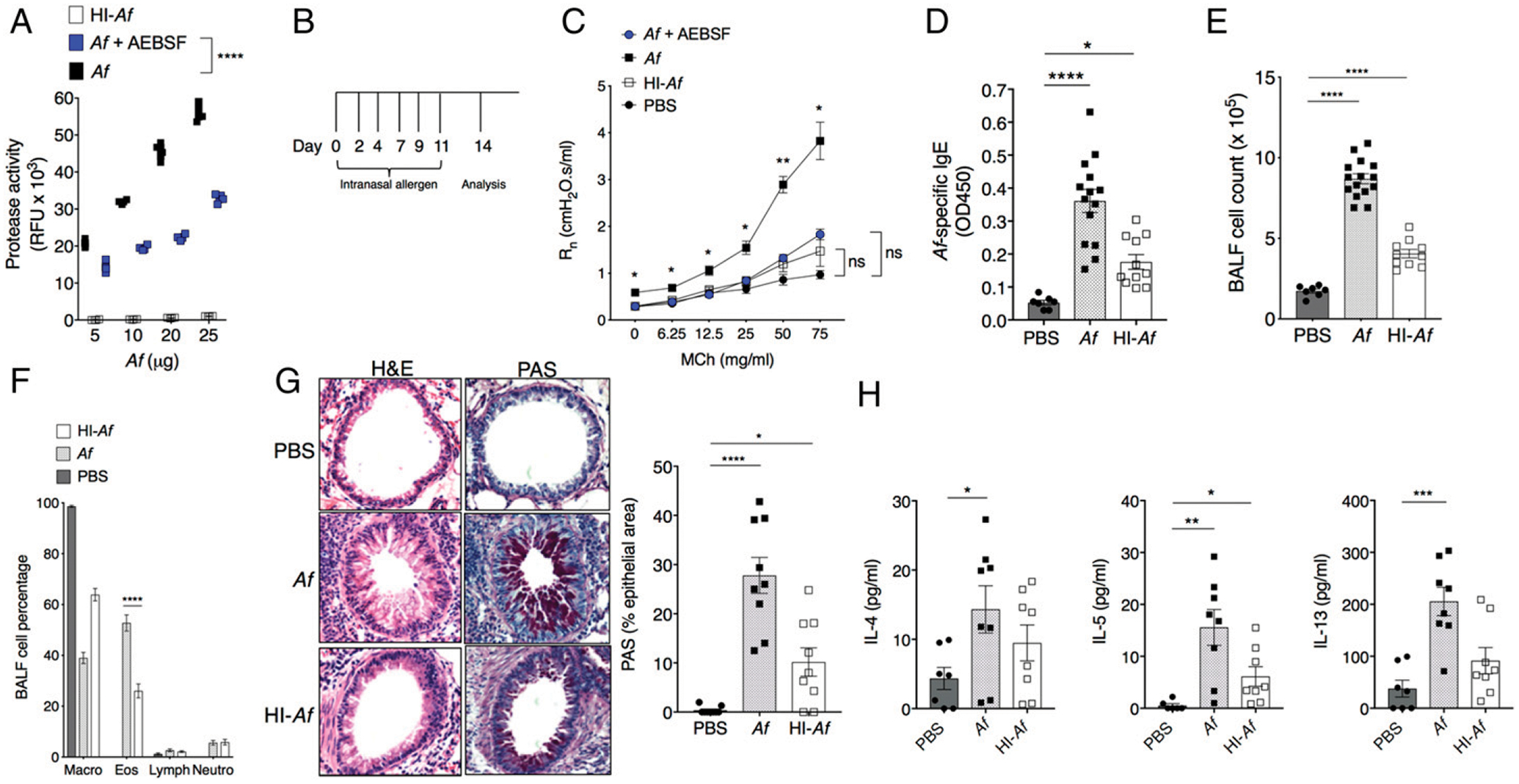
FIGURE 1.
FIGURE 1.. Repetitive administration of A. fumigatus induces AHR in mice: the role of proteolytic activity.
(A) Protease activity of A. fumigatus, HI–A. fumigatus, and AEBSF-treated A. fumigatus (5–25 μg/m1) was determined using a fluoro protease assay as described in Materials and Methods. Values are duplicates from two independent experiments. ****p < 0.0001, t test, corrected for multiple comparisons by Holm-Sidak. (B) Schematic representation of the protocol for intranasal challenge of mice with allergen. Mice were evaluated 48 h after the final challenge. (C) Rn in response to aerosolized MCh in A. fumigatus, HI–A. fumigatus, or AEBSF–A. fumigatus–challenged BALB/c mice. Each symbol represents mean ± SEM from three to eight mice per group analyzed in two independent experiments. *p < 0.04, **p = 0.002, t test corrected for multiple comparisons by Holm-Sidak. (D) Serum levels of A. fumigatus–specific IgE. Values are mean ± SEM of samples assayed in duplicate. *p = 0.01, ****p < 0.0001, Kruskal–Wallis ANOVA with Benjamini, Krieger, and Yekutieli corrections for multiple comparisons. (E and F) Total cell counts (E) and cell composition (F) in BALF. Values are mean ± SEM of 7–15 mice per group. ****p < 0.0001 versus PBS, two-way ANOVA, Tukey multiple comparisons. (G) Lung inflammation and airway mucin evaluated by H& E (left) and PAS (right) staining. Images are representative of nine mice per group. Bar graph on right shows PAS+ area (mean ± SEM) within the airway epithelium. *p = 0.03, ****p < 0.0001, one-way ANOVA, Dunnett multiple comparisons. (H) IL-4, IL-5, and IL-13 levels in BALF; mean ± SEM of seven to eight mice per group. IL-4: *p = 0.03, one-way ANOVA, Dunnett multiple comparisons. IL-5, IL-13: *p = 0.03, **p = 0.001, ***p = 0.0004, Kruskal–Wallis ANOVA, Benjamini, Krieger, and Yekutieli corrections for multiple comparisons. RFU, relative fluorescence units.
FIGURE 2.
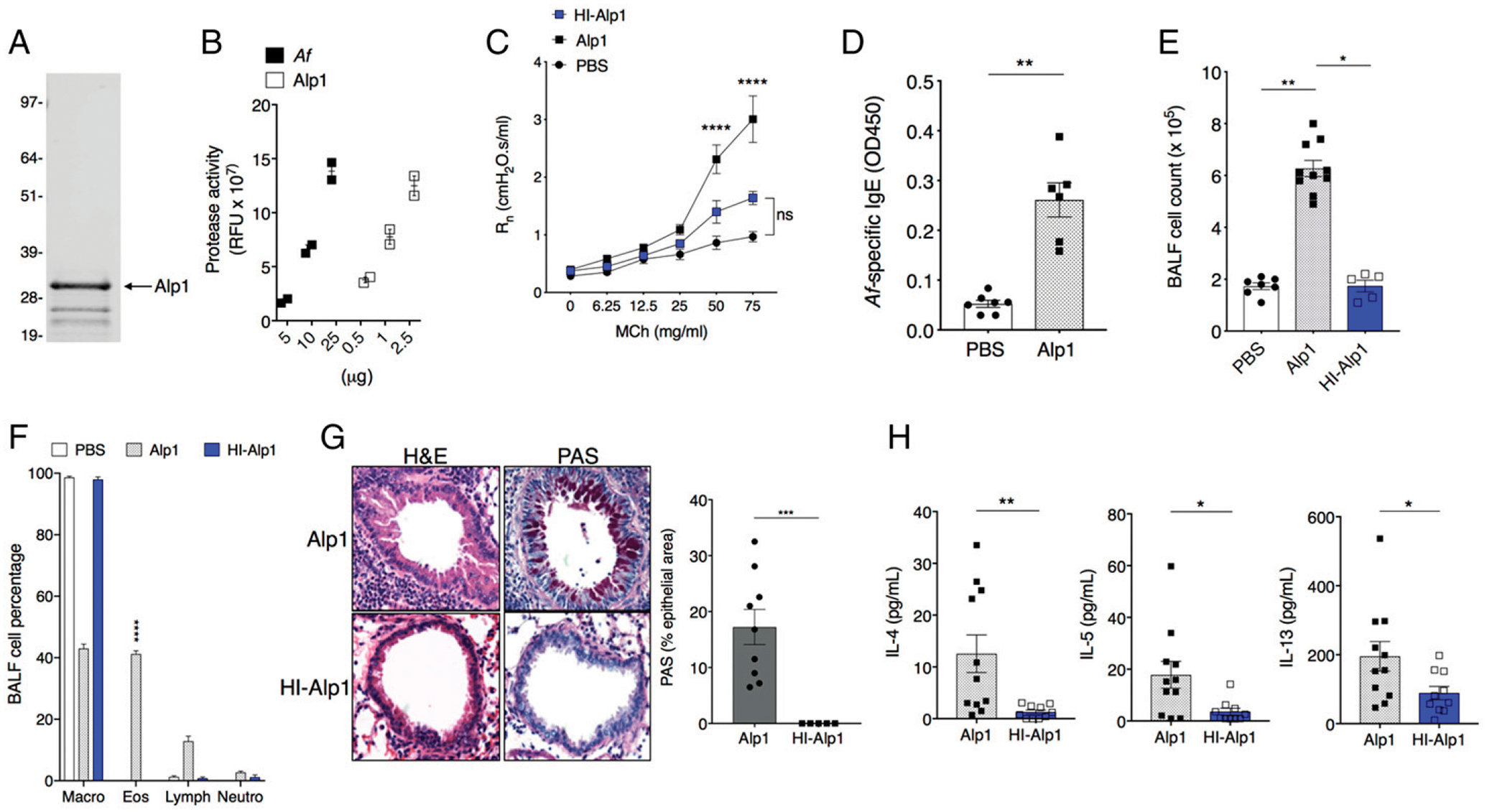
FIGURE 2.. Active Alp1 protease induces both AHR and eosinophilic inflammation.
(A) Coomassie-stained SDS-PAGE gel of purified Alp1 (33 kDa). The lower bands most likely represent proteolytic cleavage, as Alp1 is susceptible to proteolysis (12). (B) Protease assay in crude A. fumigatus extracts in comparison with purified Alp1; x-axis denotes total amount of protein in each sample. Values are duplicates from two independent experiments. (C) Rn in response to MCh in PBS, Alp1, or HI-Alp1–challenged BALB/c mice. Values are mean ± SEM of three to seven mice per group. ****p < 0.0001 versus PBS, two-way ANOVA, Tukey multiple comparisons. (D). Serum levels of A. fumigatus–specific IgE determined as in Fig. 1. **p = 0.001, Mann–Whitney U test. (E and F) Total cell counts (E) and cell composition (F) in BALF. (E) *p = 0.01, **p = 0.001, Kruskal–Wallis ANOVA, Dunn multiple comparisons. (F) ****p < 0.0001, one-way ANOVA, Sidak multiple comparisons versus PBS or HI-Alp1. (G) Lung inflammation and airway mucin evaluated by H& E (left) and PAS (right) staining. Images are representative of five to nine mice per group. Original magnification ×10. Bar graph on right shows PAS+ area within the airway epithelium. ***p = 0.001, Mann–Whitney. (H) IL-4, IL-5, and IL-13 levels in BALF. *p < 0.03, **p = 0.002, Mann–Whitney. All symbols in bar graphs represent results from an individual mouse; error bars are mean ± SEM of at least two independent experiments.
FIGURE 3.
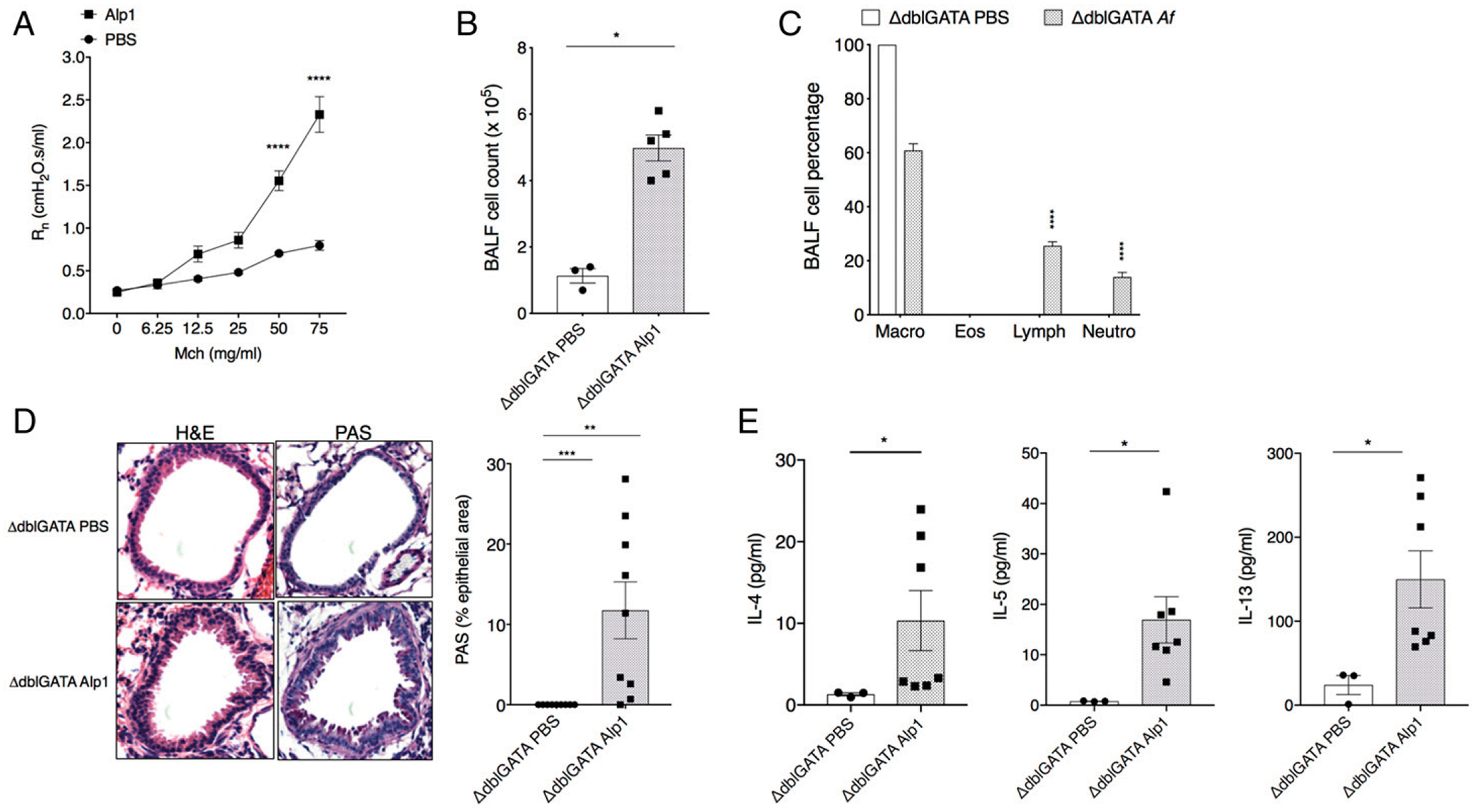
FIGURE 3.. Intranasal inoculation with A. fumigatus or Alp1 induces AHR in the absence of eosinophilic inflammation.
(A) Airway resistance in response to repetitive challenge with A. fumigatus, Alp1, or PBS. Rn in eosinophil-deficient Δdblgata mice in response to aerosolized MCh. Data represent three to six mice per group. ****p < 0.0001, two-way ANOVA, Sidak multiple comparisons. (B and C) Total cell counts (B) and cell composition (C) in BALF. (B) *p = 0.03, Mann-Whitney. (C) ****p < 0.0001, two-way ANOVA, Sidak multiple comparisons. (D) Lung inflammation and airway mucin evaluated by H& E (left) and PAS (right) staining. Images are representative of three to five mice per group. Original magnification ×10. Bar graph on right shows PAS+ area within the airway epithelium. **p = 0.005, ***p = 0.0004, Mann-Whitney. (E) IL-4, IL-5, and IL-13 levels in BALF. *p = 0.01, Mann-Whitney. All symbols in bar graphs represent results from an individual mouse; error bars are mean ± SEM; all results represent at least two independent experiments.
FIGURE 4.
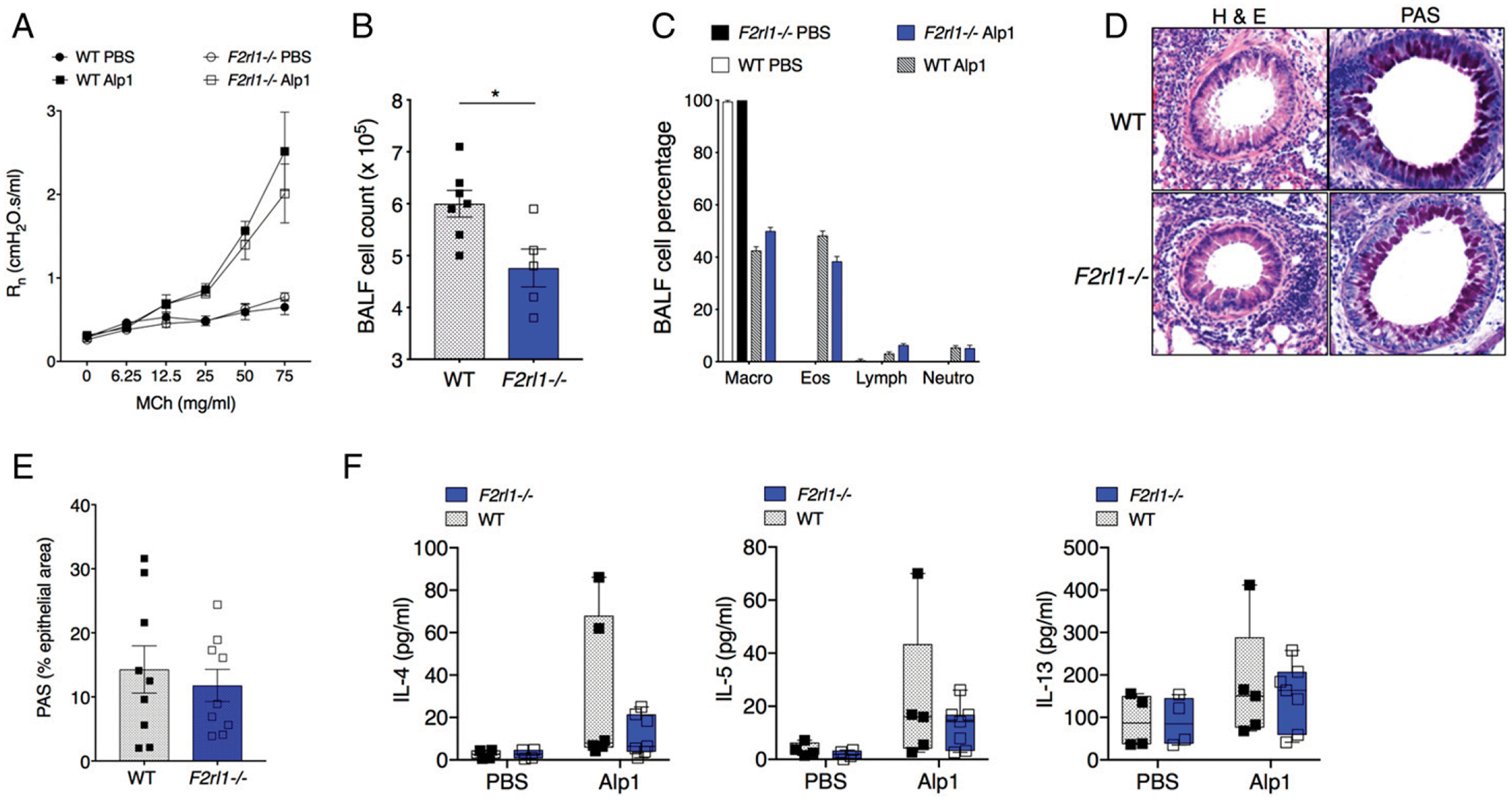
FIGURE 4.. Alp1 promotes AHR independent of PAR2.
(A) R in Alp1-challenged F2rl1−/ mice that lack PAR2 expression (two to seven mice per group). (B and C) Total cell counts (B) and cell composition (C) in BALF. (B) *p = 0.01, unpaired t test. (D) Lung inflammation and airway mucin evaluated by H& E (left) and PAS (right) staining. Images are representative of three to five mice per group. Original magnification ×10. (E) PAS+ area within the airway epithelium. (F) IL-4, IL-5, and IL-13 levels in BALF. All symbols in bar graphs represent results from an individual mouse; error bars are mean ± SEM.; all results represent at least two independent experiments.
FIGURE 5.
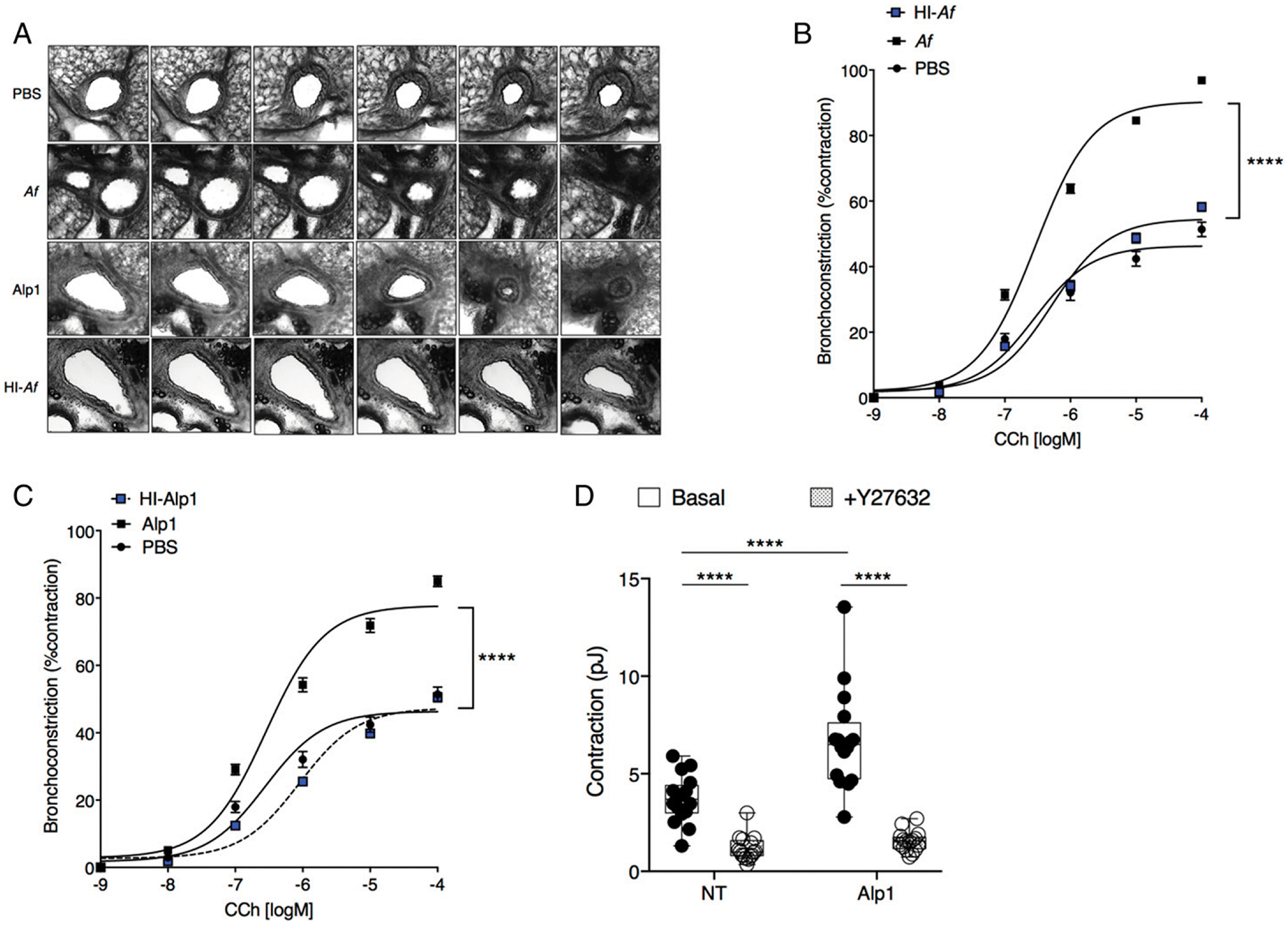
FIGURE 5.. Alp1 induces ASM contraction.
(AC) Contraction of airways in PCLSs were determined at baseline and in response to CCh stimulation. Original magnification ×10. Results are expressed as the airway luminal area divided by area prior to stimulation. Data are mean ± SEM. of a minimum of 36 slices from four to eight mice per group evaluated in two or more independent experiments, fitted to a curve using the least-squares fit method. ****p < 0.0001, two-way ANOVA. (D) Contraction of human ASM cells were determined after a 24-h treatment with Alp1 (0.005 μg/ml) in the presence or absence of a Rho-kinase inhibitor (Y27632, 10 μM) for an additional 30 min. Results are mean ± SEM of strain energy (pJ) obtained over 16 separate regions of confluent ASM cells across four separate wells. ****p < 0.00001, two-way ANOVA, Tukey multiple comparisons.

References

    1. Mims JW 2015. Asthma: definitions and pathophysiology. Int. Forum Allergy Rhinol 5(Suppl. 1): S2–S6. - PubMed
    1. Gelfand EW, and Schedel M. 2018. Molecular endotypes contribute to the heterogeneity of asthma. Immunol. Allergy Clin. North Am 38: 655–665. - PubMed
    1. Chung KF, and Adcock IM. 2019. Precision medicine for the discovery of treatable mechanisms in severe asthma. Allergy. DOI: 10.1111/all.13771. - DOI - PubMed
    1. Lambrecht BN, Hammad H, and Fahy JV. 2019. The cytokines of asthma. Immunity 50: 975–991. - PubMed
    1. Wechsler ME 2018. Current and emerging biologic therapies for asthma and COPD. Respir. Care 63: 699–707. - PubMed

Publication types

MeSH terms