


Impact of Neck Disability on Health-Related Quality of Life among Head and Neck Cancer Survivors
- PMID: 31613686
- PMCID: PMC7263303
- DOI: 10.1177/0194599819883295
Impact of Neck Disability on Health-Related Quality of Life among Head and Neck Cancer Survivors
Abstract
Objective: Although neck impairment has been described following surgical resection, limited studies have investigated its prevalence in nonsurgical treatment. The purpose of this study is to determine the prevalence and predictors of neck disability following head and neck cancer (HNC) treatment and to explore its association with quality of life (QOL).
Study design: Cross-sectional study.
Setting: HNC survivorship clinic.
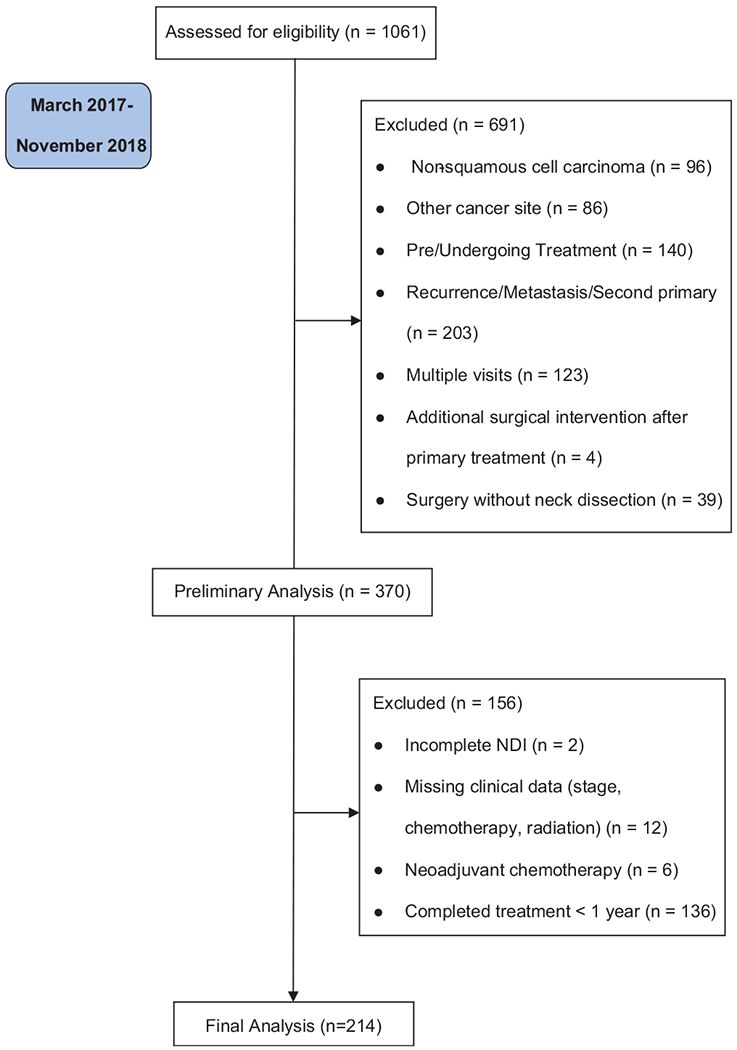
Subjects and methods: We identified 214 survivors who completed treatment ≥1 year prior to evaluation in the clinic. Self-reported neck impairment was measured using the Neck Disability Index. QOL was measured using the University of Washington QOL Questionnaire, with physical and social subscale scores calculated. Regression analysis and trend tests were employed to explore associations.
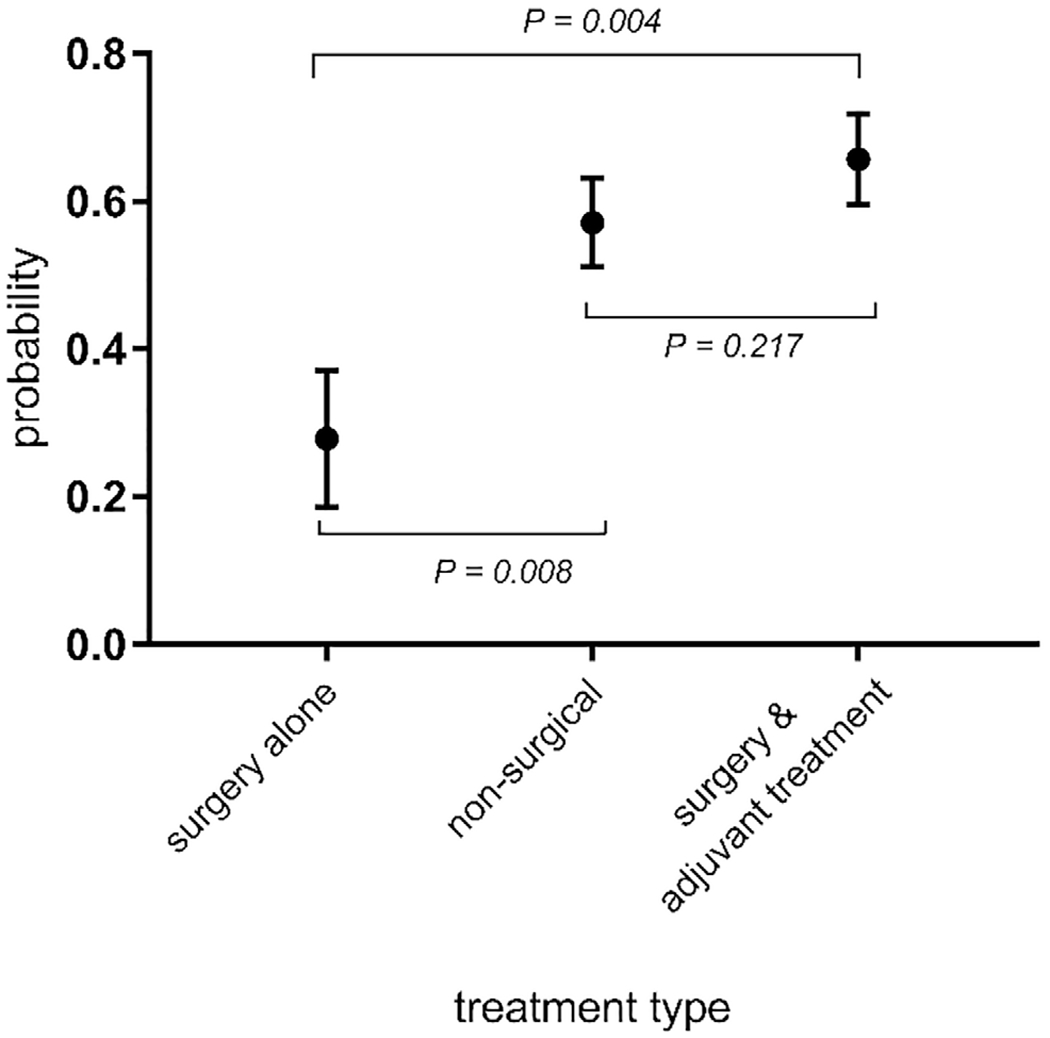
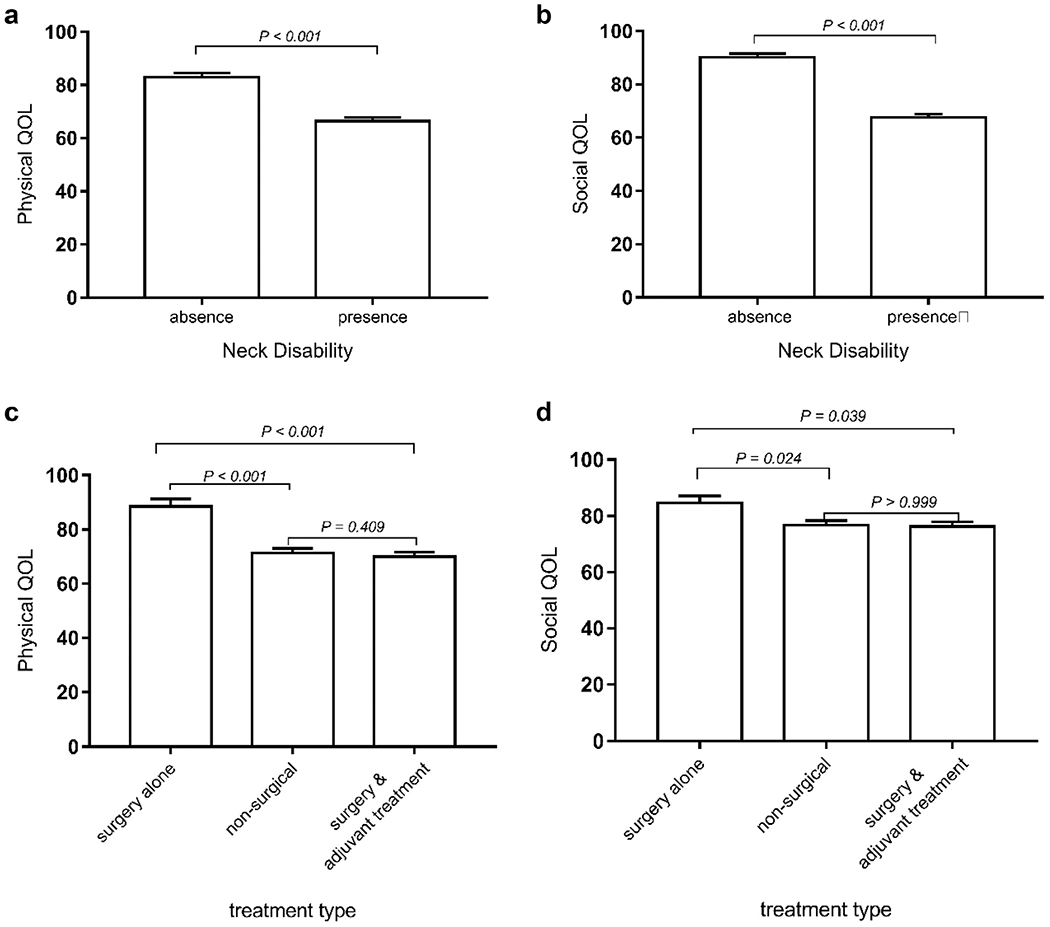
Results: Over half of survivors (54.2%) reported neck disability. The odds of neck disability in survivors who received nonsurgical treatment and those who received surgery plus adjuvant treatment were 3.46 and 4.98 times higher compared to surgery alone (P = .008, P = .004). Survivors who underwent surgery only had higher physical and social QOL than those who received nonsurgical treatment (physical QOL: P < .001, social QOL: P = .023) and those who received surgery plus adjuvant treatment (physical QOL: P < .001, social QOL: P = .039).
Conclusion: This study revealed a high prevalence of neck disability following nonsurgical treatment. While neck disability is an established sequela of surgical resection, the impact of nonsurgical treatment has gone unrecognized. Early identification and intervention to prevent progression of neck disability are crucial to optimize QOL.
Keywords: head and neck cancer; neck disability; quality of life; survivorship.
Conflict of interest statement
Figures
References
-
- Bozec A, Poissonnet G, Chamorey E, et al. Quality of life after oral and oropharyngeal reconstruction with a radial forearm free flap: prospective study. J Otolaryngol Head Neck Surg. 2009;38:401–408. - PubMed
-
- Mittal BB, Kepka A, Mahadevan A, et al. Tissue/dose compensation to reduce toxicity from combined radiation and chemotherapy for advanced head and neck cancers. Int J Cancer. 2001;96:61–70. - PubMed
-
- Karatzanis AD, Psychogios G, Zenk J, et al. Evaluation of available surgical management options for early supraglottic cancer. Head Neck. 2010;32:1048–1055. - PubMed
-
- Byers RM. Neck dissection: concepts, controversies, and technique. Semin Surg Oncol. 1991;7:9–13. - PubMed
-
- Eisbruch A, Dawson L, Kim H, et al. Conformal and intensity modulated irradiation of head and neck cancer: the potential for improved target irradiation, salivary gland function, and quality of life. Acta Otorhinolaryngol Belg. 1999;53:271–275. - PubMed
Publication types
MeSH terms
Grants and funding
LinkOut - more resources
Full Text Sources
Medical
