


Environmental distribution of Porcine Circovirus Type 2 (PCV2) in swine herds with natural infection
- PMID: 31616055
- PMCID: PMC6794300
- DOI: 10.1038/s41598-019-51473-6
Environmental distribution of Porcine Circovirus Type 2 (PCV2) in swine herds with natural infection
Abstract
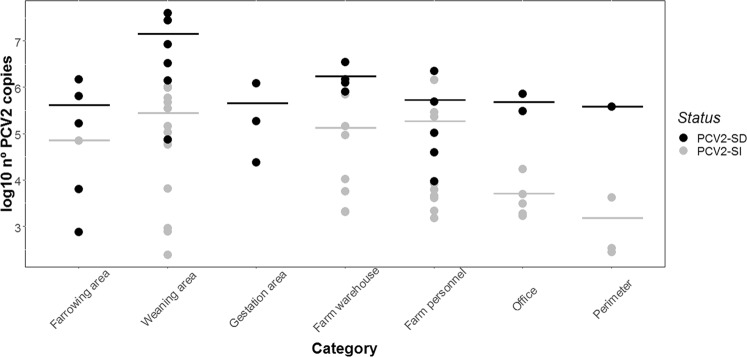
Porcine circovirus type 2 (PCV2) is the aetiological agent of PCV2-Systemic Disease (PCV2-SD) and PCV2-Subclinical Infection (PCV2-SI). PCV2 is highly resistant to environmental conditions, being able to remain in the farm environment and thus represent a risk for infection maintenance. The aim of this study was to identify, under field conditions, the possible critical points in the environment of non-vaccinated farrow-to-weaning swine farms where PCV2 could accumulate and persist. For that, environmental samples from five swine farms with PCV2-SD or PCV2-SI were taken and analysed by qPCR, including different farm areas, farm personnel and management implements. PCV2 DNA was detected in the environment of all farms (42.9% of positive samples). Overall, the PCV2-SD herd seemed to present more positive samples and higher viral loads than the PCV2-SI herds. At individual farm level, weaning areas appeared to be the most contaminated facilities. In addition, PCV2 was found at high levels in most samples from farm workers, especially work boots, suggesting that they may play a role in within-farm transmission. In addition, PCV2 was detected in areas without animals the like warehouses, offices and farm perimeter. Therefore, this study is helpful to improve measures to reduce within-farm PCV2 dissemination.
Conflict of interest statement
The authors declare no competing interests.
Figures
References
Publication types
MeSH terms
Substances
LinkOut - more resources
Full Text Sources
