


Lack of detection of Candida nivariensis and Candida bracarensis among 440 clinical Candida glabrata sensu lato isolates in Kuwait
- PMID: 31618264
- PMCID: PMC6795469
- DOI: 10.1371/journal.pone.0223920
Lack of detection of Candida nivariensis and Candida bracarensis among 440 clinical Candida glabrata sensu lato isolates in Kuwait
Abstract
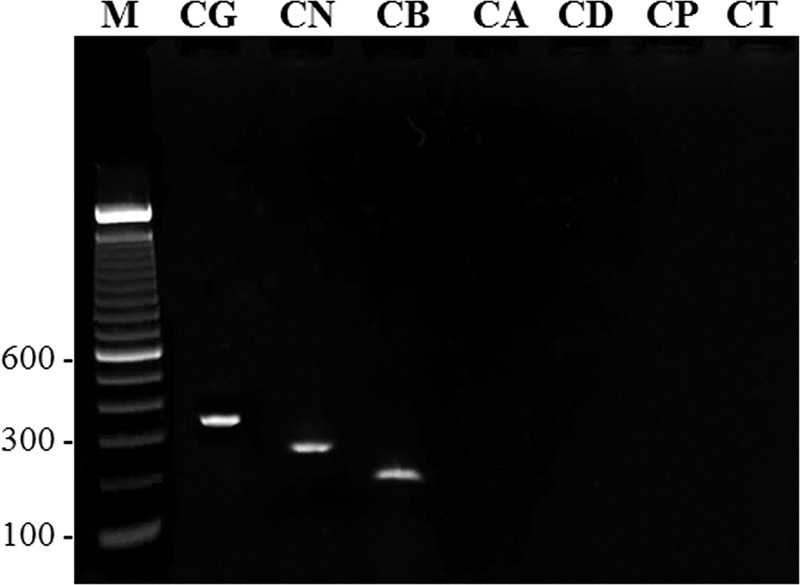
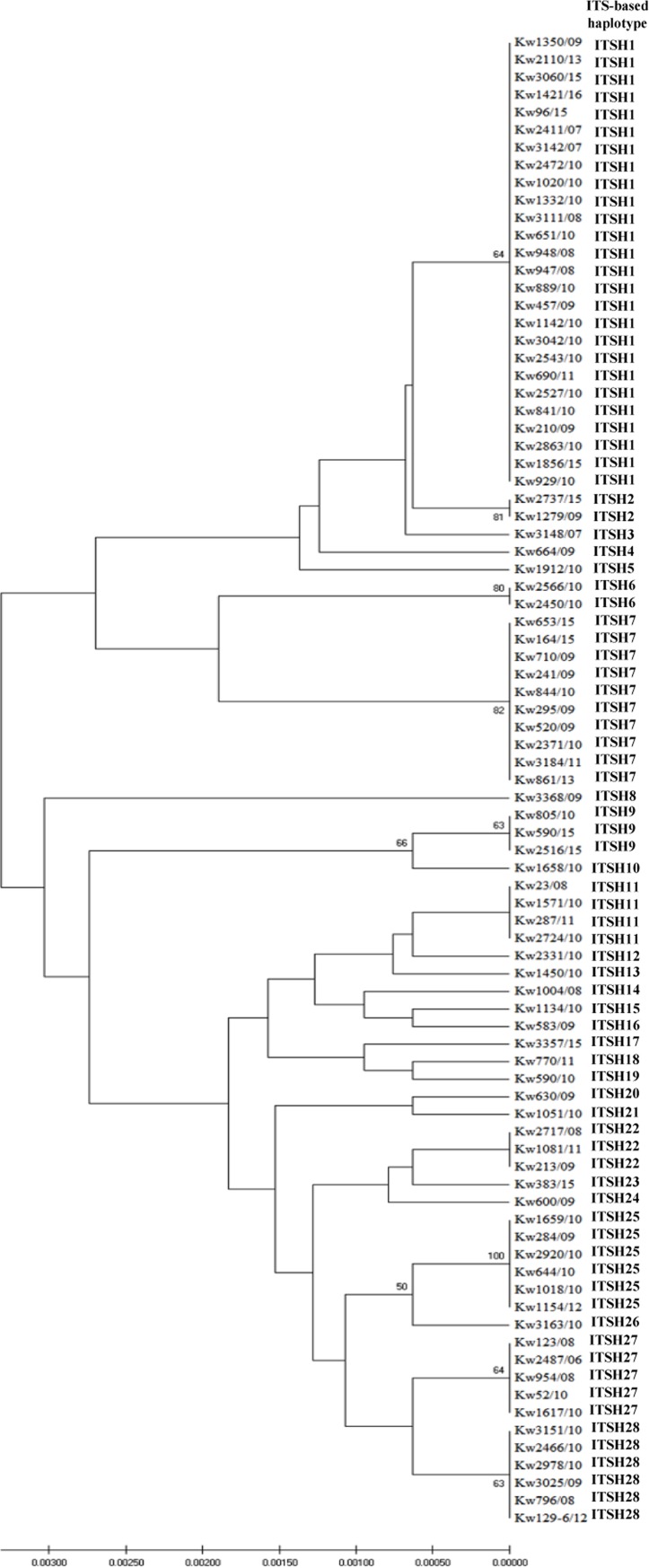
Occurrence of Candida nivariensis and Candida bracarensis, two species phenotypically similar to Candida glabrata sensu stricto, in human clinical samples from different geographical settings remains unknown. This study developed a low-cost multiplex PCR (mPCR) and three species-specific singleplex PCR assays. Reference strains of common Candida species were used during development and the performance of mPCR and singleplex PCR assays was evaluated with 440 clinical C. glabrata sensu lato isolates. The internal transcribed spacer (ITS) region of rDNA was also sequenced from 85 selected isolates and rDNA sequence variations were used for determining genetic relatedness among the isolates by using MEGA X software. Species-specific amplicons for C. glabrata (~360 bp), C. nivariensis (~250 bp) and C. bracarensis (~180 bp) were obtained in mPCR while no amplicon was obtained from other Candida species. The three singleplex PCR assays also yielded expected results with reference strains of Candida species. The mPCR amplified ~360 bp amplicon from all 440 C. glabrata sensu lato isolates thus identifying all clinical isolates in Kuwait as C. glabrata sensu stricto. The results of mPCR were confirmed for all 440 isolates as they yielded an amplicon only in C. glabrata sensu stricto-specific singleplex PCR assay. The rDNA sequence data identified 28 ITS haplotypes among 85 isolates with 18 isolates belonging to unique haplotypes and 67 isolates belonging to 10 cluster haplotypes. In conclusion, we have developed a simple, low-cost mPCR assay for rapid differentiation of C. glabrata sensu stricto from C. nivariensis and C. bracarensis. Our data obtained from a large collection of clinical C. glabrata sensu lato isolates show that C. nivariensis and C. bracarensis are rare pathogens in Kuwait. Considerable genetic diversity among C. glabrata sensu stricto isolates was also indicated by rDNA sequence analyses.
Conflict of interest statement
The authors have declared that no competing interests exist.
Figures
References
-
- Guinea J. Global trends in the distribution of Candida species causing candidemia. Clin Microbiol Infect 2014; 20(Supp. 6):5–10. - PubMed
-
- Pfaller MA, Moet GJ, Messer SA, Jones RN, Castanheira M. Candida bloodstream infections: comparison of species distributions and antifungal resistance patterns in community-onset and nosocomial isolates in the SENTRY Antimicrobial Surveillance Program, 2008–2009. Antimicrob Agents Chemother 2011; 55:561–566. 10.1128/AAC.01079-10 - DOI - PMC - PubMed
Publication types
MeSH terms
Substances
LinkOut - more resources
Full Text Sources
Medical
