Review
. 2020 Mar;107(3):521-529.
doi: 10.1002/cpt.1678. Epub 2019 Dec 6.

Improving the Safety of Medicines in the European Union: From Signals to Action

Affiliations
Review

Improving the Safety of Medicines in the European Union: From Signals to Action

Joanne Potts et al. Clin Pharmacol Ther. 2020 Mar.

Abstract

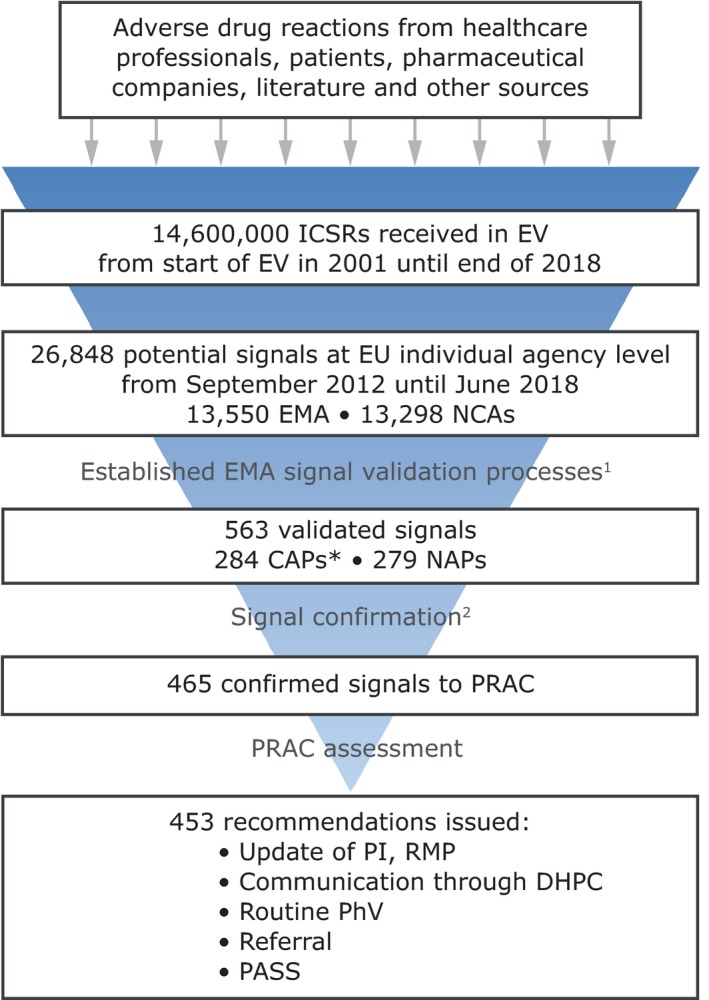
Pharmacovigilance and risk minimization must be planned during drug development and forms a critical part of the regulator's decision on whether a medicinal product can be authorized. Pharmacovigilance systems should ensure proactive monitoring of all authorized medicines throughout their lifecycle in clinical use. Signal detection and management are core activities in pharmacovigilance, rapidly delivering new information on the safety of medicines in real-world use which helps to fill knowledge gaps. The first 6 years of the European Union (EU) signal management system resulted in 453 recommendations issued by the Pharmacovigilance Risk Assessment Committee (PRAC), of which more than half were for drug labeling changes. The EU pharmacovigilance network has demonstrated its ability to detect and evaluate new drug safety signals. This has resulted in new warnings to guide the safe and effective use of medicines in Europe.


Conflict of interest statement

J.P., G.G., A.S., and P.A. are employees of the EMA. J.R. is an employee of the UK Medicines and Healthcare products Regulatory Agency and was the Chair of the PRAC from September 2012 until September 2018. S.S. is an employee of the Dutch Medicines Evaluation Board and has been a member of the PRAC since September 2012 (and Chair since September 2018).

Figures
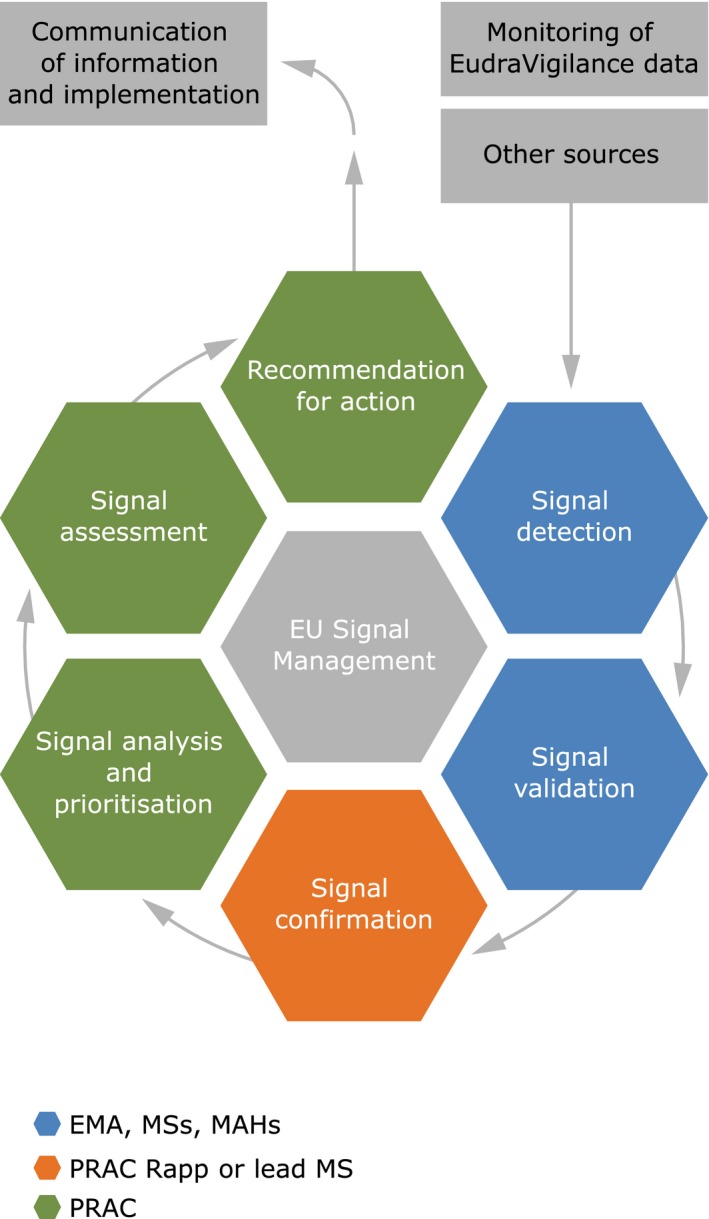
Figure 1
Figure 1
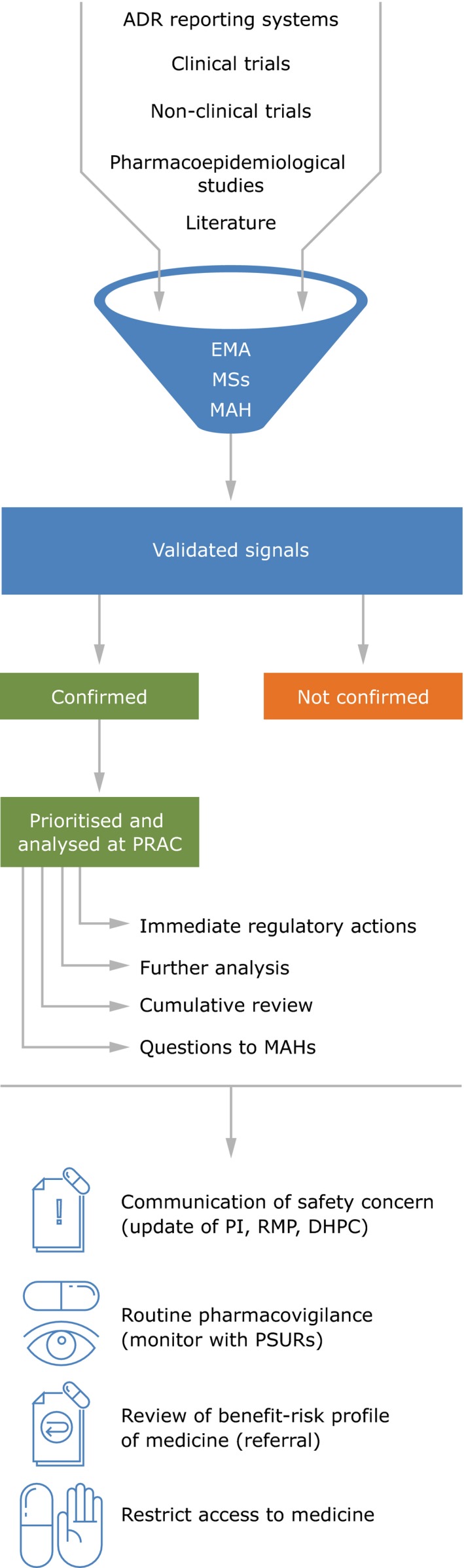
Simplified schematic of signal management process in the European Union. EMA, European Medicines Agency; EU, European Union; MAH, Marketing Authorisation Holder; MSs, Member States; PRAC, Pharmacovigilance Risk Assessment Committee.
Figure 2
Figure 2
Summary of the signal management process within the European Union and consequent recommendations of PRAC. ADR, Adverse Drug Reaction; DHPC, Direct Healthcare Professional Communication; EMA, European Medicines Agency; MAH, Marketing Authorisation Holder; MSs, Member States; PI, Product Information; PRAC, Pharmacovigilance Risk Assessment Committee; PSUR, Periodic Safety Update Report; RMP, Risk Management Plan.
Figure 3
Figure 3
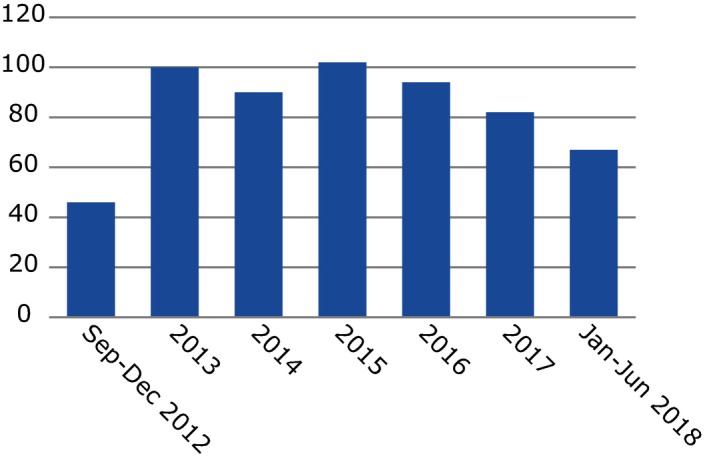
Number of signals assessed by the PRAC in last 6 years. Signals may be assessed (and thus counted in the chart) in >1 year. Although the graph looks like there were a high number of signals in 2012, this is because there were ongoing safety issues before the PRAC was formally established, which were ongoing and fed into the PRAC. Therefore, 2013 would be a better considered baseline.
Figure 4
Figure 4
Trends in adverse event reports and signals in the last 6 years. 1. Established EMA signal validation processes, including strength of evidence (such as biological mechanism, confounding by disease, causal relationship, etc.), clinical relevance, and previous awareness of an association. 2. Reasons for not confirming a validated signal include: signals already adequately handled through a different procedure, unsubstantial new evidence since a previous review, or available data assessed does not warrant further analysis. *This includes one CAP signal from an MAH in the context of the pilot, which started on February 22, 2018. CAP, Centrally Authorized Product; DHPC, Direct Healthcare Professional Communication; EMA, European Medicines Agency; EU, European Union; EV, EudraVigilance; ICSRs, Individual Case Safety Reports; NAP, Nationally Authorized Product; NCA, National Competent Authorities; PASS, Post Authorization Safety Study; PhV, pharmacovigilance; PI, product information; PRAC, Pharmacovigilance Risk Assessment Committee; RMP, risk management plan.
Figure 5
Figure 5
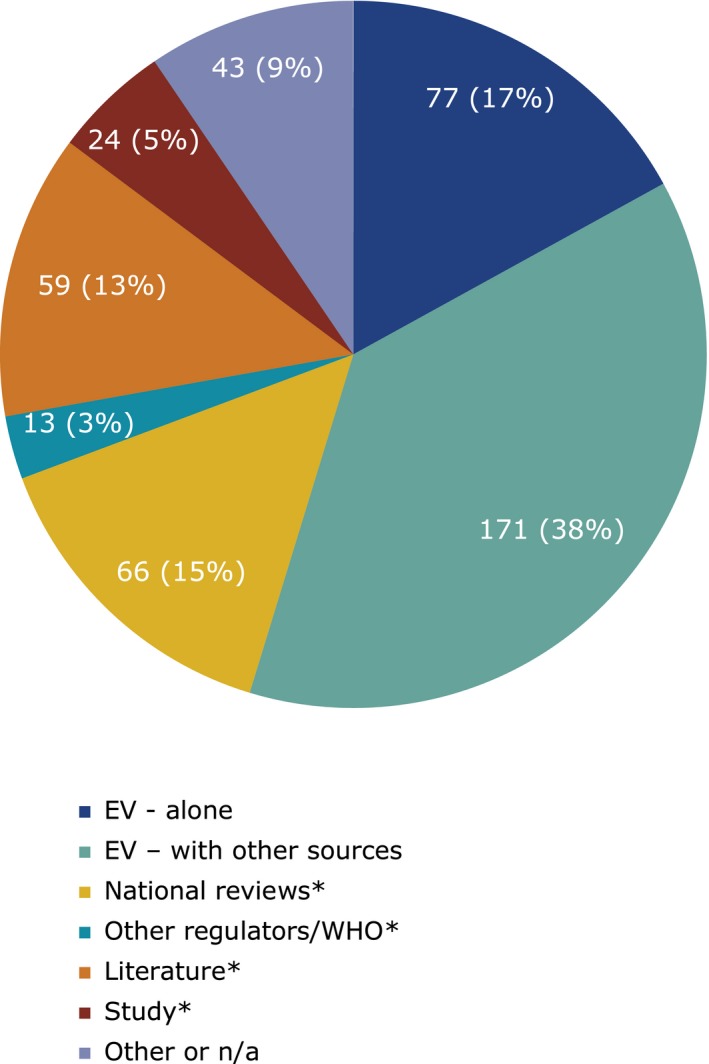
Sources of information of the signals prioritized and analyzed at the Pharmacovigilance Risk Assessment Committee from September 2012 to June 2018. EV, EudraVigilance; n/a, not applicable; PRAC, Pharmacovigilance Risk Assessment Committee; WHO, World Health Organization. *Excluding those counted already in categories above.
Figure 6
Figure 6
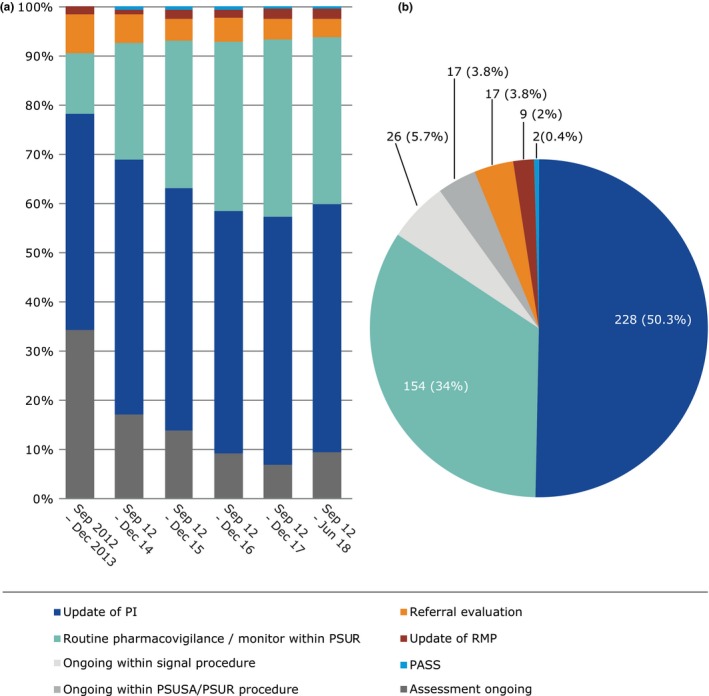
Outcomes of signals prioritized and analyzed at the Pharmacovigilance Risk Assessment Committee in the past 6 years. (a) Per year (b) September 2012 to June 2018. Note for a, 2012 data is merged with 2013 due to the low numbers. PASS, Post Authorization Safety Study; PI, Product Information; PSUR, Periodic Safety Update Report; PSUSA, Periodic Safety Update Single Assessment; Referral, in accordance with the Articles 31 and 107i of Directive 2001/83/EC(4) and Article 20 of Regulation (EC) No. 726/2004; RMP, Risk Management Plan.

References

    1. Vandenbroucke, J.P. Observational research, randomised trials, and two views of medical science. PLoS Med. 5, e67 (2008). - PMC - PubMed
    1. 2018 Annual Report on EudraVigilance for the European Parliament, the Council and the Commission. EUROPEAN MEDICINES AGENCY <https://www.ema.europa.eu/en/documents/report/2018-annual-report-eudravi...> (2019). Accessed November 27, 2019.
    1. Santoro, A. , Genov, G. , Spooner, A. , Raine, J. & Arlett, P. Promoting and protecting public health: how the European Union pharmacovigilance system works. Drug Safety 40, 855–869 (2017). - PMC - PubMed
    1. Directive 2001/83/EC of the European Parliament and of the Council of 6 November 2001 on the Community code relating to medicinal products for human use. EUROPEAN COMMISSION <https://ec.europa.eu/health/sites/health/files/files/eudralex/vol-1/dir_...> (2012). Accessed November 27, 2019.
    1. Regulation (EC) No. 726/2004 of the European Parliament and of the Council of 31 March 2004 laying down Community procedures for the authorisation and supervision of medicinal products for human and veterinary use and establishing a European Medicines Agency. EUROPEAN COMMISSION <https://eur-lex.europa.eu/legal-content/EN/TXT/?uri=CELEX:02004R0726-201...> (2019). Accessed November 27, 2019.

MeSH terms