Review
. 2020 Jan 21;33(1):95-118.
doi: 10.1021/acs.chemrestox.9b00335. Epub 2019 Nov 16.

Use of Zebrafish in Drug Discovery Toxicology

Affiliations
Review

Use of Zebrafish in Drug Discovery Toxicology

Steven Cassar et al. Chem Res Toxicol. .

Abstract

Unpredicted human safety events in clinical trials for new drugs are costly in terms of human health and money. The drug discovery industry attempts to minimize those events with diligent preclinical safety testing. Current standard practices are good at preventing toxic compounds from being tested in the clinic; however, false negative preclinical toxicity results are still a reality. Continual improvement must be pursued in the preclinical realm. Higher-quality therapies can be brought forward with more information about potential toxicities and associated mechanisms. The zebrafish model is a bridge between in vitro assays and mammalian in vivo studies. This model is powerful in its breadth of application and tractability for research. In the past two decades, our understanding of disease biology and drug toxicity has grown significantly owing to thousands of studies on this tiny vertebrate. This Review summarizes challenges and strengths of the model, discusses the 3Rs value that it can deliver, highlights translatable and untranslatable biology, and brings together reports from recent studies with zebrafish focusing on new drug discovery toxicology.


Conflict of interest statement

The authors declare the following competing financial interest(s): L.I.Z. is a founder and stockholder of Fate Therapeutics, CAMP4 Therapeutics, and Scholar Rock. He is a consultant for Celularity.

Figures
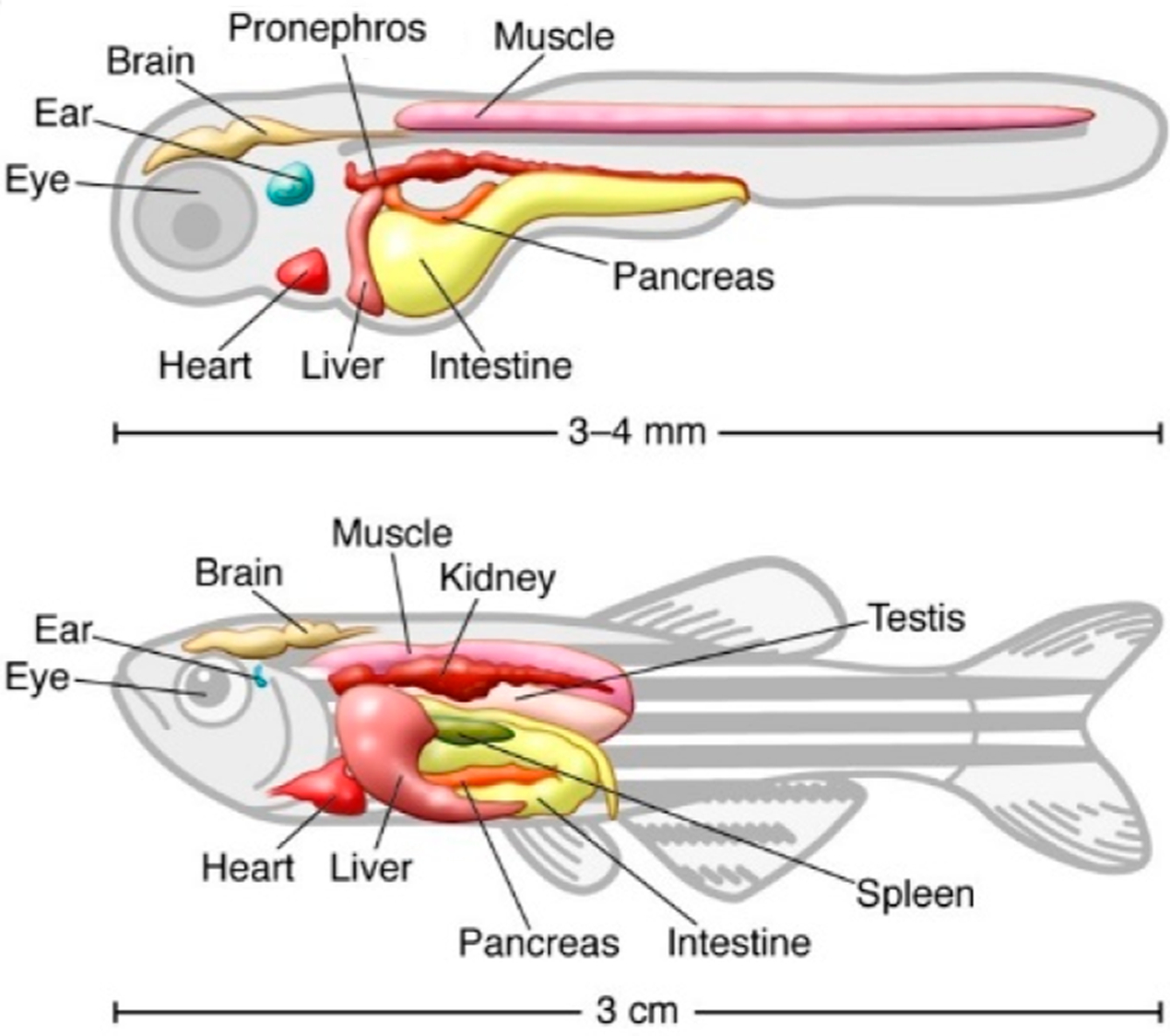
Figure 1.
Figure 1.
General body plans of a larval (top) and an adult (bottom) zebrafish indicating organ locations. Note the relative lengths of the two stages—approximately 5 days post fertilization for the larva and 3 months for the adult. In body volume, the larval fish is hundreds of times smaller than the adult. Cartoon used with permission from authors of ref and The Journal of Clinical Investigation, copyright 2012.
Figure 2.
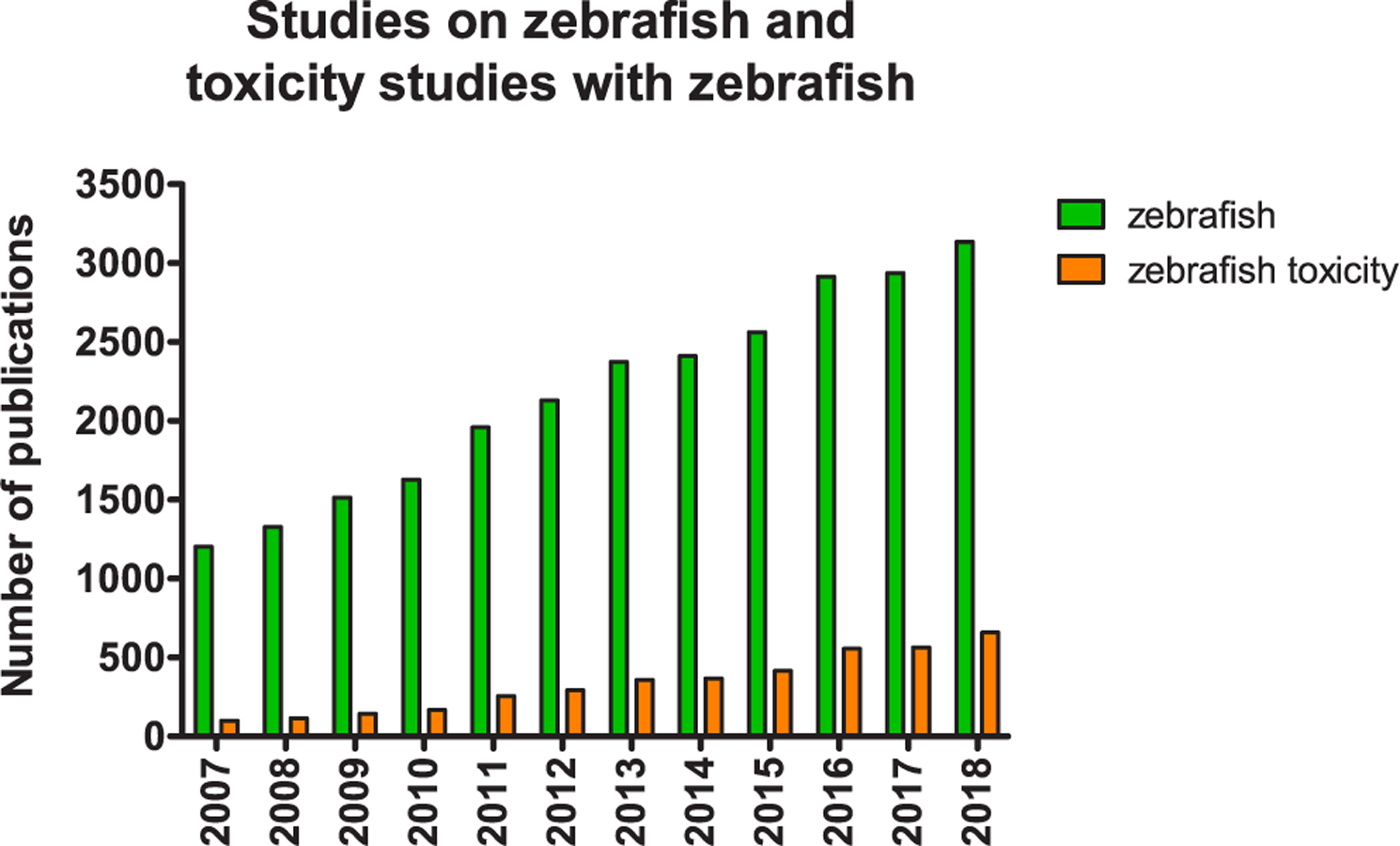
Figure 2.
Publications on zebrafish for toxicology have grown over 4-fold in the last 10 years.
Figure 3.
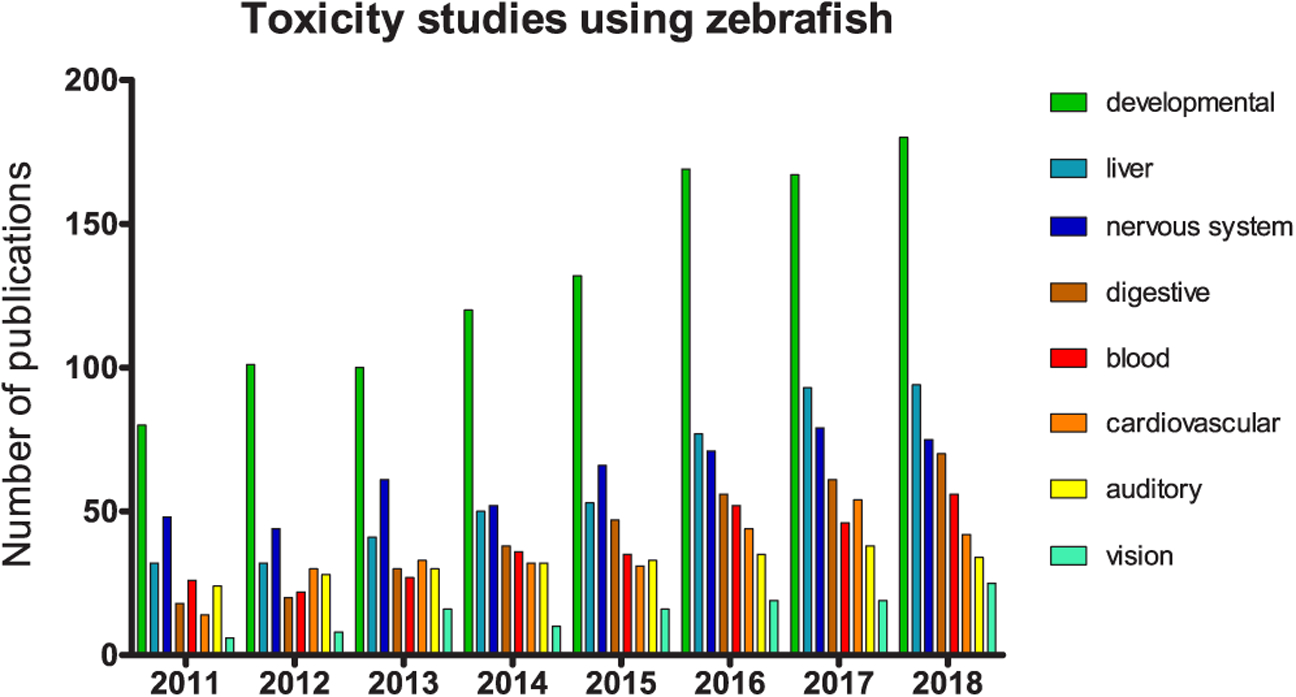
Figure 3.
Numerous systems can be interrogated for toxic end points using zebrafish, and the number of publications is trending upward, as indicated by these examples.
Figure 4.
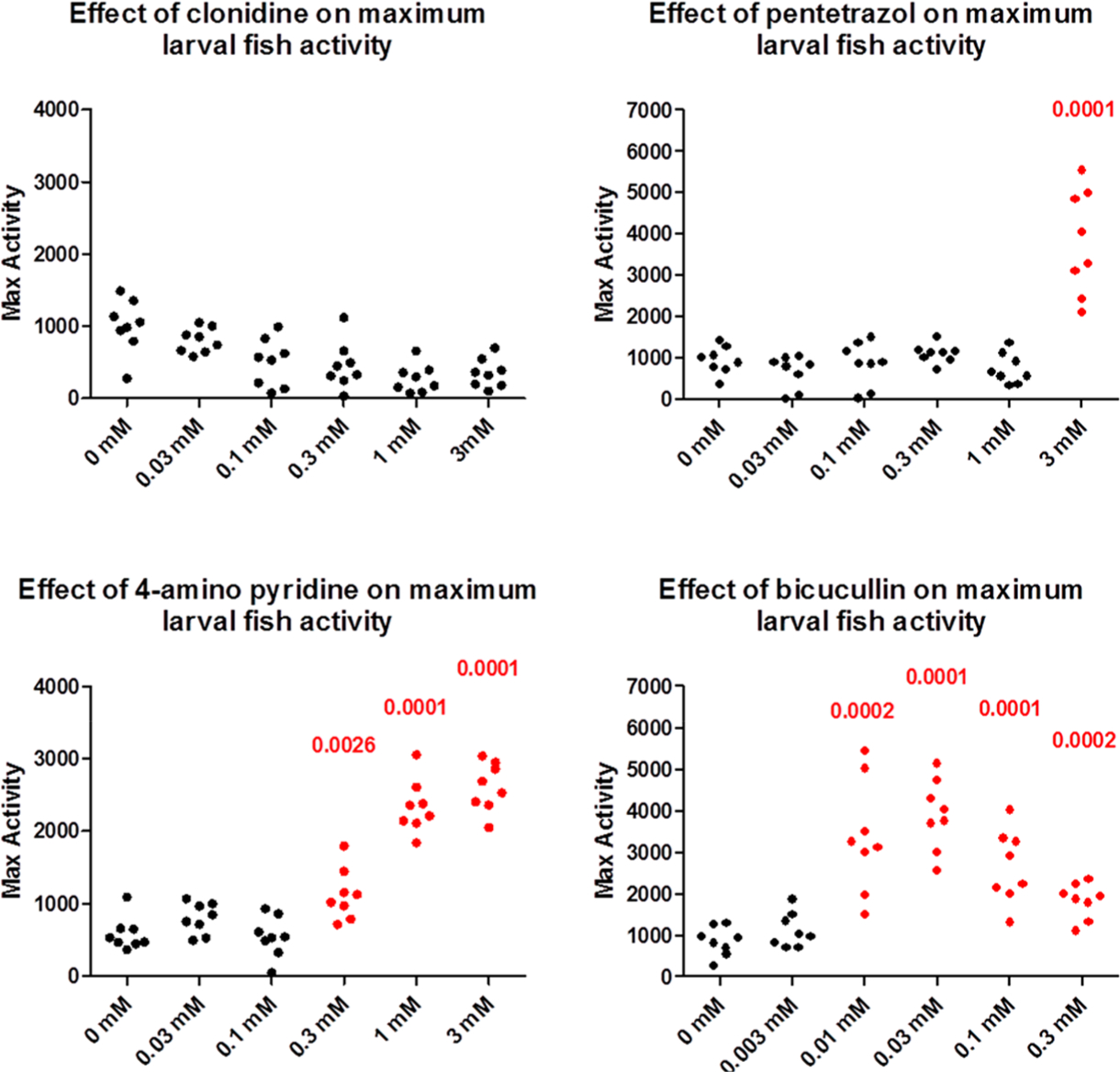
Figure 4.
Example results from a zebrafish locomotor assay for seizure liability. Drugs which interact through different mechanisms with the nervous system evoke activity responses with different potencies. Each dot represents the maximum activity for a single larva. Red dots indicate that the group average was significantly higher than that of the vehicle (0 mM) group; p-values are given in red. Copied with permission from ref and Elsevier, copyright 2019.
Figure 5.
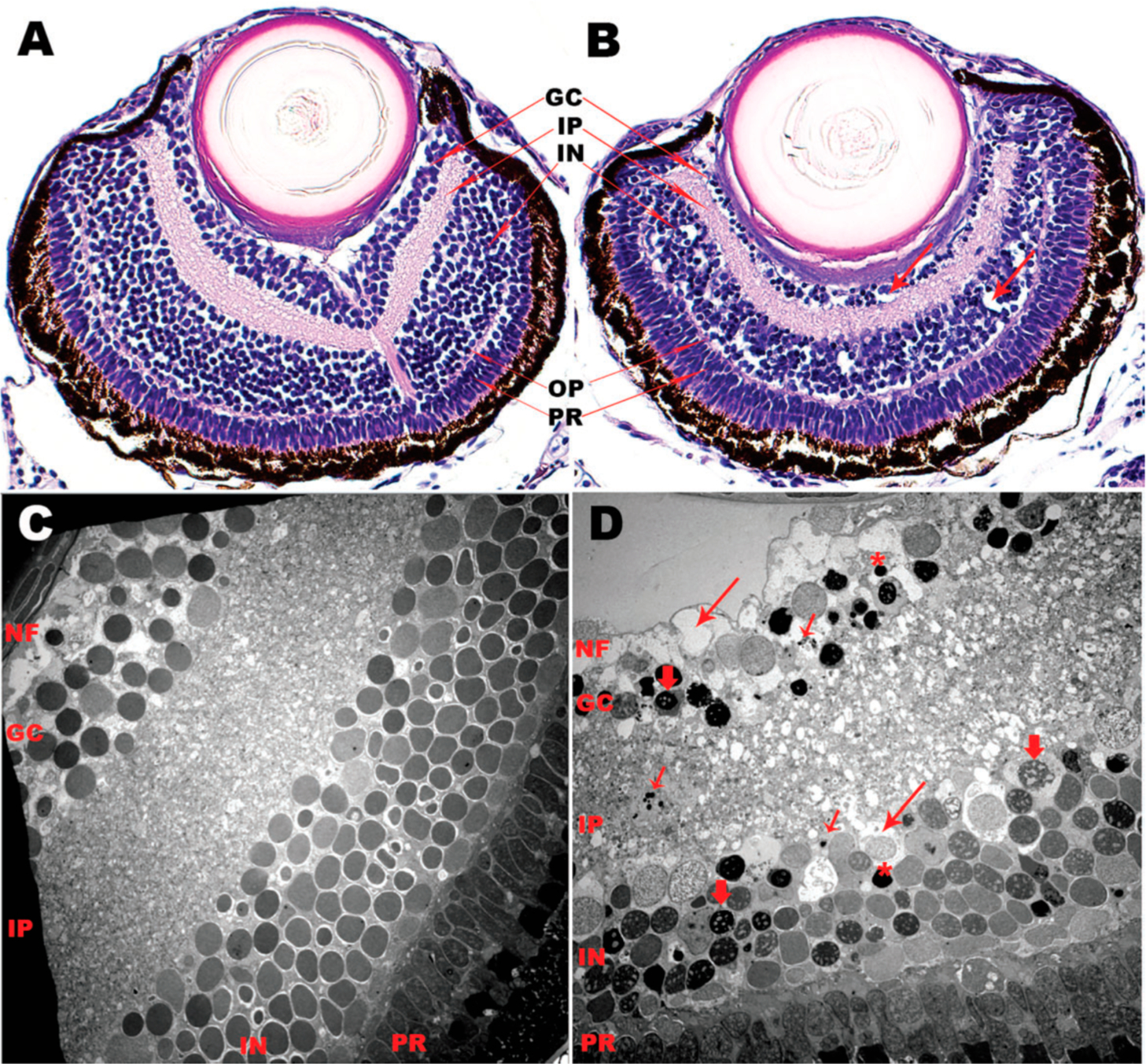
Figure 5.
Representative ocular histology (top, 40×) and transmission electron microscopy (2000×) from larval zebrafish treated with vehicle (A + C) or a chemotherapeutic discovery compound (B + D). The vehicle-treated eye (A) depicts normal retinal features with homogeneously spaced cells. The retina from the compound-treated larva has decreased cell numbers in both the ganglion (GC) and inner nuclear (IN) layers (red arrows in B), and the inner plexiform (IP) layer has a disorganized, vacuolated appearance. The electron microscopic images reveal evenly spaced nuclei in the ganglion and inner nuclear layers for the vehicle-treated larva (C) but apoptosis (asterisk and red arrows), nuclear vacuolation/fragmentation (red block arrows), and vacuolation, associated with cell loss, in the retinal layers of the compound-treated larva. Similar effects were found in retinas of rats and dogs treated with that compound. NF, nerve fiber layer; OP, outer plexiform layer; PR, photoreceptor layer. Copied with permission from ref and Oxford University Press, copyright 2014.
Figure 6.
Figure 6.
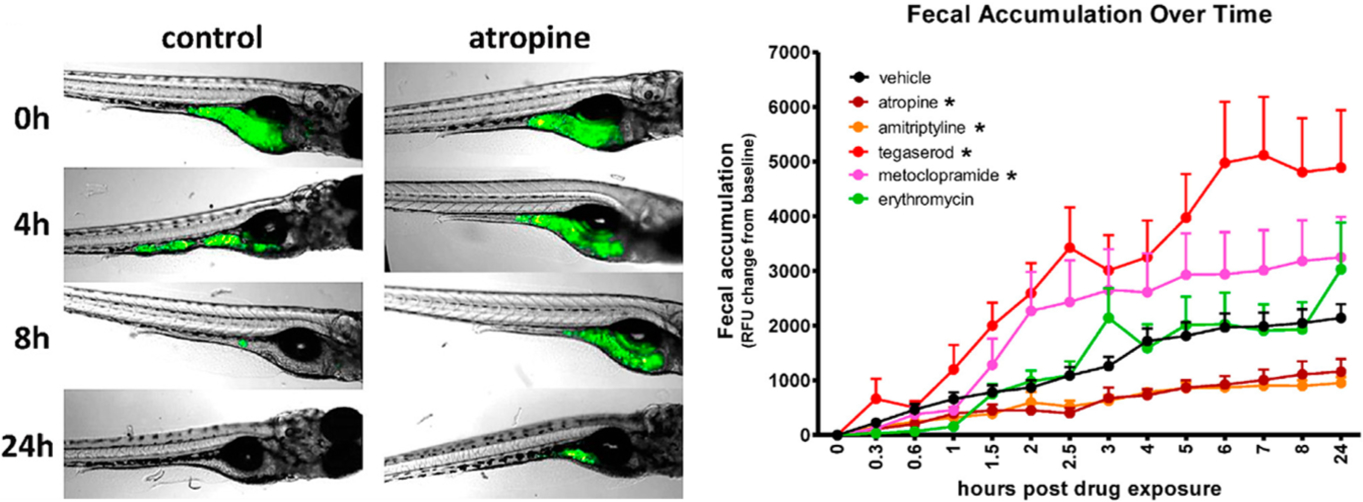
Fluorescent food transit can be detected and measured as a loss of signal over time from microscopic imaging (left) or, in a high-throughput fashion, from a corresponding gain in signal by plate-based spectrophotometry (right). The latter method allows the measurement of intestinal transit from dozens of larvae simultaneously in a microwell plate. Modified with permission from ref and Elsevier, copyright 2015.
Figure 7.
Figure 7.
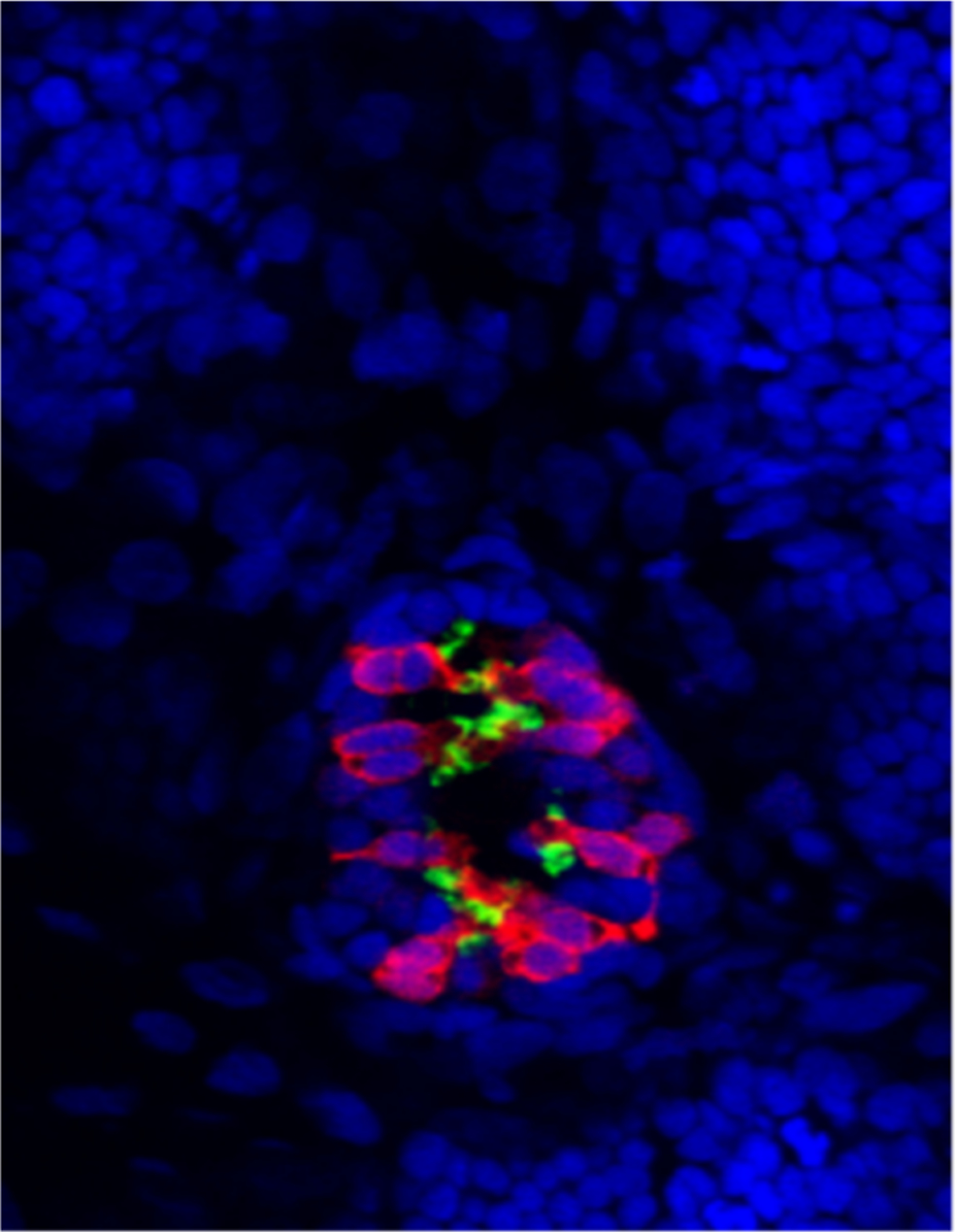
Photoreceptive pineal organ of a 4 dpf larval zebrafish, medially located in the forebrain (top of image = rostral). Nuclei are blue (DAPI), cone photoreceptors are red (antiarrestin 3a antibody), and rod photoreceptors are green (antirhodopsin antibody). Previously unpublished, provided by J. Gamse. Photo credit: Joshua Clanton.
Figure 8.
Figure 8.
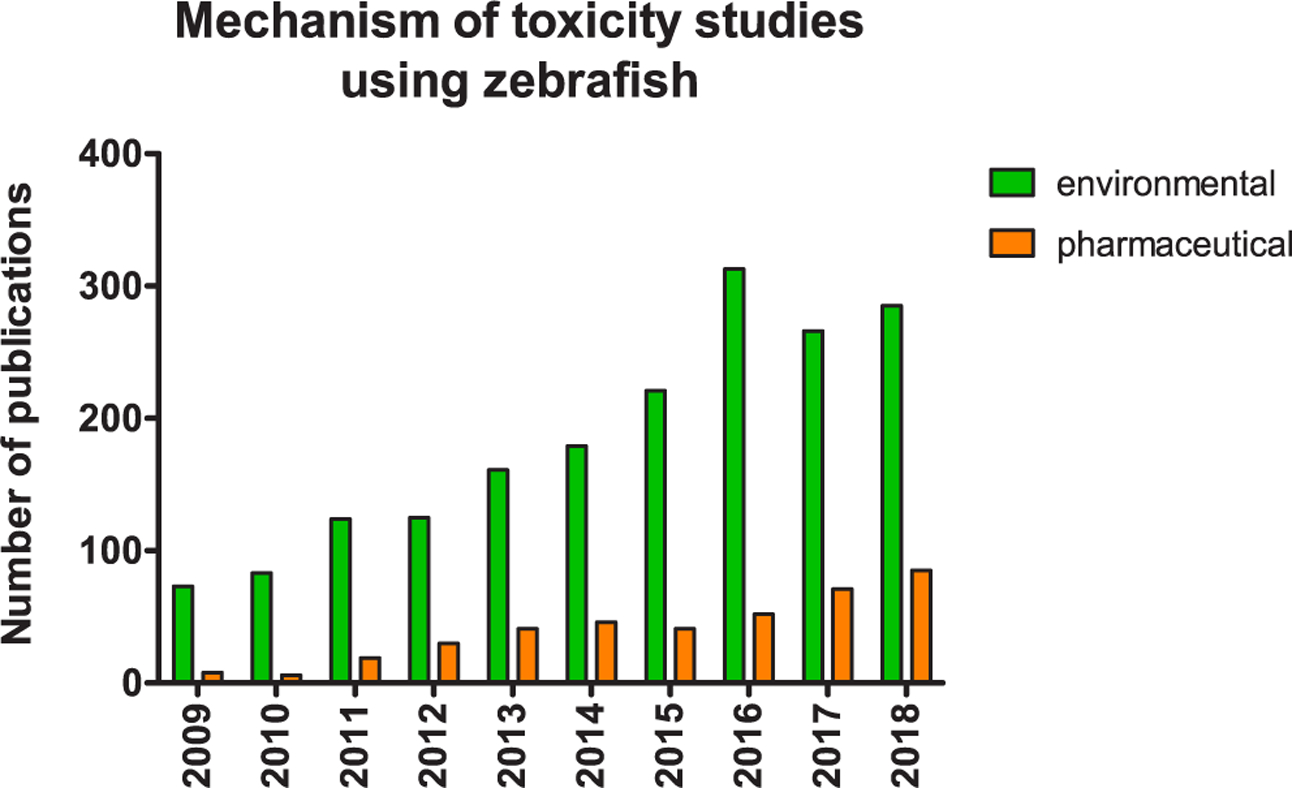
Number of publications reported from PubMed using search phrases “zebrafish (environmental or pharmaceutical) toxicity mechanism of action”.

References

    1. Blomme EA, and Will Y (2016) Toxicology Strategies for Drug Discovery: Present and Future. Chem. Res. Toxicol 29 (4), 473–504. - PubMed
    1. Hay M, Thomas DW, Craighead JL, Economides C, and Rosenthal J (2014) Clinical development success rates for investigational drugs. Nat. Biotechnol 32 (1), 40–51. - PubMed
    1. Munos B (2009) Lessons from 60 years of pharmaceutical innovation. Nat. Rev. Drug Discovery 8 (12), 959–68. - PubMed
    1. Cook D, Brown D, Alexander R, March R, Morgan P, Satterthwaite G, and Pangalos MN (2014) Lessons learned from the fate of AstraZeneca’s drug pipeline: a five-dimensional framework. Nat. Rev. Drug Discovery 13 (6), 419–31. - PubMed
    1. Waring MJ, Arrowsmith J, Leach AR, Leeson PD, Mandrell S, Owen RM, Pairaudeau G, Pennie WD, Pickett SD, Wang J, Wallace O, and Weir A (2015) An analysis of the attrition of drug candidates from four major pharmaceutical companies. Nat. Rev. Drug Discovery 14 (7), 475–86. - PubMed

Publication types