


American College of Sports Medicine Roundtable Report on Physical Activity, Sedentary Behavior, and Cancer Prevention and Control
- PMID: 31626056
- PMCID: PMC6814265
- DOI: 10.1249/MSS.0000000000002117
American College of Sports Medicine Roundtable Report on Physical Activity, Sedentary Behavior, and Cancer Prevention and Control
Abstract
Introduction: The American College of Sports Medicine convened an International Multidisciplinary Roundtable on Exercise and Cancer in March 2018 to evaluate and translate the evidence linking physical activity and cancer prevention, treatment, and control. This article discusses findings from the Roundtable in relation to the biologic and epidemiologic evidence for the role of physical activity in cancer prevention and survival.
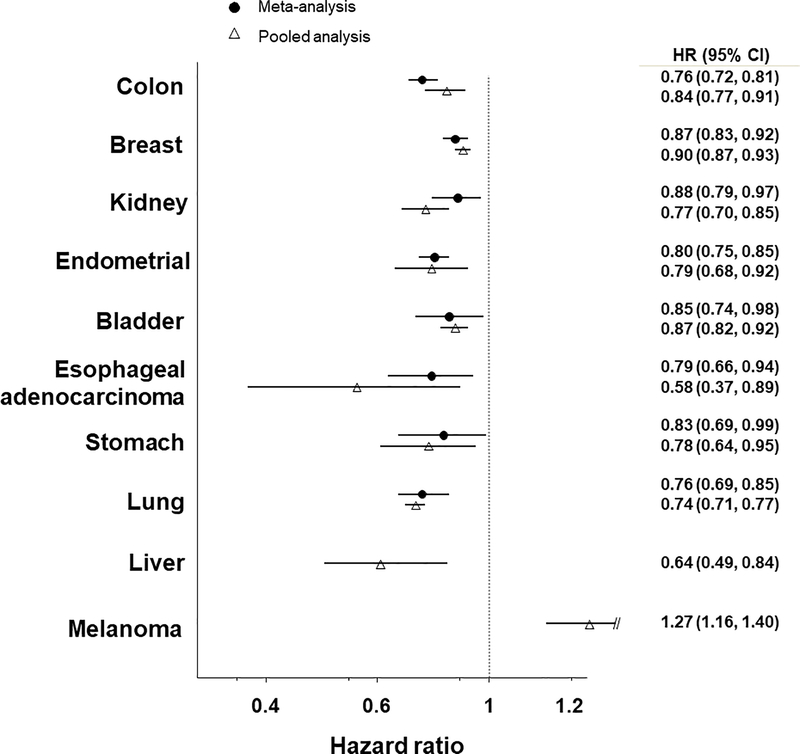
Results: The evidence supports that there are a number of biologically plausible mechanisms, whereby physical activity can influence cancer risk, and that physical activity is beneficial for the prevention of several types of cancer including breast, colon, endometrial, kidney, bladder, esophageal, and stomach. Minimizing time spent in sedentary behavior may also lower risk of endometrial, colon and lung cancers. Conversely, physical activity is associated with higher risk of melanoma, a serious form of skin cancer. Further, physical activity before and after a cancer diagnosis is also likely to be relevant for improved survival for those diagnosed with breast and colon cancer; with data suggesting that postdiagnosis physical activity provides greater mortality benefits than prediagnosis physical activity.
Conclusions: Collectively, there is consistent, compelling evidence that physical activity plays a role in preventing many types of cancer and for improving longevity among cancer survivors, although the evidence related to higher risk of melanoma demonstrates the importance of sun safe practices while being physically active. Together, these findings underscore the importance of physical activity in cancer prevention and control. Fitness and public health professionals and health care providers worldwide are encouraged to spread the message to the general population and cancer survivors to be physically active as their age, abilities, and cancer status will allow.
Figures
References
-
- Noone AM, Howlader N, Krapacho M, Miller D, Brest A, Yu M, et al. SEER Cancer Statistics Review, 1975–2015 Bethesda, MD: National Cancer Institute; 2018. [cited 2018 July 18, 2018]. Available from: https://seer.cancer.gov/csr/1975_2015/results_merged/topic_lifetime_risk....
