


Continuous local anaesthetic wound infusion for postoperative pain after midline laparotomy for colorectal resection in adults
- PMID: 31627242
- PMCID: PMC6953380
- DOI: 10.1002/14651858.CD012310.pub2
Continuous local anaesthetic wound infusion for postoperative pain after midline laparotomy for colorectal resection in adults
Abstract
Background: Colorectal resection through a midline laparotomy is a commonly performed surgical procedure to treat various bowel conditions. The typical postoperative hospital stay after this operation is 6 to 10 days. The main factors hindering early recovery and discharge are thought to include postoperative pain and delayed return of bowel function.Continuous infusion of a local anaesthetic into tissues surrounding the surgical incision via a multi-lumen indwelling wound catheter placed by the surgeon prior to wound closure may reduce postoperative pain, opioid consumption, the time to return of bowel function, and the length of hospital stay.
Objectives: To evaluate the efficacy and adverse events of continuous local anaesthetic wound infusion for postoperative pain after midline laparotomy for colorectal resection in adults.
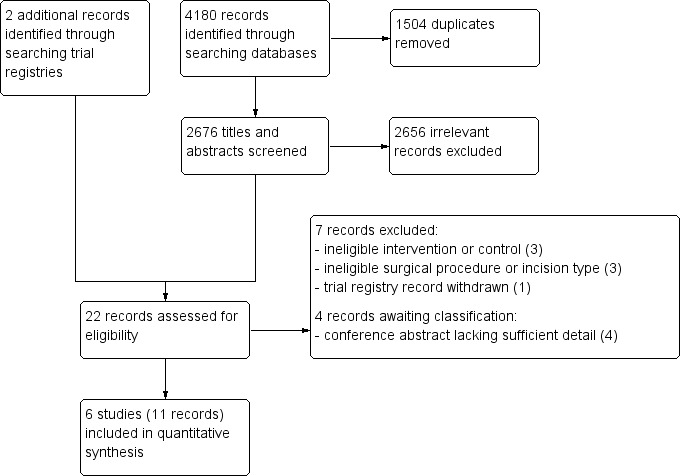
Search methods: We searched the CENTRAL, MEDLINE and Embase databases to January 2019 to identify trials relevant to this review. We also searched reference lists of relevant trials and reviews for eligible trials. Additionally, we searched two clinical trials registers for ongoing trials.
Selection criteria: We considered randomised controlled trials (including non-standard designs) or quasi-randomised controlled trials comparing continuous wound infusion of a local anaesthetic versus a placebo or a sham after midline laparotomy for colorectal resection in adults. We did not compare continuous local anaesthetic wound infusion to other techniques, such as transverse abdominis plane block or thoracic epidural analgesia. We allowed non-randomised analgesic co-interventions carried out equally in the intervention and control groups.
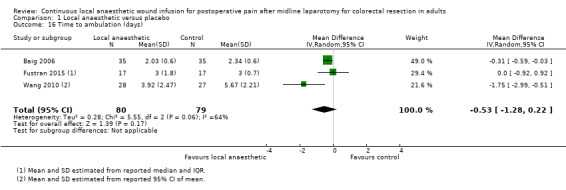
Data collection and analysis: Two review authors independently identified trials for inclusion and assessed their quality using the Cochrane 'Risk of bias' tool. We extracted data using standardised forms, including pain at rest and on movement (10-point scale), opioid consumption via a patient-controlled analgesia (PCA) system (mg morphine equivalent), postoperative opioid-related adverse events, the time to rescue analgesia, the time to first flatus and to first bowel movement, the time to ambulation, the length of hospital stay, serious postoperative adverse events, and patient satisfaction. We quantitatively synthesised the data by meta-analysis. We summarised and graded the certainty of the evidence for critical outcomes using the GRADEpro tool and created a 'Summary of findings' table.
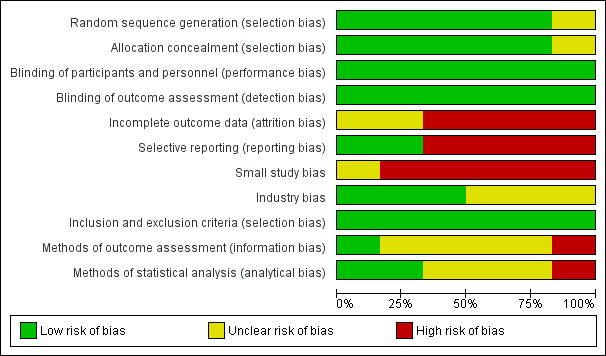
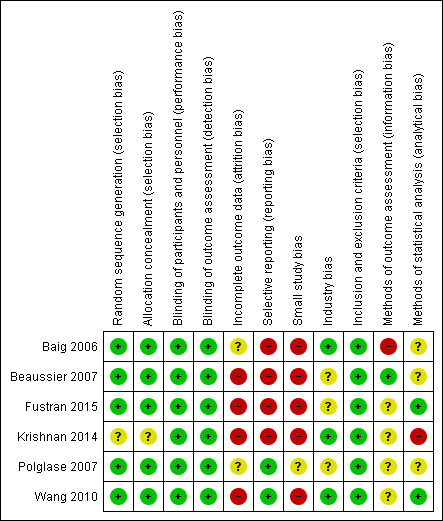
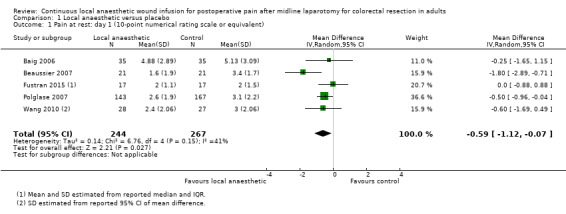
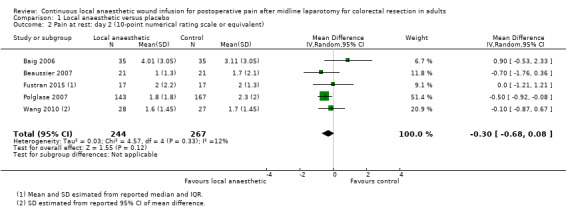
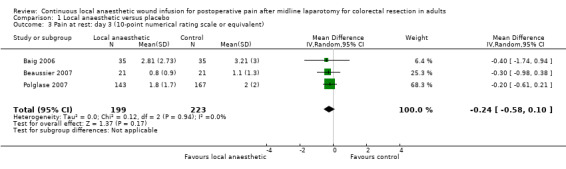
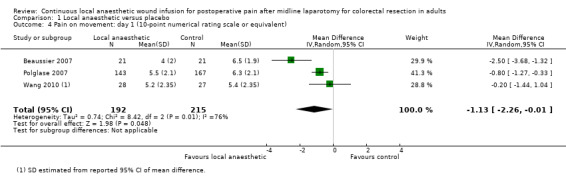
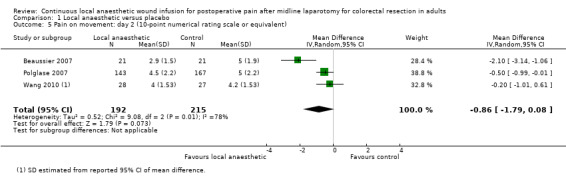
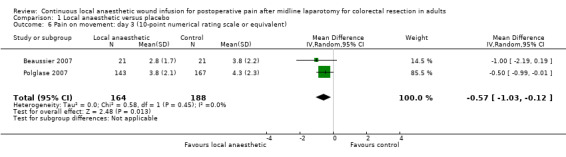
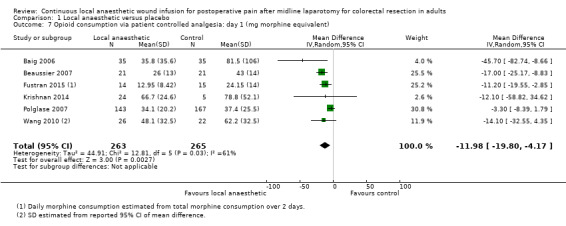
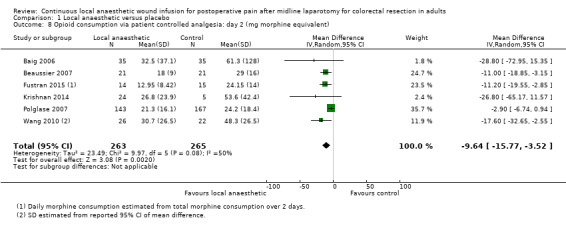
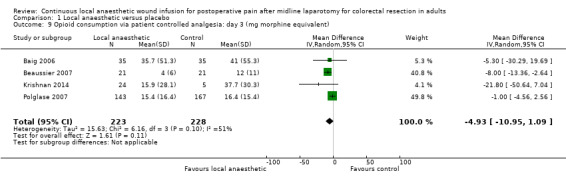
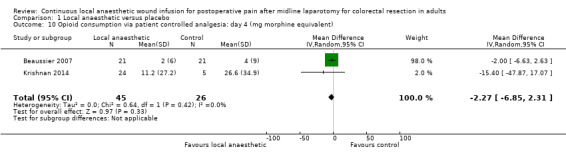
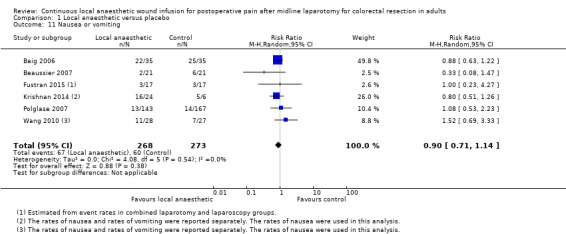
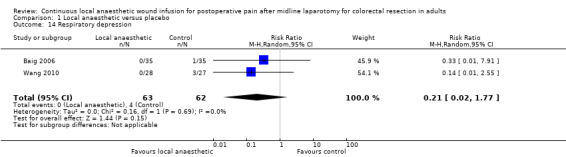
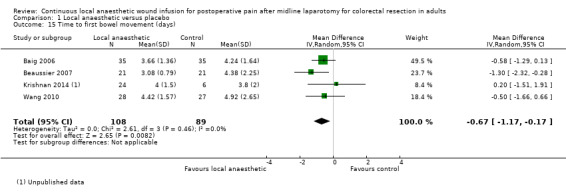
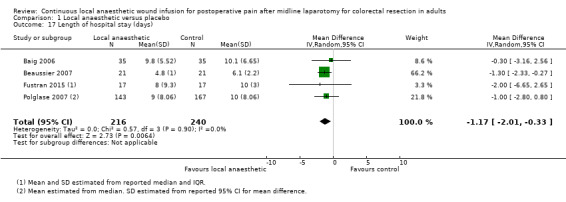
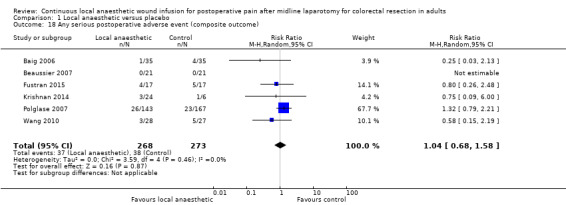
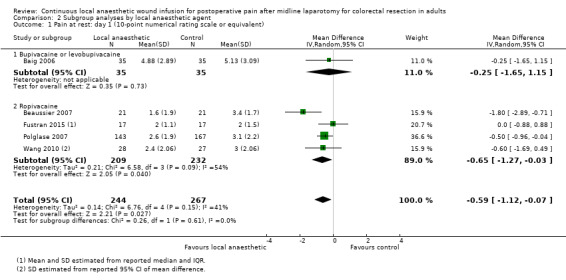
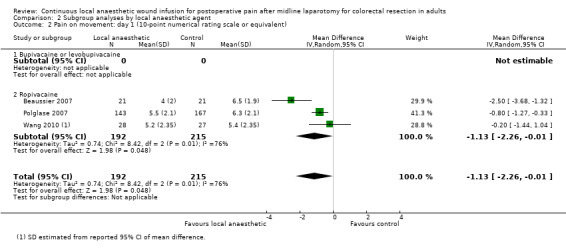
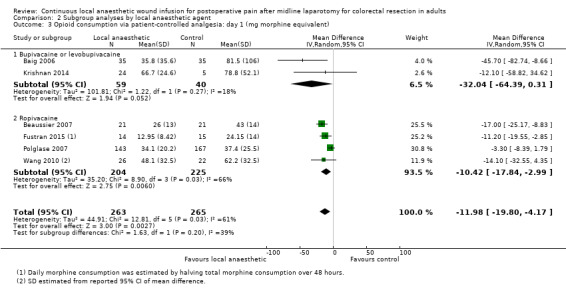
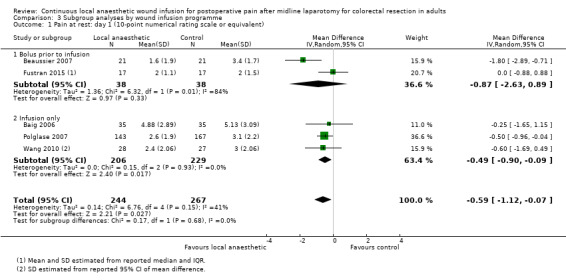
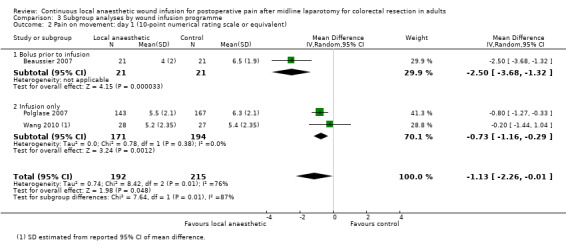
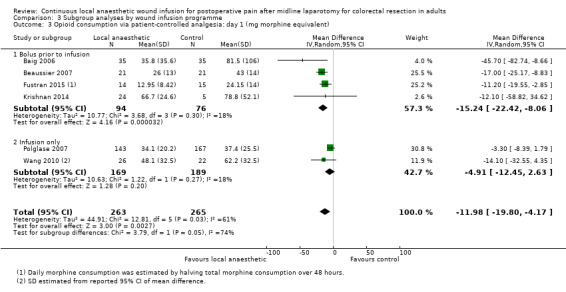
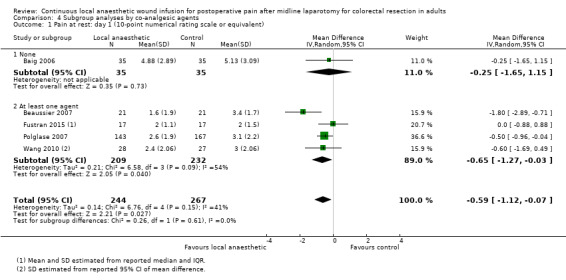
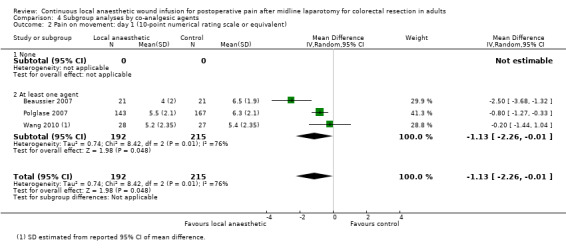
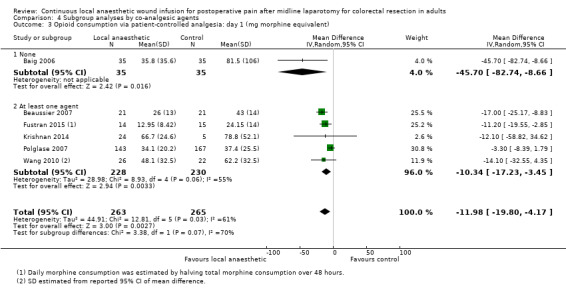
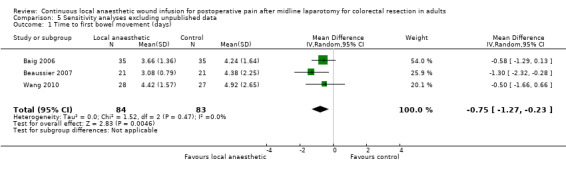
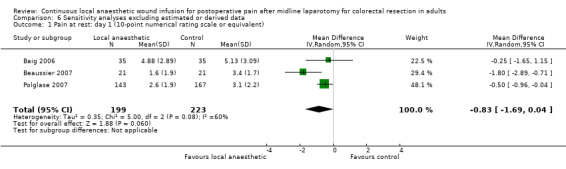
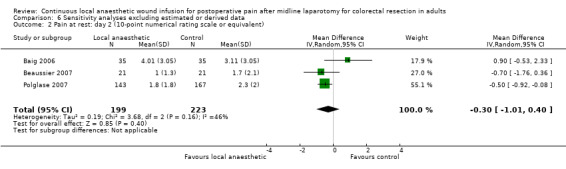
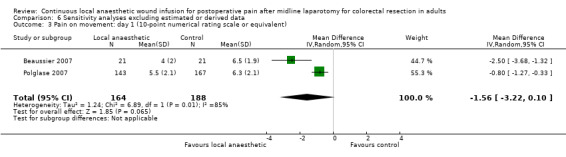
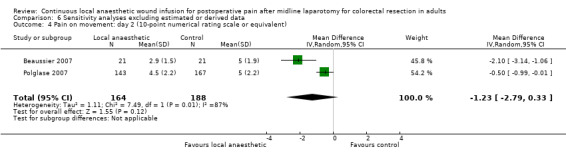
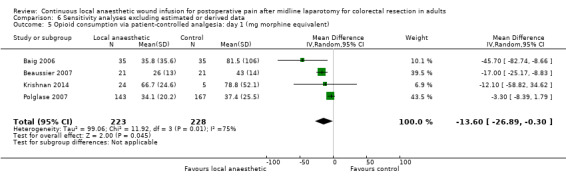
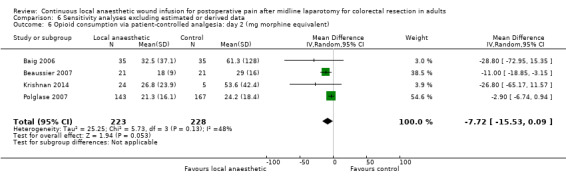
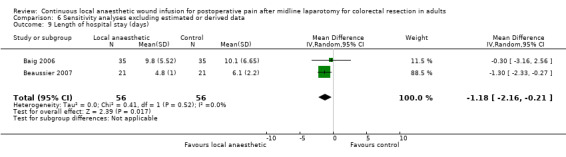
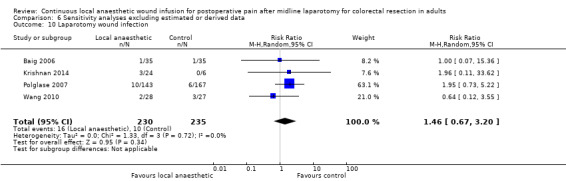
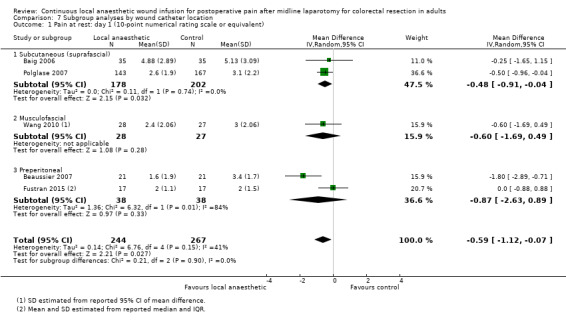
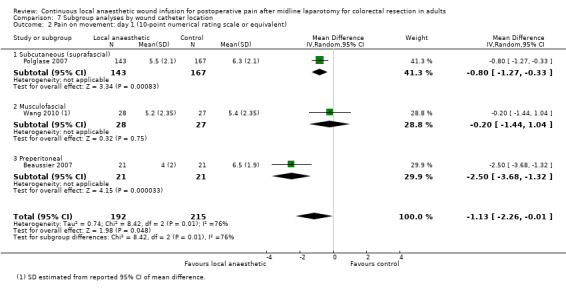
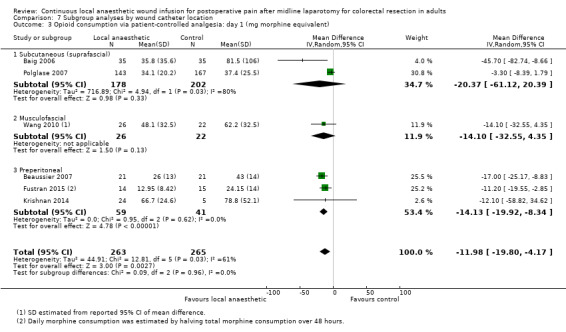
Main results: This review included six randomised controlled trials that enrolled a total of 564 adults undergoing elective midline laparotomy for colorectal resection comparing continuous wound infusion of a local anaesthetic to a normal saline placebo. Due to 23 post-randomisation exclusions, a total of 541 participants contributed data to the analysis of at least one outcome (local anaesthetic 268; control 273). Most participants were aged 55 to 65 years, with normal body mass index and low to moderate anaesthetic risk (American Society of Anesthesiologists class I-III). Random sequence generation, allocation concealment, and blinding were appropriately carried out in most trials. However, we had to downgrade the certainty of the evidence for most outcomes due to serious study limitations (risk of bias), inconsistency, indirectness, imprecision and reporting bias.Primary outcomesOn postoperative day 1, pain at rest (mean difference (MD) -0.59 (from 3.1), 95% confidence interval (CI) -1.12 to -0.07; 5 studies, 511 participants; high-certainty evidence), pain on movement (MD -1.1 (from 6.1), 95% CI -2.3 to -0.01; 3 studies, 407 participants; low-certainty evidence) and opioid consumption via PCA (MD -12 mg (from 41 mg), 95% CI -20 to -4; 6 studies, 528 participants; moderate-certainty evidence) were reduced in the local anaesthetic group compared to the control group.Secondary outcomesThere was a reduction in the time to first bowel movement (MD -0.67 from 4.4 days, 95% CI -1.17 to -0.17; 4 studies, 197 participants; moderate-certainty evidence) and the length of hospital stay (MD -1.2 from 7.4 days, 95% CI -2.0 to -0.3; 4 studies, 456 participants; high-certainty evidence) in the local anaesthetic group compared to the control group.There was no evidence of a difference in any serious postoperative adverse events until hospital discharge (RR 1.04, 95% CI 0.68 to 1.58; 6 studies, 541 participants; low-certainty evidence) between the two study groups.
Authors' conclusions: After elective midline laparotomy for colorectal resection, continuous wound infusion of a local anaesthetic compared to a normal saline placebo reduces postoperative pain at rest and the length of hospital stay, on the basis of high-certainty evidence. This means we are very confident that the effect estimates for these outcomes lie close to the true effects. There is moderate-certainty evidence to indicate that the intervention probably reduces opioid consumption via PCA and the time to first bowel movement. This means we are moderately confident that effect estimates for these outcomes are likely to be close to the true effects, but there is a possibility that they are substantially different. The intervention may reduce postoperative pain on movement, however, this conclusion is based on low-certainty evidence. This means our confidence in the effect estimate is limited. The true effect may be substantially different from the estimate of the effect. There is low-certainty evidence to indicate that the intervention may have little or no effect on the rates of any serious postoperative adverse events until hospital discharge. High-quality randomised controlled trials to evaluate the intervention with a focus on important clinical and patient-centred outcomes are needed.
Conflict of interest statement
SL received the Doctor in Training Research Scholarship for this project from Avant Mutual Group in 2015 (USD 15,000 over 1 year). Avant Mutual Group is a medical defence organisation and provider of medical indemnity insurance, with no affiliation to any manufacturer or distributor of devices or drugs used for continuous local anaesthetic wound infusion. SL uses this intervention in clinical practice.
AY: none known
EA: none known
BK: none known
GS: none known
AB: none known. AB uses this intervention in clinical practice.
HC: none known
DD: none known
ZY: none known. ZY uses this intervention in clinical practice.
Figures
Update of
References
References to studies included in this review
Baig 2006 {published data only}
-
- Baig MK, Zmora O, Derdemezi J, Weiss EG, Nogueras JJ, Wexner SD. Use of the ON‐Q pain management system is associated with decreased postoperative analgesic requirement: double blind randomized placebo pilot study. Journal of the American College of Surgeons 2006;202(2):297‐305. - PubMed
Beaussier 2007 {published data only}
-
- Beaussier M, El'Ayoubi H, Schiffer E, Rollin M, Parc Y, Mazoit JX, et al. Continuous preperitoneal infusion of ropivacaine provides effective analgesia and accelerates recovery after colorectal surgery: a randomized, double‐blind, placebo‐controlled study. Anesthesiology 2007;107(3):461‐8. - PubMed
Fustran 2015 {published data only}
-
- Fustran N, Dalmau A, Ferreres E, Camprubi I, Sanzol R, Redondo S, et al. Postoperative analgesia with continuous wound infusion of local anaesthesia vs saline: a double‐blind randomized, controlled trial in colorectal surgery. Colorectal Disease 2015;17(4):342‐50. - PubMed
Krishnan 2014 {published and unpublished data}
-
- Krishnan S. The efficacy of local anaesthetic infiltrated at the incision site for post‐operative pain management following abdominal surgery: an application to fast‐track surgery. digital.library.adelaide.edu.au/dspace/bitstream/2440/82083/8/02whole.pdf (accessed 10 March 2019).
-
- Krishnan S, Hewett PJ, Tou S, Field J, Karatassas A, Tonkin J, et al. Local anaesthetic infused at the incision site for post‐operative pain management following abdominal surgery: a double blinded randomised study. Colorectal Disease. 2011; Vol. 13:10‐11.
-
- Krishnan S, Morris R, Hewett P, Karatassas A, Tonkin J, Field J. Focused Conference Group: PW12 ‐ Experimental pain methods in development and validation of analgesics local anaesthetic infused at the incision site for post‐operative pain management following abdominal surgery. Basic and Clinical Pharmacology and Toxicology. 2010; Vol. 107:390‐1.
-
- Krishnan S, Morris R, Hewett P, Karatassas A, Tonkin J, Field J. The efficacy of 96 hour duration local anaesthesia infused at the incision site for post‐operative pain management. An interim analysis. Basic and Clinical Pharmacology and Toxicology. 2009; Vol. 105:61.
-
- Krishnan S, Morris RG, Hewett PJ, Field J, Karatassas A, Tou S, et al. A randomized double‐blind clinical trial of a continuous 96‐hour levobupivacaine infiltration after open or laparoscopic colorectal surgery for postoperative pain management‐including clinically important changes in protein binding. Therapeutic Drug Monitoring 2014;36(2):202‐10. - PubMed
Polglase 2007 {published data only}
-
- Polglase A L, McMurrick P J, Simpson P J, Wale R J, Carne P W, Johnson W, et al. Continuous wound infusion of local anesthetic for the control of pain after elective abdominal colorectal surgery. Diseases of the Colon and Rectum 2007;50(12):2158‐67. - PubMed
-
- Polglase AL, McMurrick PJ, Simpson PJ, Chee J, Ooi CW, Kindsland SR. Continuous wound infusion of local anaesthetic in the control of pain following elective abdominal colorectal surgery. ANZ Journal of Surgery. 2007; Vol. 77, issue Supplement 1:A16. - PubMed
Wang 2010 {published data only}
-
- Wang L W, Wong S W, Crowe P J, Khor K E, Jastrzab G, Parasyn A D, et al. Wound infusion with local anaesthesia after laparotomy: a randomized controlled trial. ANZ Journal of Surgery 2010;80(11):794‐801. - PubMed
-
- Wang LW, Wong SW, Crowe PJ, Khor KE, Jastrzab G, Parasyn AD, et al. Continuous local anaesthesia wound infusion after laparotomy: a double‐blinded randomised placebo‐controlled trial. Journal of Gastroenterology and Hepatology. 2009; Vol. 24, issue Supplement s2:A248.
References to studies excluded from this review
Abadir 2009 {published data only}
-
- Abadir AR, Nicolas F, Gharabawy R, Shah T, Michael R. Efficacy of postoperative continuous wound infiltration with local anesthetic after major abdominal surgery. Proceedings of the Western Pharmacology Society 2009;52:35‐8. - PubMed
Dhanapal 2017 {published data only}
-
- Dhanapal B, Sistla SC, Badhe AS, Ali SM, Ravichandran NT, Galidevara I. Effectiveness of continuous wound infusion of local anesthetics after abdominal surgeries. Journal of Surgical Research 2017;212:94‐100. - PubMed
Fry 1984 {published data only}
Gibbs 1988 {published data only}
-
- Gibbs P, Purushotham A, Auld C, Cuschieri RJ. Continuous wound perfusion with bupivacaine for postoperative wound pain. British Journal of Surgery 1988;75(9):923‐4. - PubMed
Nalda 1977 {published data only}
-
- Nalda Felipe MA, Muriel Villoria C, las Mulas Bejar M. Continuous perfusion of bupivacaine in the treatment of postoperative pain following abdominal surgery [La perfusion continue de bupivacaine dans le traitement de la douleur postoperatoire en chirurgie abdominale]. Anesthesie, Analgesie, Reanimation 1977;34(6):1167‐80. - PubMed
NCT00557843 {unpublished data only}
-
- Kurz, A. Continuous bupivacaine infusion following colonic surgery. clinicaltrials.gov/ct2/show/NCT00557843 (accessed 6 March 2019).
NCT01062919 {unpublished data only}
-
- Carli, F. Local anesthetic wound infusion and functional recovery after colon surgery. clinicaltrials.gov/ct2/show/NCT01062919 (accessed 6 March 2019).
References to studies awaiting assessment
Araujo 2014 {published data only}
-
- Araujo R, Marques C, Fernandes D, Freitas S, Rodrigues M, Bernardo R, et al. Post‐operative pain management of major abdominal surgery with continuous wound infusion: the (R) evolution?. Regional Anesthesia and Pain Medicine 2014;39(Supplement 1):E207.
Arino 2012 {published and unpublished data}
-
- Arino JJ, Tejerina JG, Mayol J, Velasco JM, Moral P, Lopez Timoneda F. Analgesic efficacy of L‐bupivacaine delivered by wound catheter after abdominal surgery. European Journal of Anaesthesiology. 2012; Vol. 29, issue Supplement 50:205.
Cano 2012 {published data only}
-
- Cano Serrano ME, Adame Reyes M, Macias Mellado A, Bravo F, Martinez Telleria A. Postoperative analgesia in colorectal surgery with levobupivacaine infusion administrated by subaponeurotic multiperforated catheter. European Journal of Anaesthesiology 2012;29:207.
Maric 2009 {published data only}
-
- Maric S, Stefancic L, Supic DK, Vrdoljak D, Sakic KZ. Continuous wound infusion of levobupivacaine provides effective analgesia after colorectal surgery. Pain Practice. 2009; Vol. 9:148.
Additional references
Amin 2015
-
- Amin AT, Ahmed BM, Khallaf SM. Safety and feasibility of laparoscopic colo‐rectal surgery for cancer at a tertiary center in a developing country: Egypt as an example. Journal of the Egyptian National Cancer Institute 2015;27:91‐5. - PubMed
Apfel 2012
-
- Apfel CC, Heidrich FM, Jukar‐Rao S, Jalota L, Hornuss C, Whelan RP, et al. Evidence‐based analysis of risk factors for postoperative nausea and vomiting. British Journal of Anaesthesia 2012;109(5):742‐53. [PUBMED: 23035051] - PubMed
Apfelbaum 2003
-
- Apfelbaum JL, Chen C, Mehta SS, Gan TJ. Postoperative pain experience: results from a national survey suggest postoperative pain continues to be undermanaged. Anesthesia Analgesia 2003;97:534‐40. - PubMed
Artinyan 2008
-
- Artinyan A, Nunoo‐Mensah JW, Balasubramaniam S, Gauderman J, Essani R, Gonzalez‐Ruiz C, et al. Prolonged postoperative ileus‐definition, risk factors, and predictors after surgery. World Journal of Surgery 2008;32(7):1495‐500. [PUBMED: 18305994] - PubMed
Baldini 2009
-
- Baldini G, Bagry H, Aprikian A, Carli F. Postoperative urinary retention: anesthetic and perioperative considerations. Anesthesiology 2009;110(5):1139‐57. [PUBMED: 19352147] - PubMed
BCCA 2015
-
- Colorectal Surgical Society of Australia and New Zealand. The Bi‐National Colorectal Cancer Audit Report 2015. Colorectal Surgical Society of Australia and New Zealand, 2015.
Beaussier 2012
-
- Beaussier M, White PF, Raeder J. Is a negative meta‐analyses consisting of heterogenic studies on wound catheters sufficient to conclude that no additional studies are needed?. Acta Anaesthesiologica Scandinavica 2012;56:396‐7; author reply 397‐8. - PubMed
Berry 2015
-
- Berry SM, Connor JT, Lewis RJ. The platform trial: an efficient strategy for evaluating multiple treatments. JAMA 2015;313(16):1619‐20. [PUBMED: 25799162] - PubMed
Brown 2005
Burger 2002
-
- Burger JW, Van't Riet M, Jeekel J. Abdominal incisions: techniques and postoperative complications. Scandinavian Journal of Surgery 2002;91:315‐21. - PubMed
Butterworth 1990
-
- Butterworth JF, Strichartz GR. Molecular mechanisms of local anesthesia: a review. Anesthesiology 1990;72:711‐34. - PubMed
Buvanendran 2009
Chaimani 2013
-
- Chaimani A, Vasiliadis HS, Pandis N, Schmid CH, Welton NJ, Salanti G. Effects of study precision and risk of bias in networks of interventions: a network meta‐epidemiological study. International Journal of Epidemiology 2013;42(4):1120‐31. [PUBMED: 23811232] - PubMed
Cheong 2001
-
- Cheong WK, Seow‐Choen F, Eu KW, Tang CL, Heah SM. Randomized clinical trial of local bupivacaine perfusion versus parenteral morphine infusion for pain relief after laparotomy. British Journal of Surgery 2001;88(3):357‐9. [PUBMED: 11260098] - PubMed
Dechartres 2013
Deeks 2017
-
- Deeks JJ, Higgins JP, Altman DG (editors) on behalf of the Cochrane Statistical Methods Group. Chapter 9: Analysing data and undertaking meta‐analyses. In: Higgins JPT, Churchill R, Chandler J, Cumpston MS (editors), Cochrane Handbook for Systematic Reviews of Interventions version 5.2.0 (updated June 2017), Cochrane, 2017. Available from www.training.cochrane.org/handbook.
Demets 1987
-
- Demets DL. Methods for combining randomized clinical trials: strengths and limitations. Statistics in Medicine 1987;6:341‐50. - PubMed
DerSimonian 1986
-
- DerSimonian R, Laird N. Meta‐analysis in clinical trials. Controlled Clinical Trials 1986;7:177‐88. - PubMed
Egger 1997
El‐Boghdadly 2018
Espitalier 2013
-
- Espitalier F, Tavernier E, Remerand F, Laffon M, Fusciardi J, Giraudeau B. Heterogeneity in meta‐analyses of treatment of acute postoperative pain: a review. British Journal of Anaesthesia 2013;111:897‐906. - PubMed
Fredman 2001
-
- Fredman B, Zohar E, Tarabykin A, Shapiro A, Mayo A, Klein E, et al. Bupivacaine wound instillation via an electronic patient‐controlled analgesia device and a double‐catheter system does not decrease postoperative pain or opioid requirements after major abdominal surgery. Anesthesia and Analgesia 2001;92(1):189‐93. [PUBMED: 11133625] - PubMed
Gan 2006
-
- Gan TJ. Risk factors for postoperative nausea and vomiting. Anesthesia and Analgesia 2006;102(6):1884‐98. [PUBMED: 16717343] - PubMed
Gan 2014
-
- Gan TJ, Habib AS, Miller TE, White W, Apfelbaum JL. Incidence, patient satisfaction, and perceptions of post‐surgical pain: results from a US national survey. Current Medical Research and Opinion 2014;30(1):149‐60. [PUBMED: 24237004] - PubMed
Gerbershagen 2013
-
- Gerbershagen HJ, Aduckathil S, Wijck AJ, Peelen LM, Kalkman CJ, Meissner W. Pain intensity on the first day after surgery: a prospective cohort study comparing 179 surgical procedures. Anesthesiology 2013;118:934‐44. - PubMed
Gerbershagen 2014
-
- Gerbershagen HJ, Pogatzki‐Zahn E, Aduckathil S, Peelen LM, Kappen TH, Wijck AJ, et al. Procedure‐specific risk factor analysis for the development of severe postoperative pain. Anesthesiology 2014;120:1237‐45. - PubMed
GRADEpro GDT [Computer program]
-
- McMaster University (developed by Evidence Prime). GRADEpro GDT. Hamilton (ON): McMaster University (developed by Evidence Prime), (last accessed on 16 August 2019).
Grantcharov 2001
-
- Grantcharov TP, Rosenberg J. Vertical compared with transverse incisions in abdominal surgery. European Journal of Surgery 2001;167:260‐7. - PubMed
Gray 2005
-
- Gray A, Kehlet H, Bonnet F, Rawal N. Predicting postoperative analgesia outcomes: NNT league tables or procedure‐specific evidence?. British Journal of Anaesthesia 2005;94:710‐14. - PubMed
Gupta 2011
Higgins 2002
-
- Higgins JP, Thompson SG. Quantifying heterogeneity in a meta‐analysis. Statistics in Medicine 2002;21:1539‐58. - PubMed
Higgins 2003
Higgins 2011
-
- Higgins JP, Deeks JJ, Altman DG (editors). Chapter 16: Special topics in statistics. In: Higgins JPT, Green S (editors), Cochrane Handbook for Systematic Reviews of Interventions Version 5.1.0 (updated March 2011). The Cochrane Collaboration, 2011.. Available from www.handbook.cochrane.org..
Higgins 2017
-
- Higgins JP, Altman DG, Sterne JA (editors). Chapter 8: Assessing risk of bias in included studies. In: Higgins JPT, Churchill R, Chandler J, Cumpston MS (editors), Cochrane Handbook for Systematic Reviews of Interventions version 5.2.0 (updated June 2017), Cochrane, 2017. Available from www.training.cochrane.org/handbook.
Hollmann 2000
-
- Hollmann MW, Durieux ME. Local anesthetics and the inflammatory response: a new therapeutic indication?. Anesthesiology 2000;93:858‐75. - PubMed
Jadad 1996
-
- Jadad AR, Moore RA, Carroll D, Jenkinson C, Reynolds DJ, Gavaghan DJ, et al. Assessing the quality of reports of randomized clinical trials: is blinding necessary?. Controlled Clinical Trials 1996;17(1):1‐12. [PUBMED: 8721797] - PubMed
Jin 2001
-
- Jin F, Chung F. Multimodal analgesia for postoperative pain control. Journal of Clinical Anesthesia 2001;13:524‐39. - PubMed
Johnson 2008
-
- Johnson SM, Saint John BE, Dine AP. Local anesthetics as antimicrobial agents: a review. Surgical Infections 2008;9:205‐13. - PubMed
Joshi 2013
-
- Joshi GP, Kehlet H. Procedure‐specific pain management: the road to improve postsurgical pain management?. Anesthesiology 2013;118:780‐2. - PubMed
Karthikesalingam 2008
Kehlet 1999
-
- Kehlet H, Werner M, Perkins F. Balanced analgesia: what is it and what are its advantages in postoperative pain?. Drugs 1999;58:793‐7. - PubMed
Kehlet 2007
-
- Kehlet H, Wilkinson RC, Fischer HB, Camu F. PROSPECT: evidence‐based, procedure‐specific postoperative pain management. Best Practice & Research: Clinical Anaesthesiology 2007;21:149‐59. - PubMed
Kehlet 2008
-
- Kehlet H. Fast‐track colorectal surgery. Lancet 2008;371:791‐3. - PubMed
Liu 2006
-
- Liu SS, Richman JM, Thirlby RC, Wu CL. Efficacy of continuous wound catheters delivering local anesthetic for postoperative analgesia: a quantitative and qualitative systematic review of randomized controlled trials. Journal of the American College of Surgeons 2006;203:914‐32. - PubMed
Luckey 2003
-
- Luckey A, Livingston E, Taché Y. Mechanisms and treatment of postoperative ileus. Archives of Surgery 2003;138(2):206‐14. - PubMed
Lundh 2012
Moher 2009
Moore 1998
-
- Moore RA, Gavaghan D, Tramer MR, Collins SL, McQuay HJ. Size is everything‐‐large amounts of information are needed to overcome random effects in estimating direction and magnitude of treatment effects. Pain 1998;78(3):209‐16. [PUBMED: 9870574] - PubMed
NBOCA 2015
-
- Association of Coloproctology of Great Britain and Ireland. National Bowel Cancer Audit Annual Report 2015. UK: Association of Coloproctology of Great Britain and Ireland, 2015. - PubMed
Nuesch 2010
Ozturk 2011
-
- Ozturk E, Yilmazlar A, Coskun F, Isik O, Yilmazlar T. The beneficial effects of preperitoneal catheter analgesia following colon and rectal resections: a prospective, randomized, double‐blind, placebo‐controlled study. Techniques in Coloproctology 2011;15(3):331‐6. [PUBMED: 21769617] - PubMed
Plummer 2011
-
- Plummer JM, Mitchell DI, Arthurs M, Leake PA, Deans‐Minott J, Cawich SO, et al. Laparoscopic colectomy for colonic neoplasms in a developing country. International Journal of Surgery 2011; Vol. 9, issue 5:382‐5. - PubMed
Rawal 2012
-
- Rawal N. Epidural technique for postoperative pain: gold standard no more?. Regional Anesthesia and Pain Medicine 2012;37:310‐7. - PubMed
Ray‐Offor 2014
Review Manager 2014 [Computer program]
-
- Nordic Cochrane Centre, The Cochrane Collaboration. Review Manager 5 (RevMan 5). Version 5.3. Copenhagen: Nordic Cochrane Centre, The Cochrane Collaboration, 2014.
Rosenberg‐Adamsen 1996
-
- Rosenberg‐Adamsen S, Kehlet H, Dodds C, Rosenberg J. Postoperative sleep disturbances: mechanisms and clinical implications. British Journal of Anaesthesia 1996;76(4):552‐9. [PUBMED: 8652329] - PubMed
Rybakov 2017
-
- Rybakov EG, Shelygin YA, Khomyakov EA, Zarodniuk IV. Risk factors for postoperative ileus after colorectal cancer surgery. Colorectal Disease 2017;20(3):189‐94. [PUBMED: 28921903] - PubMed
SAGES 2012
-
- Society of American Gastrointestinal and Endoscopic Surgeons. Guidelines for Laparoscopic Resection of Curable Colon and Rectal Cancer. Society of American Gastrointestinal and Endoscopic Surgeons, 2012.
Schulz 2010
Schünemann 2017
-
- Schünemann HJ, Oxman AD, Higgins JP, Vist GE, Glasziou P, Akl E, et al. on behalf of the Cochrane GRADEing Methods Group and the Cochrane Statistical Methods Group. Chapter 11: Completing ‘Summary of findings’ tables and grading the confidence in or quality of the evidence. In: Higgins JPT, Churchill R, Chandler J, Cumpston MS (editors), Cochrane Handbook for Systematic Reviews of Interventions version 5.2.0 (updated June 2017). Cochrane, 2017. Available from www.training.cochrane.org/handbook.
Sommer 2008
-
- Sommer M, Rijke JM, Kleef M, Kessels AG, Peters ML, Geurts JW, et al. The prevalence of postoperative pain in a sample of 1490 surgical inpatients. European Journal of Anaesthesiolology 2008;25(4):267‐74. - PubMed
Ventham 2014
-
- Ventham NT, O'Neill S, Johns N, Brady RR, Fearon KC. Evaluation of novel local anesthetic wound infiltration techniques for postoperative pain following colorectal resection surgery: a meta‐analysis. Diseases of the Colon and Rectum 2014;57:237‐50. - PubMed
Walter 2009
-
- Walter CJ, Collin J, Dumville JC, Drew PJ, Monson JR. Enhanced recovery in colorectal resections: a systematic review and meta‐analysis. Colorectal Disease 2009;11:344‐53. - PubMed
Waxler 2005
-
- Waxler B, Dadabhoy ZP, Stojiljkovic L, Rabito SF. Primer of postoperative pruritus for anesthesiologists. Anesthesiology 2005;103(1):168‐78. [PUBMED: 15983470] - PubMed
WCR 2014
-
- Stewart BW, Wild CP (ed). World Cancer Report. International Agency for Research on Cancer, 2014.
Wind 2006
-
- Wind J, Polle SW, Fung Kon Jin PH, Dejong CH, Meyenfeldt MF, Ubbink DT, et al. Systematic review of enhanced recovery programmes in colonic surgery. British Journal of Surgery 2006;93:800‐9. - PubMed
References to other published versions of this review
Liang 2016
-
- Liang SS, Ying AJ, Affan ET, Kakala BF, Strippoli GF, Bullingham A, et al. Continuous local anaesthetic wound infusion for postoperative pain after midline laparotomy for colorectal resection in adults. Cochrane Database of Systematic Reviews 2016, Issue 8. [DOI: 10.1002/14651858.CD012310] - DOI - PMC - PubMed
Publication types
LinkOut - more resources
Full Text Sources
Medical
