


The History of Enterovirus A71 Outbreaks and Molecular Epidemiology in the Asia-Pacific Region
- PMID: 31627753
- PMCID: PMC6798416
- DOI: 10.1186/s12929-019-0573-2
The History of Enterovirus A71 Outbreaks and Molecular Epidemiology in the Asia-Pacific Region
Abstract
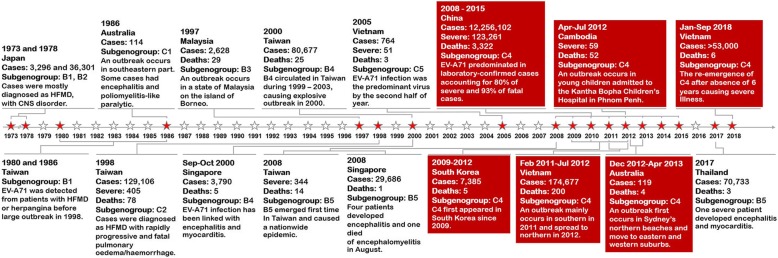
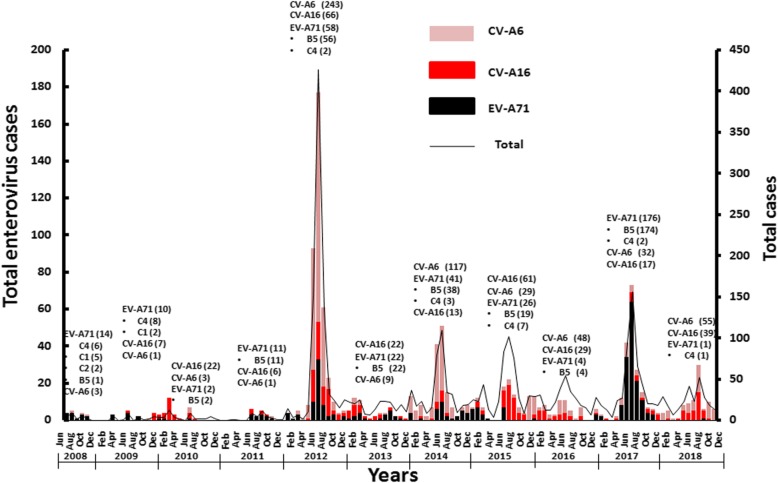
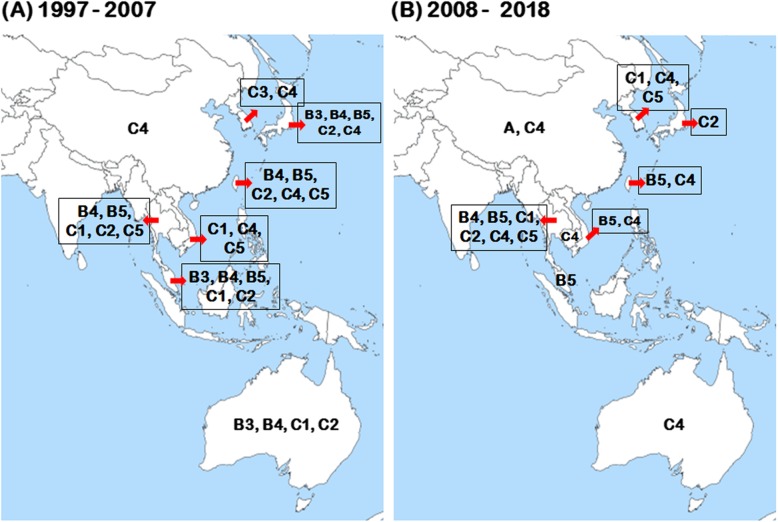
Enterovirus A71 (EV-A71) is one of the common causative pathogens for hand foot and mouth disease (HFMD) affecting young children. HFMD outbreak can result in a substantial pediatric hospitalization and burden the healthcare services, especially in less-developed countries. Since the initial epidemic of predominantly EV-A71 in California in 1969, the high prevalence of HFMD in the Asia-pacific region and elsewhere around the world represents a significant morbidity in this age group. With the advent of rapid and accurate diagnostic tools, there has been a dramatic increase in the number of laboratory-confirmed EV-A71 infection over the past two decades. The population, cultural, and socioeconomic diversity among countries in the Asia-Pacific region all influence the transmission and morbidity associated with HFMD. This review summarizes the current state of epidemiology of EV-A71 in Asia-Pacific countries based on the most recent epidemiological data and available information on the prevalence and disease burden. This knowledge is important in guiding the prevention, control and future research on vaccine development of this highly contagious disease of significant socioeconomic implications in public health.
Keywords: Asia-Pacific region; Enterovirus A71; Molecular epidemiology.
Conflict of interest statement
The authors declare that they have no competing interests.
Figures
References
-
- Stanway G, Brown F, Christian P, Hovi T, Hyypiä T, King AMQ, et al. Family Picornaviridae. In: Fauquet CM, Mayo MA, Maniloff J, Desselberger U, Ball LA, et al., editors. Virus taxonomy. Eighth report of the international committee on taxonomy of viruses. London: Elsevier; 2005. pp. 757–778.
-
- Pallansch MA, Roos R. Fields Virology (Volumn 1) USA: Lippincott, Williams & Wilkins; 2001. Enteroviruses: polioviruses, coxsackieviruses, echoviruses, and newer enteroviruses; pp. 840–884.
Publication types
MeSH terms
Grants and funding
LinkOut - more resources
Full Text Sources
Miscellaneous
