Review
. 2019 Aug:50:42-49.
doi: 10.1016/j.mib.2019.09.009. Epub 2019 Oct 16.

Scales of persistence: transmission and the microbiome

Affiliations
Review

Scales of persistence: transmission and the microbiome

Catherine D Robinson et al. Curr Opin Microbiol. 2019 Aug.

Abstract

Historically microbiomes have been studied on the scale of the individual host, giving little consideration for the role of extra-host microbial populations in microbiome assembly. However, work in recent years has brought to light the importance of inter-host transmission and its influence on microbiome composition and dynamics. We now appreciate that microbiomes do not exist in isolation, but exchange constituents with the microbial communities of other hosts and the environment. Moving forward, fully understanding the role of transmission in microbiome assembly and dynamics will require a high-resolution view of the colonization and persistence patterns of particular microbial lineages (i.e. strains) across individuals and the environment. Yet, accomplishing this level of resolution will be an immense challenge, requiring improved sampling and bioinformatics approaches as well as employment of tractable experimental models. Insight gained from these investigations will contribute to our understanding of microbiome composition and variation, and lead to improved strategies for modulating microbiomes to improve human health.


Figures

Figure 1.
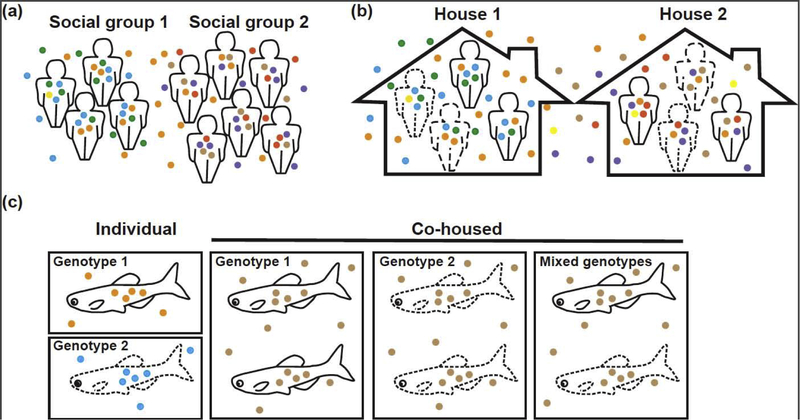
Figure 1.. Social groups and co-housing conditions facilitate microbiome transmission across individuals.
In all panels, individuals with similarly-dashed outlines represent close genetic relationships; small filled circles of varying colors represent phylogenetically diverse microbes. (a) Individuals belonging to the same social groups tend to share more microbial species with each other and their environment than individual from other groups. (b) Co-housed individuals have more similar microbiomes than individuals not co-housed, even when they are genetically closely related. (c) Zebrafish of different genotypes housed individually assemble microbiomes that are genotype-specific. However, microbiomes of co-housed fish are different from individually housed fish, irrespective of genotype.
Figure 2.
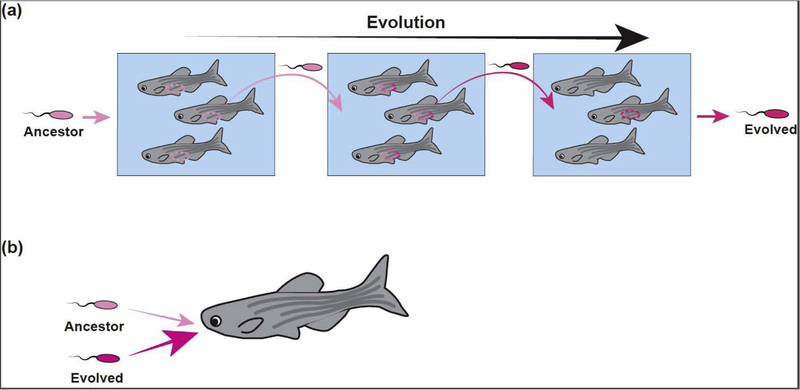
Figure 2.. Transmission impacts bacterial evolutionary strategies for optimizing host colonization.
(a) In an experimental evolution study, a bacterial symbiont was passaged through populations of zebrafish, each time selecting gut-associated bacterial populations to inoculate the water of a new host population. (b) The adaptation that evolved first in the experiment was the ability to migrate into the host more quickly than the ancestor.
Figure 3.
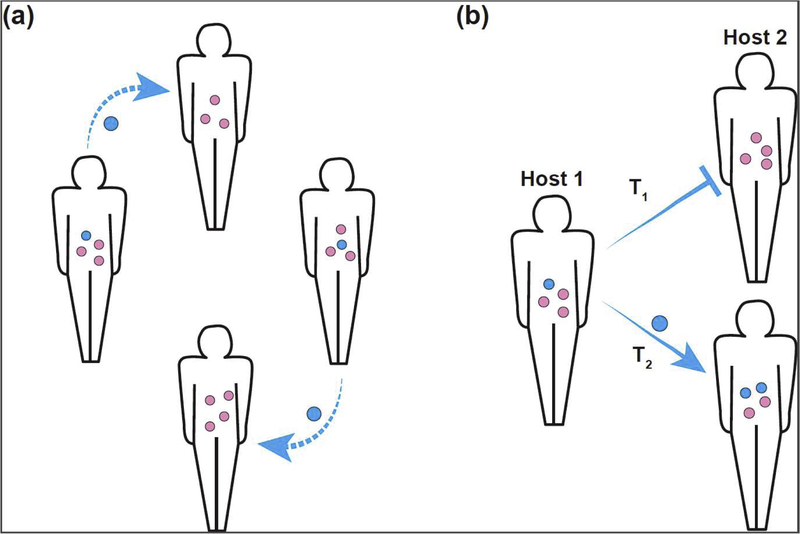
Figure 3.. Transmission of dispersal-specialist species within a host population.
(a) Some microbial strains (blue) more readily transmit between hosts than other more long-term resident strains (pink). Through this mechanism, they can persist at a host population level even if they are poor competitors within a single host. (b) Transmission and colonization of a dispersal specialist (blue) may not be successful at one point in time (T1), however, this microbe can persist within the host population until conditions within the second host allow successful colonization and persistence (T2).

References

    1. Human Microbiome Project Consortium. Structure, function and diversity of the healthy human microbiome. Nature. 2012. June 13;486(7402):207–14. - PMC - PubMed
    1. Lloyd-Price J, Mahurkar A, Rahnavard G, Crabtree J, Orvis J, Hall AB, et al. Strains, functions and dynamics in the expanded Human Microbiome Project. Nature. Nature Publishing Group; 2017. October 5;550(7674):61–6. - PMC - PubMed
    1. Rothschild D, Weissbrod O, Barkan E, Kurilshikov A, Korem T, Zeevi D, et al. Environment dominates over host genetics in shaping human gut microbiota. Nature. Nature Publishing Group; 2018. February 28;:1–19. - PubMed
    1. Goodrich JK, Waters JL, Poole AC, Sutter JL, Koren O, Blekhman R, et al. Human Genetics Shape the Gut Microbiome. Cell. Elsevier Inc; 2014. November 6;159(4):789–99. - PMC - PubMed
    1. Chen J, Bittinger K, Charlson ES, Hoffmann C, Lewis J, Wu GD, et al. Associating microbiome composition with environmental covariates using generalized UniFrac distances. Bioinformatics. 2012. June 17;28(16):2106–13. - PMC - PubMed

Publication types