


Organizational factors affecting physician well-being
- PMID: 31632895
- PMCID: PMC6801108
- DOI: 10.1007/s40746-019-00147-6
Organizational factors affecting physician well-being
Abstract
Purpose of review: Symptoms of burnout affect approximately half of pediatricians and pediatric subspecialists at any given time, with similarly concerning prevalence of other aspects of physician distress, including fatigue, depressive symptoms, and suicidal ideation. Physician well-being affects quality of care, patient satisfaction, and physician turnover. Organizational factors influence well-being, stressing the need for organizations to address this epidemic.
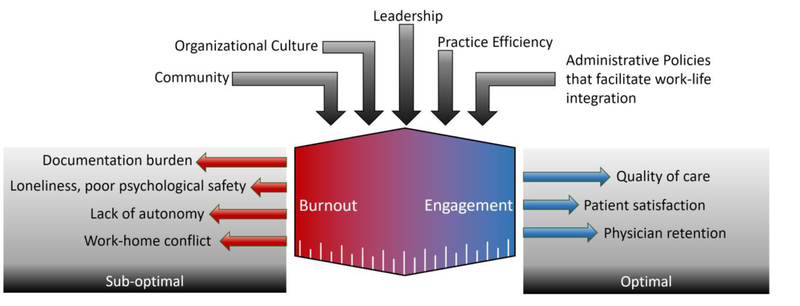
Recent findings: Organizational characteristics, policies, and culture influence physician well-being, and specific strategies may support an environment where physicians thrive. We highlight four organizational opportunities to improve physician well-being: developing leaders, cultivating community and organizational culture, improving practice efficiency, and optimizing administrative policies. Leaders play a key role in aligning organizational and individual values, promoting professional fulfillment, and fostering a culture of collegiality and social support among physicians. Reducing documentation burden and improving practice efficiency may help balance job demands and resources. Finally, reforming administrative policies may reduce work-home conflict, support physician's efforts to attend to their own well-being, and normalize use of supportive resources.
Summary: Physician well-being is critical to organizational success, sustainment of an adequate workforce, and optimal patient outcomes. Because burnout is primarily influenced by organizational factors, organizational interventions are key to promoting well-being. Developing supportive leadership, fostering a culture of wellness, optimizing practice efficiency, and improving administrative policies are worthy of organizational action and further research.
Keywords: Organizational factors; burnout; physician engagement; physician well-being.
Conflict of interest statement
Conflict of Interest Sarah Webber declares no conflicts of interest.
Figures
References
-
- Shanafelt TD, et al. , Changes in Burnout and Satisfaction With Work-Life Balance in Physicians and the General US Working Population Between 2011 and 2014. Mayo Clin Proc, 2015. 90(12): p. 1600–13. - PubMed
-
- Shanafelt TD, et al. , Burnout and satisfaction with work-life balance among US physicians relative to the general US population. Arch Intern Med, 2012. 172(18): p. 1377–85. - PubMed
-
- Roth M, et al. , Career burnout among pediatric oncologists. Pediatr Blood Cancer, 2011. 57(7): p. 1168–73. - PubMed
-
- Shenoi AN, et al. , Burnout and Psychological Distress Among Pediatric Critical Care Physicians in the United States. Crit Care Med, 2018. 46(1): p. 116–122. - PubMed
-
- Boyle DA and Bush NJ, Reflections on the Emotional Hazards of Pediatric Oncology Nursing: Four Decades of Perspectives and Potential. J Pediatr Nurs, 2018. 40: p. 63–73. - PubMed
Grants and funding
LinkOut - more resources
Full Text Sources
Research Materials