The New Biology of Diabetic Kidney Disease-Mechanisms and Therapeutic Implications
- PMID: 31633153
- PMCID: PMC7156849
- DOI: 10.1210/endrev/bnz010
The New Biology of Diabetic Kidney Disease-Mechanisms and Therapeutic Implications
Abstract
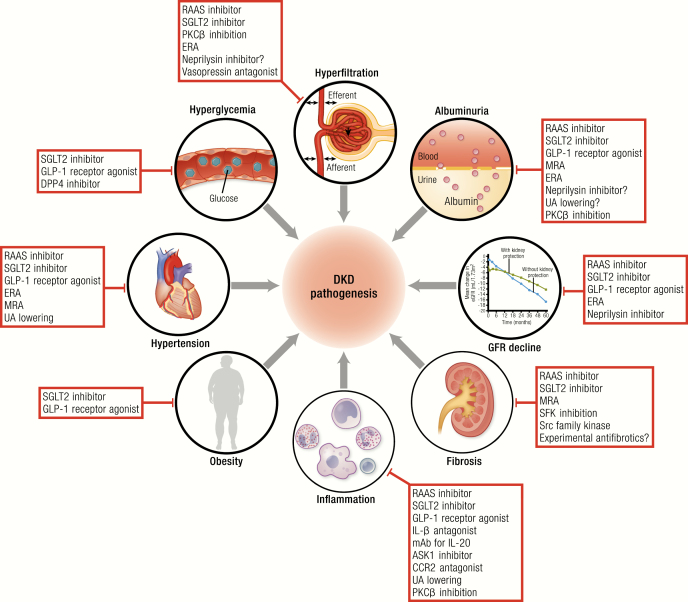
Diabetic kidney disease remains the most common cause of end-stage kidney disease in the world. Despite reductions in incidence rates of myocardial infarction and stroke in people with diabetes over the past 3 decades, the risk of diabetic kidney disease has remained unchanged, and may even be increasing in younger individuals afflicted with this disease. Accordingly, changes in public health policy have to be implemented to address the root causes of diabetic kidney disease, including the rise of obesity and diabetes, in addition to the use of safe and effective pharmacological agents to prevent cardiorenal complications in people with diabetes. The aim of this article is to review the mechanisms of pathogenesis and therapies that are either in clinical practice or that are emerging in clinical development programs for potential use to treat diabetic kidney disease.
© Endocrine Society 2019. All rights reserved. For permissions, please e-mail: journals.permissions@oup.com.
Figures
References
Publication types
MeSH terms
Substances
Grants and funding
LinkOut - more resources
Full Text Sources
Other Literature Sources
Medical
Miscellaneous