


Genetic clustering analysis for HIV infection among MSM in Nigeria: implications for intervention
- PMID: 31634185
- PMCID: PMC7219556
- DOI: 10.1097/QAD.0000000000002409
Genetic clustering analysis for HIV infection among MSM in Nigeria: implications for intervention
Abstract
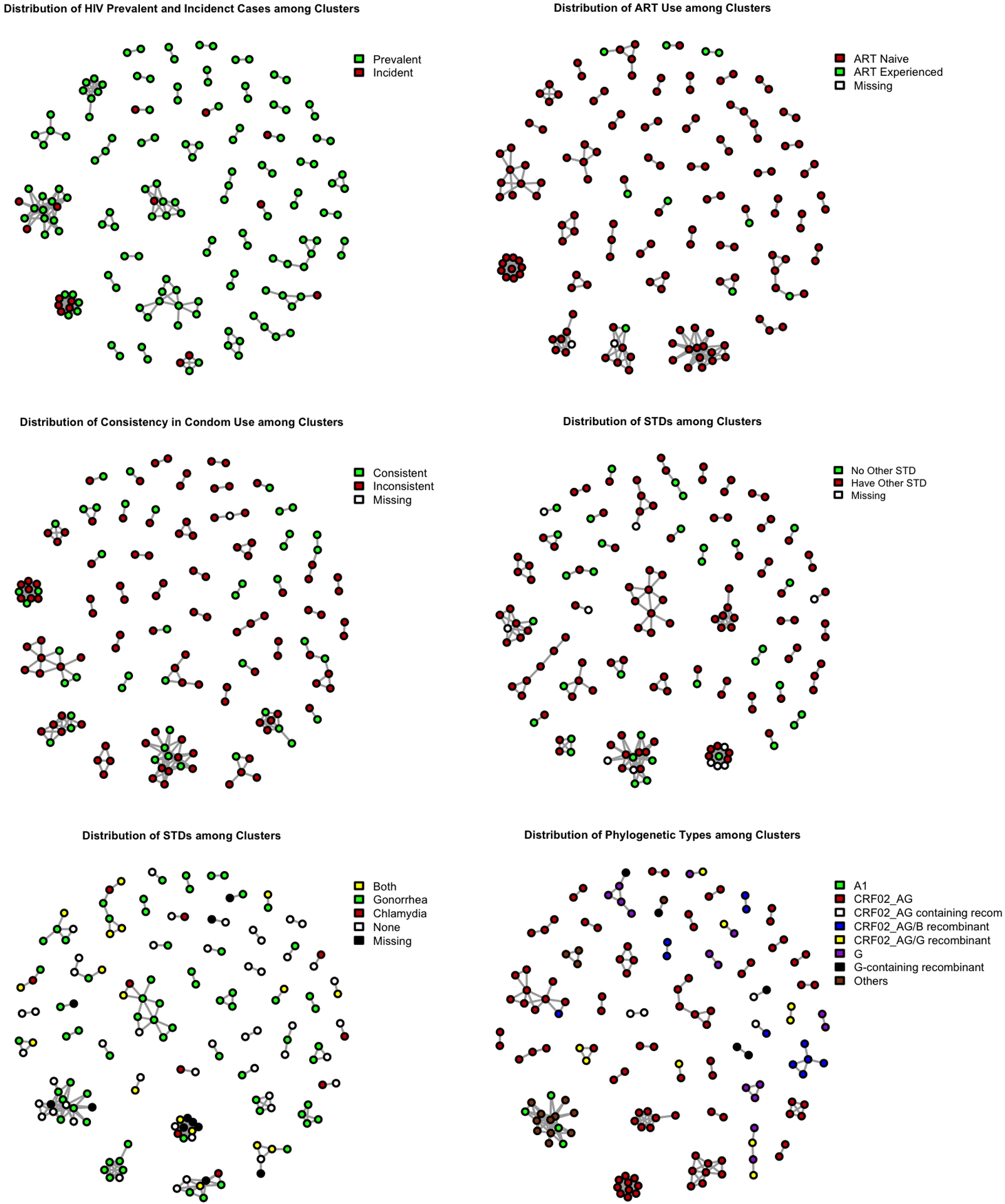
Background: The HIV epidemic continues to grow among MSM in countries across sub-Saharan Africa including Nigeria. To inform prevention efforts, we used a phylogenetic cluster method to characterize HIV genetic clusters and factors associated with cluster formation among MSM living with HIV in Nigeria.
Methods: We analyzed HIV-1 pol sequences from 417 MSM living with HIV enrolled in the TRUST/RV368 cohort between 2013 and 2017 in Abuja and Lagos, Nigeria. A genetically linked cluster was defined among participants whose sequences had pairwise genetic distance of 1.5% or less. Binary and multinomial logistic regressions were used to estimate adjusted odds ratios (AORs) and 95% confidence intervals (CIs) for factors associated with HIV genetic cluster membership and size.
Results: Among 417 MSM living with HIV, 153 (36.7%) were genetically linked. Participants with higher viral load (AOR = 1.72 95% CI: 1.04-2.86), no female partners (AOR = 3.66; 95% CI: 1.97-6.08), and self-identified as male sex (compared with self-identified as bigender) (AOR = 3.42; 95% CI: 1.08-10.78) had higher odds of being in a genetic cluster. Compared with unlinked participants, MSM who had high school education (AOR = 23.84; 95% CI: 2.66-213.49), were employed (AOR = 3.41; 95% CI: 1.89-10.70), had bacterial sexually transmitted infections (AOR = 3.98; 95% CI: 0.89-17.22) and were not taking antiretroviral therapy (AOR = 6.61; 95% CI: 2.25-19.37) had higher odds of being in a large cluster (size > 4).
Conclusion: Comprehensive HIV prevention packages should include behavioral and biological components, including early diagnosis and treatment of both HIV and bacterial sexually transmitted infections to optimally reduce the risk of HIV transmission and acquisition.
Figures
References
-
- Chehadeh W, Albaksami O, Altawalah H, Ahmad S, Madi N, John SE, et al. Phylogenetic analysis of HIV-1 subtypes and drug resistance profile among treatment-naive people in Kuwait. J Med Virol 2015; 87(9):1521–1526. - PubMed
Publication types
MeSH terms
Substances
Grants and funding
LinkOut - more resources
Full Text Sources
Medical
Molecular Biology Databases
