


Silicon Priming Regulates Morpho-Physiological Growth and Oxidative Metabolism in Maize under Drought Stress
- PMID: 31635179
- PMCID: PMC6843370
- DOI: 10.3390/plants8100431
Silicon Priming Regulates Morpho-Physiological Growth and Oxidative Metabolism in Maize under Drought Stress
Abstract
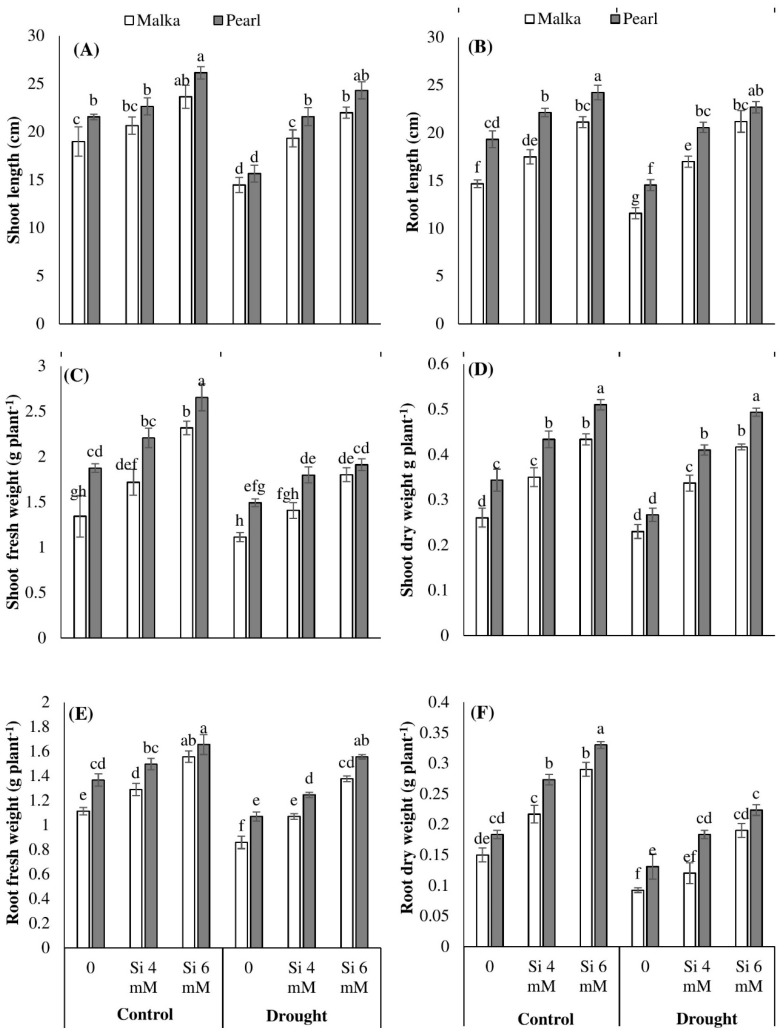
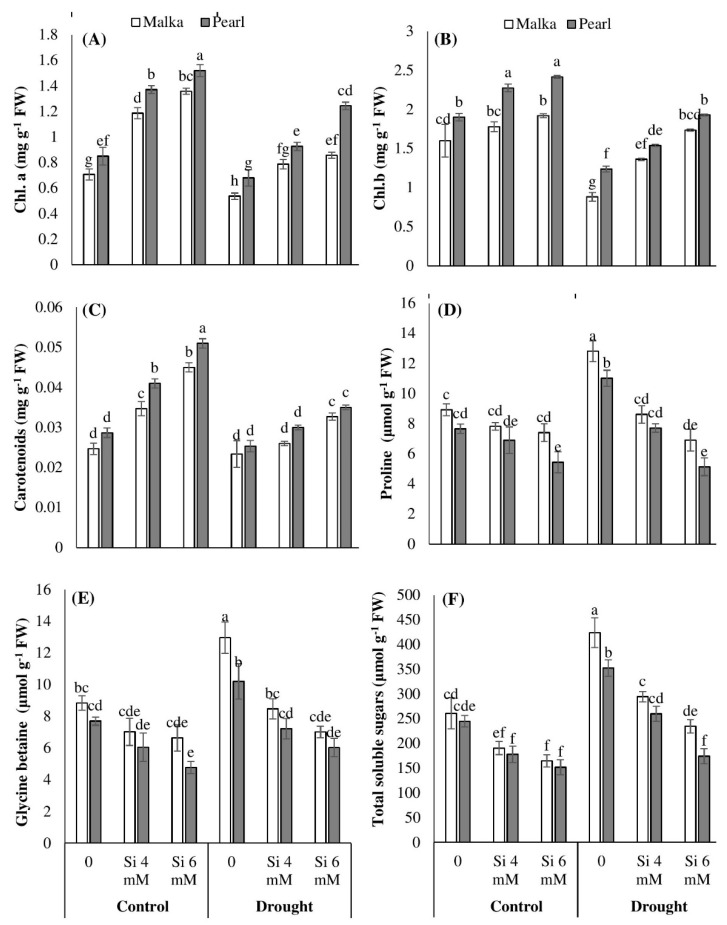
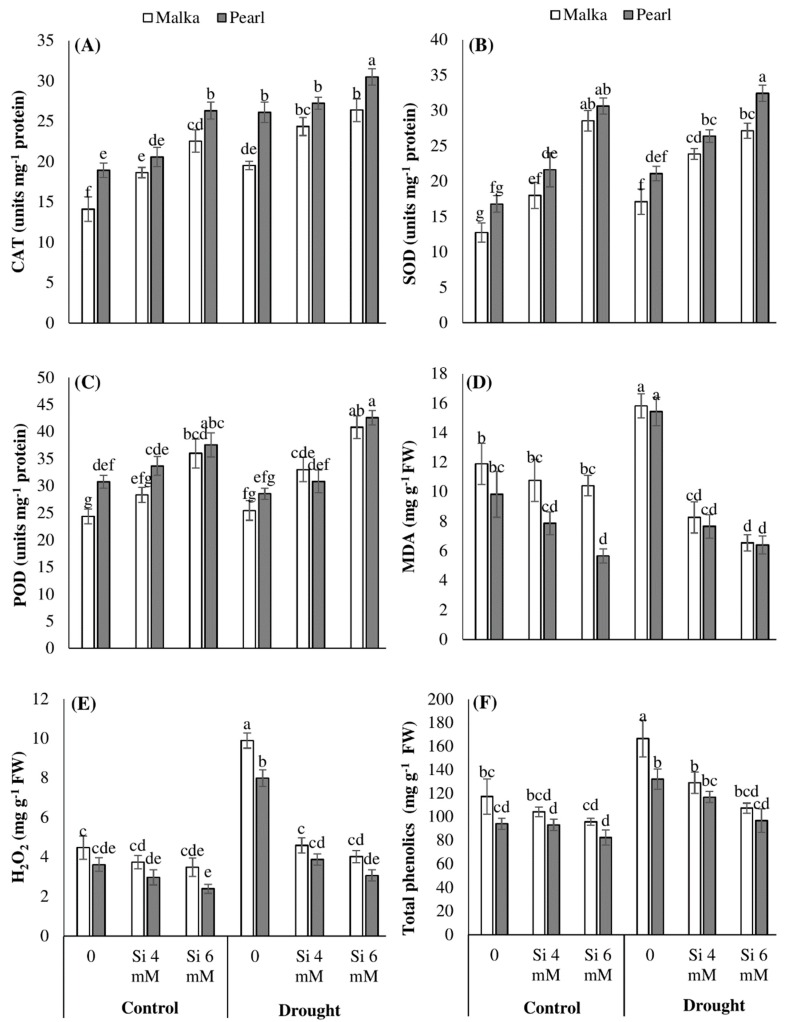
Seed priming with silicon (Si) is an efficient and easy method to regulate plant tolerance against different abiotic stresses. A pot experiment was conducted to examine the Si-mediated changes in oxidative defense and some vital physio-biochemical parameters of maize under a limited water supply. For this purpose, two maize varieties (Pearl and Malka) with different Si priming treatments (0, 4 mM, 6 mM) were grown under a control and 60% field capacity for three weeks. At 60% field capacity, significant reductions in plant growth attributes and chlorophyll contents were recorded compared with the control. The negative effects of drought stress were more severe for Malka compared with Pearl. Drought stress increased the malondialdehyde (MDA) and hydrogen peroxide (H2O2) contents, altered the activities of antioxidant enzymes (superoxide dismutase (SOD), peroxidase (POD), and catalase (CAT)), and triggered the accumulation of soluble sugars, glycine betaine, proline, and phenolics contents. Nevertheless, seed priming with silicon at 4 or 6 mM was effective in alleviating the detrimental effects of drought stress in both cultivars. Si priming particularly at 6 mM significantly enhanced the shoot and root lengths as well as their biomass and improved the levels of photosynthetic pigments. Moreover, Si treatments enhanced the activities of antioxidant enzymes (SOD, POD, and CAT) while it reduced the MDA and H2O2 contents in both cultivars under stress conditions. In crux, the present investigation suggests that Si priming mitigates the harmful effects of drought stress and contributes to the recovery of maize growth.
Keywords: antioxidant machinery; chlorophyll pigments; drought stress; maize growth; osmoprotectants; silicon.
Conflict of interest statement
The authors declare no competing financial interests.
Figures
References
-
- Zheng M., Tao Y., Hussain S., Jiang Q., Peng S., Huang J., Cui K., Nie L. Seed priming in dry direct-seeded rice: Consequences for emergence, seedling growth and associated metabolic events under drought stress. Plant Growth Regul. 2016;78:167–178. doi: 10.1007/s10725-015-0083-5. - DOI
-
- Hussain S., Hussain S., Qadir T., Khaliq A., Ashraf U., Parveen A., Saqib M., Rafiq M. Drought stress in plants: An overview on implications, tolerance mechanisms and agronomic mitigation strategies. Plant Sci. Today. 2019;6:389–402. doi: 10.14719/pst.2019.6.4.578. - DOI
-
- Anjum S.A., Ashraf U., Tanveer M., Khan I., Hussain S., Shahzad B., Zohaib A., Abbas F., Saleem M.F., Ali I., et al. Drought Induced Changes in Growth, Osmolyte Accumulation and Antioxidant Metabolism of Three Maize Hybrids. Front. Plant Sci. 2017;8:69. doi: 10.3389/fpls.2017.00069. - DOI - PMC - PubMed
Grants and funding
LinkOut - more resources
Full Text Sources
Miscellaneous
