


Intranasal Ectopic Tooth in Adult and Pediatric Patients: A Report of Two Cases
- PMID: 31637080
- PMCID: PMC6766144
- DOI: 10.1155/2019/8351825
Intranasal Ectopic Tooth in Adult and Pediatric Patients: A Report of Two Cases
Abstract
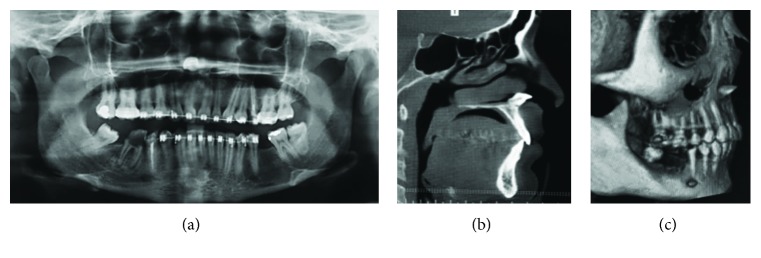
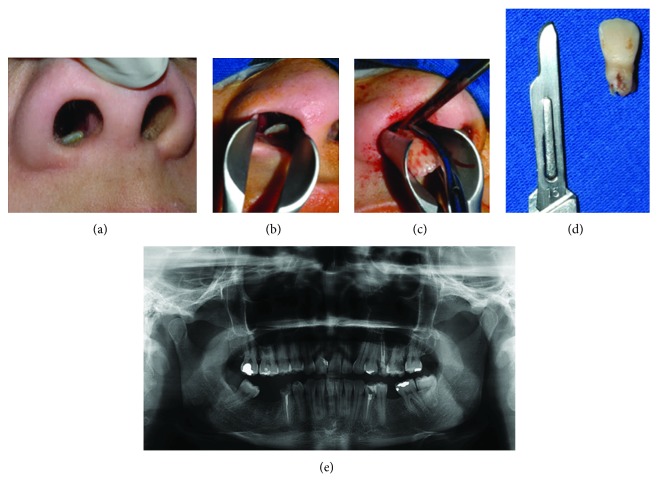
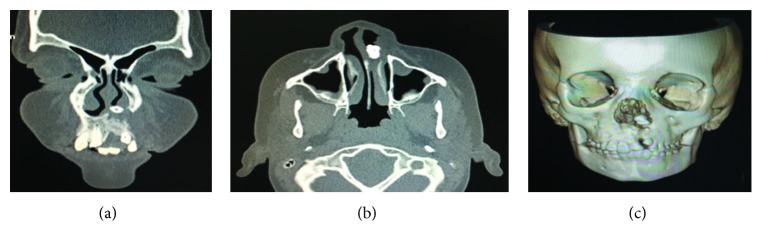
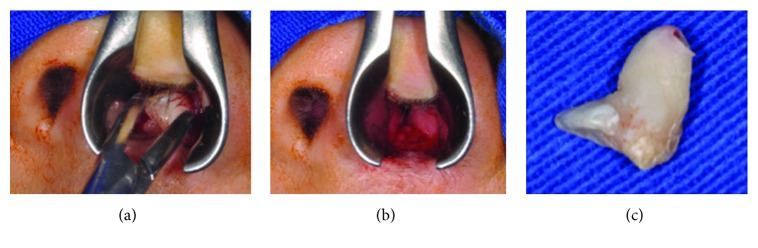
The aim of this study was to report two rare cases of ectopic tooth into the nasal cavity. The first case reports a 32-year-old female patient with the main complaint of having a tooth inside her nose. According to her, this condition causes pain and sporadic nosebleed. The patient had a facial trauma when she was 6 years old. The second case refers to an 8-year-old girl with left incomplete unilateral cleft lip and palate. The main complaint was left-sided nasal obstruction by a white hard mass. The treatment for both cases was surgical removal of the ectopic erupted tooth under general anesthesia. In conclusion, we can state that the surgical removal of intranasal tooth is a safe procedure and improves patient's quality of life.
Copyright © 2019 Isabela Polesi Bergamaschi et al.
Conflict of interest statement
The authors declare that there is no conflict of interest regarding the publication of this paper.
Figures
References
-
- Lin I. H., Hwang C. F., Su C. Y., Kao Y. F., Peng J. P. Intranasal tooth: report of three cases. Chang Gung medical journal. 2004;27(5):385–389. - PubMed
-
- HFd O., Vieira M. B., Buhaten W. M. S., Neves C. A., Seronni G. P., Dossi M. O. Tooth in nasal cavity of non-traumatic etiology: uncommon affection. International Archives of Otorhinolaryngology. 2009;13(2):201–203.
-
- Medeiros A. S., Gomide M. R., Costa B., Carrara C. F., das Neves L. T. Prevalence of intranasal ectopic teeth in children with complete unilateral and bilateral cleft lip and palate. The Cleft Palate-Craniofacial Journal. 2000;37(3):271–273. doi: 10.1597/1545-1569_2000_037_0271_poieti_2.3.co_2. - DOI - PubMed
Publication types
LinkOut - more resources
Full Text Sources
